

Flour moths in your pantry? Here’s how to stop them for good
The Mediterranean flour moth lays eggs in flour and other dry goods. It usually enters the home undetected with contaminated food packages. Eliminating it takes persistence—act immediately if you spot adult moths, larvae, or webbing.
Identifying the Mediterranean flour moth
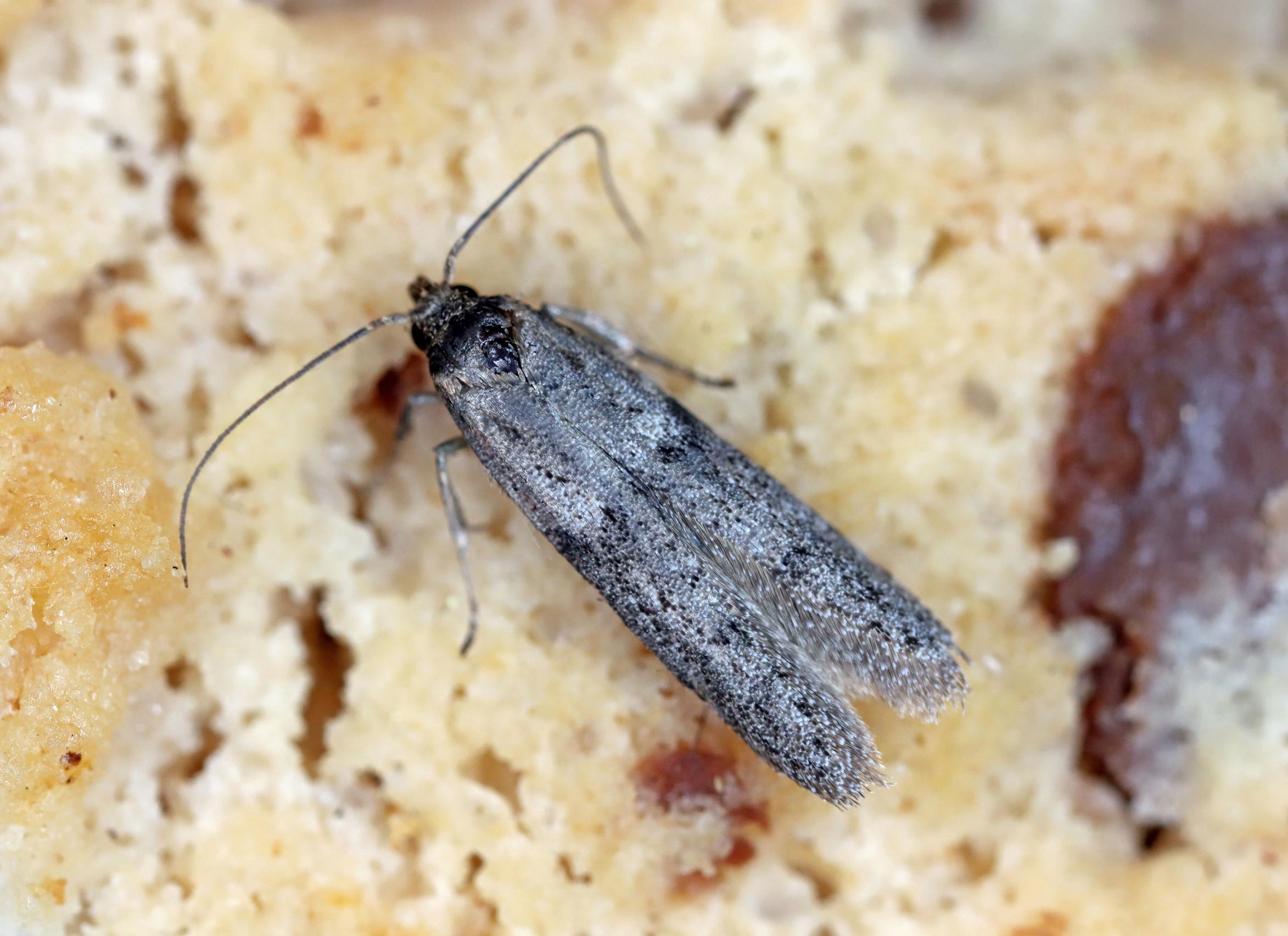
An adult Mediterranean flour moth (Ephestia kuehniella) has a wingspan of about 20–28 millimeters (about 0.8–1.1″). Its forewings are gray and patterned. The flour moth larva is about 20 millimeters (about 0.8″) long, pale, soft-skinned, and sparsely haired. There’s a dark spot at the base of its dorsal hairs.
Flour moth or pantry moth?
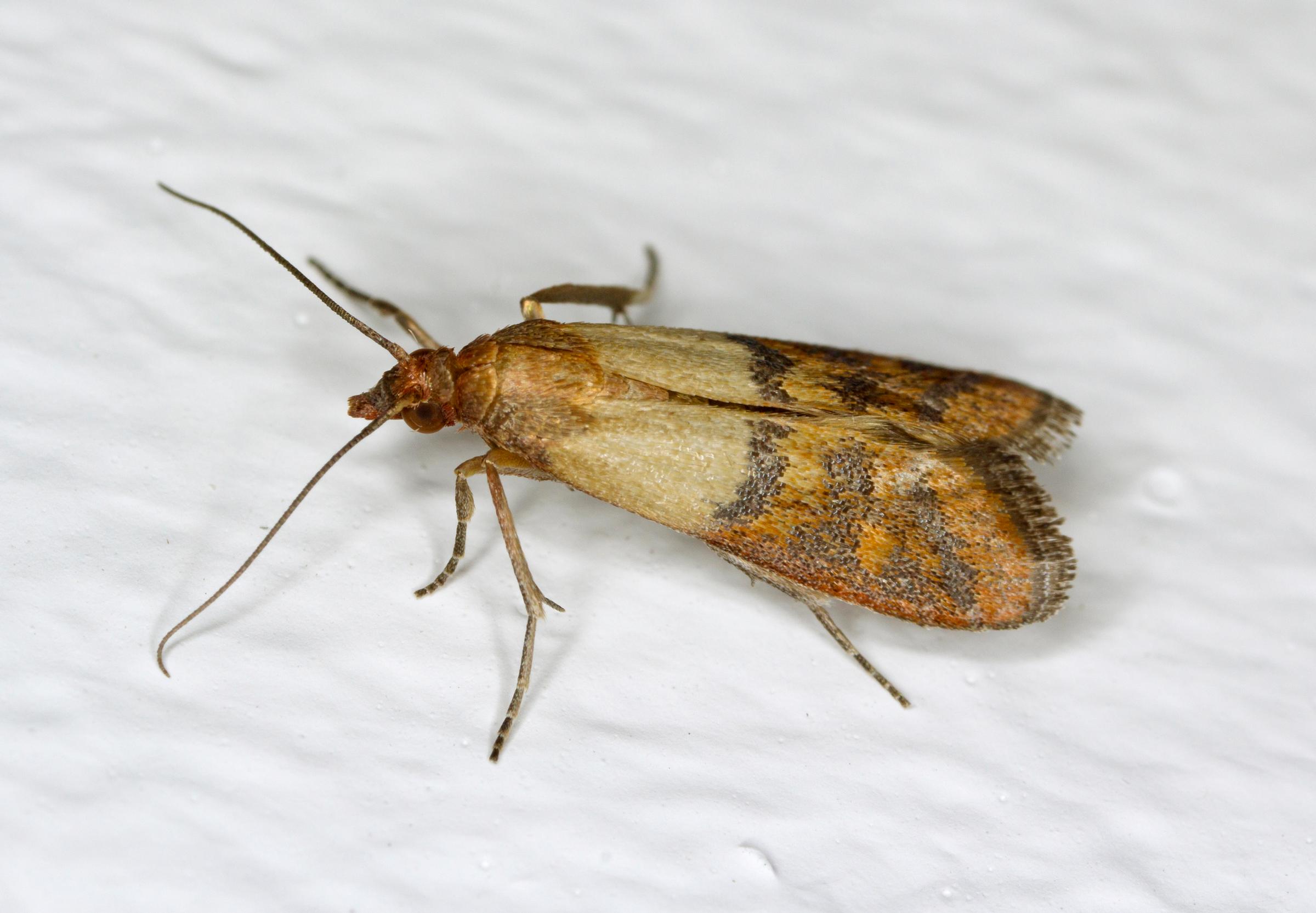
Both moths inhabit kitchen shelves, but it’s fairly easy to tell them apart. The pantry moth is clearly more common in households, with a reddish-brown color and a smaller size than the Mediterranean flour moth. Their food preferences differ slightly—flour moths particularly favor flour and other grain products, while pantry moths may settle in a wide range of dry goods, from spices to pet food. Read more about the pantry moth!

What do Mediterranean flour moths eat?
Adult Mediterranean flour moths don’t need any food at all. The larvae primarily eat wheat flour, though they also consume other flours, grain products, and dry goods such as nuts and dried fruit.
How does the Mediterranean flour moth enter your home?
Mediterranean flour moths are a nuisance in mills and bakeries. Eggs can land in flour packages at the mill, where larvae pupate in the flour mass. They may also spread to your home via spices or dried fruit. If you know which store you bought the contaminated product from, consider letting them know so they can alert the manufacturer.
Do I have Mediterranean flour moths at home? Watch for these signs
- Adult moths are flying around kitchen cabinets, on walls, or near the ceiling. Flour moths often move slowly, especially in the evening or at night. They typically stay close to products like flour, grains, and cereal.
- You notice web-like strands resembling spider silk in flour bags, causing clumps to form. These are made by the larvae, and the larvae also pupate in this webbing. You may see the strands along package seams or corners.
- You see pupae or moving pale larvae among flour or grain products.
Controlling the Mediterranean flour moth
Flour moths typically arrive with infested food items and can spread undetected to other packages if not caught early. The larvae may wander far from the food source when preparing to pupate, for instance into cracks in cabinets or baseboards. Because of this, getting rid of flour moths can be challenging, and adult moths may still appear long after you dispose of contaminated items and clean storage areas. If you see one moth, there are likely more.
If you’ve found Mediterranean flour moths, pupal casings, or other signs of infestation, here’s what to do:
1. Inspect your dry goods
Look through flour, muesli, pasta, rice, nuts, dried fruit, spices, and other dry foods, including pet food. Also check unopened packages.
2. Discard infested foods
Throw out any items with webbing, clumps, larvae, tiny brown pupae, or adult moths. Don’t keep anything suspicious. If you find them in a flour bag, place the entire package in a plastic bag. Seal both the container and trash bag tightly, and take it to an outdoor bin immediately. Otherwise, larvae can crawl out and spread elsewhere in your home.
3. Thoroughly clean cupboards
Empty all cupboards and drawers where you keep dry goods. Remove dishes and containers so you can thoroughly clean every surface. Vacuum shelves, corners, and the top edges of cupboards or drawers with care. Remember to check behind drawers, baseboards, trim, and other small crevices where larvae might hide. Examine around your freezer and fridge too. Replace your vacuum bag right after cleaning, seal it securely in a trash bag, and take it outside right away. Finally, wipe all surfaces with a damp cloth and a mild cleaning agent or a vinegar solution (1 part vinegar to 1 part water).
4. Set up Mediterranean flour moth traps
You can use pheromone traps for adult flour moths. The traps attract the moths, which get stuck to a sticky surface. While this breaks the reproduction cycle, it doesn’t eliminate the larvae. It’s best not to use insecticides in the kitchen, as they can come into contact with your food.
5. Clean again
Give your cupboards and drawers another thorough cleaning about a week later. This can catch any hidden larvae before they develop into adults.
6. Store dry goods in airtight containers
Keep flour and other dry foods in tightly sealed glass or metal jars. Paper or plastic packages aren’t enough to keep moths out.
7. Don’t store food too long
Leaving opened packages in warm or humid spots for extended periods encourages Mediterranean flour moths to settle in.
8. Keep an eye on things
Monitor for at least a month. Clean cupboards and check any pheromone traps regularly. If moths show up in the traps, repeat your preventive steps until the problem is completely resolved.
9. Prevent a new infestation
Keep cupboards clean, sweep away flour dust regularly, and store newly opened dry goods in airtight containers right away to help prevent flour moths in the future.
Expert: Environmental Inspector Hanna Vatanen, City of Helsinki Environmental Services
Additional sources: hel.fi/fi/asuminen/asuminen-ja-terveys/kodin-tuholaiset, hyonteismaailma.fi, vuokranantajat.fi

