

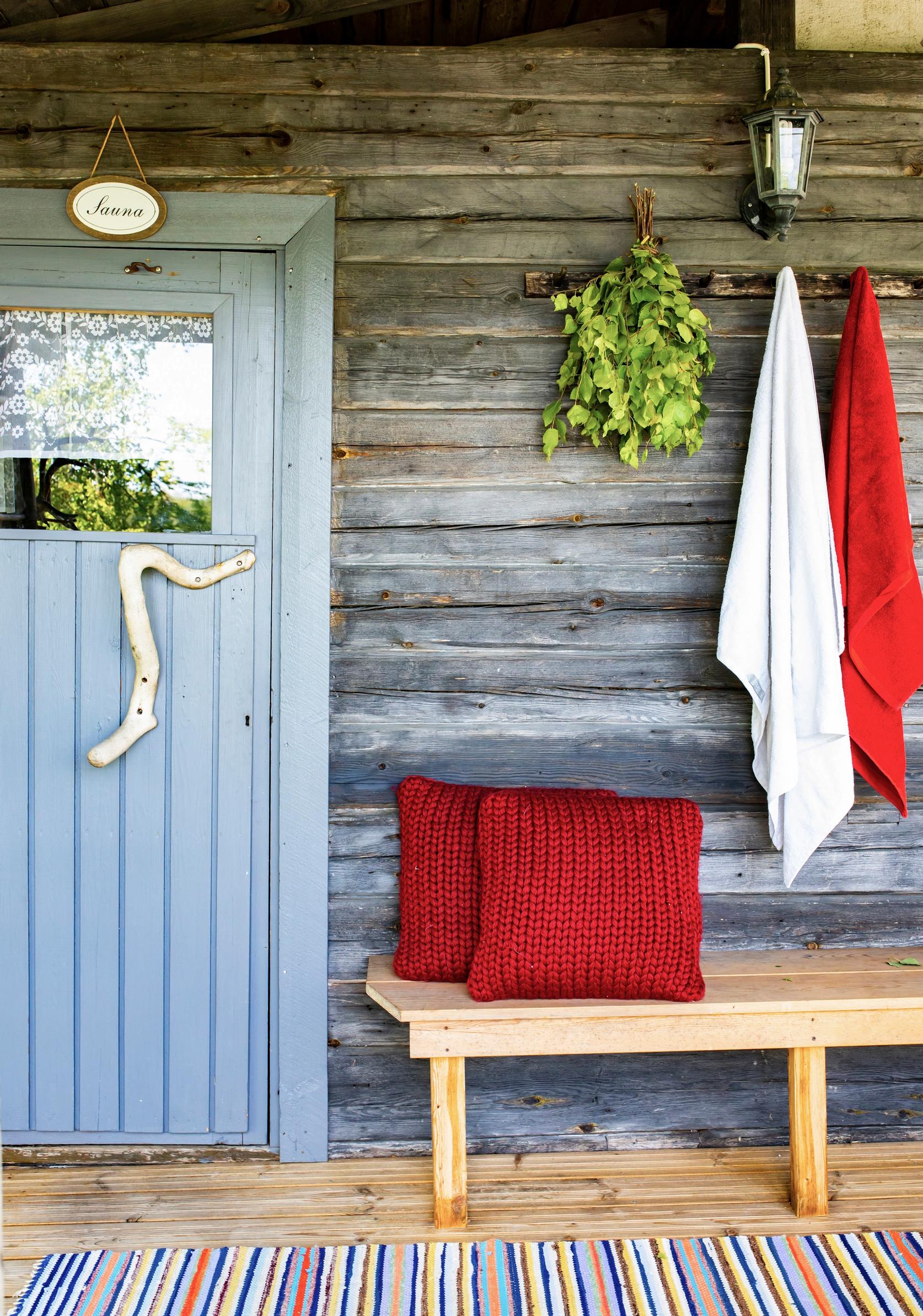
“Sauna lets both body and mind unwind”—where does the Finnish sauna obsession come from?
There are more than 2.4 million saunas in Finland, and they’re truly everywhere: in homes, in apartment-building attics, on trailers, even in a Ferris wheel car. We’ve got sauna hats, sauna coffee, sauna yoga, the sauna run, and the post‑run sauna. We set out to discover where our love for the sauna springs from.
When a Finn goes to the sauna, it isn’t just to wash up or warm up. The sauna is where you put your feet up and your heart rate down. In the sauna, you can simply be quiet—or have the most serious conversations of all.
It would be sacrilege to call the sauna merely a washroom. It’s part of our inner landscape! But why is the sauna so important to us Finns—almost part of our identity?
“It’s been suggested that perhaps the sauna suits the Finnish character—or that it actually shapes the Finnish character. So which came first, the chicken or the egg,” says Laura Seesmeri, a university lecturer at the University of Turku.

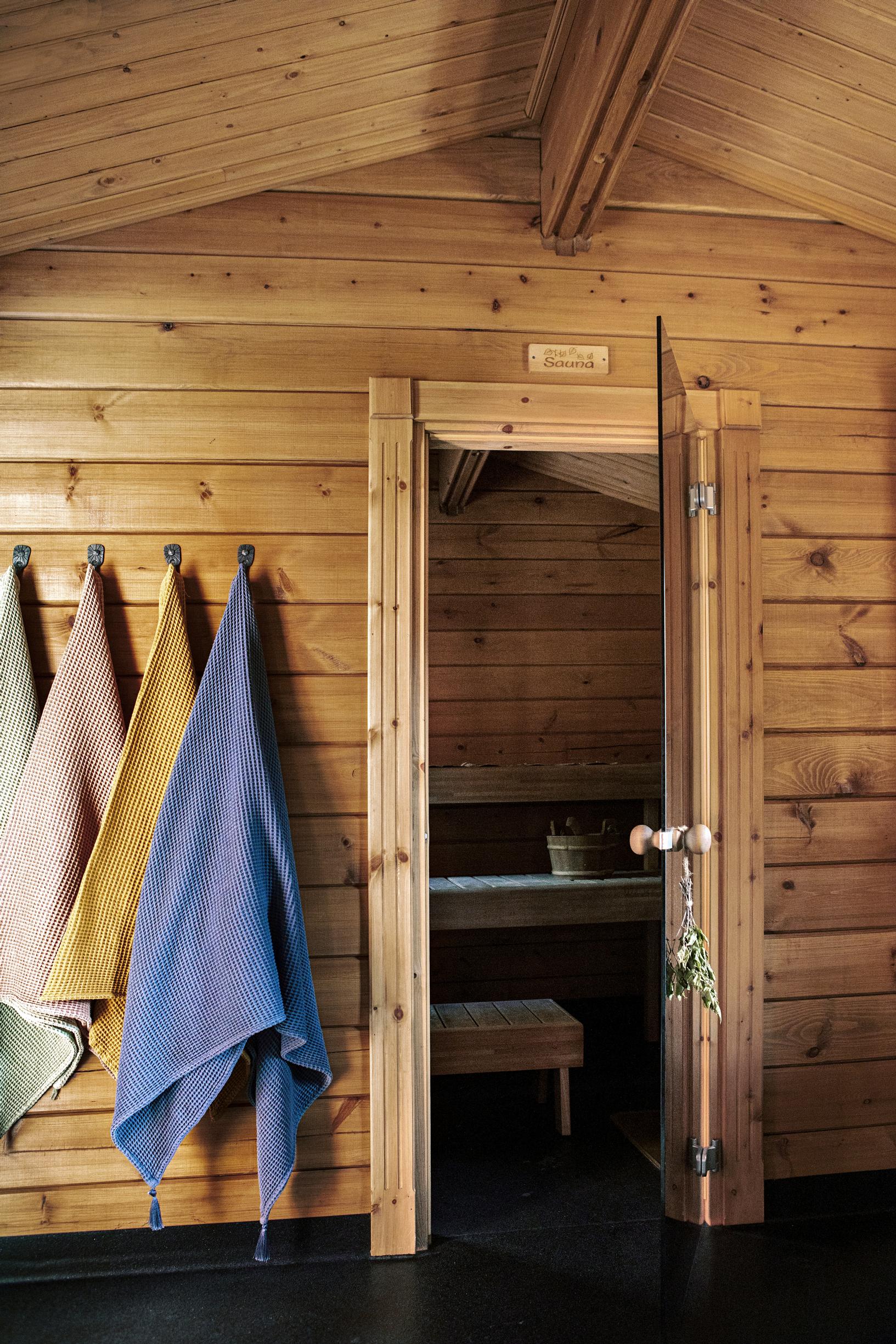
Seesmeri has studied Finns’ sauna experiences. In them, the sauna is linked to things like understatement, closeness to nature, quiet—and a touch of introversion. You’ll find much the same traits in many Finns, too.
Seesmeri sees the sauna as a bond with nature: even if a Finn takes a sauna in a high‑rise in the concrete jungle, they notice the birds singing outside the window. The sauna is also a link to the past.
“Finns grow up with the sauna from a young age. We can share largely the same sauna memories and experiences. Through the sauna, we feel we’re part of a chain of tradition.”
The sauna stove heats up in almost half of Finnish homes
- Slightly more than half of Finnish homes have a sauna: there are about three million dwellings, with approximately 1.8 million in‑unit saunas.
- All told, there are an estimated more than 2.4 million saunas in Finland. That’s one sauna for every 2–3 Finns.
- And we use them! According to a study by the University of Eastern Finland and the Saunologia website, nearly 60 percent of us work up a sweat in the sauna at least once a week. One in three goes at least twice a week, and five percent four times.
- Men go to the sauna a bit more often than women.
Sources: Statistics Finland & Saunologia

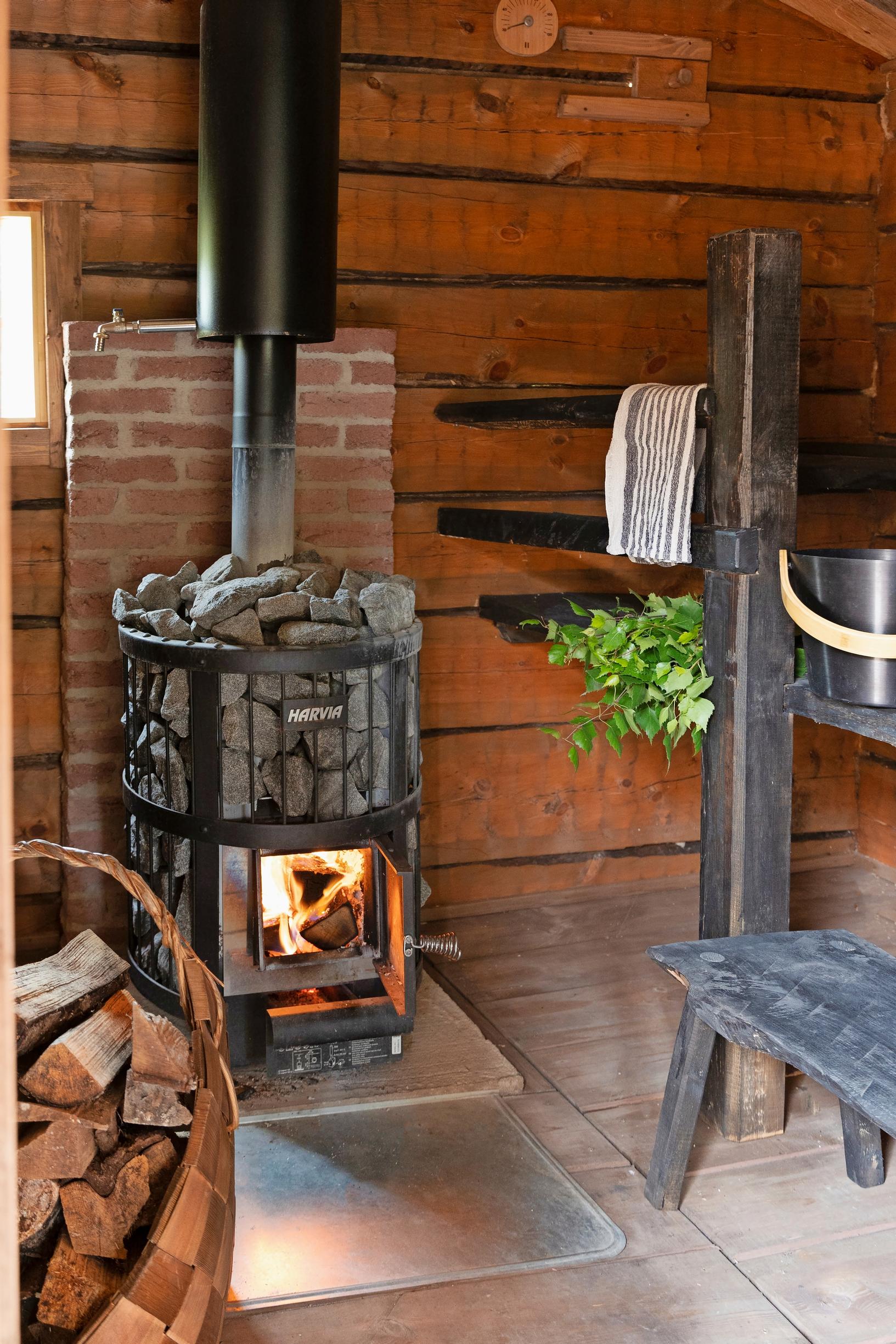
The Finnish sauna changes—and stays the same
As times have changed, the sauna has kept pace with Finnish society and everyday life, says the Executive Director of the Finnish Sauna Society Janne Koskenniemi as he reflects on the sauna’s popularity.
Back in the day, when a homestead was built, the sauna went up right away. People were born there, and the dead were washed there. During the great wave of urbanization in the 1960s–70s, different social classes met in public saunas without status symbols. Today, cleansing is above all mental.
“The sauna is one of the few places where we are free of digital devices, buzzing phones, and deadlines. The sauna is everyday luxury—there’s no rush and no stress,” Koskenniemi says.
The Finnish sauna has stayed alive because we’ve allowed it to change, Seesmeri says. On the other hand, as a space it’s reassuringly constant: most often paneled walls and benches, no glaring colors or tiled walls.
“There are always certain basic elements to sauna bathing. You sit quietly and wait for the sweat to rise to the surface. No matter what energy source heats the stove, the sound of throwing water onto the stones is always the same,” Seesmeri notes.
_1766287217653_fr_1767013847282_M5RpG.jpg?w=64&q=50&blur=20)
_1766287217653_fr_1767013847282_M5RpG.jpg?w=3840&q=75)
In Finland, the sauna isn’t a show
We love to proclaim that the sauna is Finnish.
We have saunas everywhere: at home, in an apartment building’s attic, at the gym, on a trailer, even in a Ferris wheel car.
There’s sauna paraphernalia and concepts: the sauna hat, sauna yoga, sauna coffee, the Saturday sauna, the sauna run, the post‑run sauna.
But the sauna isn’t Finns’ exclusive domain. In our western neighbor Sweden, people sauna much as we do. Among the Balts and Russians, sauna enthusiasm comes close to ours. In Central Europe, people sweat in spa saunas; in the Middle East, in the steam of the hammam.


To Koskenniemi, however, three things are distinctive to the Finnish sauna.
Nudity: sure, you’ll find it elsewhere too—for example in Germany and the Baltics—but in Finland it’s even more common.
Equality: we have a strong tradition of mixed‑gender sauna bathing.
A stripped‑down experience: In Germany, for example, there’s the Aufguss ritual, where a sauna master leads the session and throws water on the stones.
“In Finland, there’s no show—there’s the sauna and the stove, and the people on the benches decide for themselves what the experience will be,” Koskenniemi says.
“In the sauna, I feel my Finnishness in my bones”—our Finnish readers share their thoughts on sauna:
“The sauna means rest, relaxation, warmth, safety, comfort, cleanliness, a prehistoric sense of meaning (sauna bathing is in my cells).” - Sirpa
“An evening ritual for the family—without it, sleep won’t come.” - Katja
“Sauna bathing is Finnishness. Even though I hardly ever go, when I do, I feel my Finnishness in my bones.” - Pia
“Sauna lets both body and mind unwind. Your eyes open to things at the back of your mind—even if you’re not actively thinking about them.” - Anna Liisa
“A soothing, cleansing habit learned since babyhood. I can’t do without it.” - Tiina
“The sauna is about equality. Titles and jobs are left at the door.” - Maarit
“After the sauna, you feel clean, good, and relaxed. It’s as if your whole body can exhale.” - Rita
“You can pause for a moment with your own thoughts—or save the world with a friend. If my partner has something to talk about, they ask: ‘Shall we heat the sauna?’” - Noora
“Often in the sauna we finish our shared decisions, catch up on everyone’s news, and of course, end with the happiest stories. Between rounds we cool off in the sea or on the terrace—those are the moments when I feel most alive.” - Julia
Will we soon be taking a sauna dressed in linen?
Right now, winter swimming and the smoke sauna are trending in Finnish sauna culture, Koskenniemi says. Both he and Seesmeri note that public saunas and communal sauna sessions are on the rise.
Two things may explain their popularity, Seesmeri says. First, shared sauna sessions can reduce energy consumption. Second, the sauna was on everyone’s lips when, in 2020, it was added to UNESCO’s list of intangible cultural heritage specifically as a tradition that brings people together.
Koskenniemi predicts that in the future the number of saunas—including public ones—will grow, and their quality will improve.
“When electric saunas became widely available in homes, the focus was perhaps on volume, and quality dipped a bit. We have a generation of Finns whose image of a sauna is an uncomfortably hot, dry little box where your head burns and your toes freeze. Now we’ve started investing in sauna quality again,” Koskenniemi says.

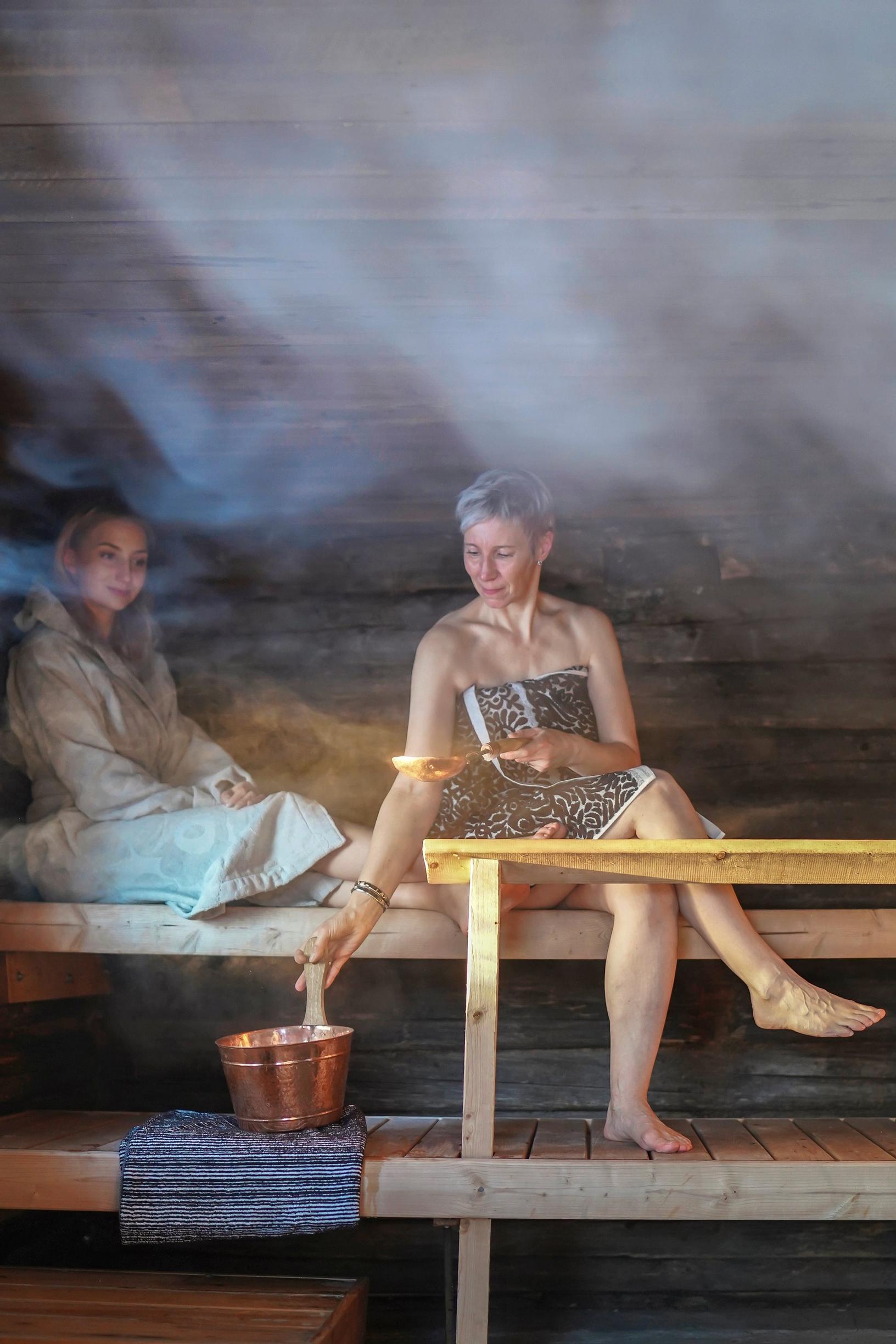

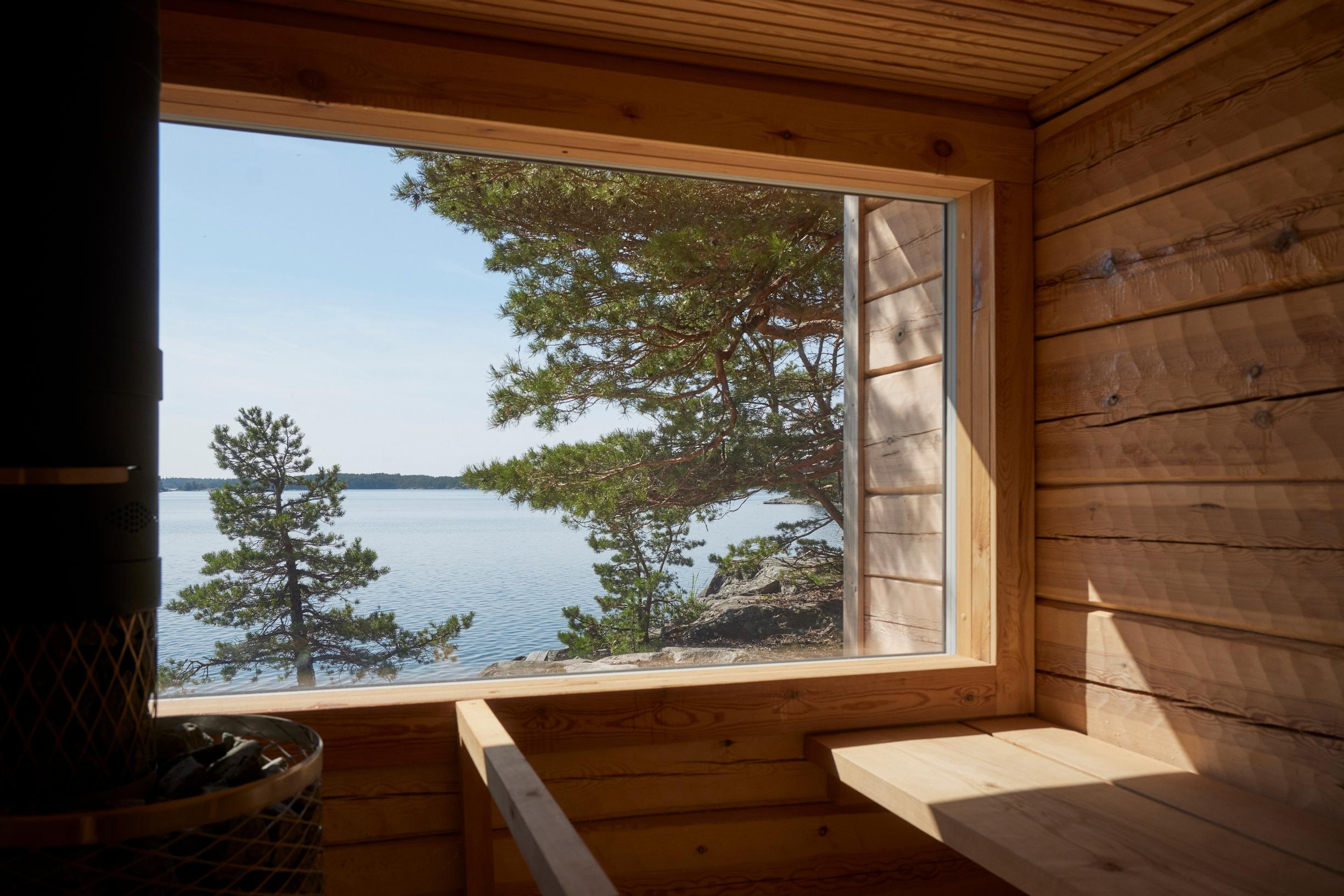
Lately the sauna has been criticized as old‑fashioned, Seesmeri notes. People are often divided into two genders, and women and men sauna separately. That said, thanks to the rise of winter swimming, people in mixed saunas often sit in swimsuits.
“To some, a swimsuit in the sauna is a terrible thing. Perhaps this idea will gradually change and nudity will simply be forgotten as communal sauna sessions grow. Or maybe in mixed saunas in the future people will wear towels—or some kind of linen outfit?”
A short history of the Finnish sauna

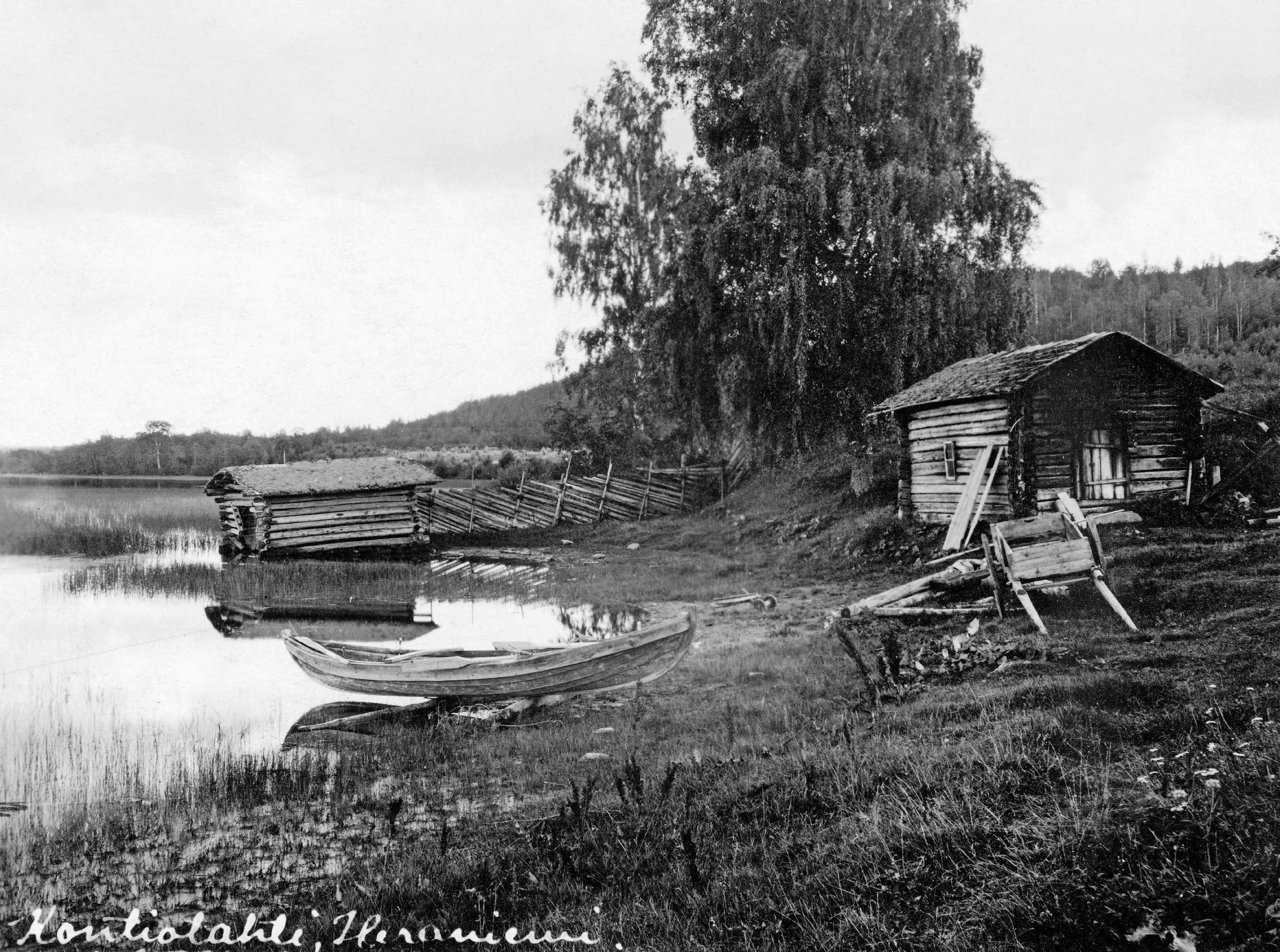
Things akin to the sauna were invented in different parts of the world. In ancient Greek and Roman baths, people lounged in sweat baths. Indigenous peoples of North and Central America had their own sweat lodges.
In the freezing North, some kind of sauna was a lifeline. In Finland, structures dating back to the Stone Age have been found that point to a tent sauna. After those came the earth sauna: a pit heated with a pile of stones.
Between the 5th–9th centuries, saunas moved up from the ground, and the now‑trendy smoke sauna was born. The smoke cottage without a chimney was both home and sauna.
The modern sauna came into being with the addition of a chimney, but it didn’t become widespread until the early 20th century. Washrooms and dressing rooms began to sprout alongside the sauna.
When people moved from the countryside to the cities in the early 1900s, few had their own sauna. That’s when people started bathing together in public saunas and apartment buildings’ shared saunas.
In the 1970s, as electric stoves became common, saunas were built at a clip into apartment blocks and row houses. With them and the saunas at public swimming pools, public saunas began to lose popularity—until they made a strong comeback in recent years.
Sources: Satu Laatikainen: Saunan kansa & Anna-Kaarina Mäkisalo: Saunan henki
The readers’ comments are based on Kotona’s sauna survey. It was conducted in Finnish in September 2025 and had 250 respondents.

