This tree won’t drop a single needle: Marsa crocheted a Christmas tree from about 300 granny squares
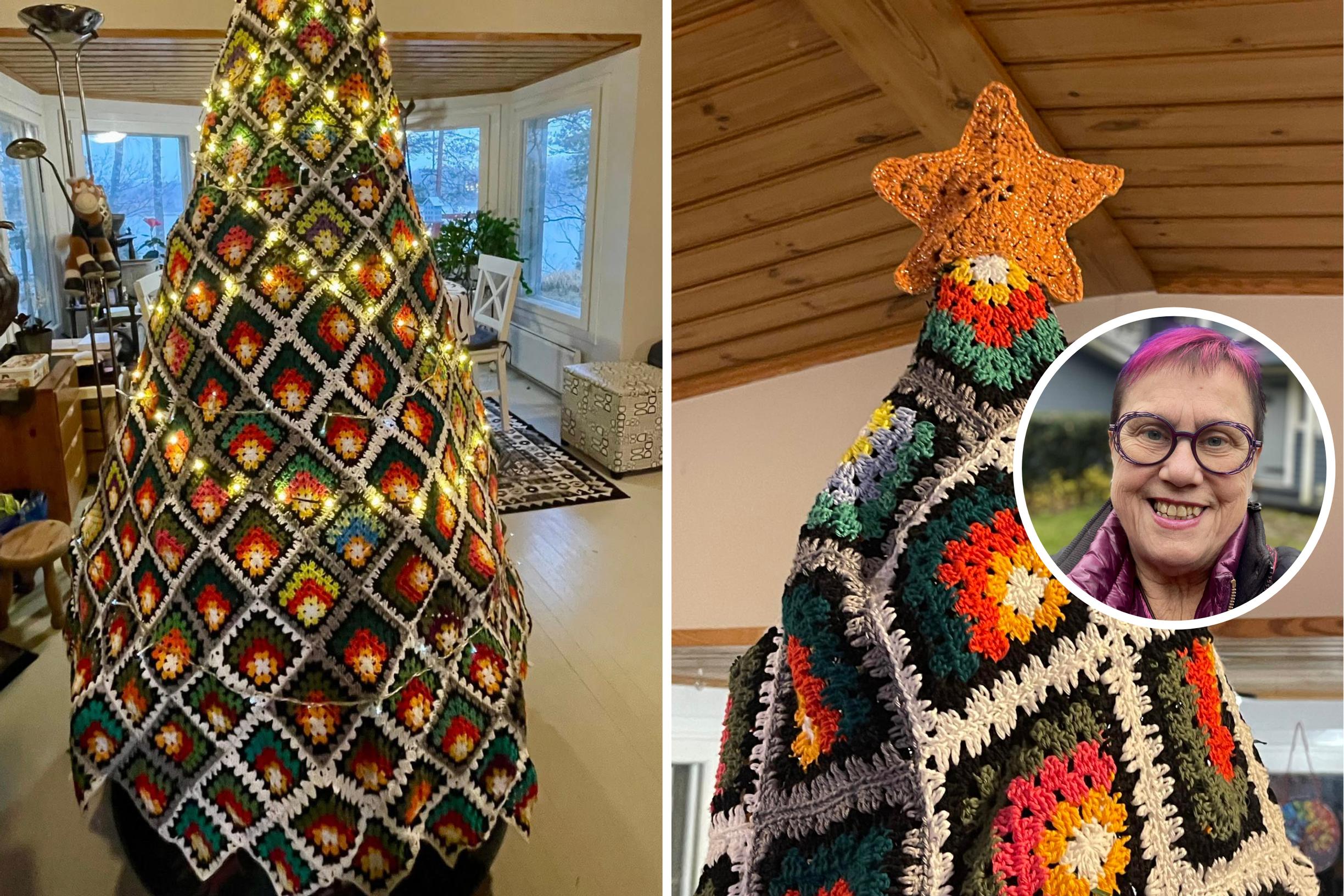
A real Christmas tree and asthma don’t quite go together—and the dogs wouldn’t leave the tree alone either. So what’s the solution? That’s what Marsa Valtonen, 70, was pondering a couple of years ago. And that’s how the idea for the granny square Christmas tree was born.
Marsa, how many granny squares are in your Christmas tree?
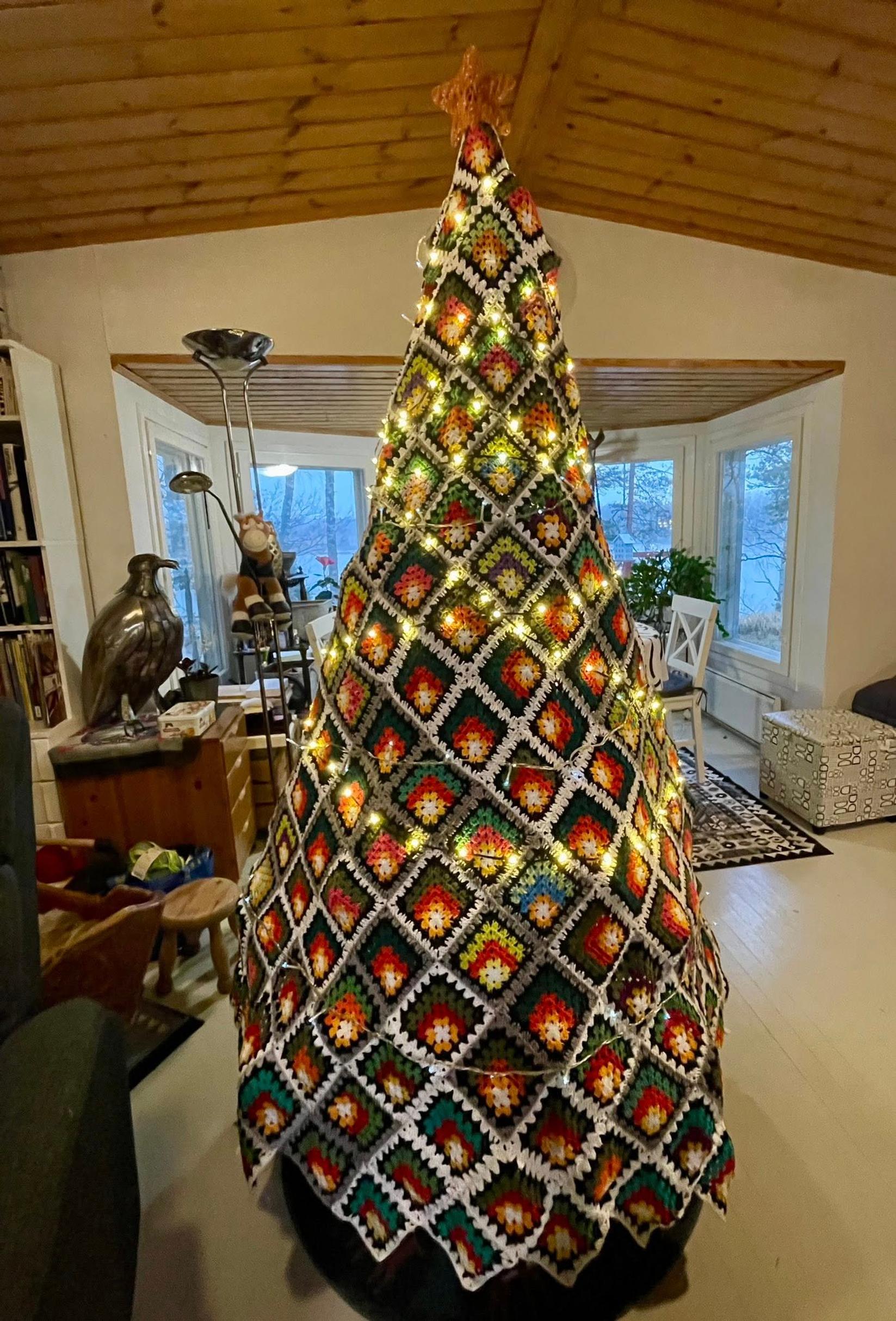
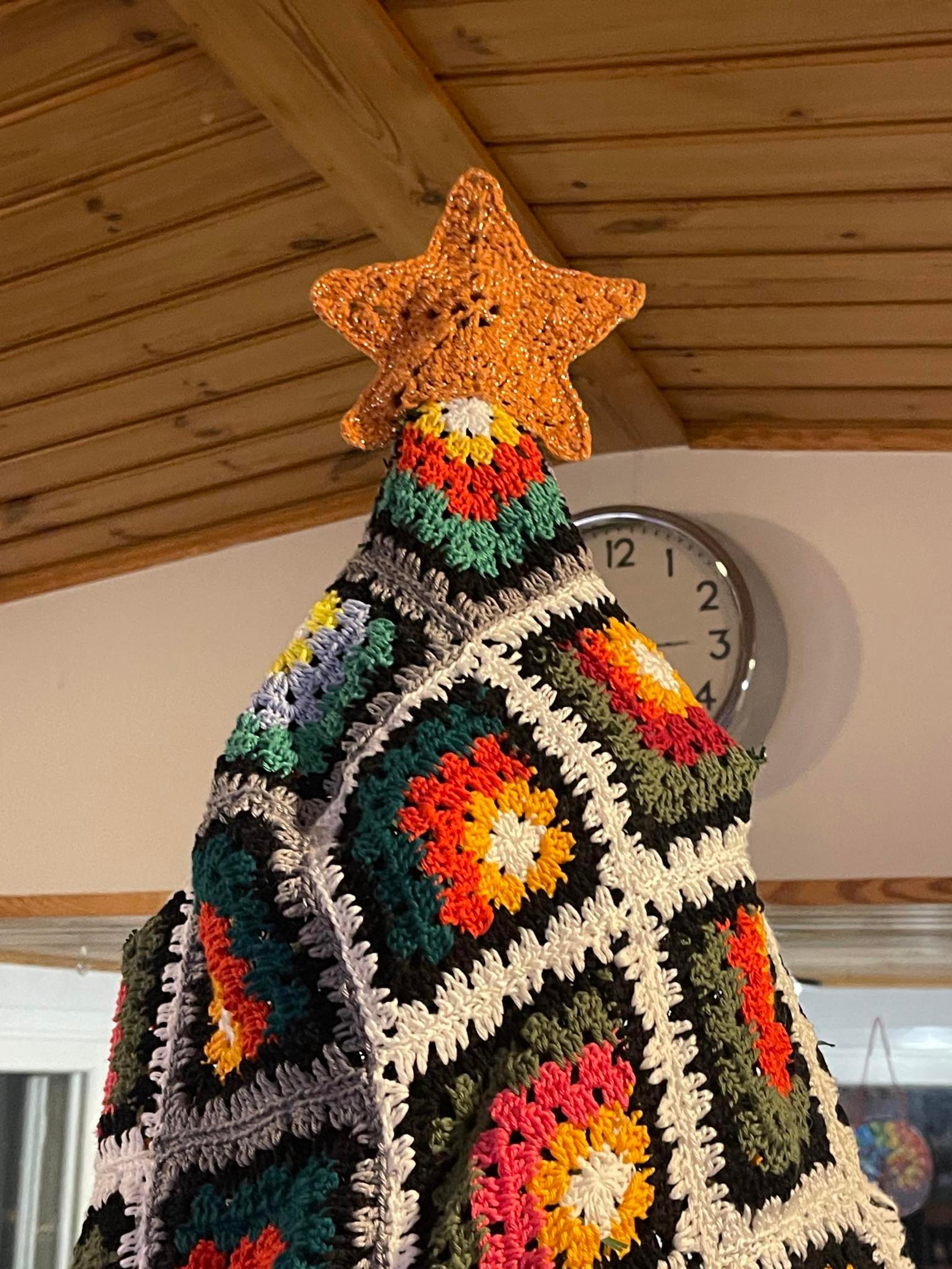
I’ve made two versions of the crocheted Christmas tree. In 2024 I made a shorter one with a frame of chicken wire and wood. This year I wanted something bigger, so I unpicked the squares from the old tree and added more granny squares to build a larger one. This tree has about 300 pieces in total, which I stitched into a slipcover for an artificial tree just over 2 m tall (6′7″).


You set the squares on a diagonal. Why?
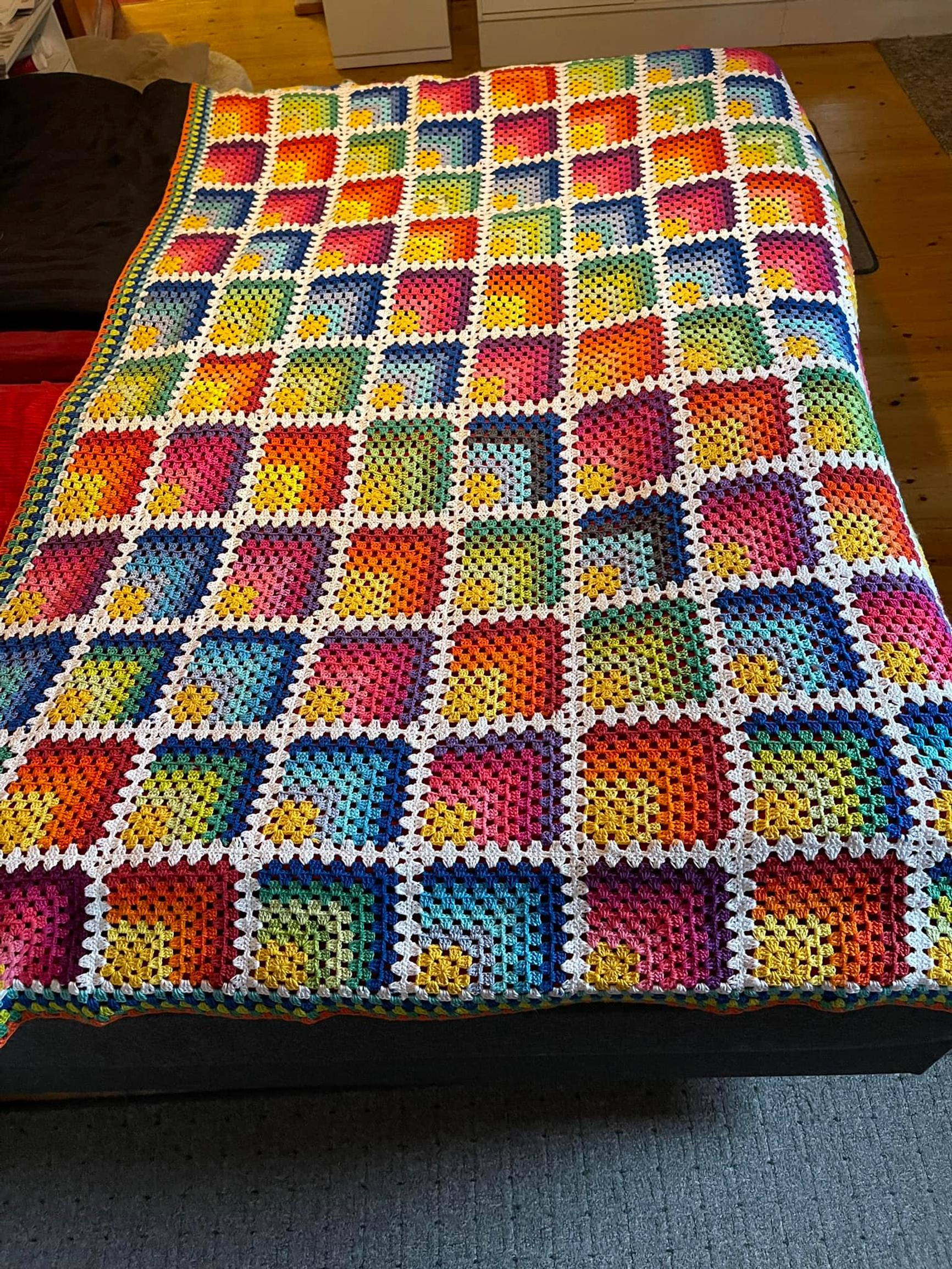
I’ve crocheted a lot of granny squares. Besides the tree, I’ve made bedspreads, for example. I like to crochet the squares starting from a corner rather than the traditional center-out pattern, because the surface becomes a bit more three-dimensional and the colors stand out better. I finish with rounds worked around the entire square.



How long did it take to make the tree?
My plan was to crochet the tree little by little over the year. I didn’t quite manage—other projects got in the way—so I finished it over a couple of months in the fall.
One granny square takes me maybe ten minutes. Crocheting doesn’t really take time away from anything else, because I usually watch TV or read magazines as I go. I only need to look down when I change yarn.
Of course, time also goes into laying out and joining the pieces. With granny-square projects, I do that in stages as I finish new squares. The crocheting is the most enjoyable part. Often with granny-square projects, once the pieces are done, you barely feel like joining them anymore.
What happens to the tree after Christmas?
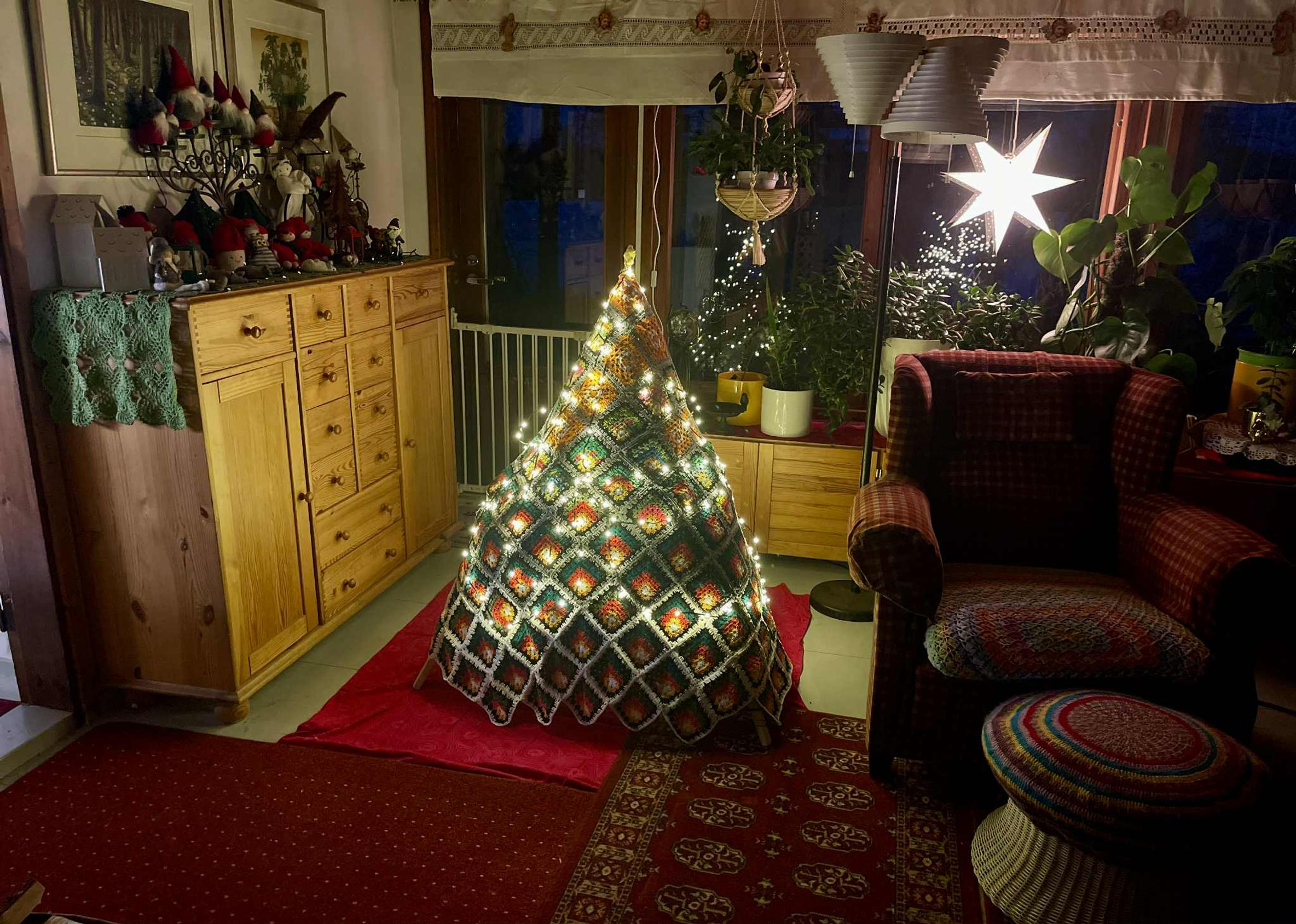
The beauty of a crocheted Christmas tree is that you can enjoy it for a long time. I brought it into the parlor at the start of December and wrapped lights around it. It can stay on display well after the holidays. When it’s time to put it away, I fold it up and tuck it into storage. Next Christmas, a quick airing will do—and then it goes right back to its spot.