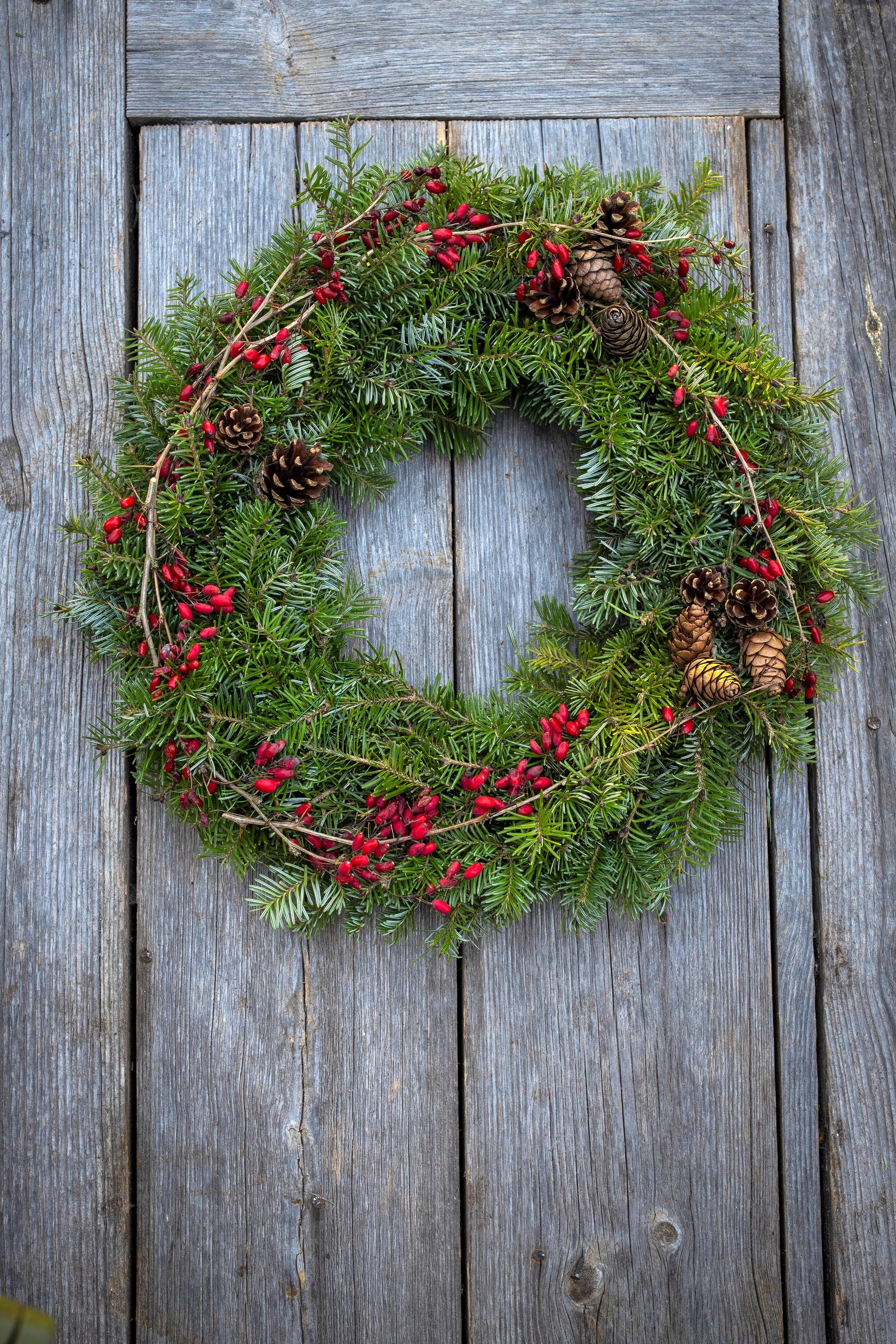
Dreaming of a wreath? Horticulturist Outi Tynys shows how to make one from your yard—or the wild
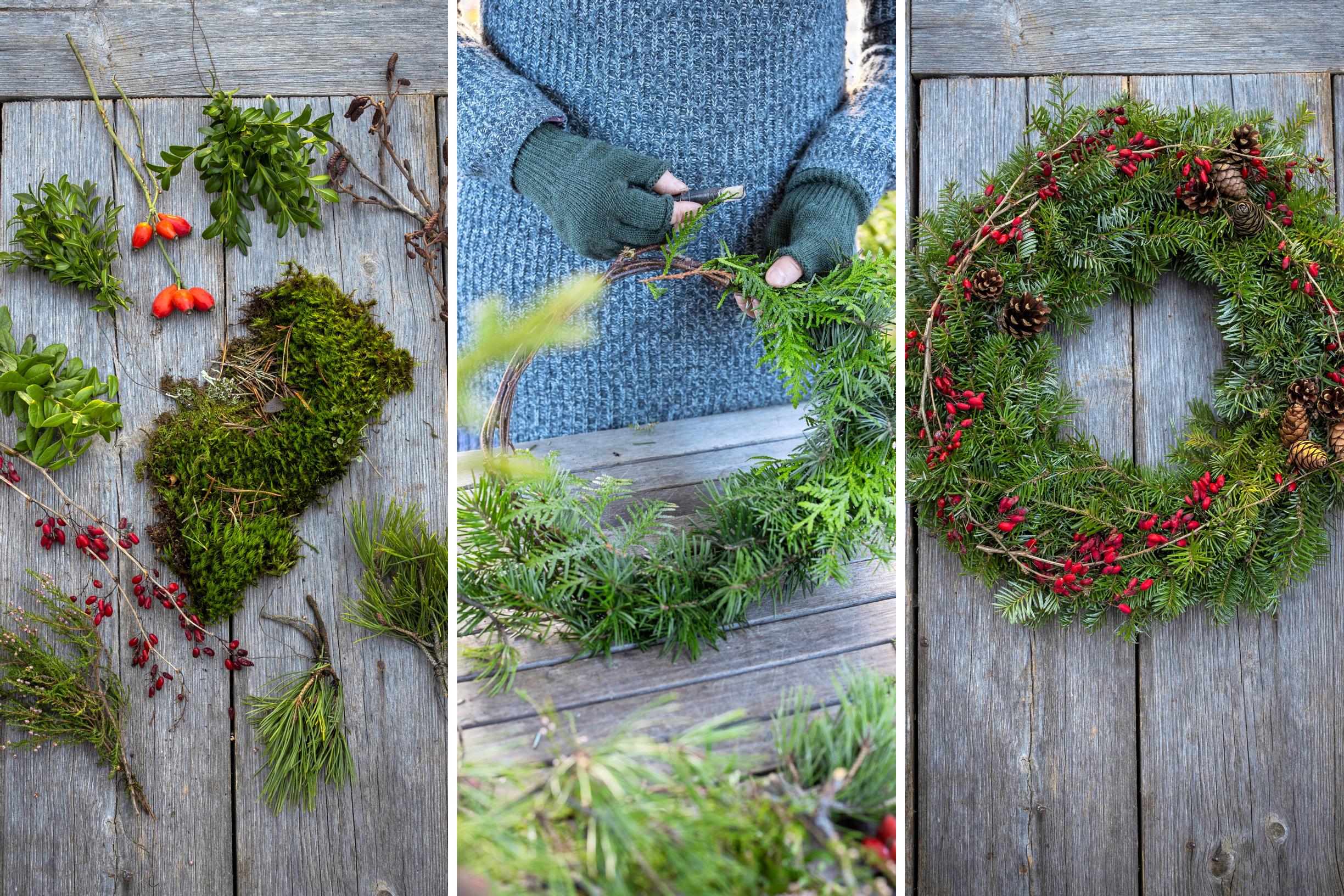
A natural wreath comes together easily with materials from your own yard and the nearby wild. If you want evergreens in your wreath, clip sprigs in early winter only from hardy species.
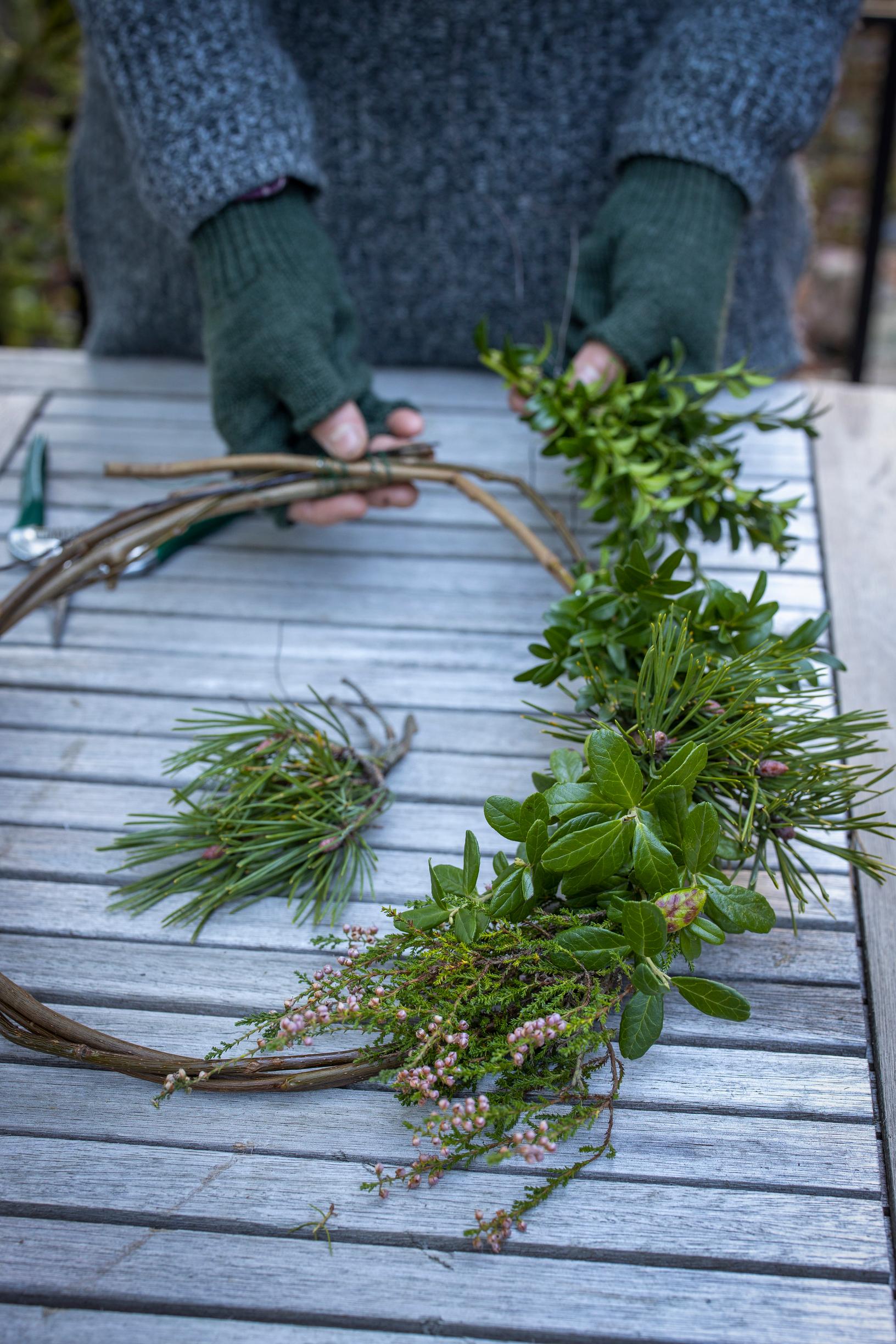
Twist the wreath base into a curve using pliable twigs or vines. Try, for example, the shoots of virginia creeper or branches of blackcurrant or juniper.


Tie the base into a circle or a heart with natural-fiber twine or uncoated wire; both will eventually decompose along with the wreath or in the compost. (If you prefer galvanized or plastic-coated wire, be sure to remove it later and reuse it.)
If you want evergreen branches in your wreath, cut them in early winter only from hardy species, such as arborvitae and yew. When you cut the tip or a side branch above a branching point, the plant will branch out and become denser.


Cut the wire with side cutters or pruners that have a wire-cutting notch. Spray lubricant on the blades and other metal parts—this helps keep evergreen sap from sticking and makes cleanup easier. Sticky fingers come clean with a couple of drops of dish soap and cooking oil.
If you want to gather materials for your wreath from the forest, remember to follow your local guidelines for foraging. In Finland, you need the landowner’s permission to take parts from living trees or shrubs. Collecting dwarf shrubs, lichens, and mosses also requires permission. Without permission, you may gather fallen twigs, cones, nuts, and acorns, as well as bark and birch bark. It’s especially worth heading out after a storm, when there are plenty of fallen branches on the ground.

Don’t overlook the seemingly modest details of plants in your wreath. For example, the purple catkins of alder stand out beautifully against a wreath of evergreens.


Refresh your wreath throughout the winter with cones and berries. For instance, the loose, berry-laden canes of barberry are easy to bend into the wreath’s shape.