This wooden villa was a treasure chest waiting to be saved—with the Finnish president next door
Weathered wooden villa by the sea, Villa Furunäs was on the brink—yet full of charm, rich in history, and offering the space and location a growing family needed. A Finnish family devoted to rescuing old houses has turned it into a cozy, colorful home.
residents Johanna, Pekka and two school-age children.
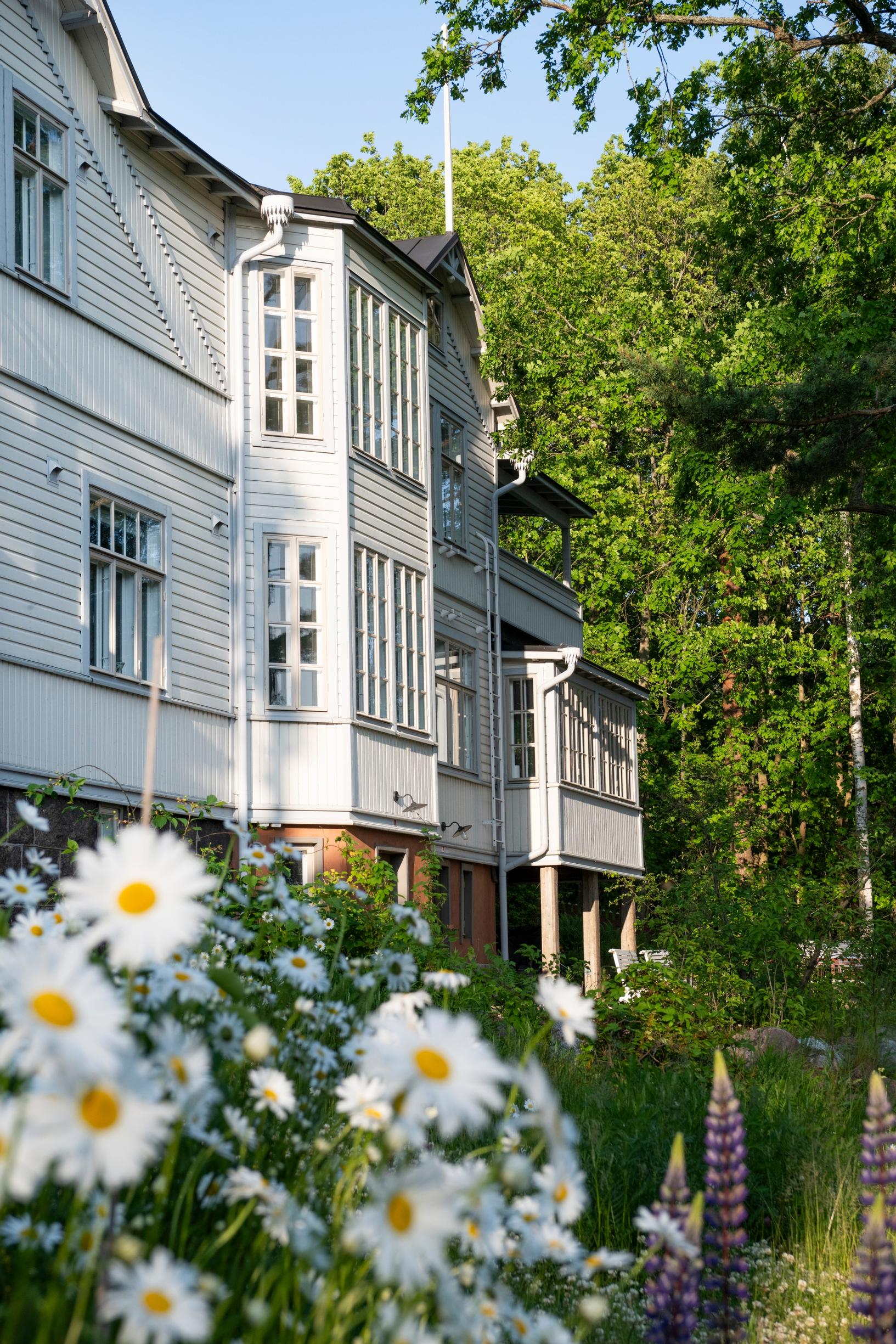
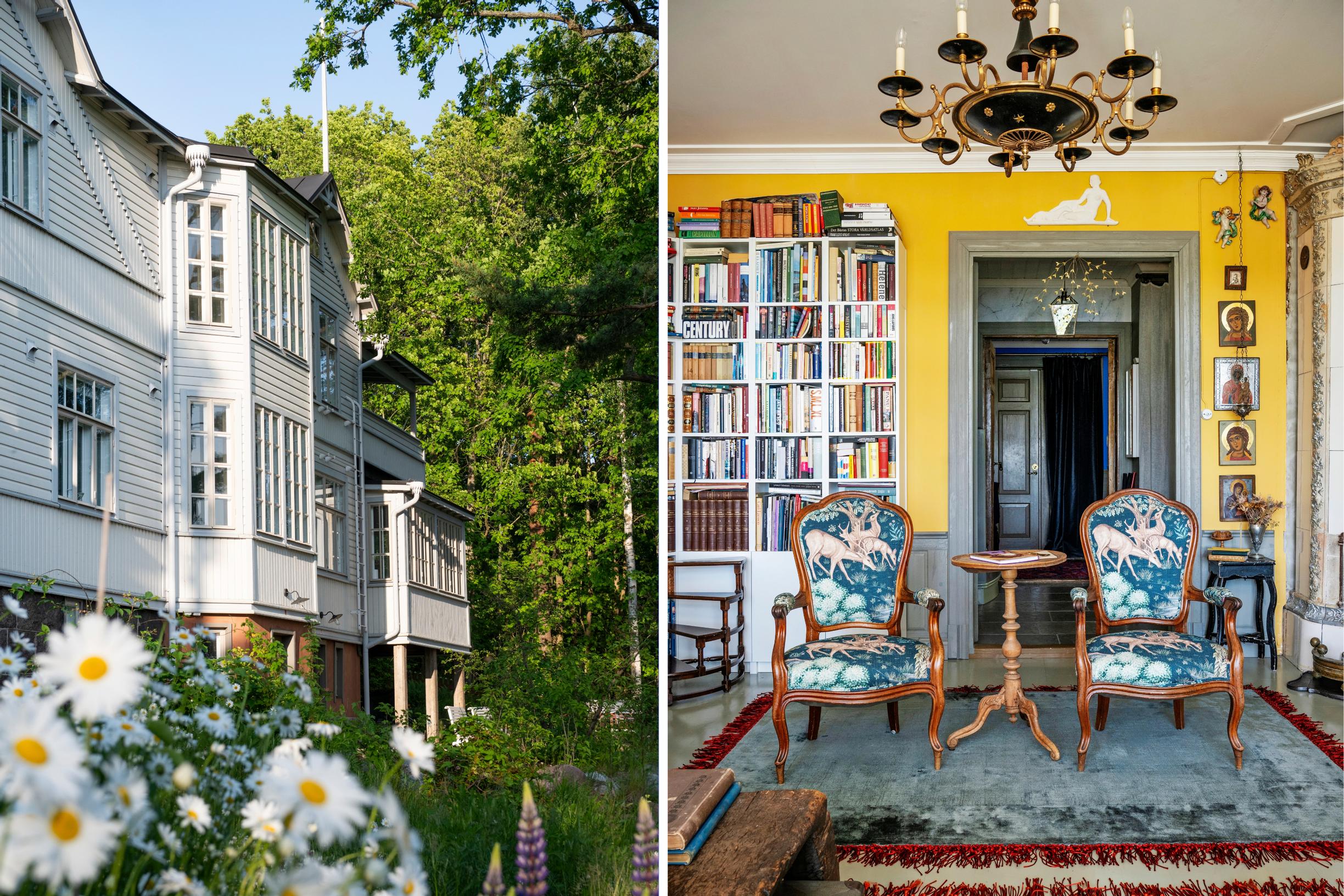
home Villa Furunäs in Helsinki’s Meilahti villa district. The older section was completed in 1893 and the newer in 1903. The villa now contains three apartments; the one shown here is 155 square meters (1,670 square feet).

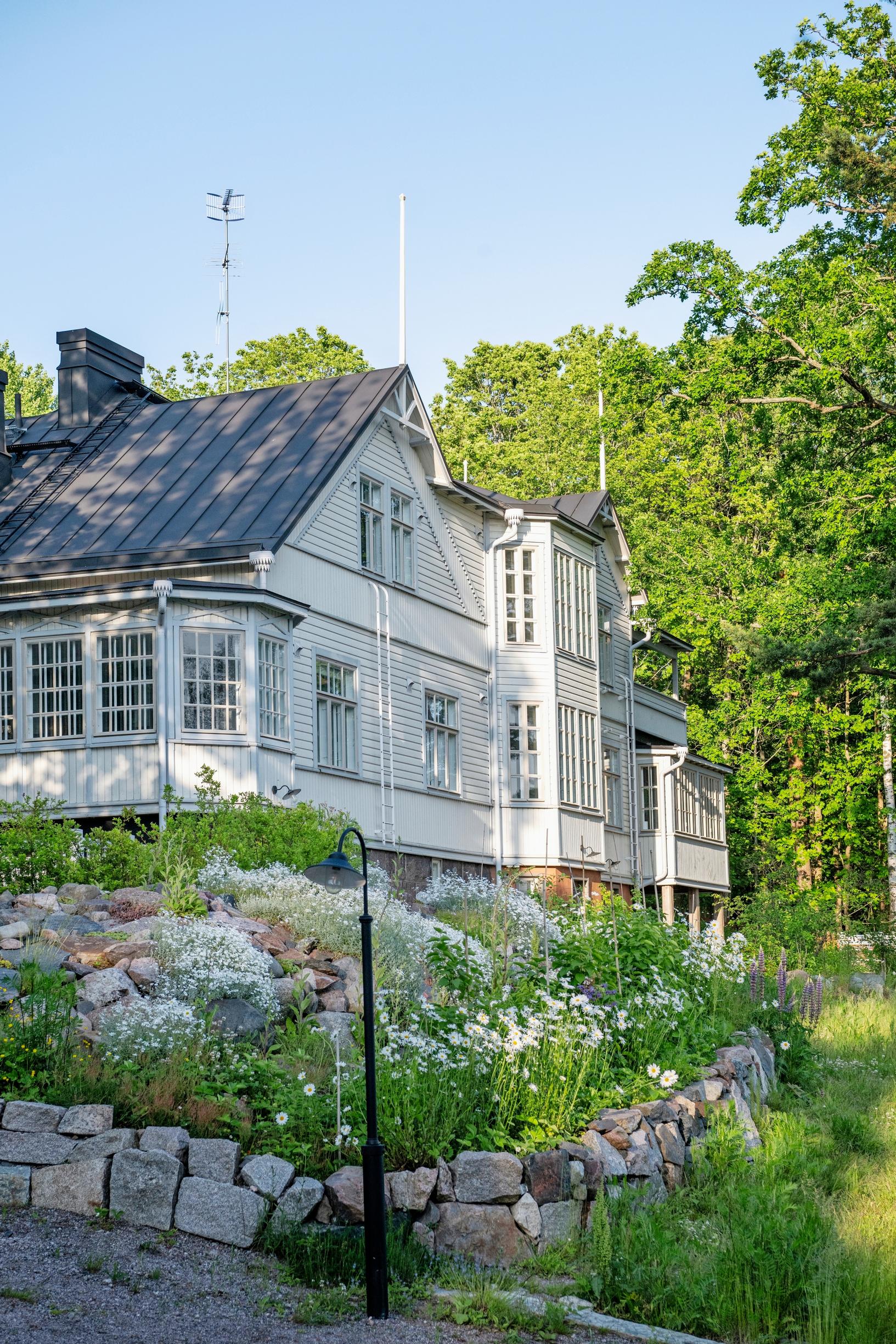
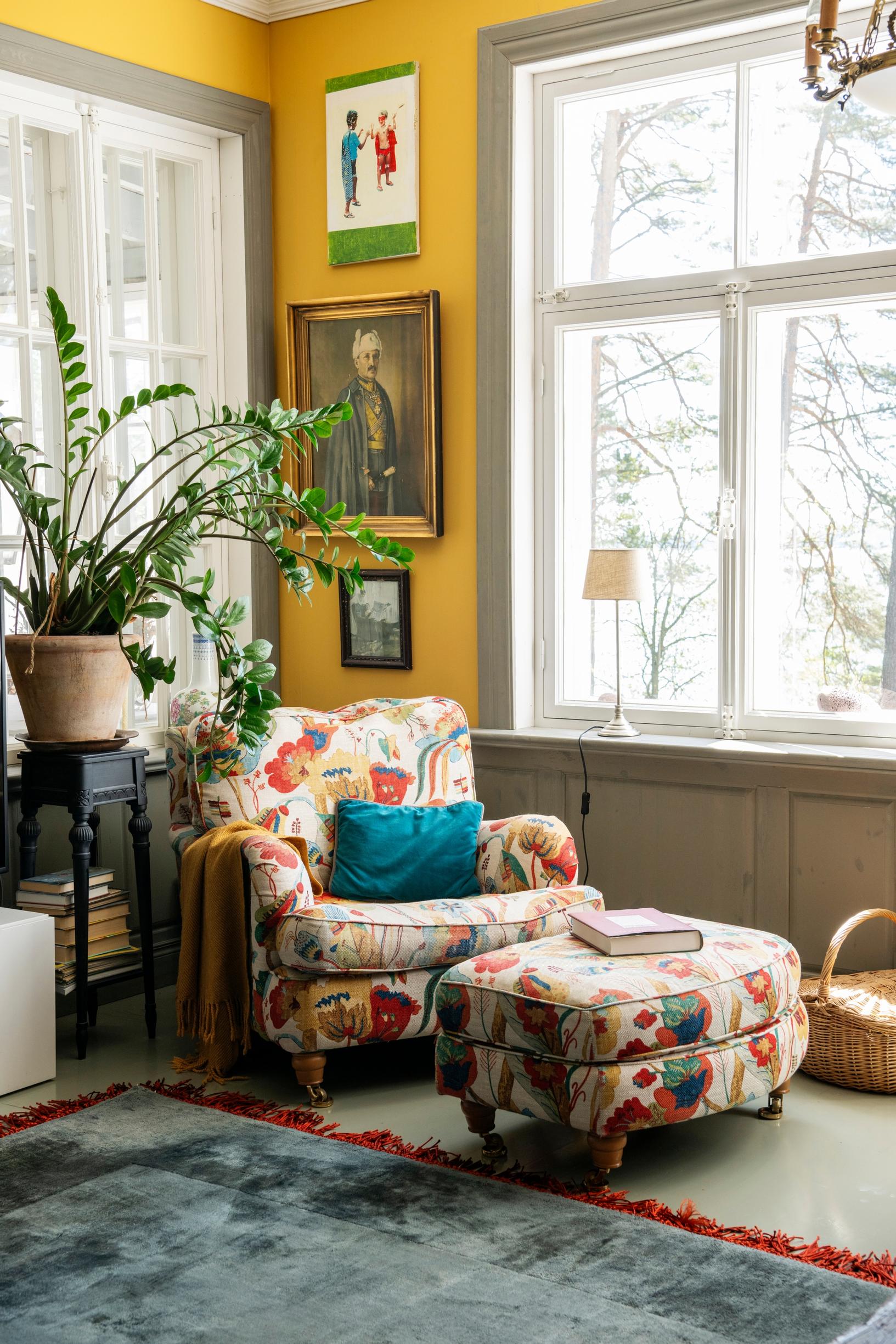
From the living room window you can see down to the shoreline and the road where dog walkers and joggers pass by. To the right lies the Seurasaari open-air museum, and just beyond the tip of the peninsula is Mäntyniemi, the official residence of the President of Finland. The district of Meilahti has many other old villas besides Villa Furunäs, but this one’s perch on a rocky slope is among the most impressive.
Originally, the land in the villa district belonged to Meilahti Manor. Starting in the 1870s, the City of Helsinki began subdividing the estate for the summer retreats of the well-to-do and also with year-round living in mind.
The elongated Villa Furunäs was built in two phases. The oldest part was commissioned in 1893 by mason August Lundell. A few years later, the villa was sold to pharmacist Oskar Durchmann, under whose ownership the villa gained ample additional space and a flourishing garden.
The property once included everything from an outbuilding and a stable to a henhouse and a house converted for summer living. They disappeared from the grounds long ago.

Villa Furunäs gained its longest-standing residents in 1916, when the Kilpinen family bought it as their summer place. The family’s son, Finnish composer Yrjö Kilpinen, moved into the house in 1918 with his pianist spouse Margaret, and in a cigar-scented study he wrote hundreds of songs loved by Finns.
The villa emerged unscathed from the early February 1944 bombing in Helsinki, but a mine blast blew up the sauna and gave the live-in caretaker a fright. At times, other members of the Kilpinen family also lived in the house, and in the 1950s the tenants included a young and enterprising Kirsti Paakkanen, who later became known as the owner and CEO of Marimekko.

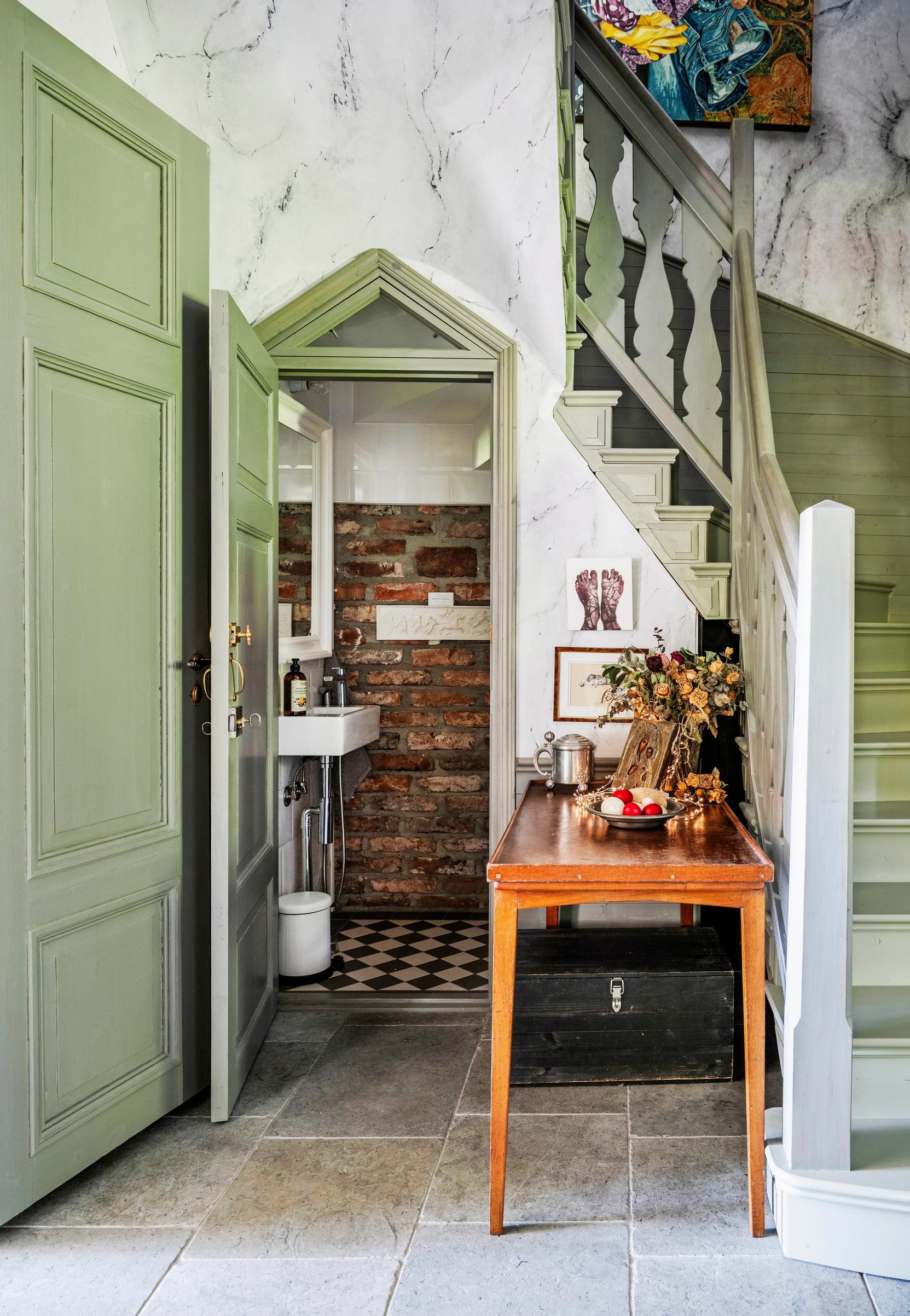
Villa Furunäs’s decline began in 1967, when the city bought it from the Kilpinen estate and converted it into rental units for Helsinki’s visual artists. The garden ran wild, and the building was patched with ill-suited methods and materials—sprayed polyurethane foam insulation among them. Much of the original fabric and the layered interiors from different eras were lost for good.

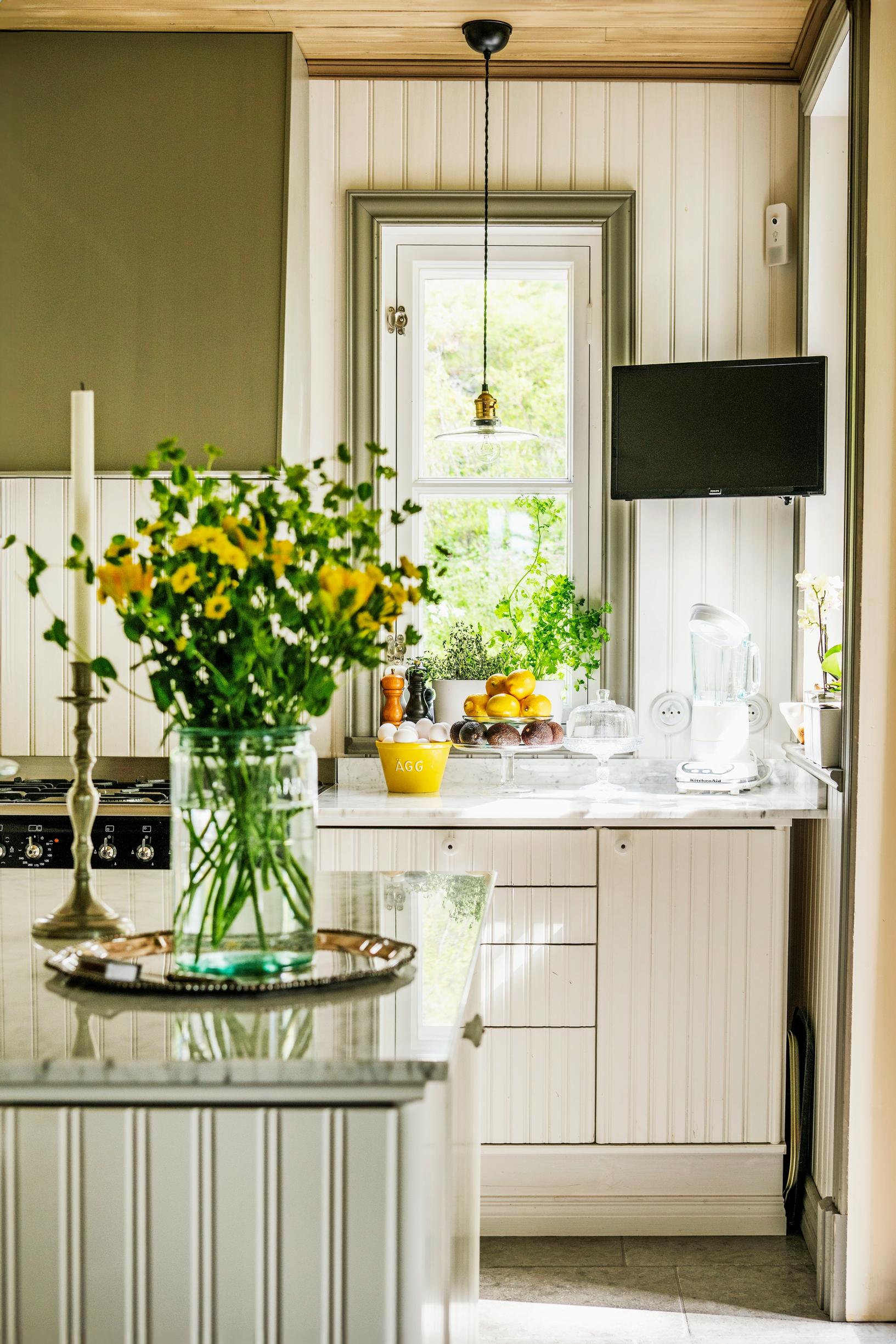

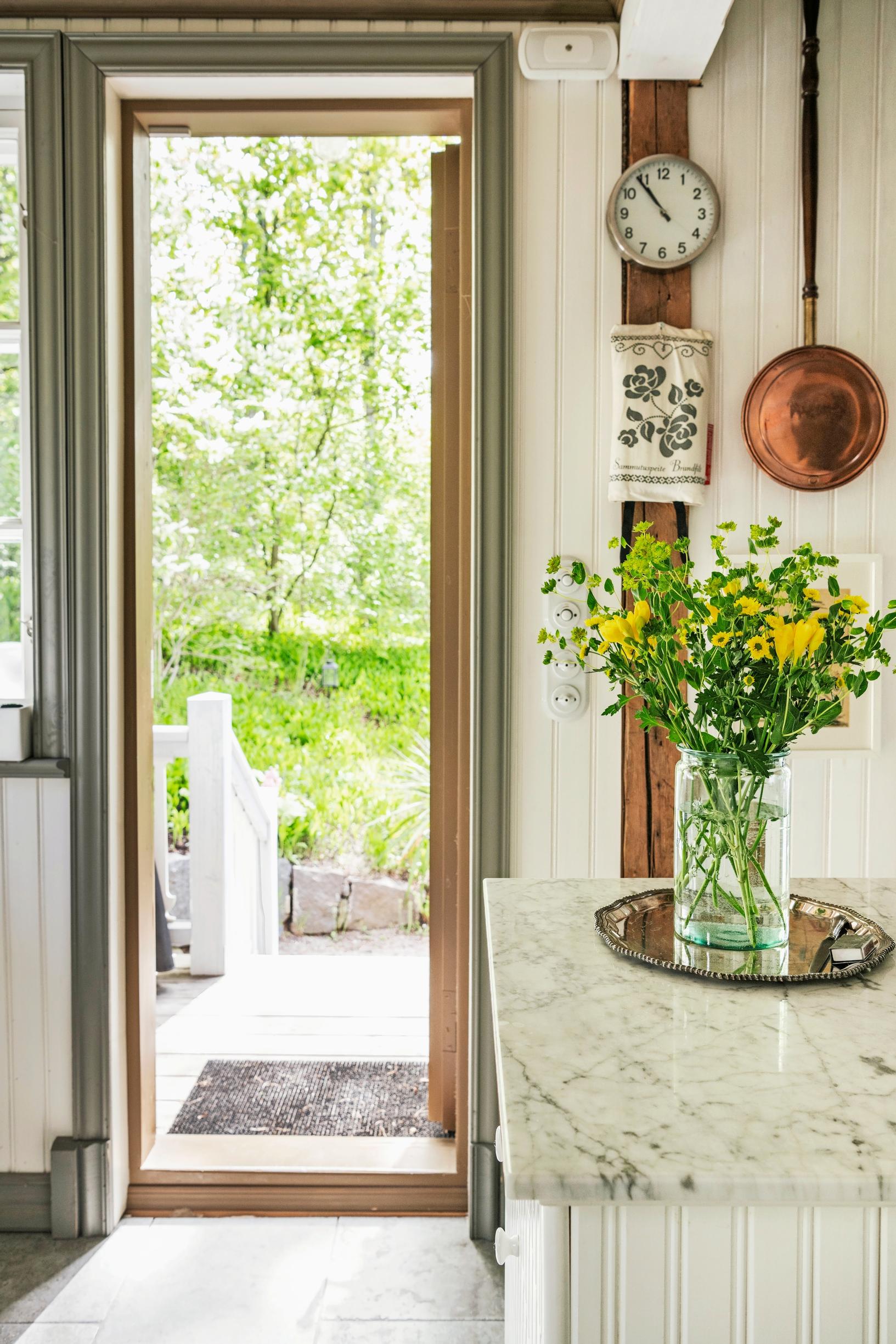

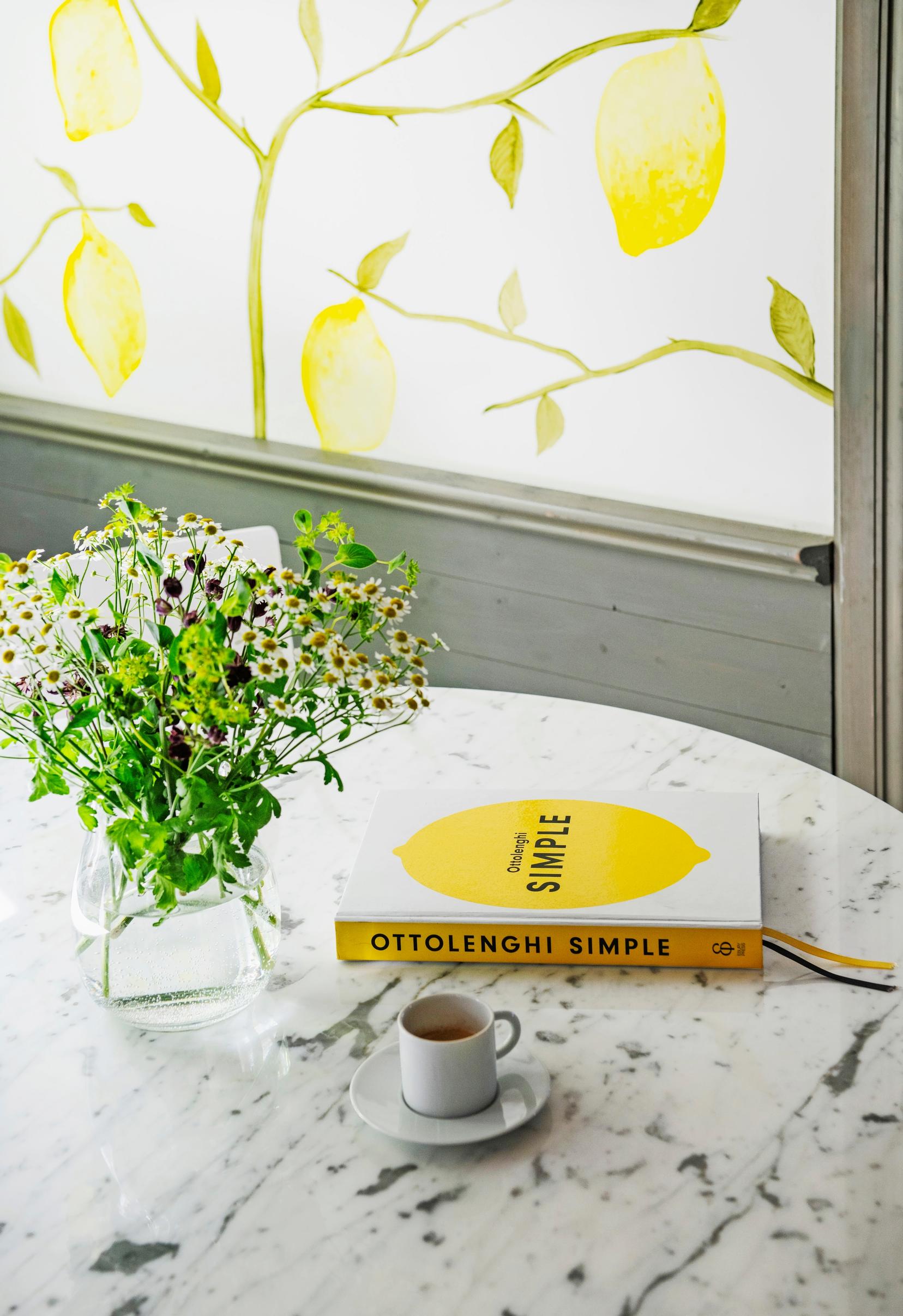
When the city decided in 2014 to sell Villa Furunäs, a family moved in—one that had already restored an early-1800s bakery cottage on the other side of the villa district.
“I’ve liked rescuing and restoring old houses—or maybe I’ve drifted into it. I’ve come to see it as a duty. This villa, if any, needed saving. Villa Furunäs was on the brink, but it had not only incredible charm, but also the extra space our family needed, and a fantastic location,” says Johanna, the mother of the family.
The truth revealed itself gradually. The sheet-metal roof turned out to be leaky, even though the seller’s condition survey emphasized that the roof had been renewed and was sound. It failed to mention that sealant was missing from the seams and the sheets were peppered with large holes here and there. There were signs of rust, too.
“The whole building was crying out for help, and we didn’t start by inspecting the part that was said to be fine. The unexpected need to replace the roof ultimately made a significant dent in our budget,” Johanna recalls.



As the rescue work progressed, so many compromised structures and other damage emerged that, at the height of the renovation, Villa Furunäs looked like a rickety skeleton. The exterior siding was completely replaced to match the original, and repairs to the log frame behind it alone took over a thousand work hours. Both the new owners and skilled log builders did the work.


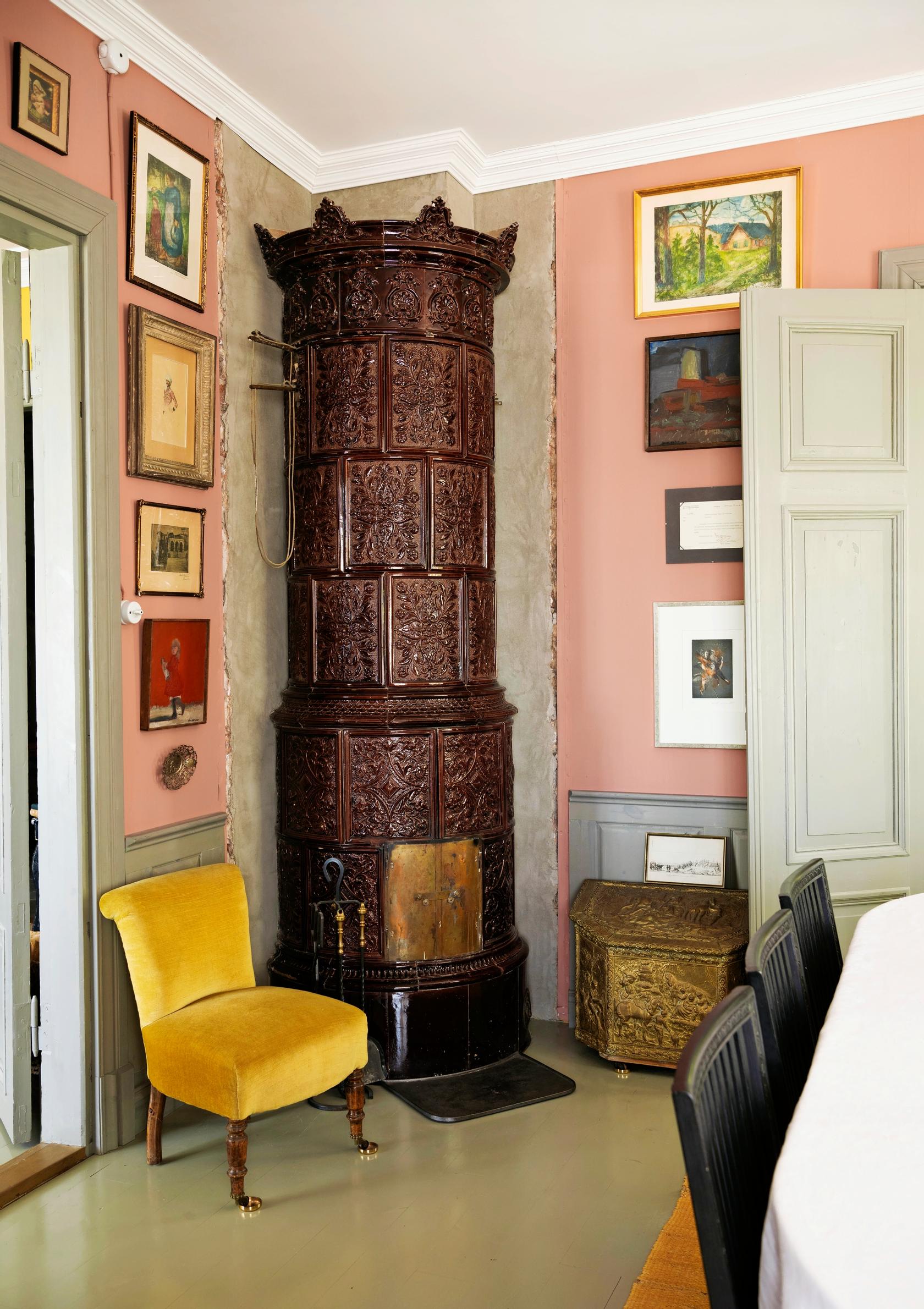

As if by some miracle, the tile stoves that had survived—though condemned—were restored and put back into use. Moldy bathrooms were torn out and modernized. Admiring the current ones, it’s hard to imagine that as late as the late 1980s water was carried in from a well and visits to the toilet meant a privy at the far end of the yard.
Skip after skip of trash and unusable junk left by previous occupants was hauled to the waste station. Only a refrigerator on wooden legs—estimated to date from the 1800s—was kept, as it is from the villa’s earliest days. As a mark of care, Johanna sourced old espagnolette bolts for the windows and restored and painted them herself.
The family moved in 2019.
“Our base heating comes from geothermal, but in the first winter I tested the power of the tile stoves and lit fires in all seven of our fireplaces. After that, we were sweating—right along with the house.”

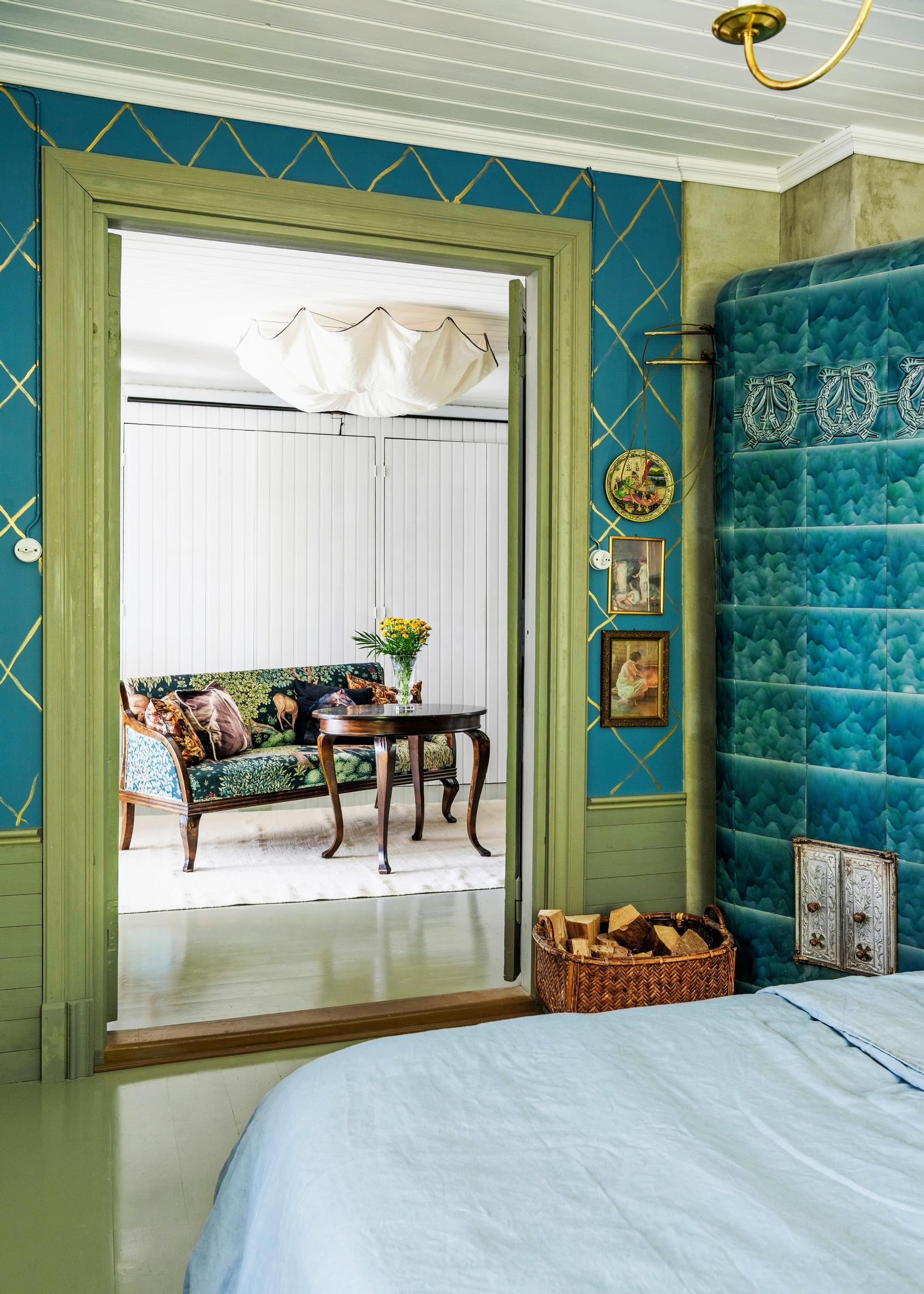

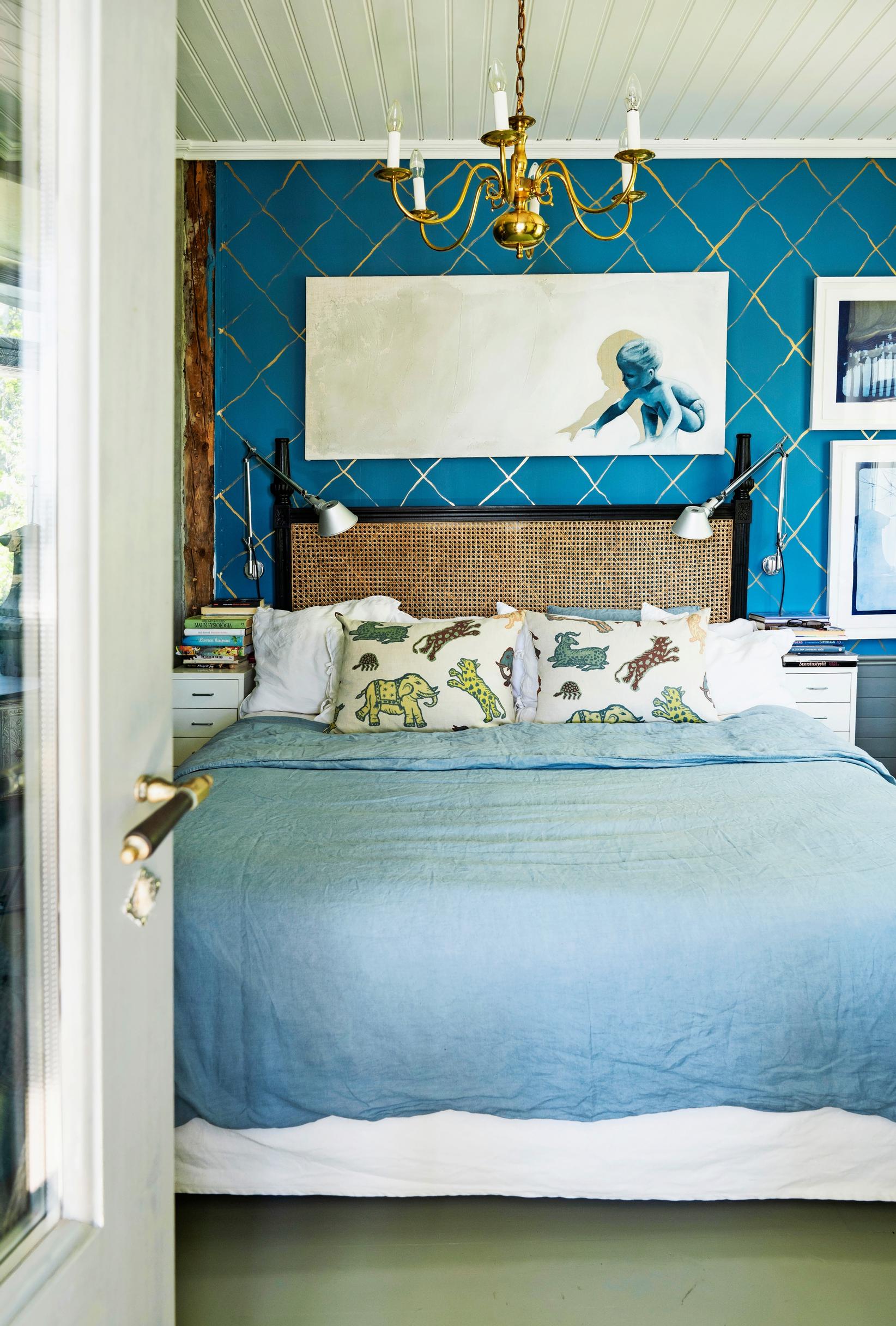

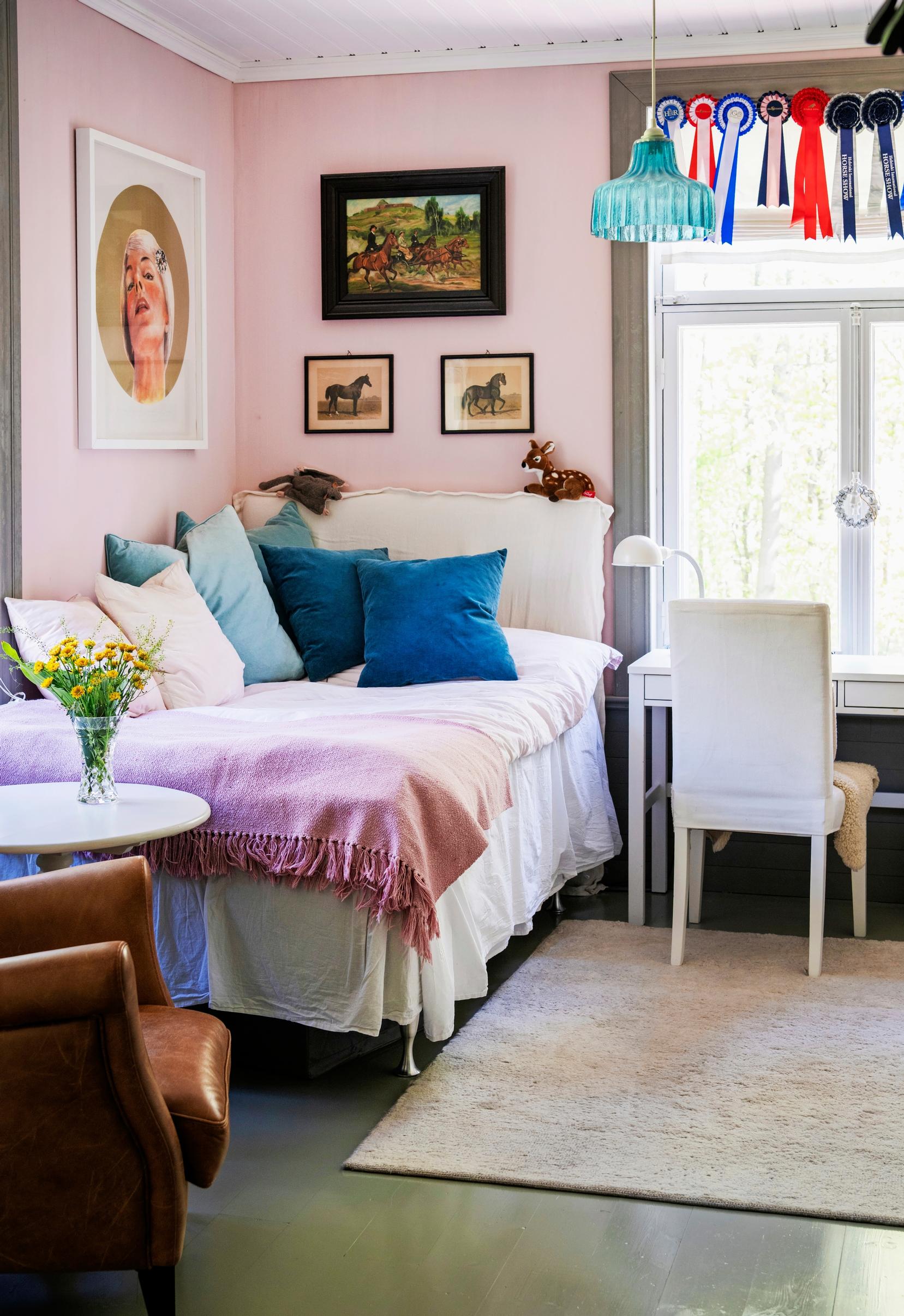

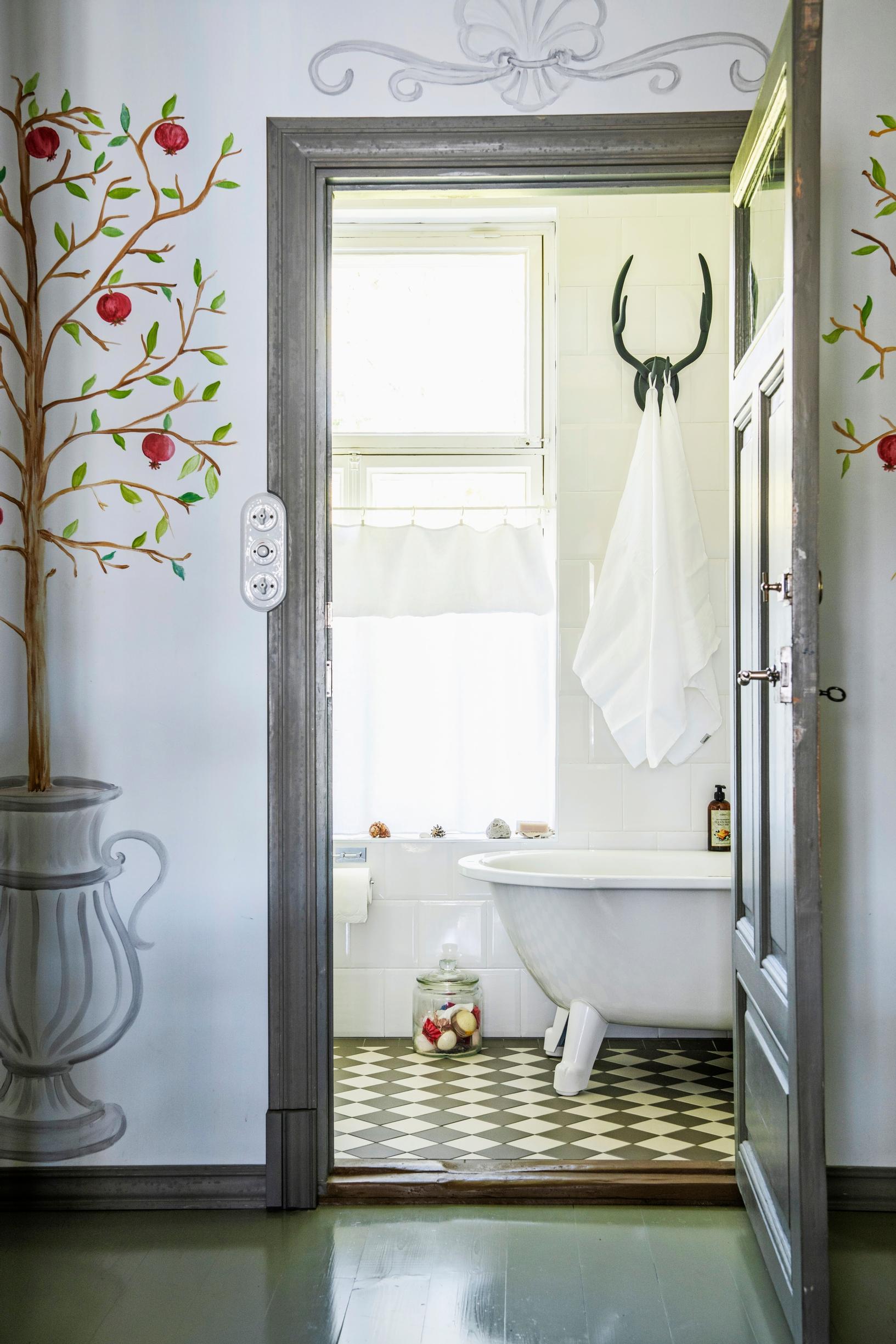
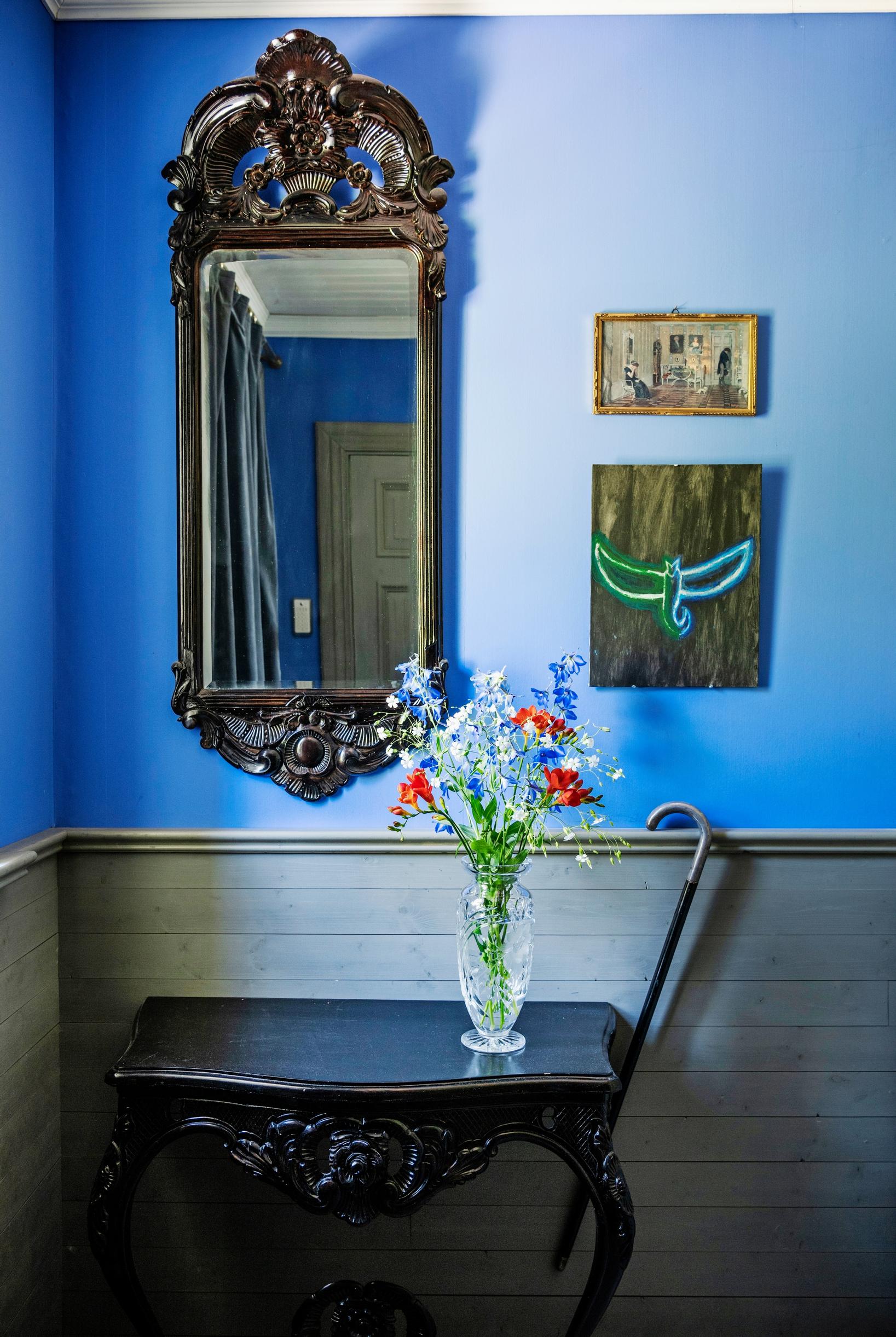
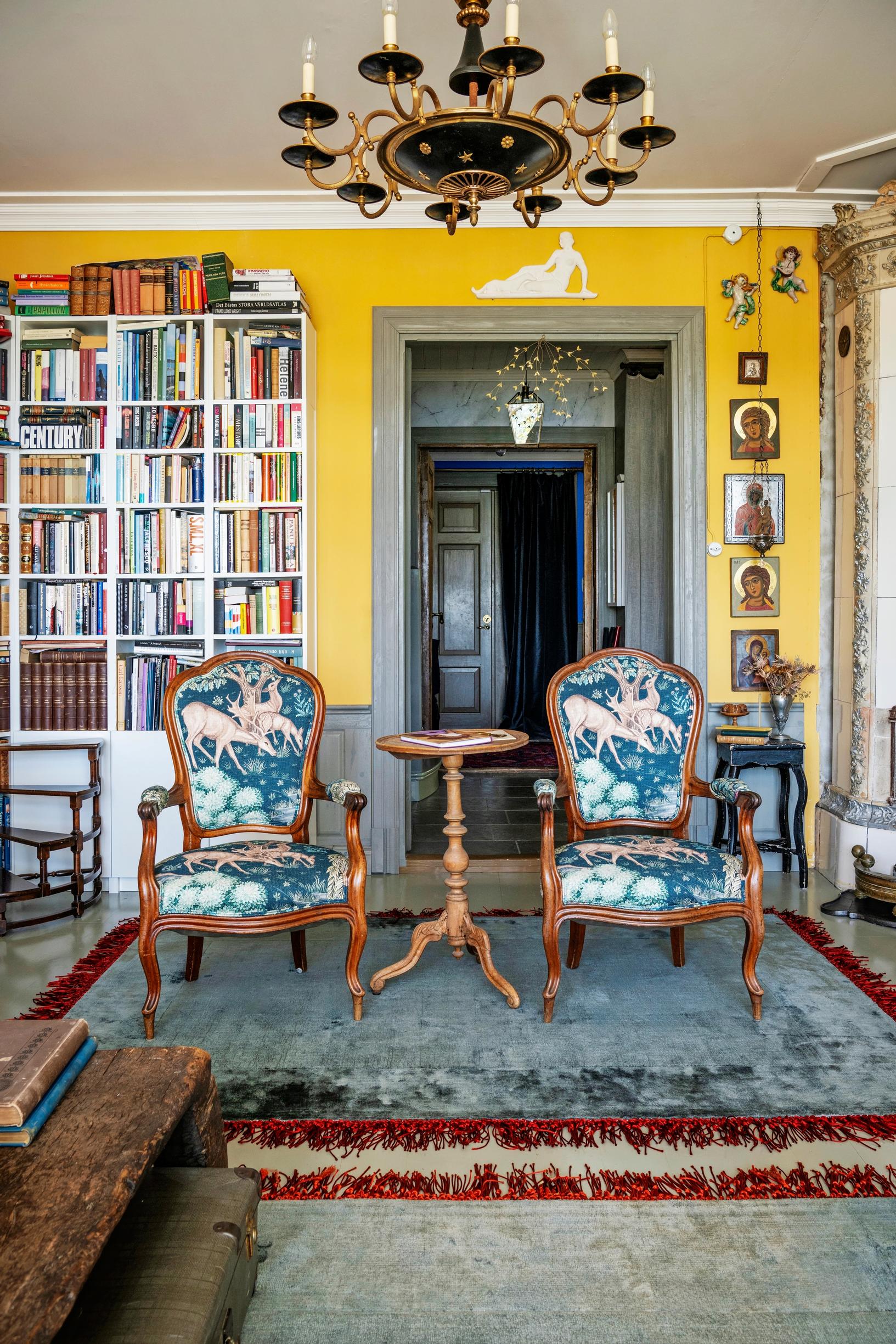
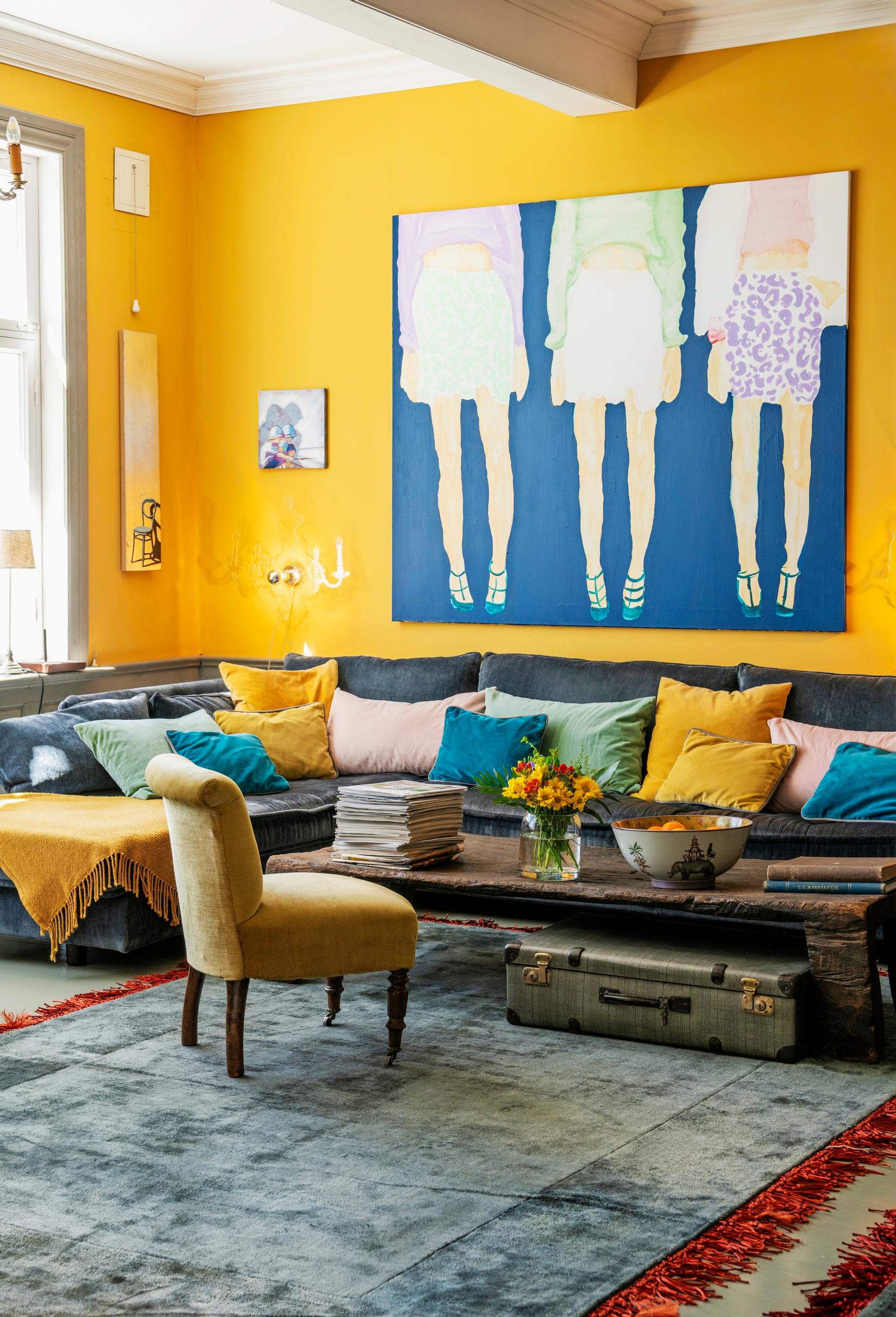
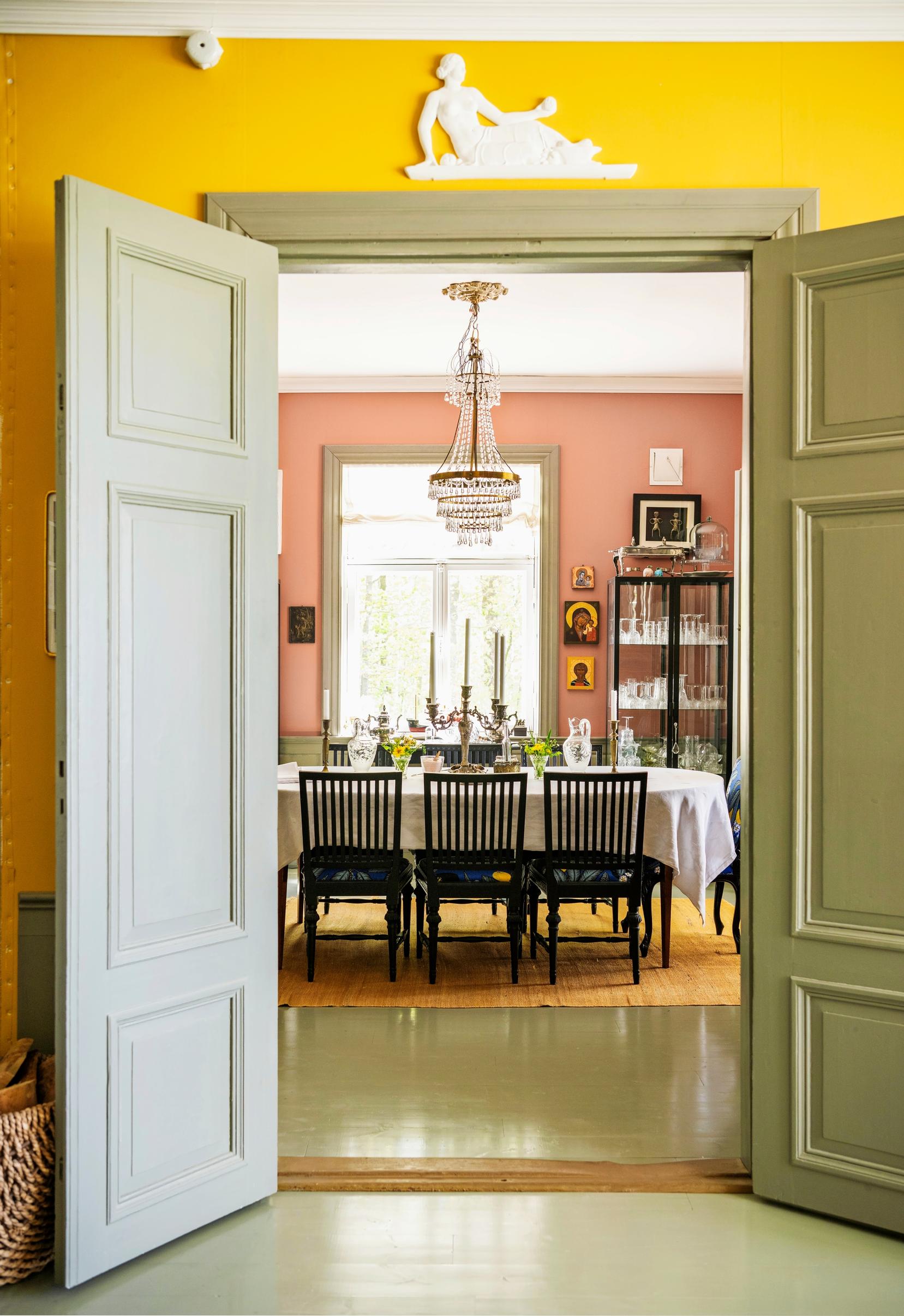
The colors honor the hues of the stoves in each room. Painting different rooms in different colors follows 19th-century conventions for decorating and color use. All the walls are covered with stretched lining paper, and the paints are linseed-oil based, with shades Johanna mixed from earth pigments. The ceilings are finished either with lining paper or beadboard paneling.
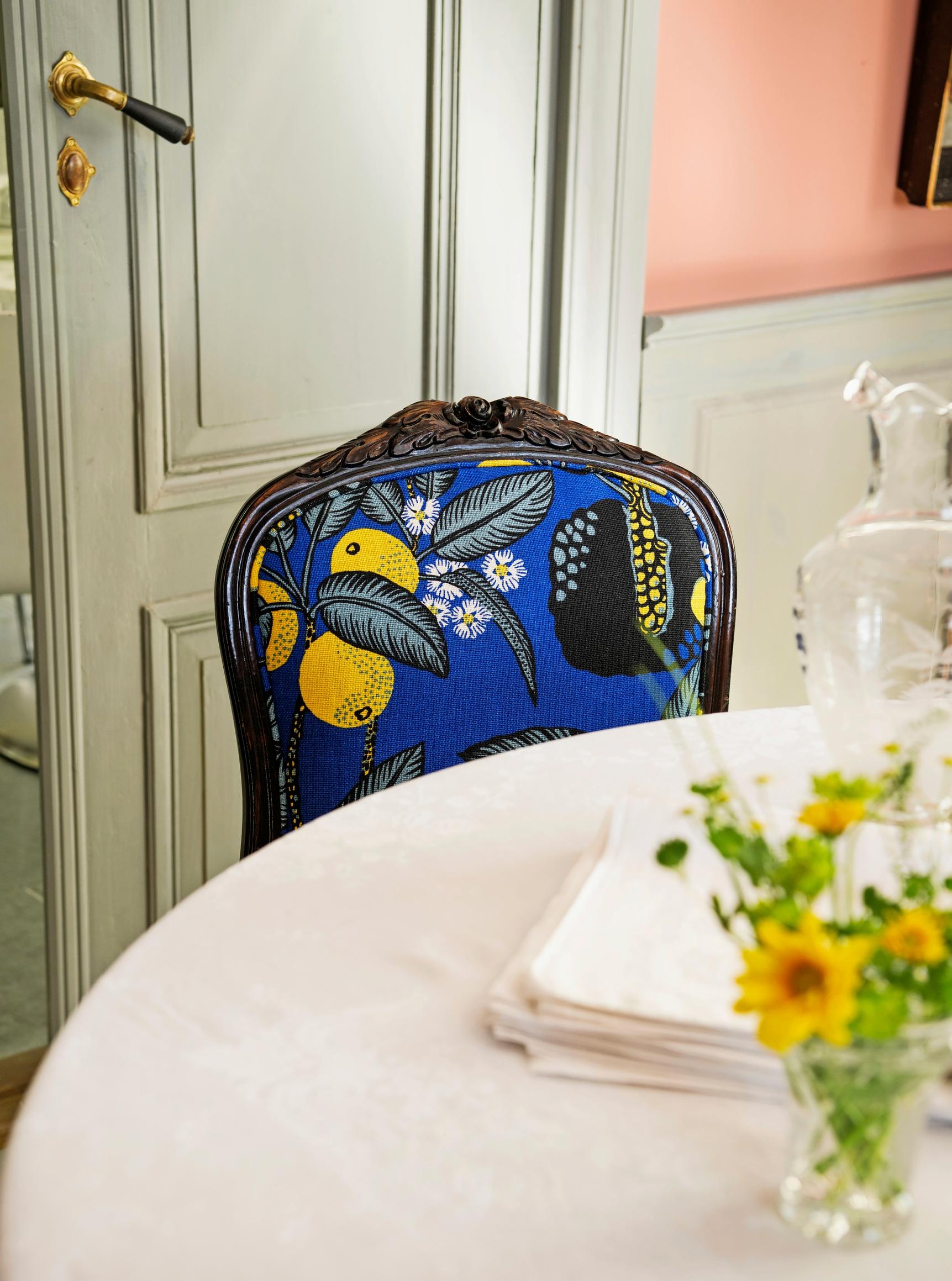
The decorating style is abundant and layered: paintings, books, objects, and textiles are everywhere. Several striking chandeliers hang from the ceilings, with crystal or without. Some furniture Johanna has repainted, some she’s had reupholstered, and some are allowed to look exactly as time has made them.
Since the current owners moved in, Villa Furunäs has hosted numerous family celebrations and other gatherings—the lofty rooms seem made for joyful get-togethers.
New work opportunities have steered the family, at least partly, out into the wider world—and the house is looking for new residents.