

“When my mom died, knitting saved me”—now Marjut’s wool socks carry on her mother’s legacy
Three years ago, 53-year-old Marjut Ruusuvaara lost both her mom and her pet within a short span. She remembers nothing of what followed, but even in the worst times of grief, Marjut knitted wool socks with the colors of joy.
“The panic attacks hit like tsunamis. Panic rose from the pit of my stomach, and I couldn’t stop it. At worst, one hit every hour. Each time I thought I was going to die.
The attacks started in the spring of 2022, when my mom died suddenly. Because of her illnesses, my mom had moved in with me when I was in my thirties, and we lived together in my adulthood for more than 20 years.
I don’t remember anything from the time after she died. I know I went to work the next day like a zombie. Three weeks later, my beloved dog died. I didn’t know how to handle any of it, and my head couldn’t keep up with the fact that I lost two family members so quickly.
After my dog died, I went on sick leave from work, and I don’t know how my days passed. I probably slept a lot. Later, my daughter and my friends told me I was never left alone for a moment because of the panic attacks.
As it turns out, I didn’t stop knitting. Looking back at photos from then, I see the lovely wool socks I’d managed to finish during the very next summer. Neither my colors nor my skills had vanished.
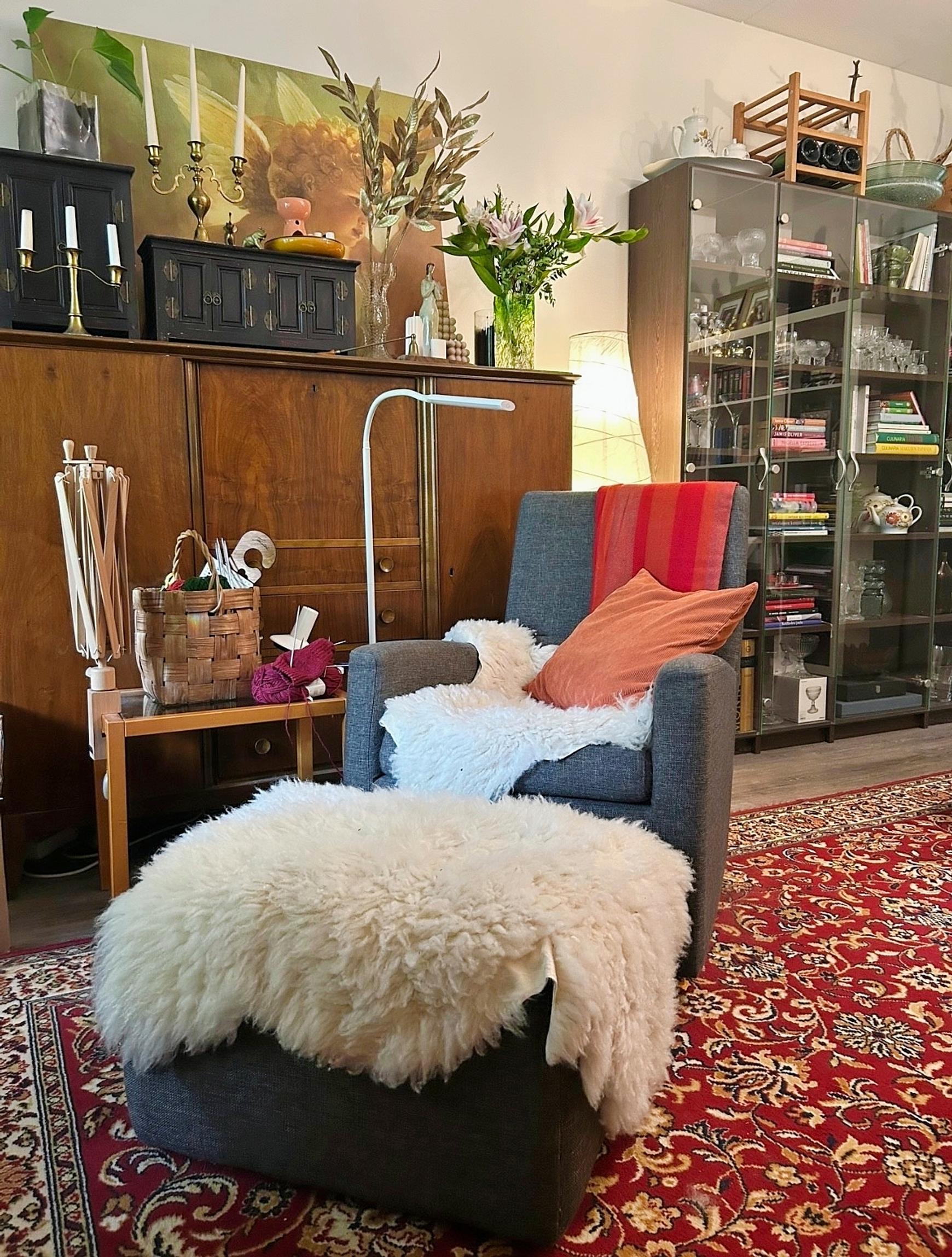
Maybe it was automatic. When I sat down in my knitting chair, I started to knit. In that moment I didn’t think I was just knitting; I thought, this is therapy and a way of soothing myself. I understood all that only later.

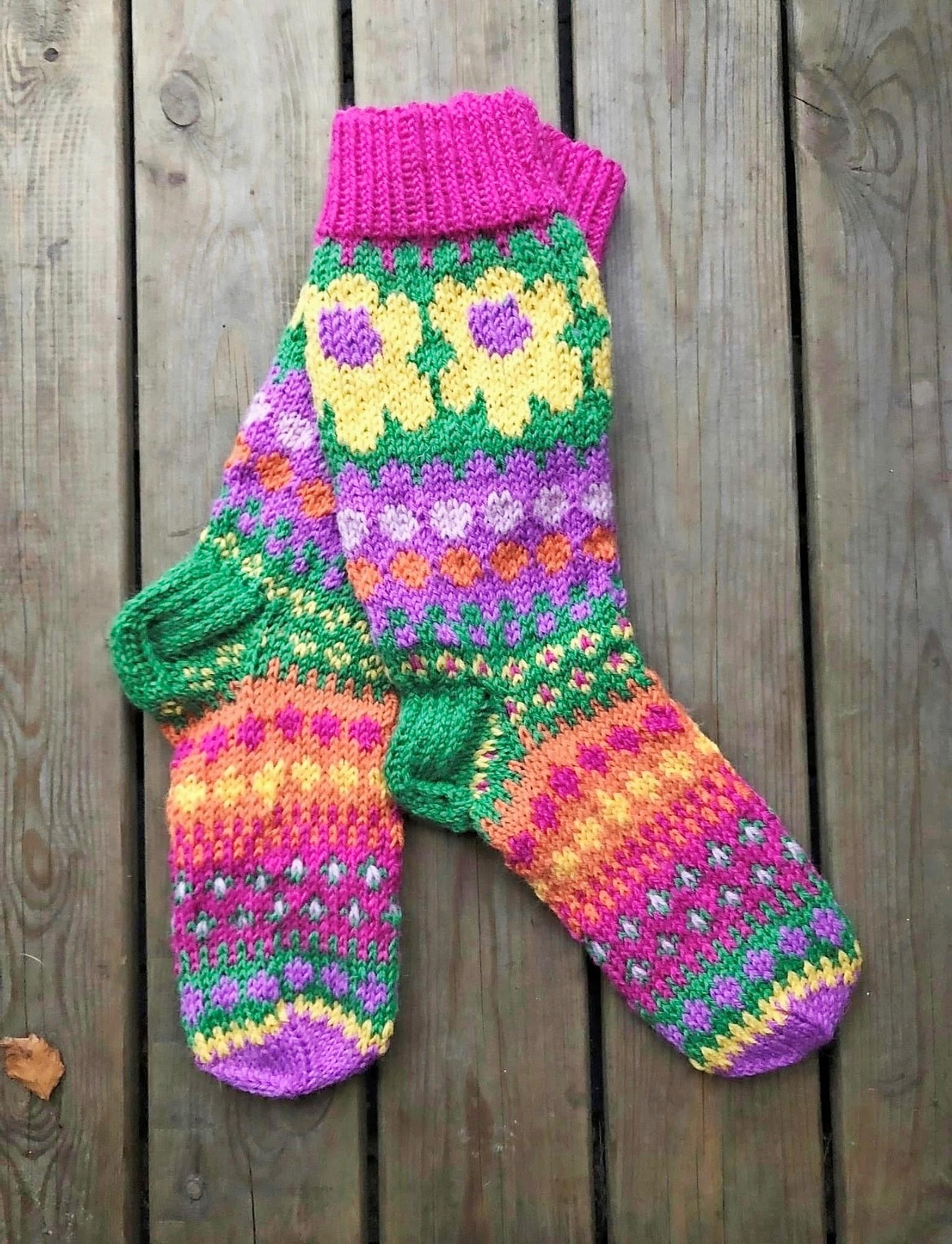

I have been knitting and doing crafts my whole life. For my kids, I made toys and sweaters that had a messy wrong side. I didn’t mind, because what fascinated me were the yarns and the tools, not the end result. Following patterns had never been my strong suit.
In 2010 I realized my marriage was over. My children were little, and I had a full-time job. The breakdown of the family was a heavy blow. I felt a need to find something that could teach me new things and challenge my concentration so that I couldn’t think about anything else. I decided I wanted to knit socks.
Maybe it was a psychological thing: wool socks symbolize warmth, love, and a safe home. I thought it would be wonderful to learn to knit socks that would delight the people I love most.
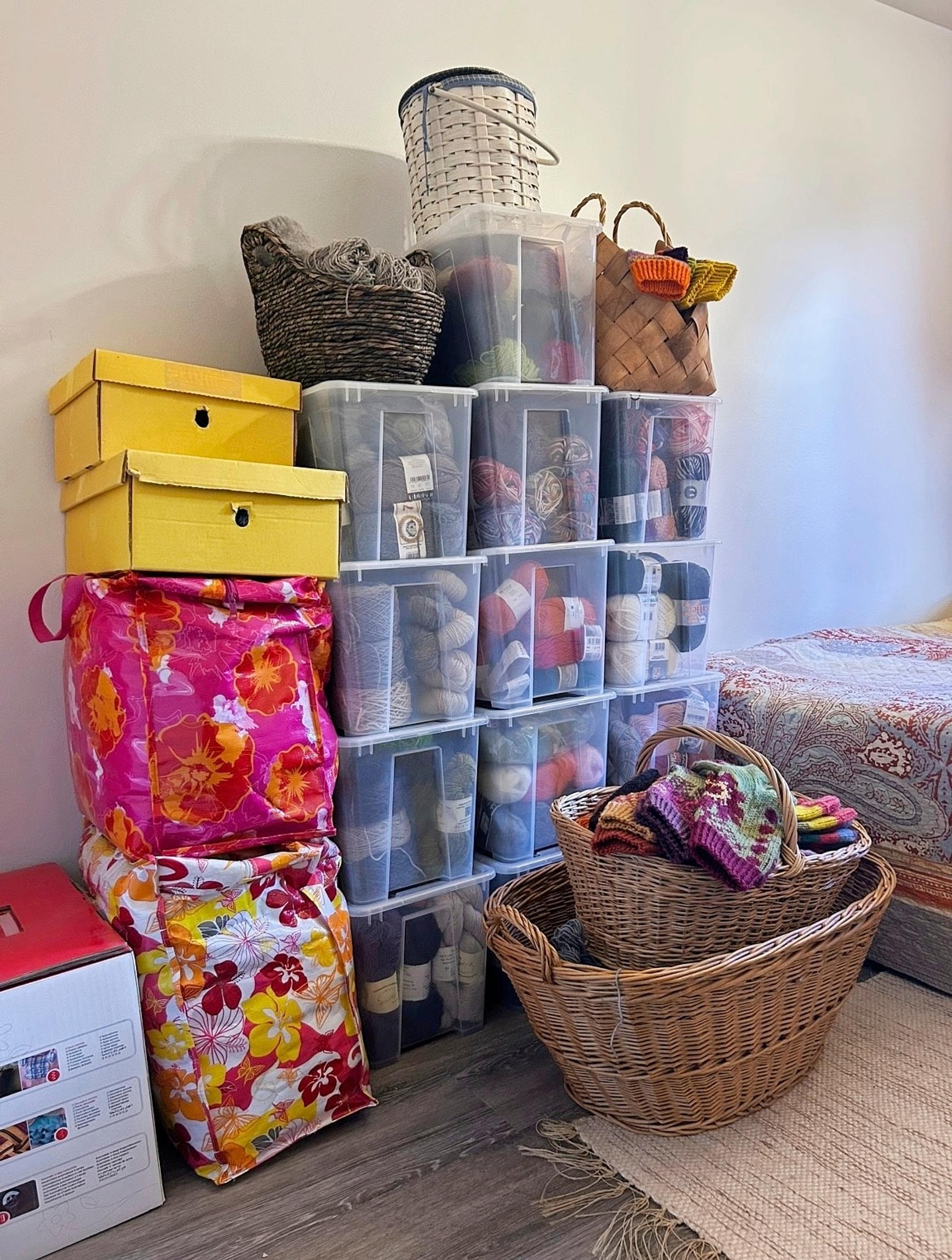
I started hoarding yarn from stores in the neighborhood and from my mom’s stash. I could knit simple ribbing and legs, but the heels—oh hell, how hard they were. I just couldn’t understand how to make them.
Mom was living with us already back then, and she was a craftsperson who could do everything. Our relationship had been stormy over the years, and around her I regressed to my 13-year-old self. So I knew she was the last person I should ask to instruct me. Even so, Mom started teaching me how to knit a heel using a pattern that had circulated in our family for over a hundred years.
It turned into a shouting match. When Mom asked me to turn the work, I yelled that I didn't understand how. When you teach someone, you shouldn’t assume they understand the instructions the same way you do.
In the end, we made a deal: Mom would knit the heels and I’d do the legs. I churned out legs at a furious pace, but Mom was slow. One evening I decided I wouldn’t go to bed until I learned to knit the heel myself. By morning, my first self-made heel held together.

When the family was breaking DOWN, knitting socks was my salvation. It was my own little time, something I carved out time for even if the food was boiling on the stove. The kids got used to me yelling at them to wait while I knitted one more row. While knitting I could sink into a state of focus where nothing made me cry, stressed me out, or distracted me. I focused on something that would bring someone else happiness, gratitude, or joy.
Knitting helped me get through the divorce, and the obsession changed my life completely. In 2013 I started doing crafts publicly and opened crafts accounts on social media. Now I’m also making a craft-themed book and podcast.
“I could sink into a state of focus where nothing made me cry, stressed me out, or distracted me. I focused on something that would bring someone else joy.”
The divorce and the losses triggered similar reactions in me, but I’ve only now understood how they're connected. Both times my family fell apart and I curled up inside. I had panic attacks and felt like I couldn’t breathe. I was helpless, which I usually am not.
During the divorce I had a mom-shield: because I was caring for two small children, I couldn’t sink completely into darkness. After my mom and my dog died, I was alone and, in a different way, I could let the situation wash over me. I sank deep into grief. They suspected depression, and I took medication for a year that dulled my feelings. I didn’t laugh anymore, so I stopped the medication on my own.
I started keeping myself busy. In my freelance years I had learned the importance of filling the days and made a disciplined checklist. Every day I changed out of pajamas into day clothes, made the bed, combed my hair, cooked a meal and ate it at the kitchen table, did some exercise, and went outside. Sometimes I baked bread.
I always knitted. In the work from the year after the deaths, you can see the fast pace. I pushed every project through to the end, even when it was hard. I even irritated myself by pressing on when the needles felt too thin or the yarn too fine. I needed the focus, because it took me away from what my days would otherwise have been: uninterrupted time alone with my thoughts.
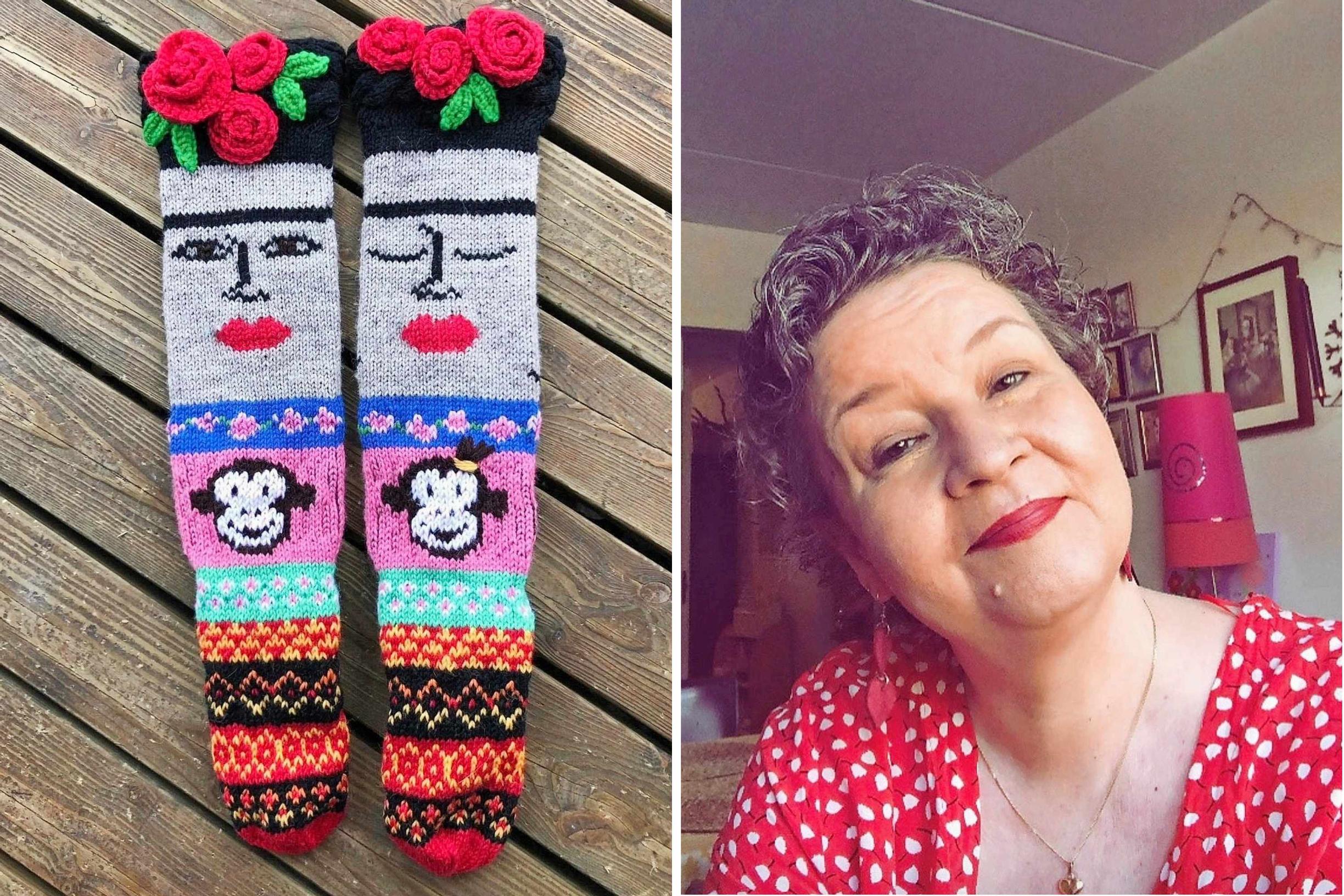
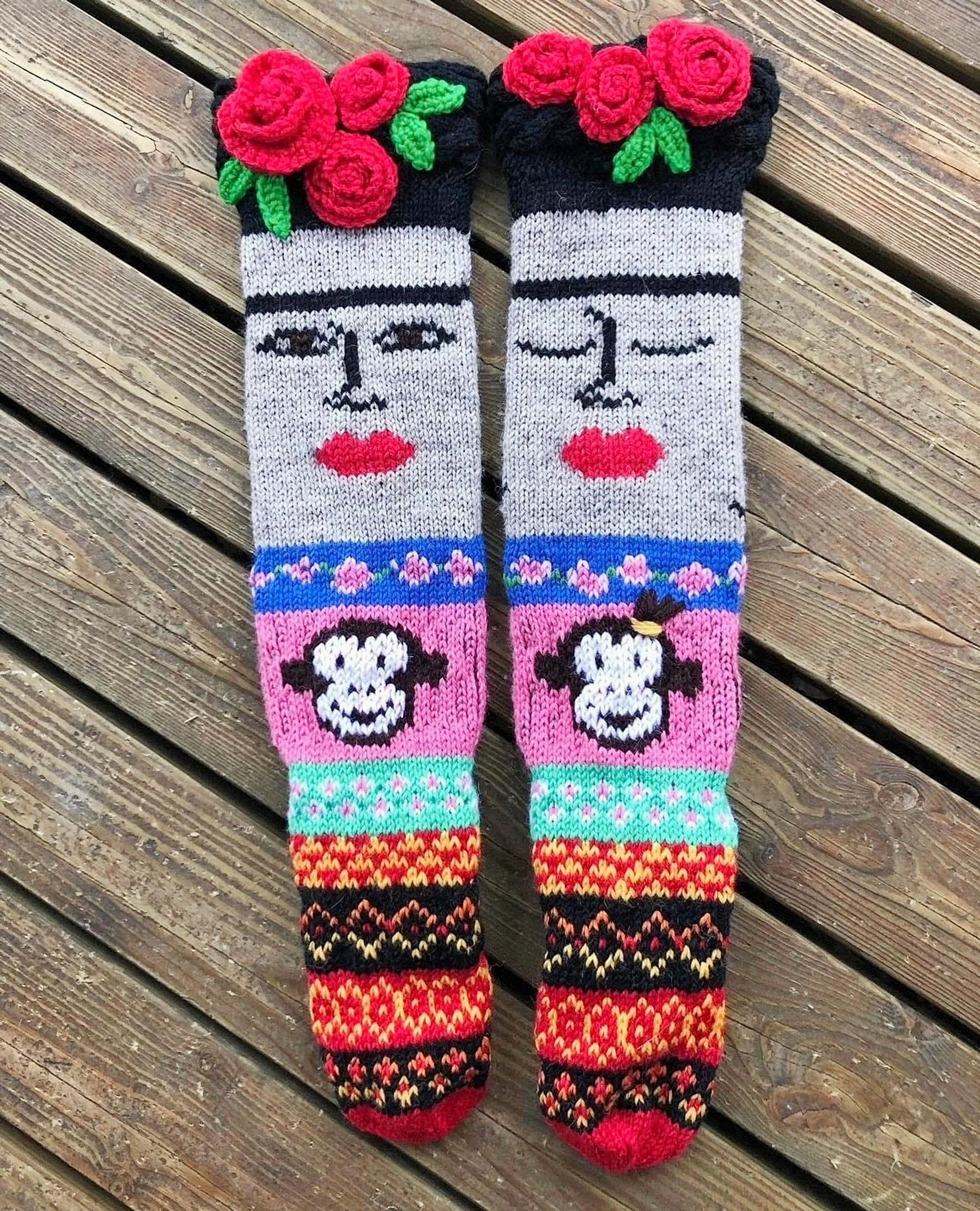
I knitted the Frida socks at a friend’s request. I remember being in a bubble of happiness while making them, because it was so wonderful to start exploring Frida Kahlo and think about what parts of her life to translate into the socks. I looked online and in books at what she wore and what pets she had. The gaze was the most important: Frida’s gaze was brazen and feminine, wild and free—everything I craved in my own life. Just realizing I could work Frida’s crown braid into the ribbing was delightful.
“I think of a wool sock as bigger than it is: it’s a canvas, my needles are brushes, and the yarns are my color palette.”
Fifteen years ago I didn’t know that working with your hands affects mental health. Later I read a lot about it, and many things clicked into place. There is a connection between the brain and the hands.
Many times I’ve thought that if I hadn’t had my hand skills, I wouldn’t be here today. Recovery would have taken much longer.
Many people don’t have a similar activity that lets them experience moments of success. They rely on pills or therapy. I wonder why we don’t hand out knitting needles already at recess in school. I’d argue many young people would feel better if they found their way to crafts without a teacher grading them. It would work regardless of age, because deep down each of us is a child who longs for other people’s attention.
I’m someone who gets addicted easily, but I haven’t gotten bored with knitting or wanted to swap it for something new. When it comes to making socks, the learning never ends. Socks are a playground that reflects the maker’s life situation and skill.
I believe creative people can never be completely crushed. I’m happy about my ability to throw myself into things and about the way I think of a wool sock as bigger than it is: it’s a canvas, my needles are brushes, and the yarns are my color palette.
“In that moment I didn’t think I was just knitting; I thought, this is therapy and a way of soothing myself.”
After my mom died, I was on sick leave for almost two years. I’ve always had a strong will to live, but this time it was tested in every possible way. Successes didn’t build me up; mostly I was yelling that I've had enough, thank you—no more setbacks at this address.
What brought light into everyday life, besides the care of friends and my kids, was my daughter’s puppy and a new relationship that brought back the laughter I’d lost.
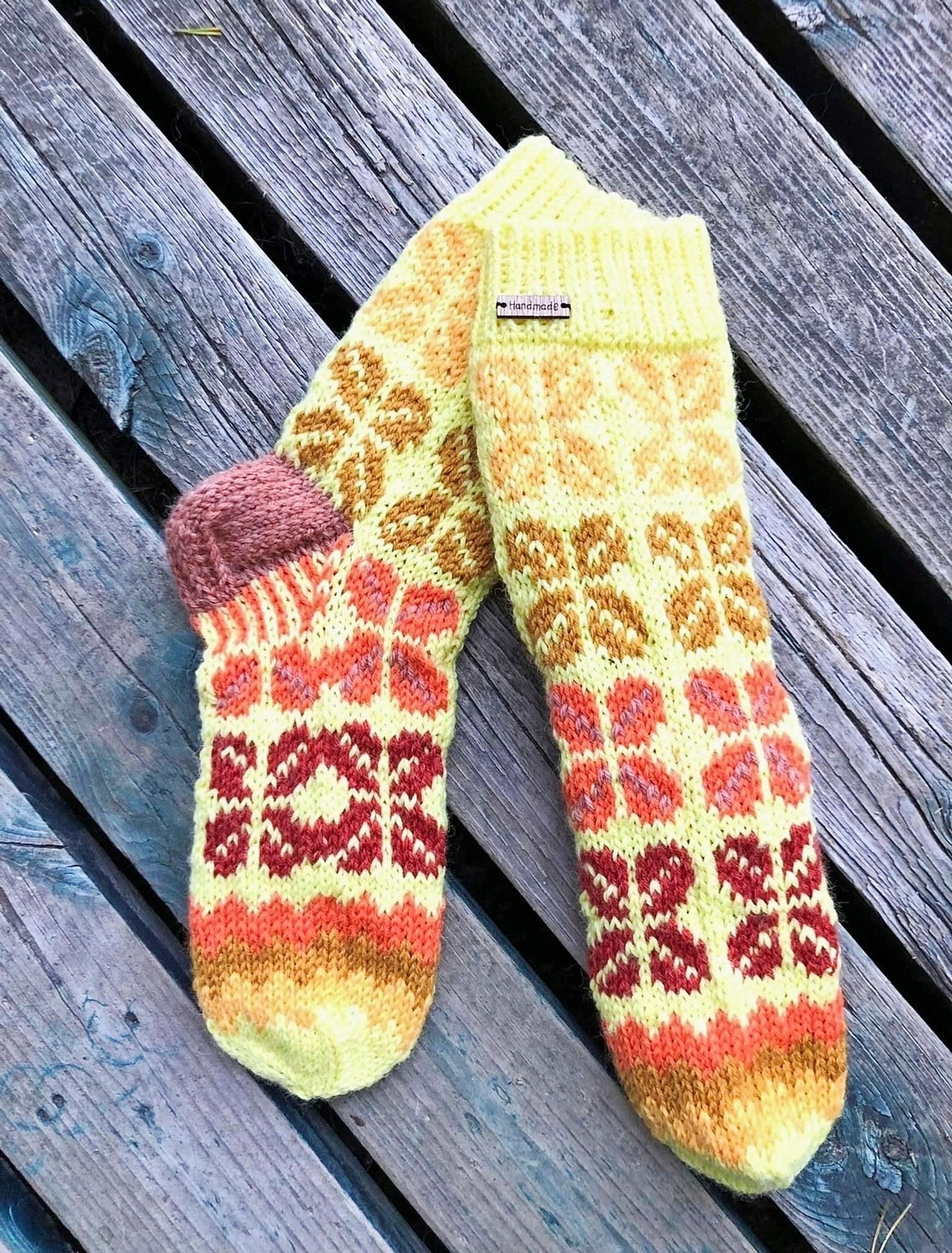
The colors never disappeared from my crafts. I also notice from them the point in time I’ve started to wake up again and made peace with the situation: the colors began to soften. Suddenly there was white and green in the socks—colors that, for me, signal calm.
I, too, became calmer, and these days I’m slower and more sensitive than before the losses. All my adult life I worked three jobs at once, but my body can’t handle that anymore. I’m pretty happy about it. It’s wonderful not to have my heart rate shooting high and not to have big emotional spikes. I don’t have the energy to be as social as before, so without knitting I’d probably just sit on the couch binging shows.
I used to be a marionette, but now I’m steadily as calm as I am when I knit. I’m grateful that even in the depths of grief I was never so exhausted that I stopped knitting.
The thought scares me: what if one day I want to quit? It’s possible. But right now my goal is to get half of Finland knitting.


The heel pattern’s legacy must continue. That’s why I started teaching my followers in my mom’s footsteps. I’ve helped countless people let go of their old handicraft traumas. I was so happy when a 75-year-old follower sent feedback that she finally understood the heel instructions and is now knitting all the socks she never made earlier in her life.
The pattern became a form of therapy and a source of joy for people outside our family. In a way, my mom continues on in the lives of people who are strangers to me.
I hope she’s sitting on the edge of a cloud, watching my social media pages and seeing how many people all of this has made happy.”
Marjut’s 3 tips for times of grief
Forget the “someday, when…” mindset
“Loss changed my sense of time. Everything you want in life needs to happen now. These days, if I get a wild idea, I don’t wait for a better moment. My next dream is a palazzo in Italy.”
Stick to routines
“I repeated the same routines I had when I was going to work: every day I at least changed out of my pajamas into clothes and made my bed. I had a list I followed step by step.”
Be bold
“Sometimes you have to wait too long to get help. I called offices countless times and, using an exhaustion tactic, demanded they arrange help for me right away rather than months from now. It worked.”

