From old farm to idyllic retreat: Mia and Mikko’s hard work at Villa Mandala paid off
Nestled in the courtyard of a former farm, Villa Mandala is the result of years of dedication by Mia Jokiniva and Mikko Harma. This magical retreat center inspires countless guests.

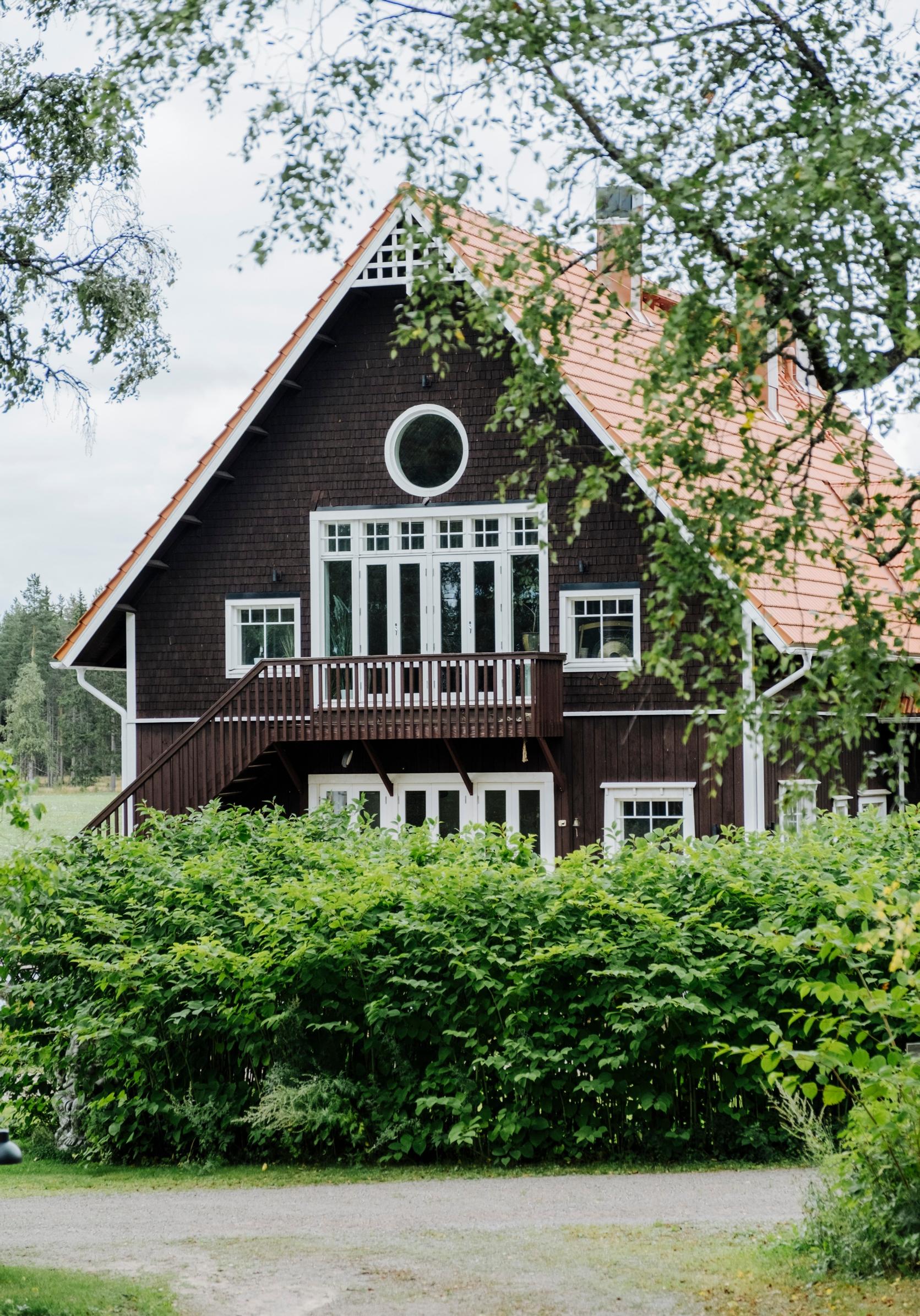
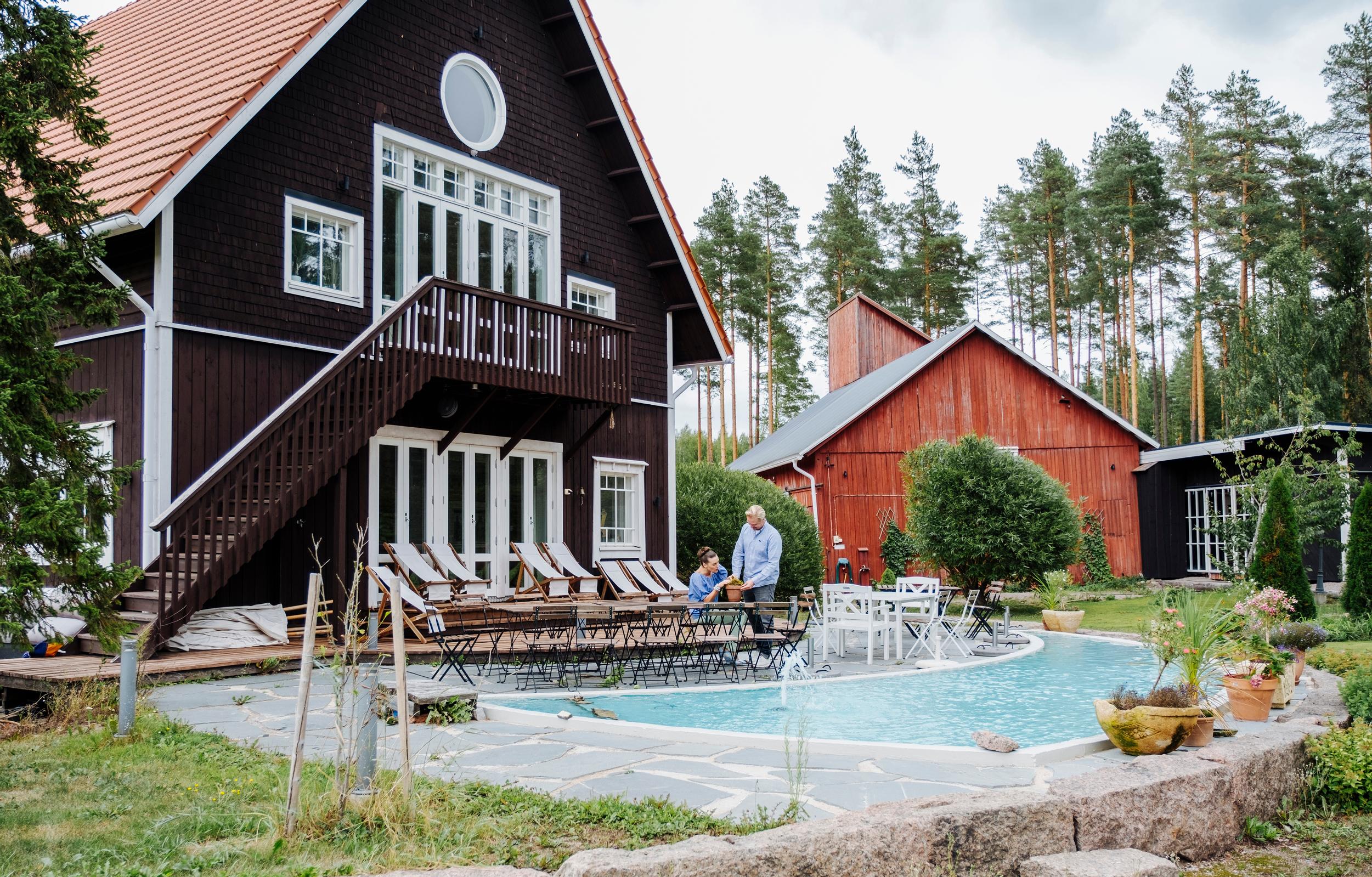
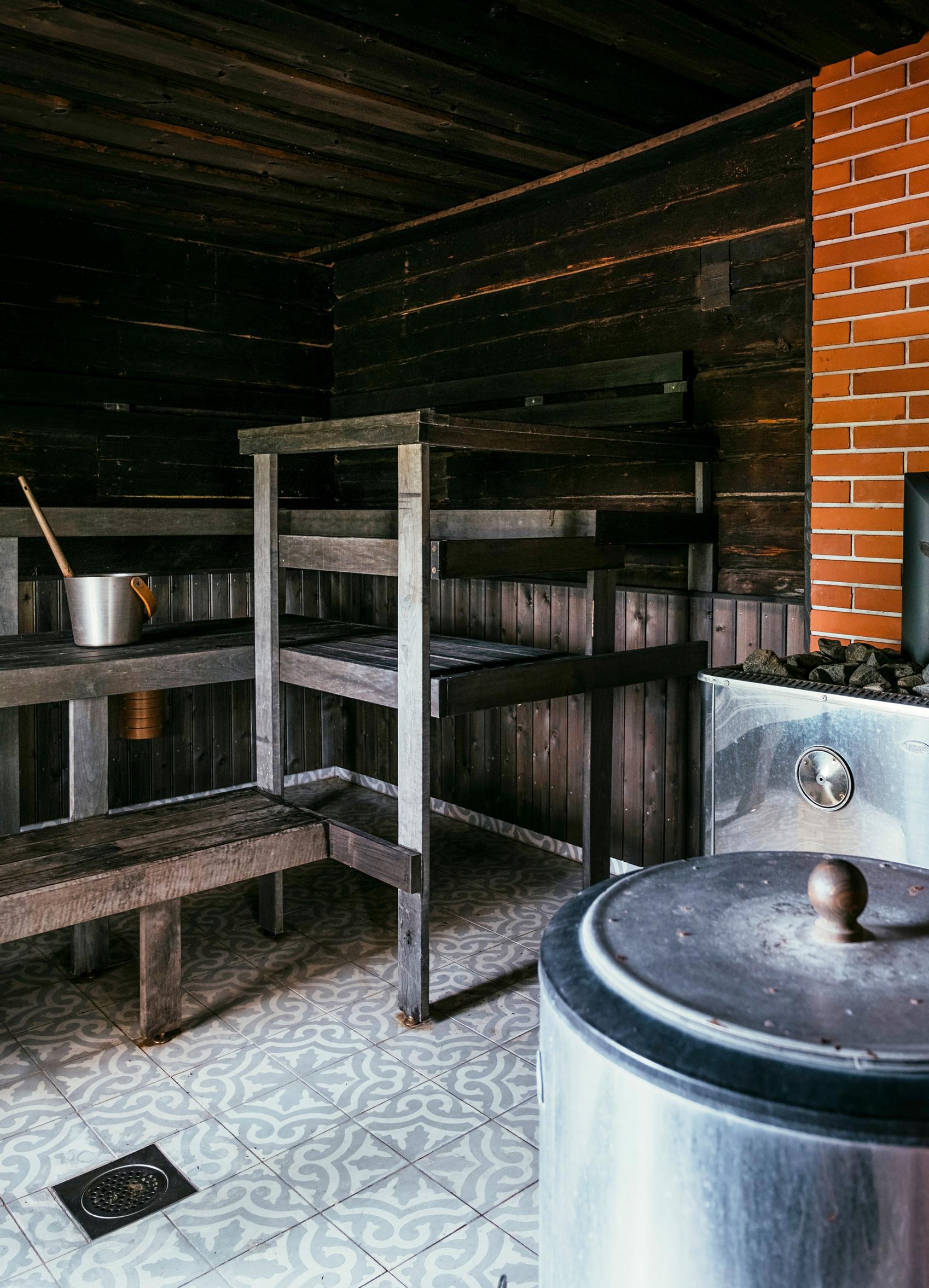
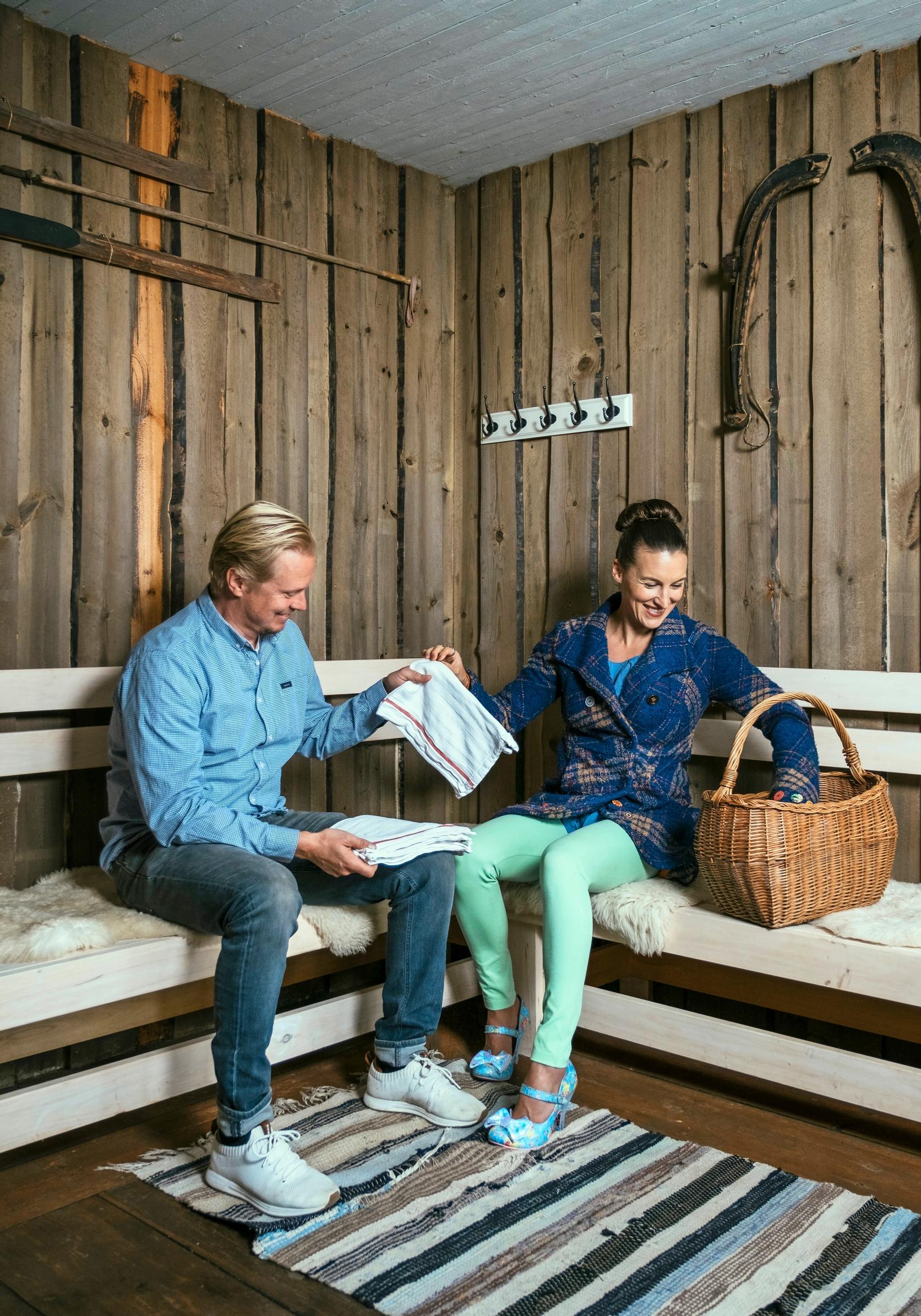
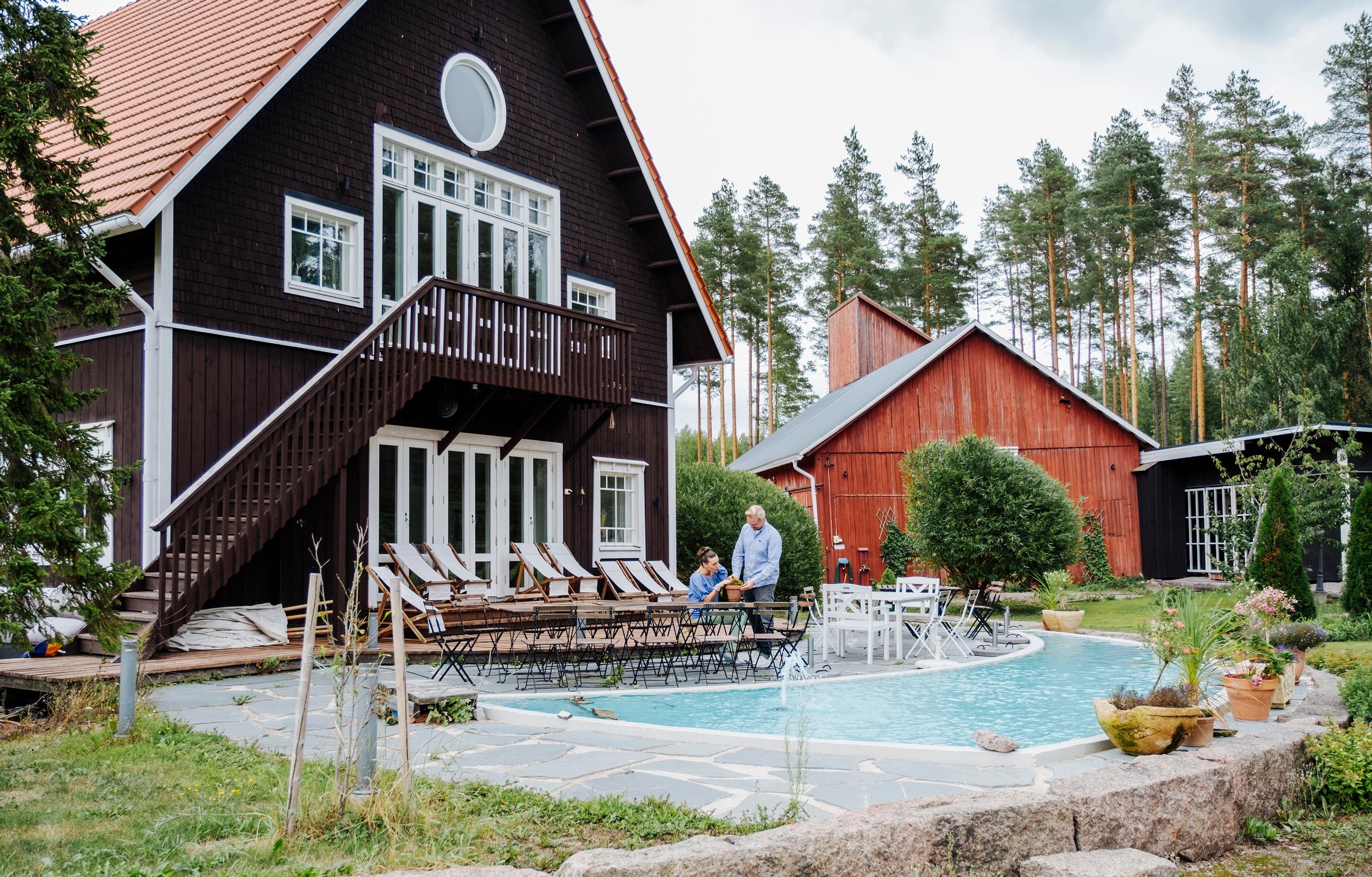
This place is truly serene. The courtyard holds six buildings, yet the main house of Villa Mandala, partly clad in wooden shingles, instantly draws your eye. Beside it stand the oldest structures: the original farmhand’s quarters and a yard sauna from the 1800s. Both were reportedly moved here from a nearby village to protect them from fires. The former grain-drying barn now serves as a storage facility.
On the opposite side of the yard is a red ochre-painted, mansard-roofed log house, home to Villa Mandala’s retreat and vacation entrepreneurs Mia Jokiniva and Mikko Harma themselves.
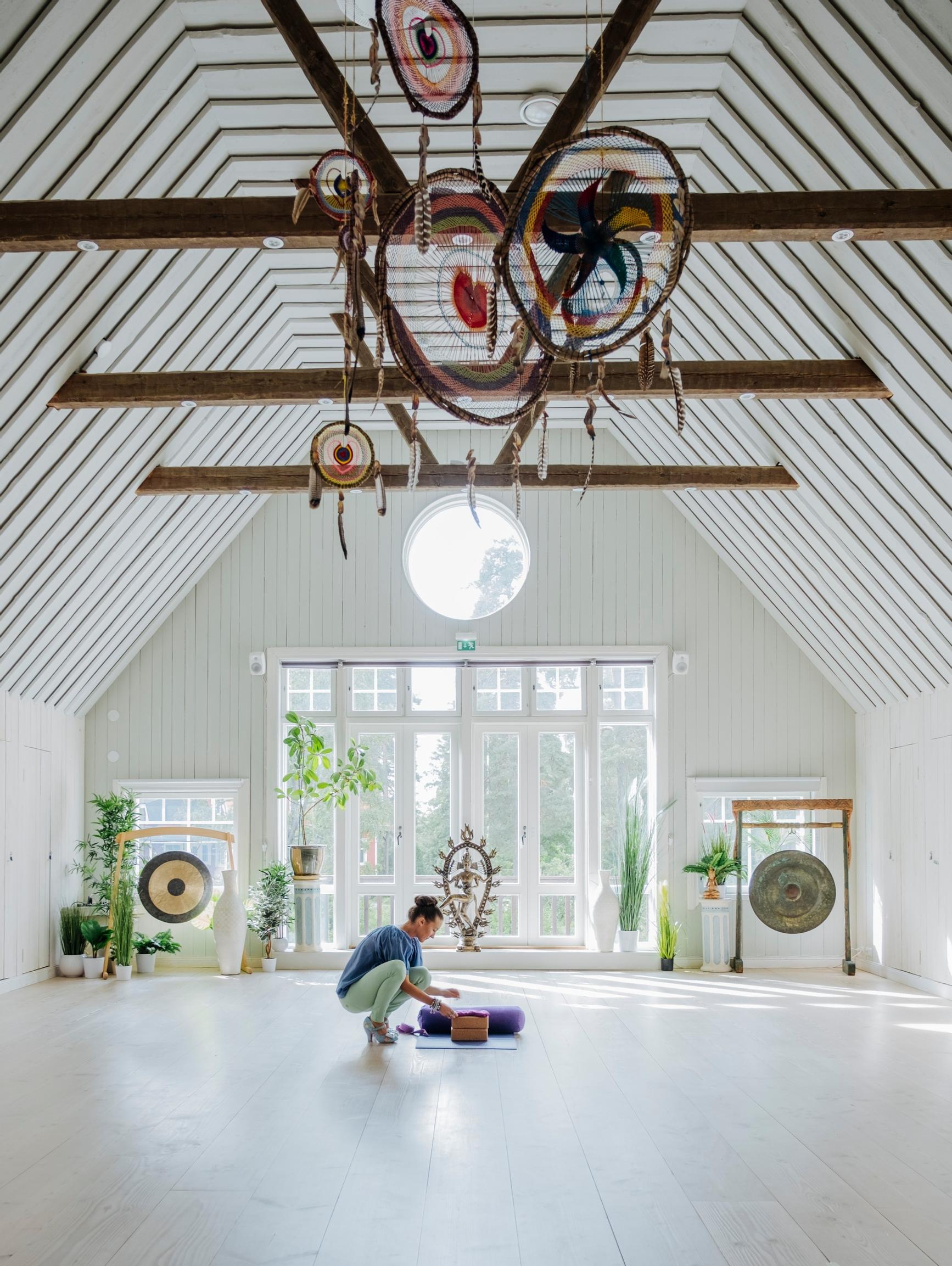
The old cowshed had to be demolished long ago due to a badly collapsed roof. Its hayloft sparked their first idea for a yoga studio. Over a decade ago, they decided to create a similarly unique space, reminiscent of the places they visited on yoga and surfing trips in Asia.
“We were basically living the dream and Villa Mandala came almost out of nowhere. Looking back, I believe there was some guidance involved. I felt a strong pull to make it happen even though there wasn’t a pressing need to change our lives back then,” Mia recalls.

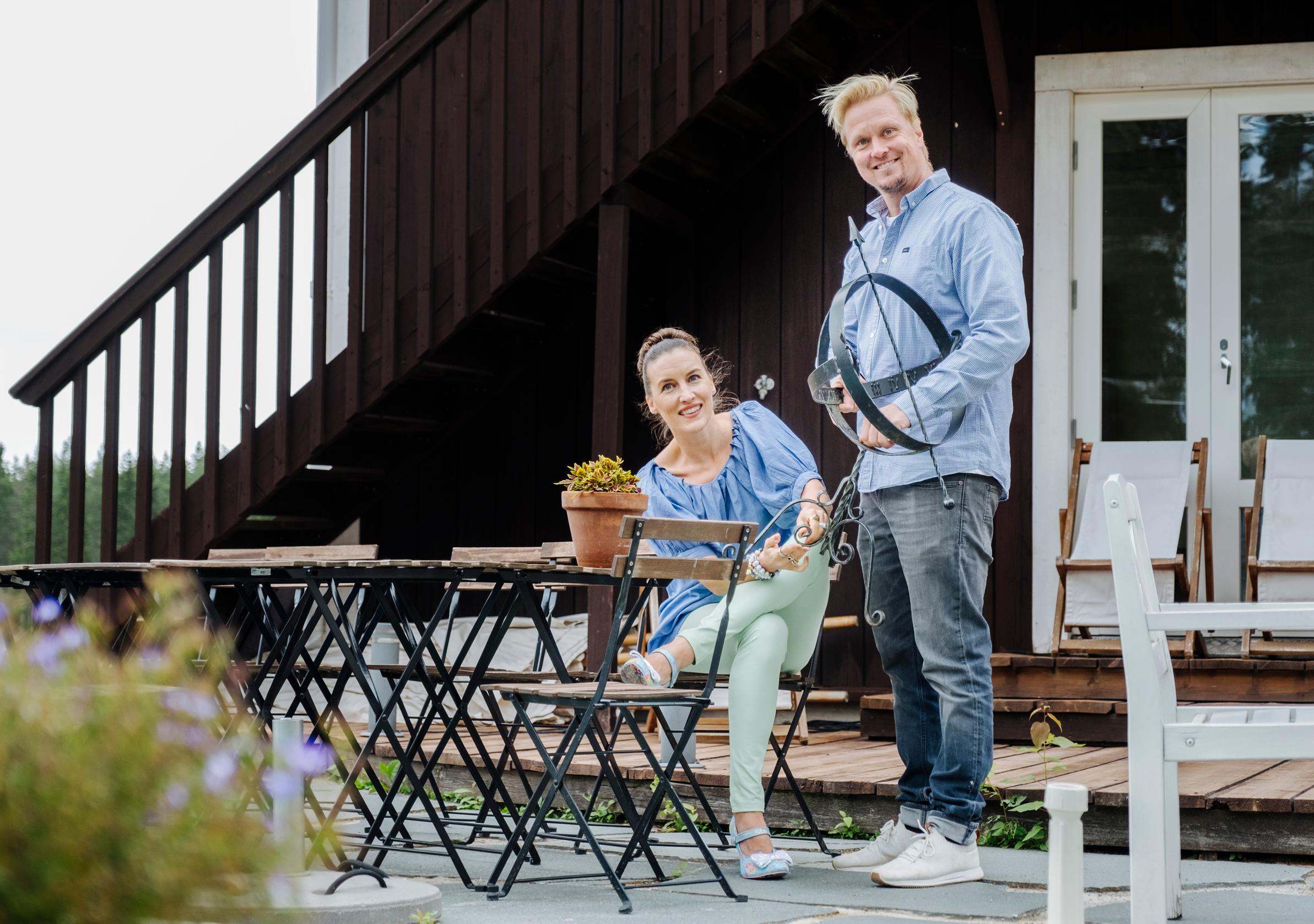
Two decades ago, this former farm in Loviisa, Finland, was rundown and covered in weeds. Around that time, Mikko, a successful photographer from Helsinki, wanted to experience life outside the city and perhaps find a sense of continuity to counterbalance his project-based work. While Mikko was surfing in the Lofoten Islands, his then-partner called to say he should return promptly because a promising spot had finally surfaced.
“Commercial photography may look shiny from the outside, but this is more genuine. It’s wonderful stress relief and it’s very soothing to get your hands into the soil and on the logs,” Mikko says.
Stepping into the yard for the first time, Mikko felt an immediate calm, which strengthened after an overnight stay prior to the purchase. Despite the obvious enormity of the task, the place felt like it welcomed him from the start. He often envisions a project’s end result but doesn’t dwell on the steps in between. Over time, he’s come to recognize that owning historic countryside properties is ultimately about carrying the responsibility of safeguarding them for future generations.
“I felt it was my duty to peel back the layers and restore the site’s old beauty and charm. If everybody does their part, places like this can endure for a long time, letting future generations appreciate them,” Mikko says.

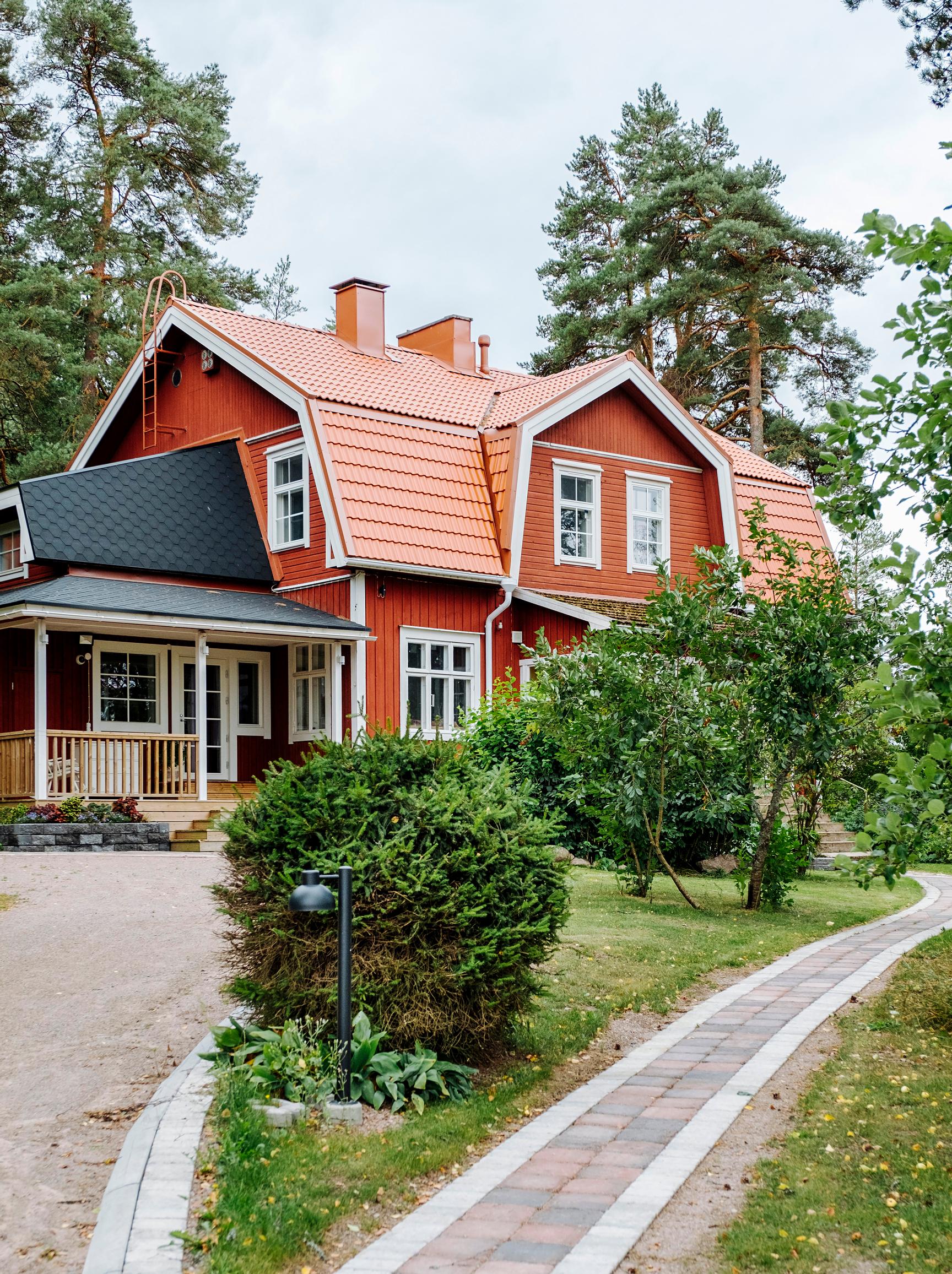
The home’s mansard roof reminds Mikko of childhood summers in the Sipoo archipelago, where his uncle taught him hands-on skills like woodworking. Over time, especially at Villa Mandala, his renovation savvy has grown.
“We’re both idea generators, but Mikko clearly has a builder’s knack. This place wouldn’t look like it does if he weren’t so meticulous,” Mia admits.
Their home revealed more splendor when surfaces from the 1970s and 1980s were stripped away, exposing grand logs and old wooden floors. Even the hidden roof structures showed the craftsmanship of past builders.

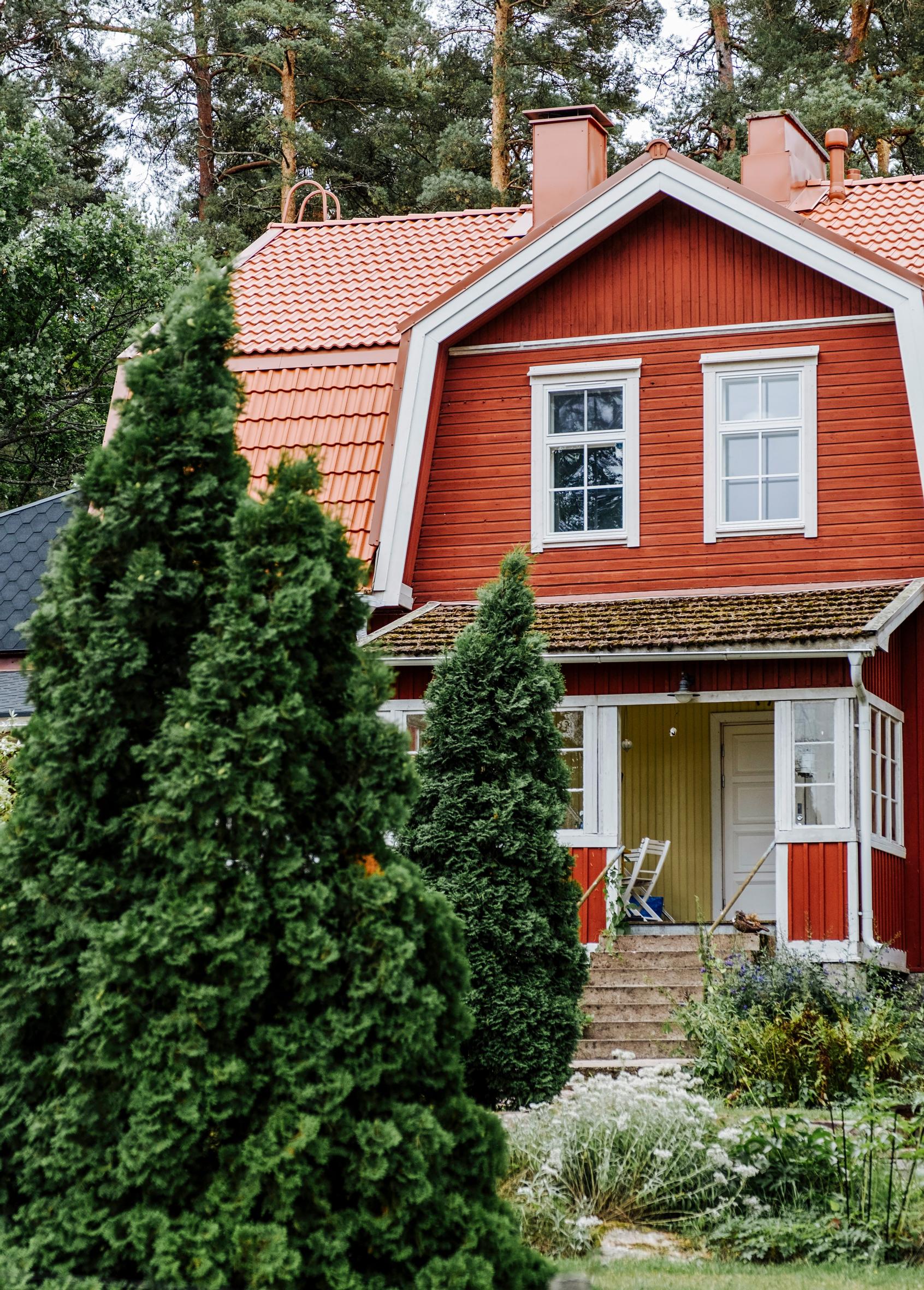
The house served as a summer cottage for a long while. After Mikko’s divorce, he lived there alone, having grown so fond of the place that he never seriously considered selling.
A year passed before Mia, a culture-loving Helsinkian Mikko had met on a blind date, came to visit for the first time. At that point, she couldn’t quite grasp the idea of weekends in the countryside. Howver, love quickly changed things, and while working as a magazine managing editor, she began easing into rural life among the open fields. Gradually, Mikko’s enthusiasm for logs rubbed off on her, and Mia to Loviisa in 2006 to live there part-time and permanently in 2017.
“I never pictured myself living in the countryside or found old farmhouses particularly appealing. Accepting rural life was a process, but I got there,” Mia laughs.

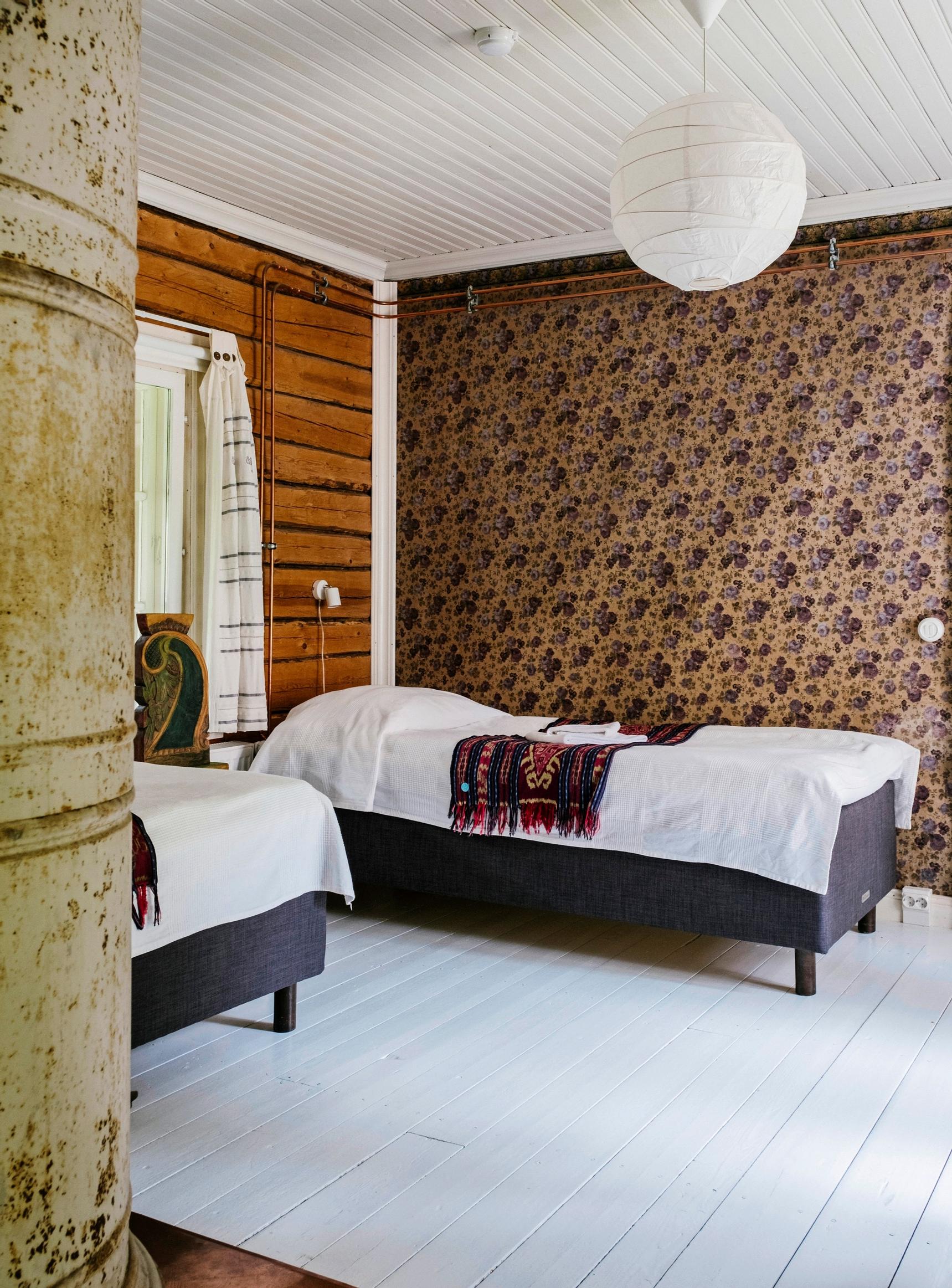
The original ceramic stove remains in the old section, along with wallpaper at least a century old. The sturdy, dark-brown main building was completed just over a decade ago. Mikko first drafted plans with a neighbor specializing in structural engineering, then an architect couple skilled in traditional building helped make it a reality. The culturally significant homes around Lake Tuusula served as visual inspiration. Most importantly, the building had to look like it was always meant to be there.
While exploring the construction site, Mia discovered a massive horse skull and bones. Earlier residents had buried their beloved horses in the yard.
“We’re among truly historic roots here. Finnish agriculture and construction wouldn’t exist without the Finnish horse. There was a pioneer spirit at work when this place was originally built in the middle of nowhere.”
The house’s southwest-facing facade encloses the courtyard, and each building is positioned such that together, they create a peaceful circle.
“We’re part of a continuum. Someone else did the initial work, and we are continuing the story in our own way.”




They both love old things, but for different reasons. Mia, an anthropologist, is drawn to the human narratives behind structures, whereas Mikko sees buildings as personalities, closely examining their shapes, cladding, and techniques with delight.
During renovations, Mia is most intrigued by what the process uncovers about a building’s past. She lights up if pencil-written names are discovered on the walls. Within their own house, they’ve unearthed everything from a bust of Finnish military commander Mannerheim to a row of shell casings older than the building itself. In the old grain-drying barn, they came across farm tools so ancient that Mia asked her grandmother for help identifying them. A few are displayed on the yard sauna’s original log walls.
Before Mia and Mikko arrived, a locally notable cultural figure named Inger lived on the property into her later years. It was her parents who founded the farm. The massive foundation boulders were quarried from the forest edge visible through the home’s window. For quite some time, Mia felt like a guest in someone else’s home, because of the respect she holds for its history. She wondered how the old lady would feel about them living there and all the changes they were making.
“Even now, I don’t fully think it’s our house. We’re part of a continuum. Someone else laid the groundwork, and we do our part in continuing the story.”

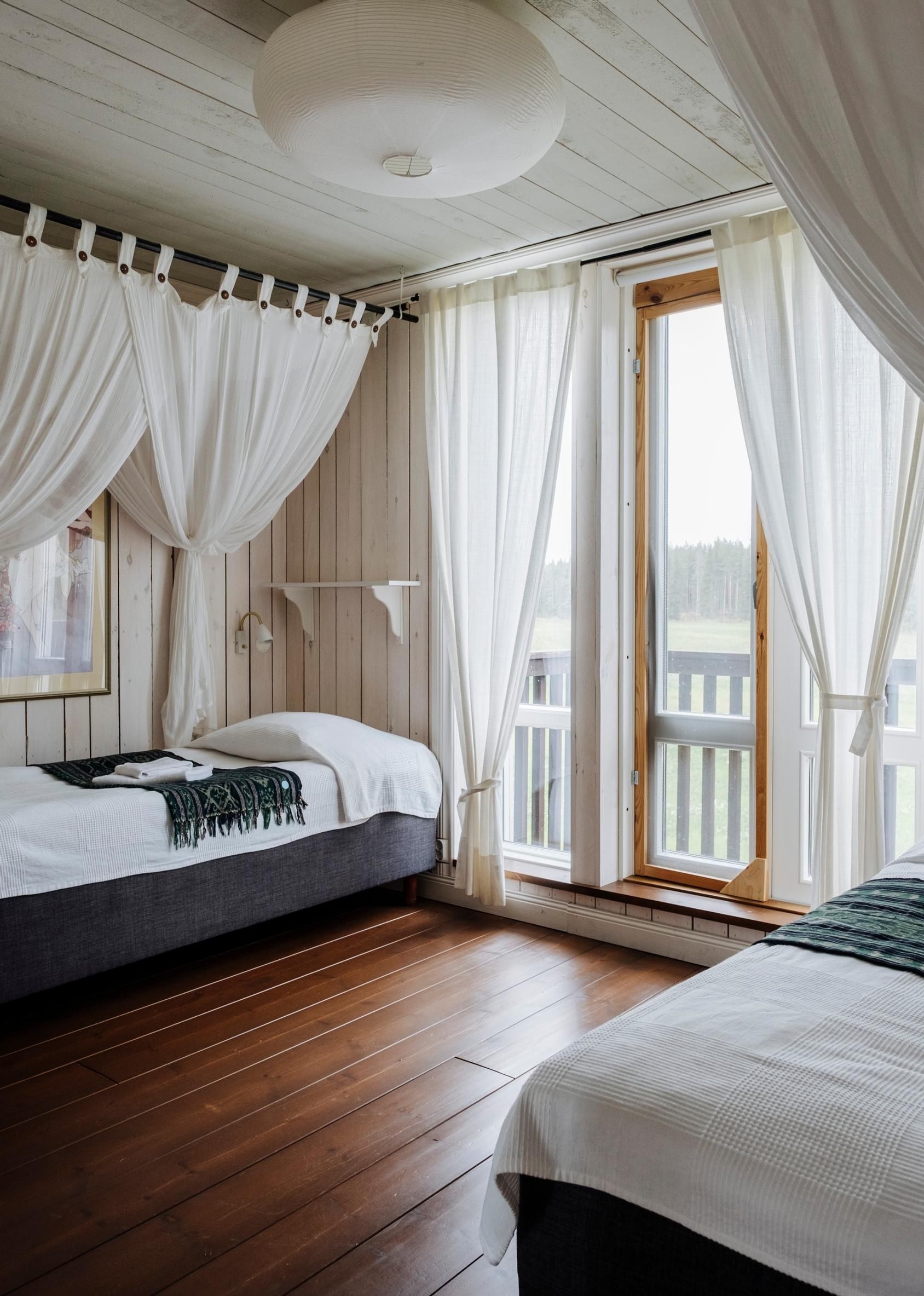

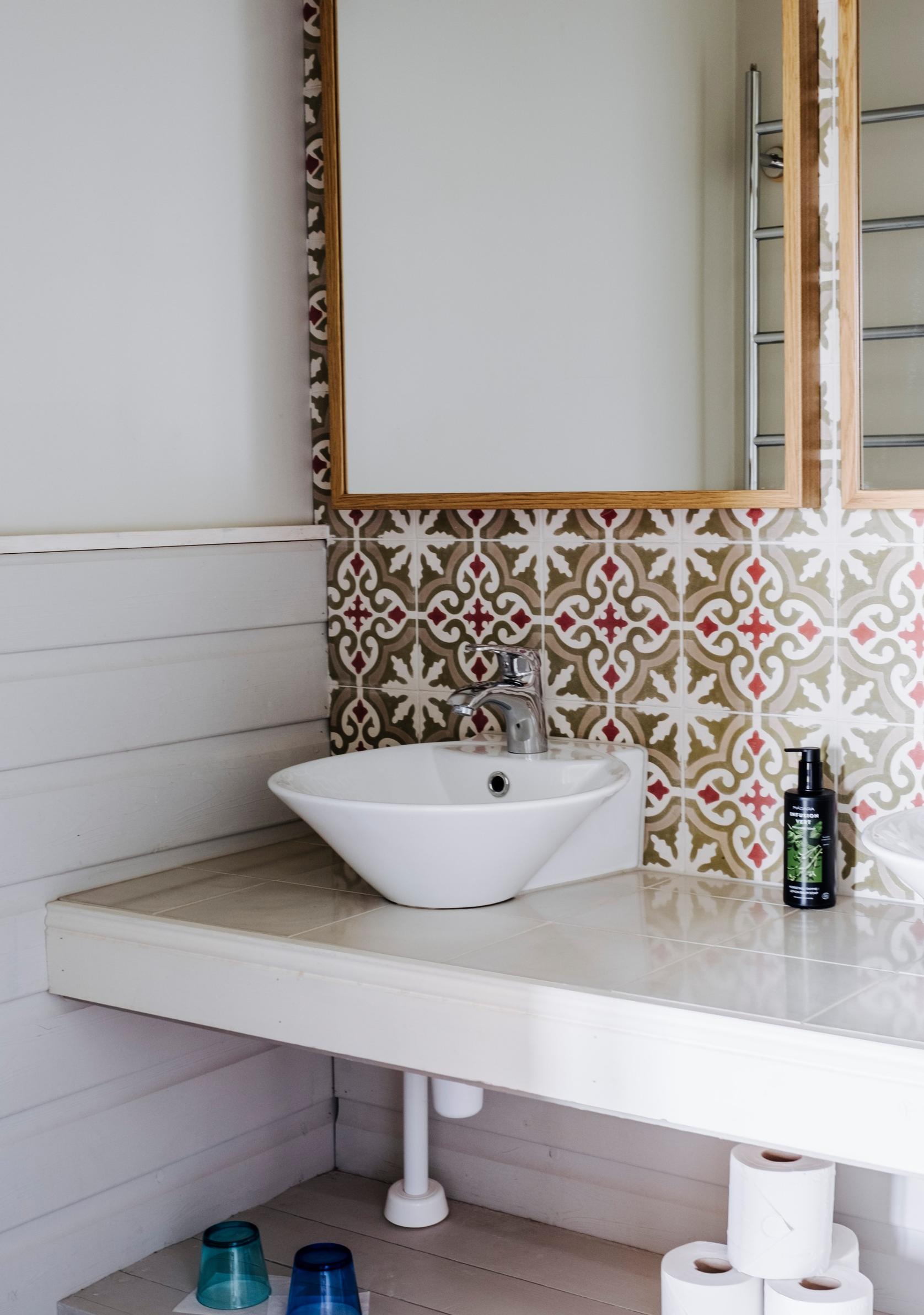

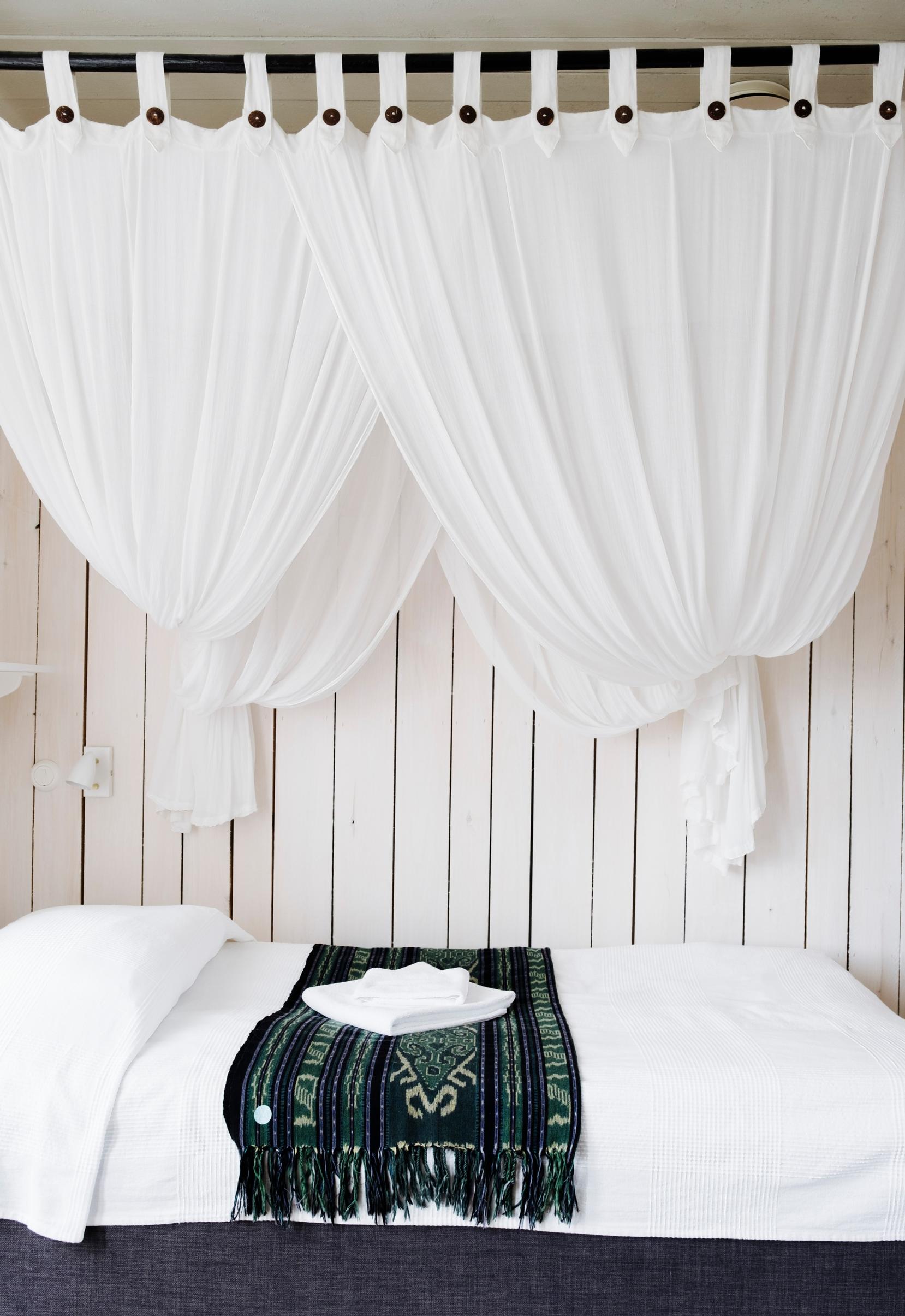

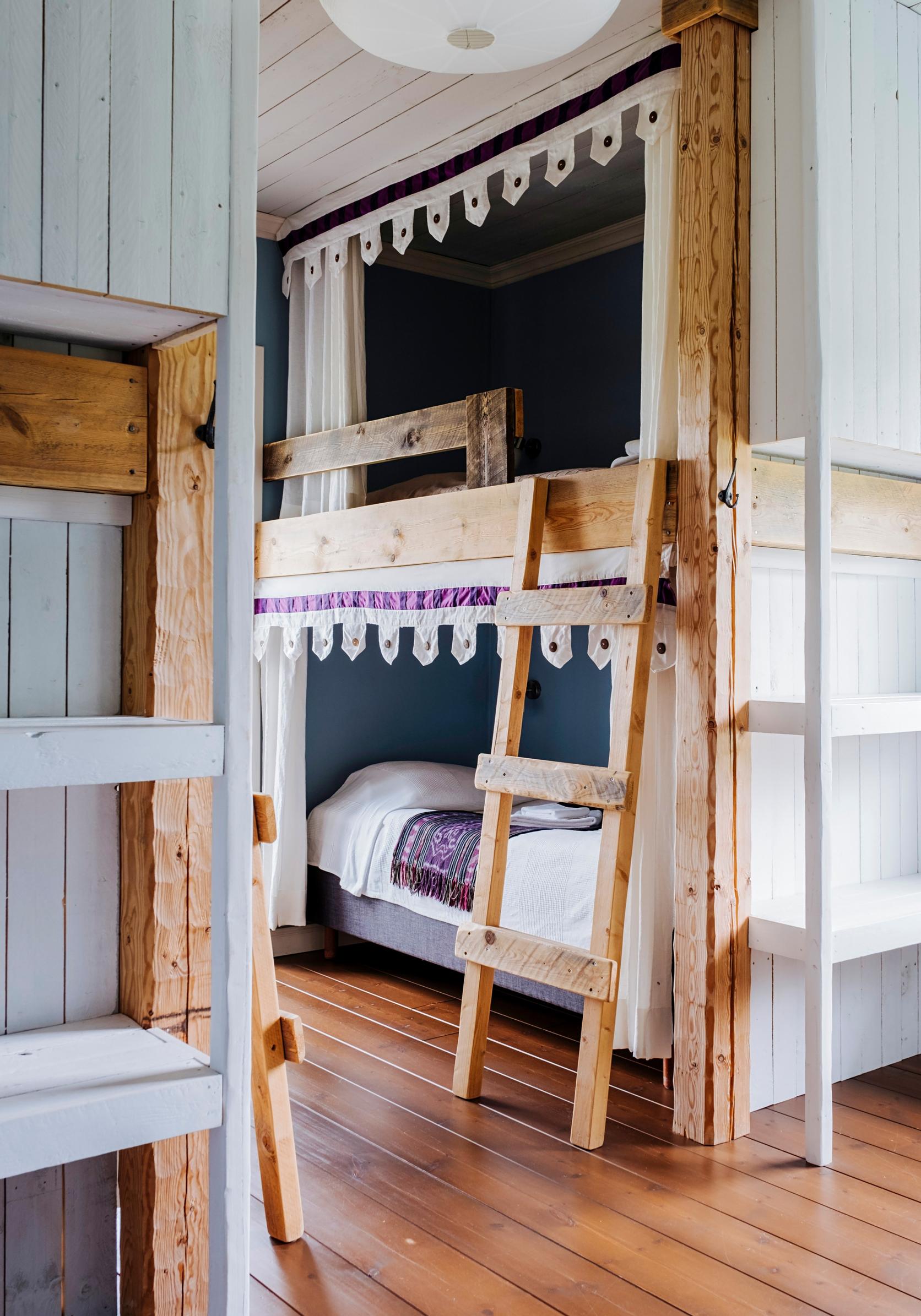
When Villa Mandala is at capacity, all thirty guest beds in the main house, the farmhand’s quarters, and the Solvilla house are in use.
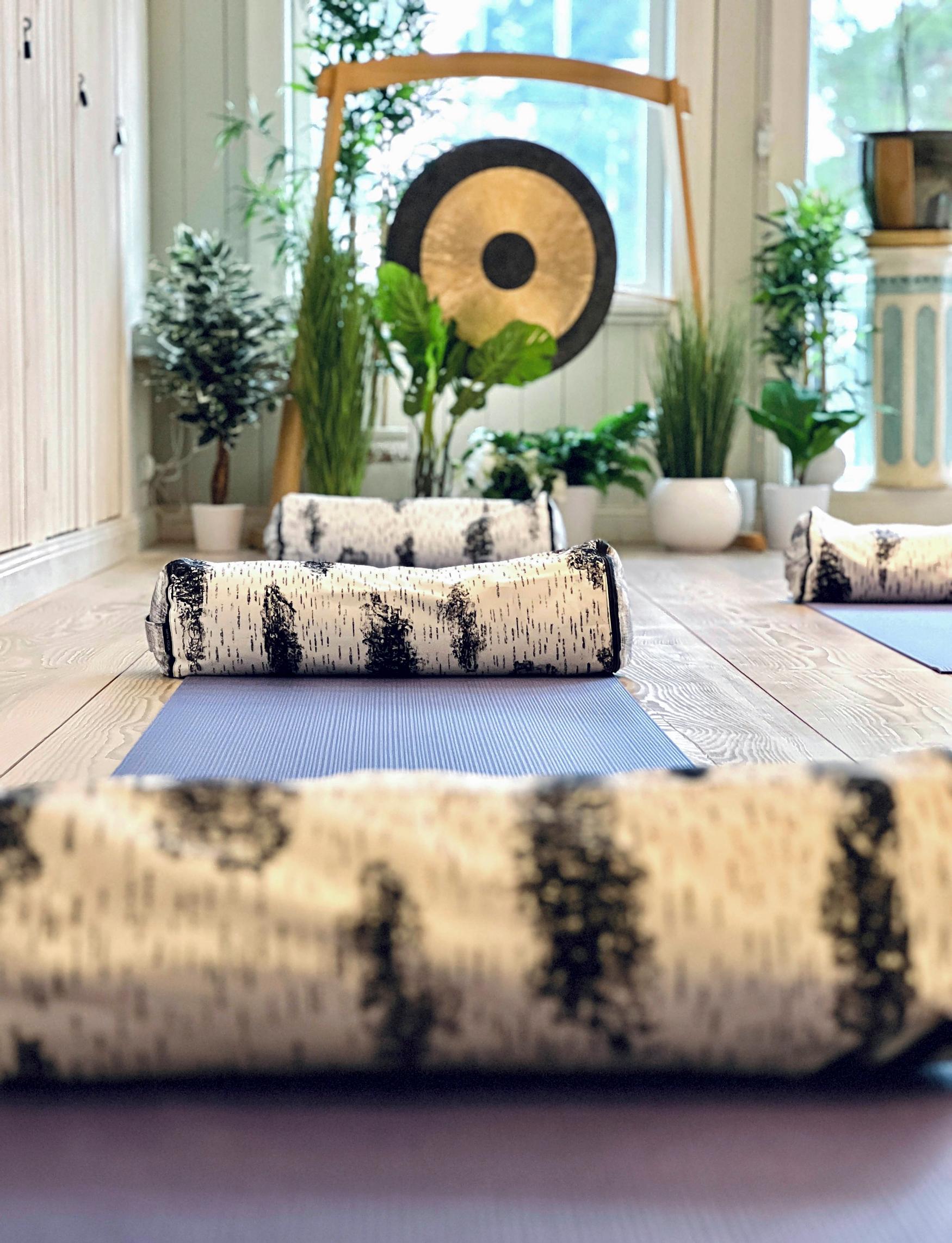
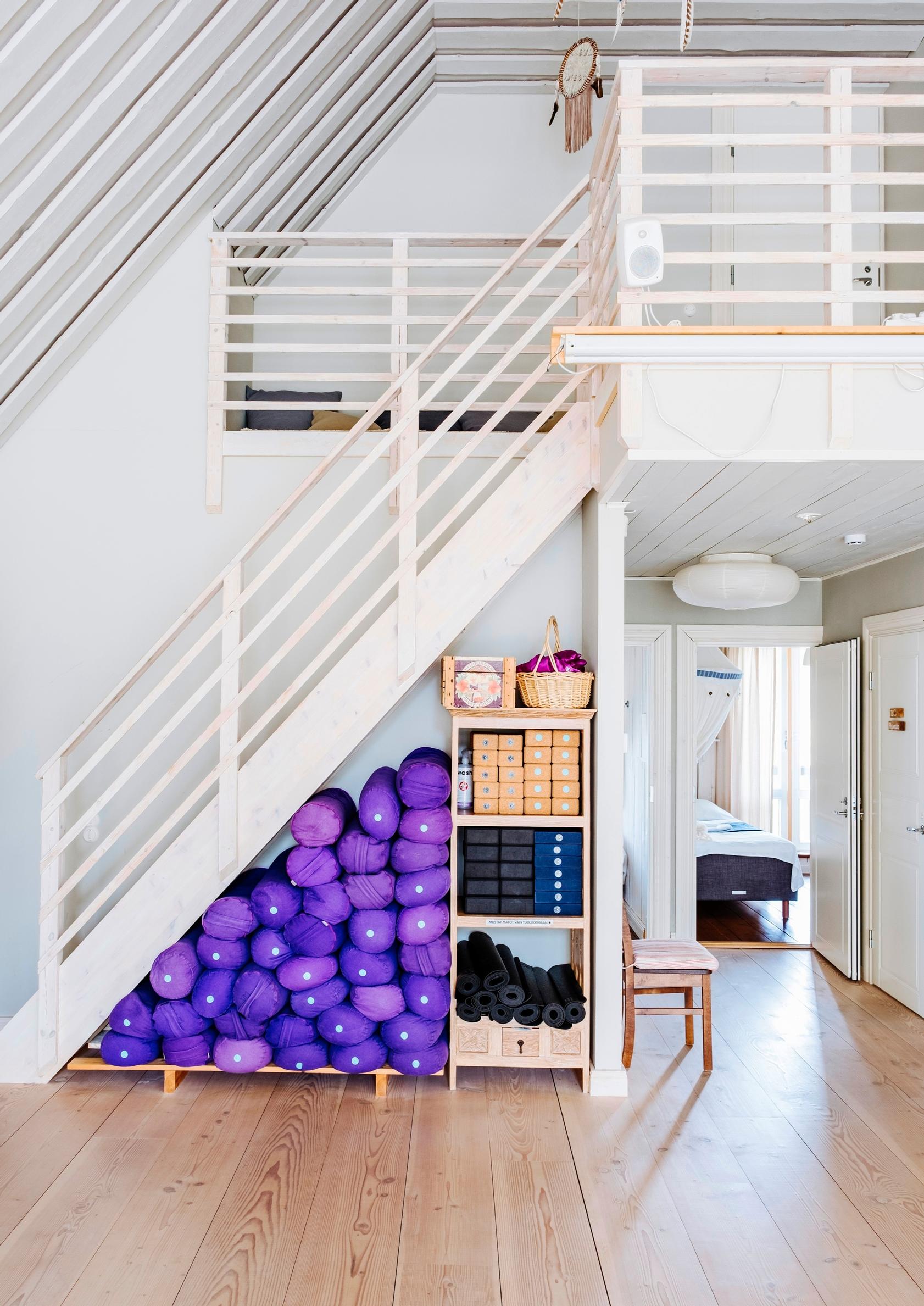
At the heart of the main building is a high-ceilinged yoga studio upstairs. One can easily picture how spectacular it looks in spring and summer, with sunlight flooding in through the large window.
Mia refers to yoga as her spiritual path, her fundamental calling on Earth. She began practicing 25 years ago. Over the last ten years, Buddhism has also become a big part of Mia’s life, shaping her values and work. Its emphasis on compassion stands out to her. A large Buddha statue graces another space in an outbuilding.



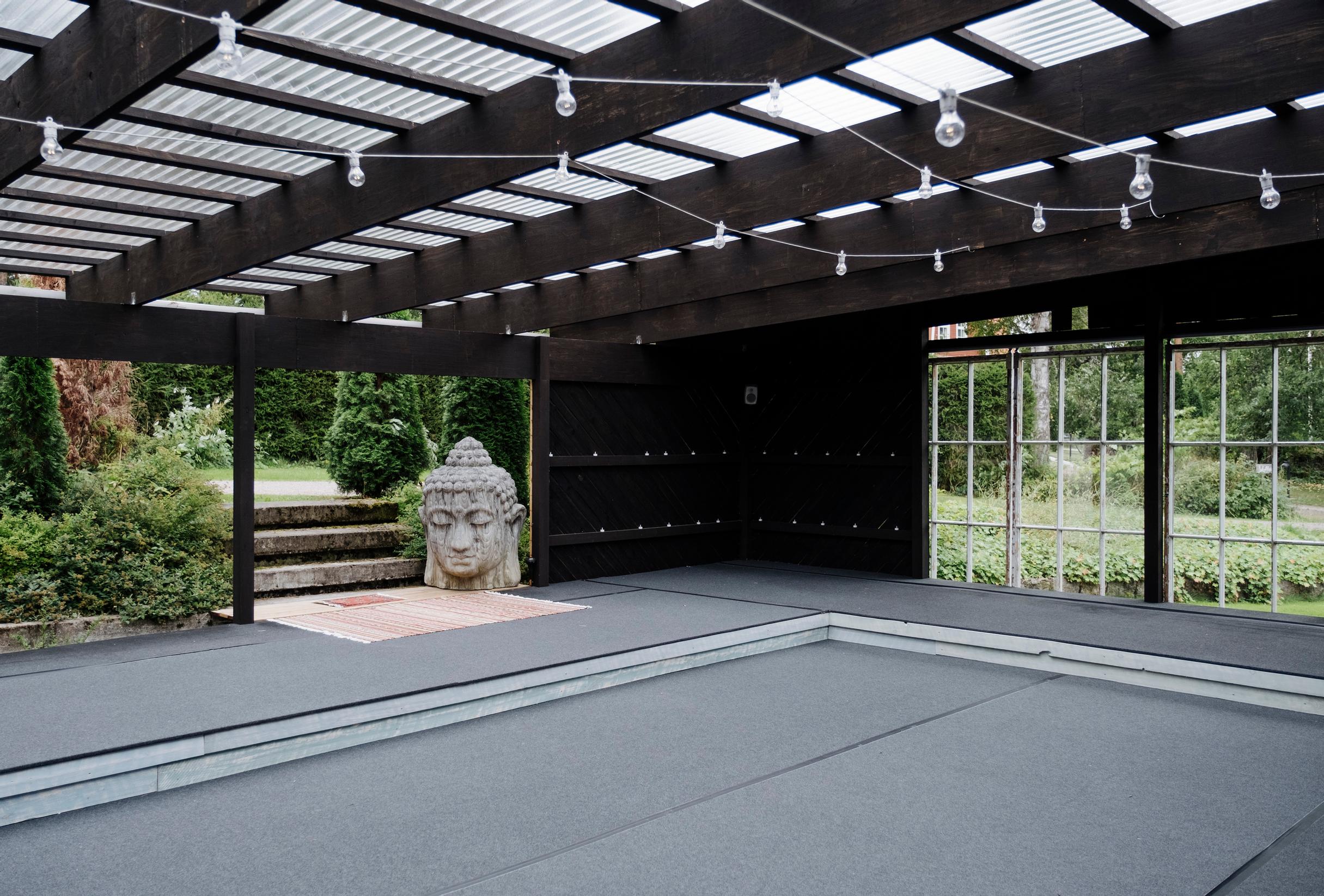
For years, this couple’s work and personal life have blurred together. A quick glance across the yard or out the window, and they can see from home to their work areas and vice versa. Their home wasn’t always fully private, either, since staff hired for on-site events sometimes stayed there. When it was very busy, it felt like people were streaming in from all sides. Mia guesses she found it more stressful than Mikko.
“Mikko had probably already grown accustomed to busy atmospheres at his family’s cottage, so the hustle and bustle didn’t bother him as much.”
When the pandemic slowed everything down, they finally had the time to turn the unheated attic into living quarters. It was a conscious move to separate personal space from professional space. The upstairs now features their private office, bedroom, and a small terrace.
“I needed distance between my home life and my work identity. I feel like I recharge more effectively when I can genuinely be at home. Now I rarely feel the urge to leave,” Mia says.

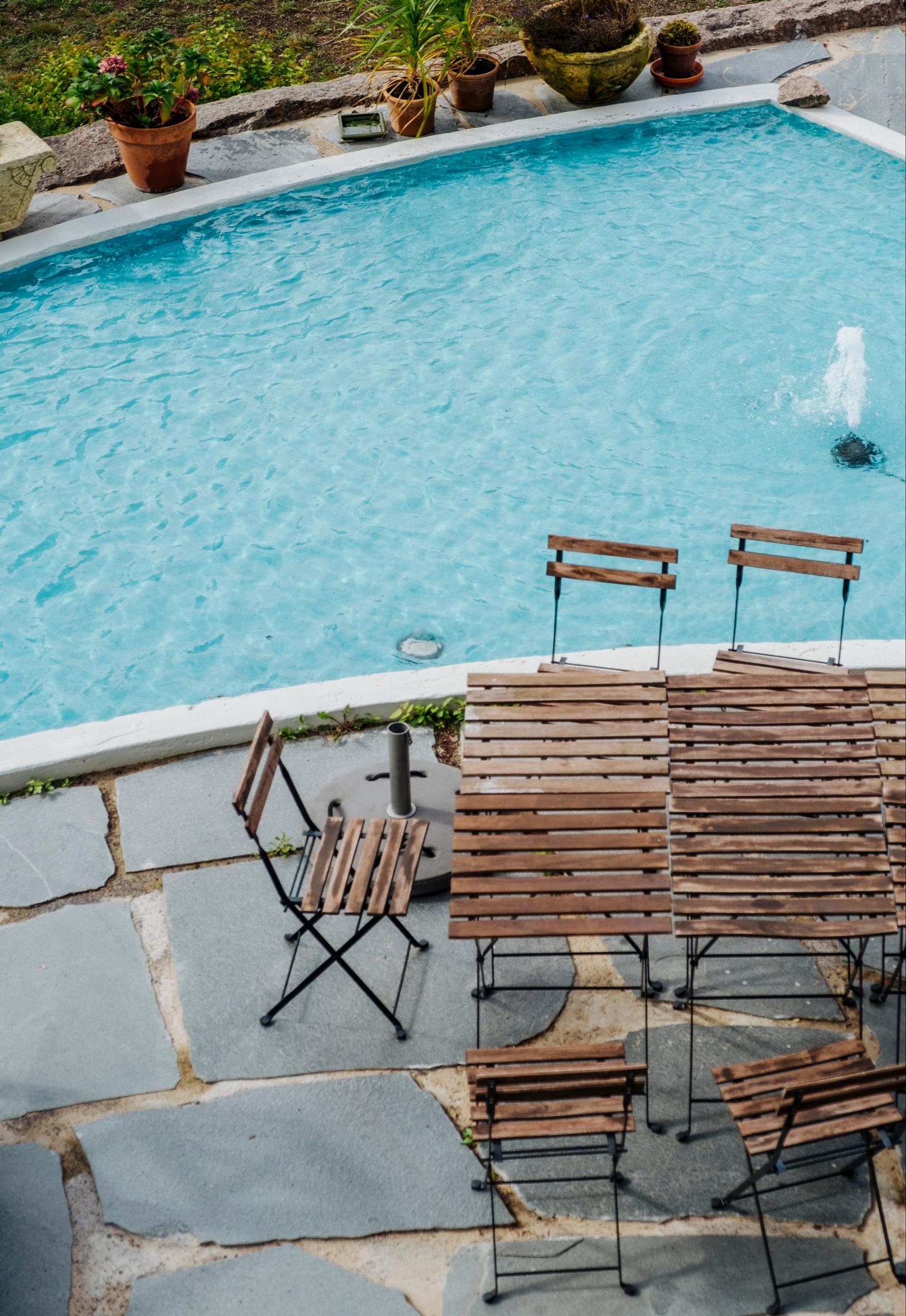


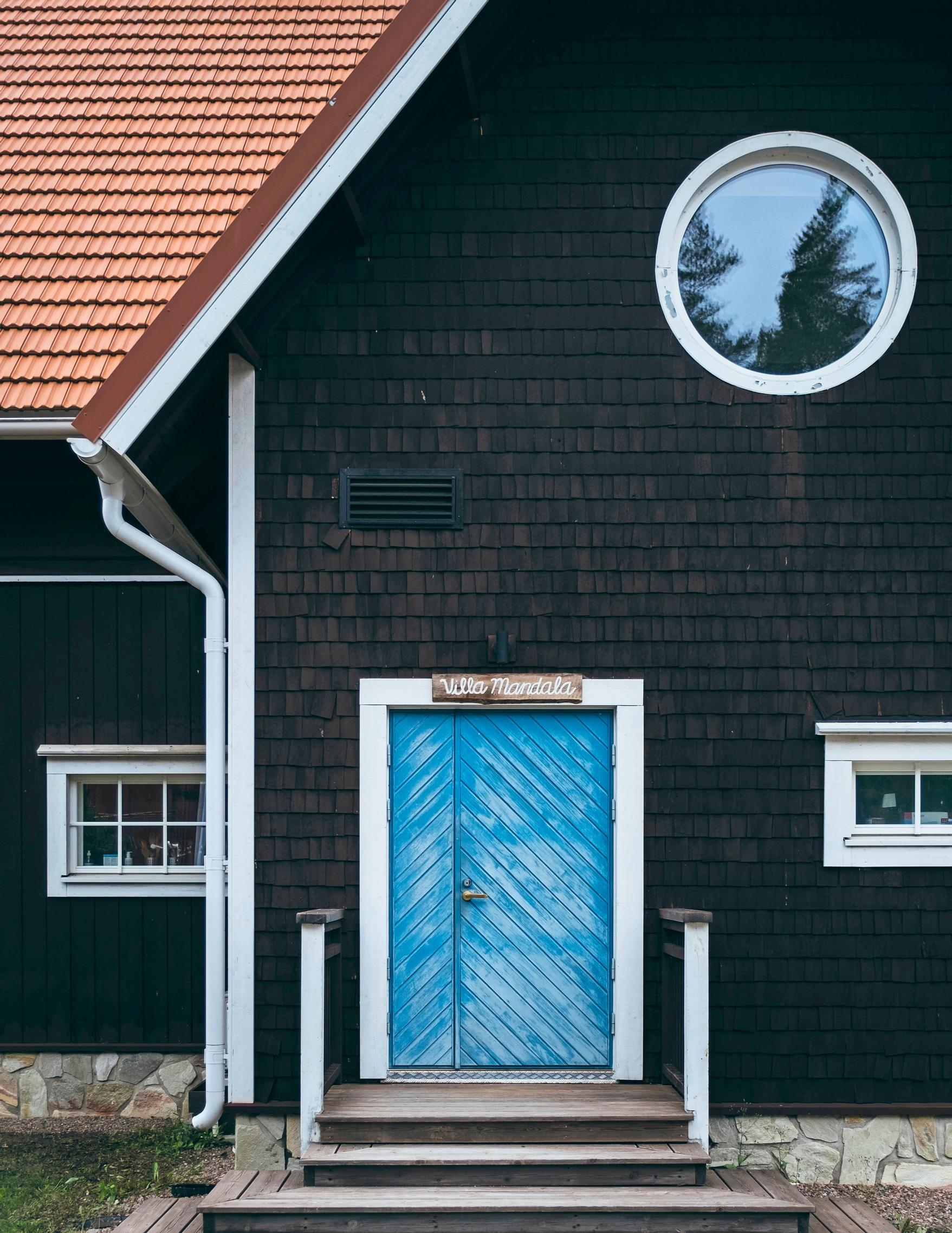
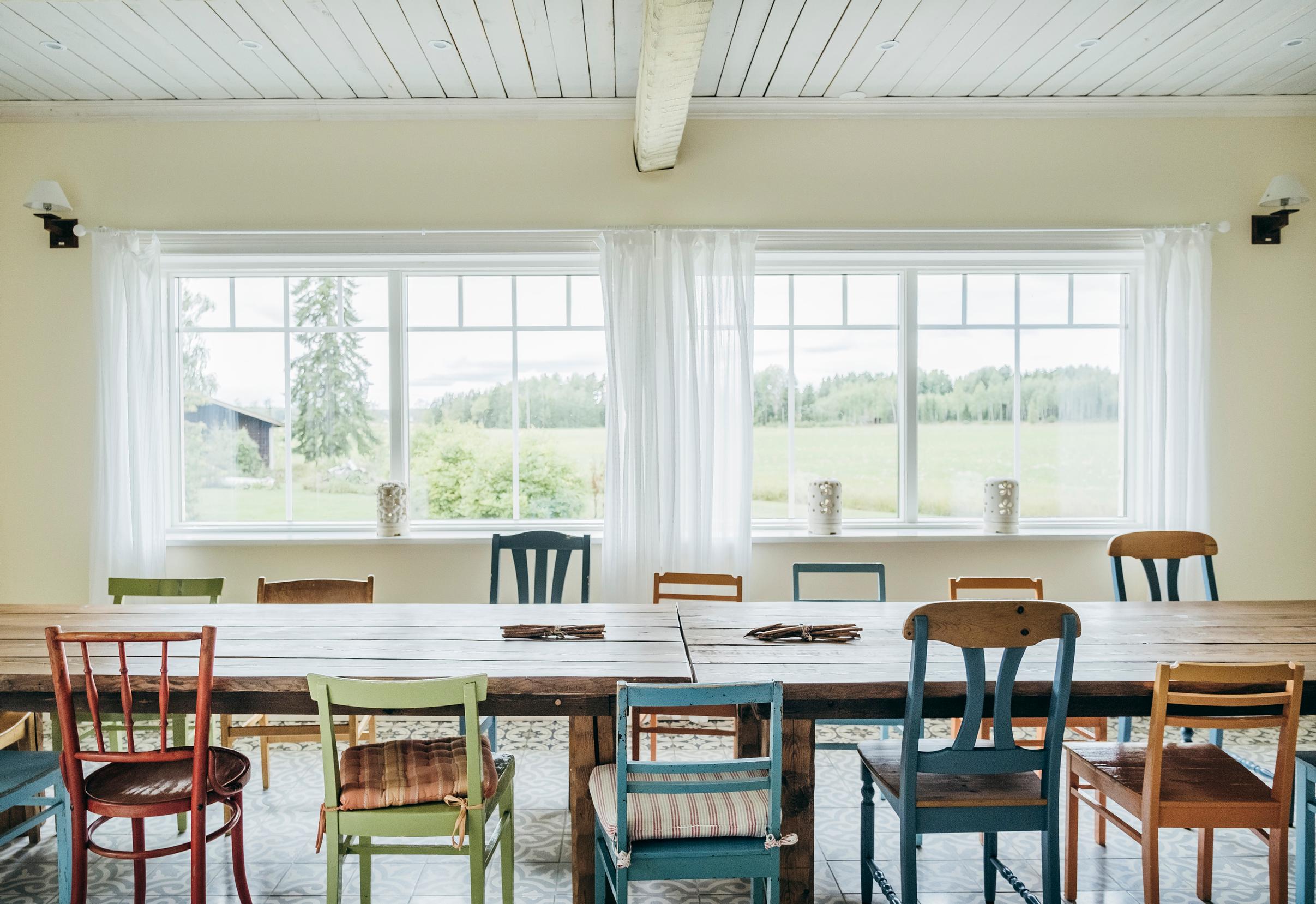
Almost every item at Villa Mandala comes with its own history and significance. The couple’s interior design preferences differ slightly, which shows in their compromises on materials. Mia leans toward colorful, bohemian, and vibrant styles, whereas Mikko is more restrained. While planning the interiors, Mia also thinks about how people connect in the space. Instead of multiple tables, they went with a single long table in the dining room so everyone would chat and potentially connect with newcomers.
Many guests return repeatedly. Several have even become friends with the owners.
“It means a lot to me if someone describes this place as dear to them or even calls it their second home,” Mia says.
After an event ends and the property quiets down, the couple heads out for a long walk and a soothing sauna.
“I’m grateful to do this. It’s demanding and can be tiring, but we receive much more than we give,” Mikko sums up.