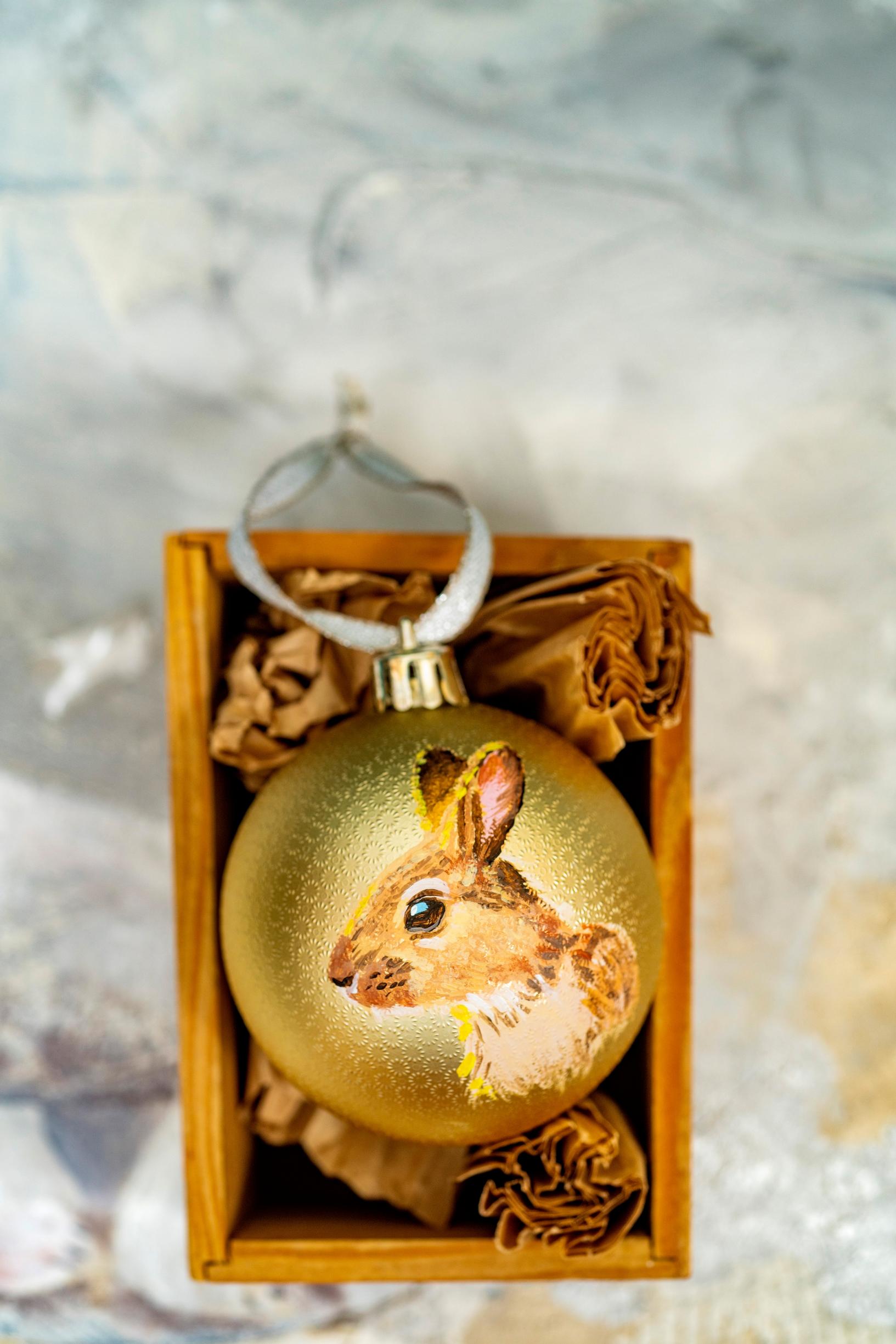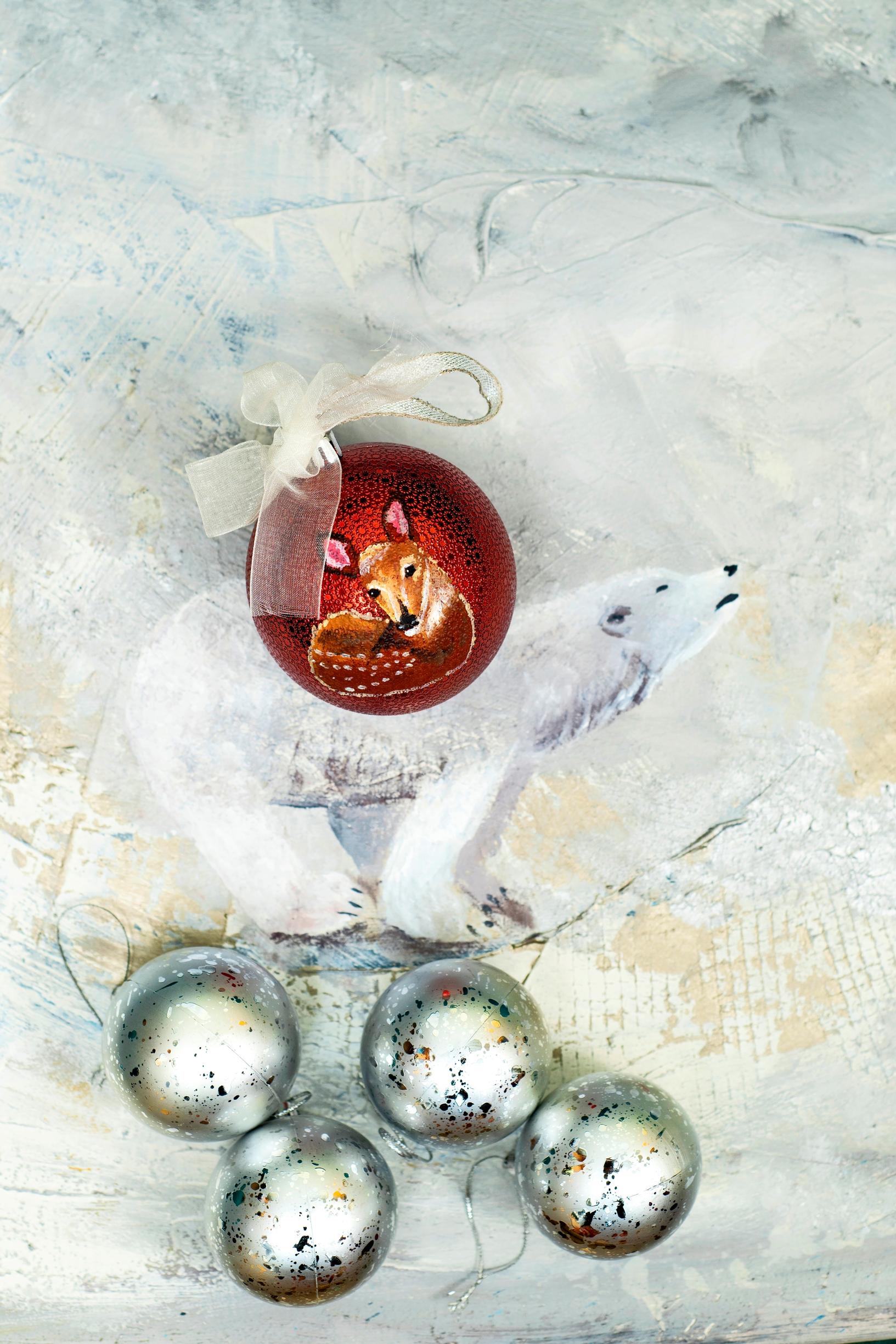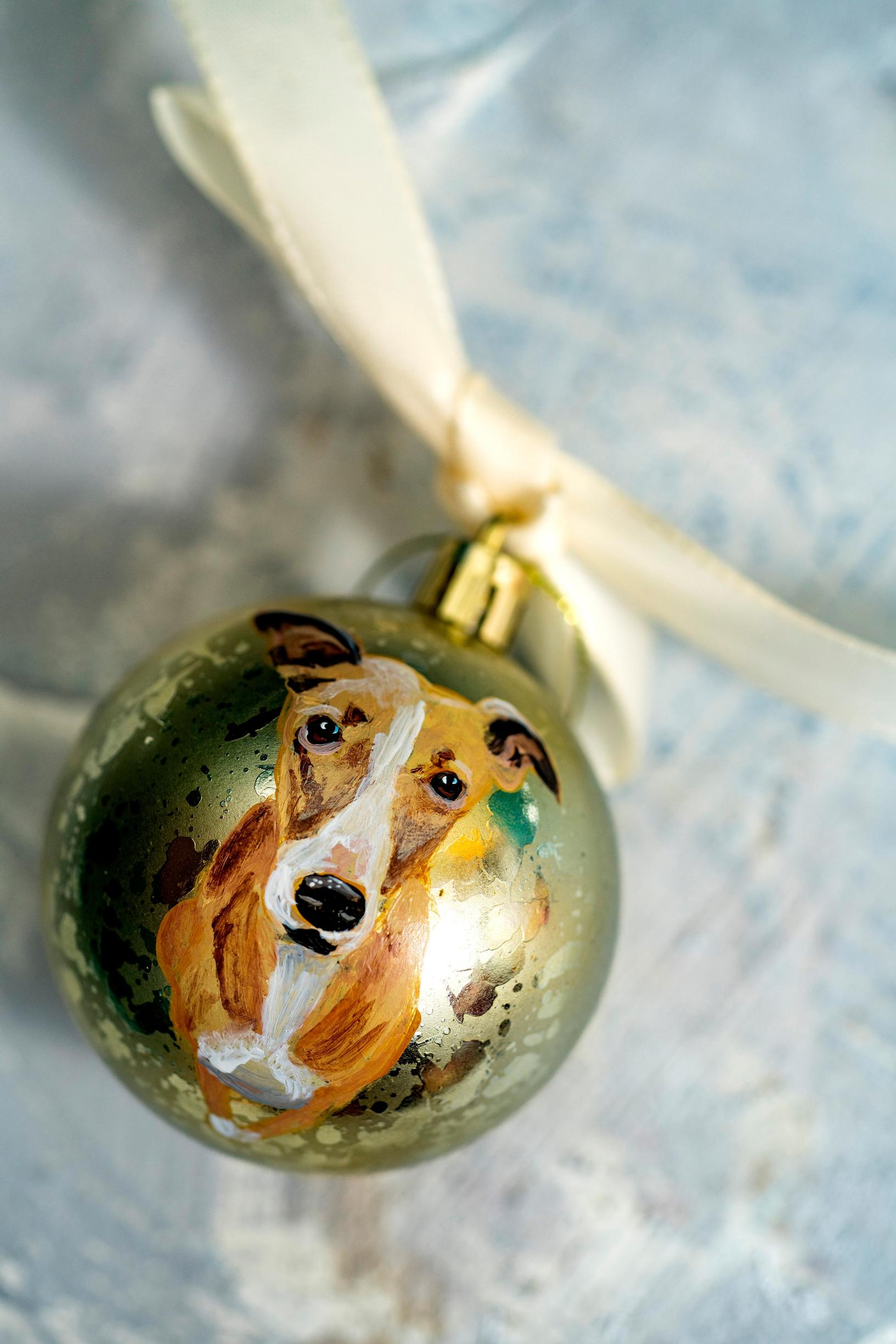
Marianne brings beloved pets to life on Christmas ornaments: “My first portrait subjects were found at home”
40-year-old Marianne Kantanen paints pictures of pets on Christmas ornaments. She says the best images are created on large ornaments with a coarse surface.
In 2015, I spotted some large Christmas ornaments in a store—about 10–15 centimeters (4–6 inches) in diameter—and immediately wondered if I could paint on them. My first attempts were on glass ornaments, but I quickly switched to plastic ones because glass breaks easily. I usually look for ornaments to paint during post-Christmas clearance sales. My son sometimes gets bored during our shopping trips when I want to check which Christmas ornaments are available.
I’ve always enjoyed experimenting with different techniques, materials, and surfaces in my art. I’m not sure exactly where the idea to paint Christmas ornaments came from, but I’ve likely painted over a hundred so far. At first, I painted landscapes, but soon I began painting animals, which feels more natural to me as a visual artist. The cats and dogs in our family are always my first subjects when I’m testing new surfaces.



Some dog breeds are more challenging than others. Paying close attention to the animal’s shape improves the end result. For instance, spitz-type dogs are tricky to capture on a curved surface because their upright ears and long muzzles can get distorted from various angles. Round-headed dogs, such as French bulldogs, tend to work really well on ornaments.
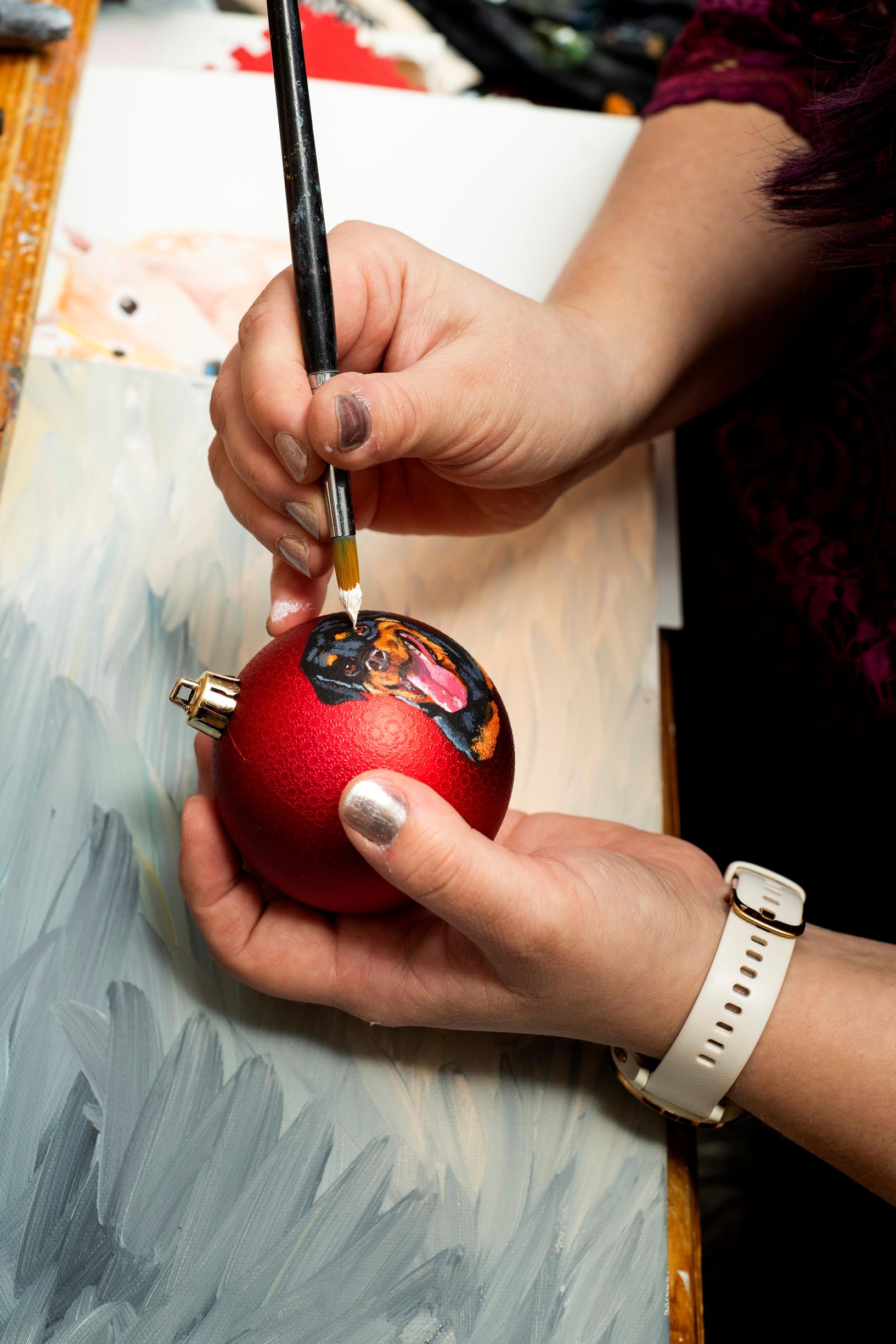
Capturing the animal’s expression is everything. The eyes are the most important part, and making them look expressive can be tough on a small ornament. It took me a while to find brushes tiny enough for this job. I don’t make a pencil sketch first; instead, I paint directly onto the ornament with acrylics and then seal it with spray varnish.

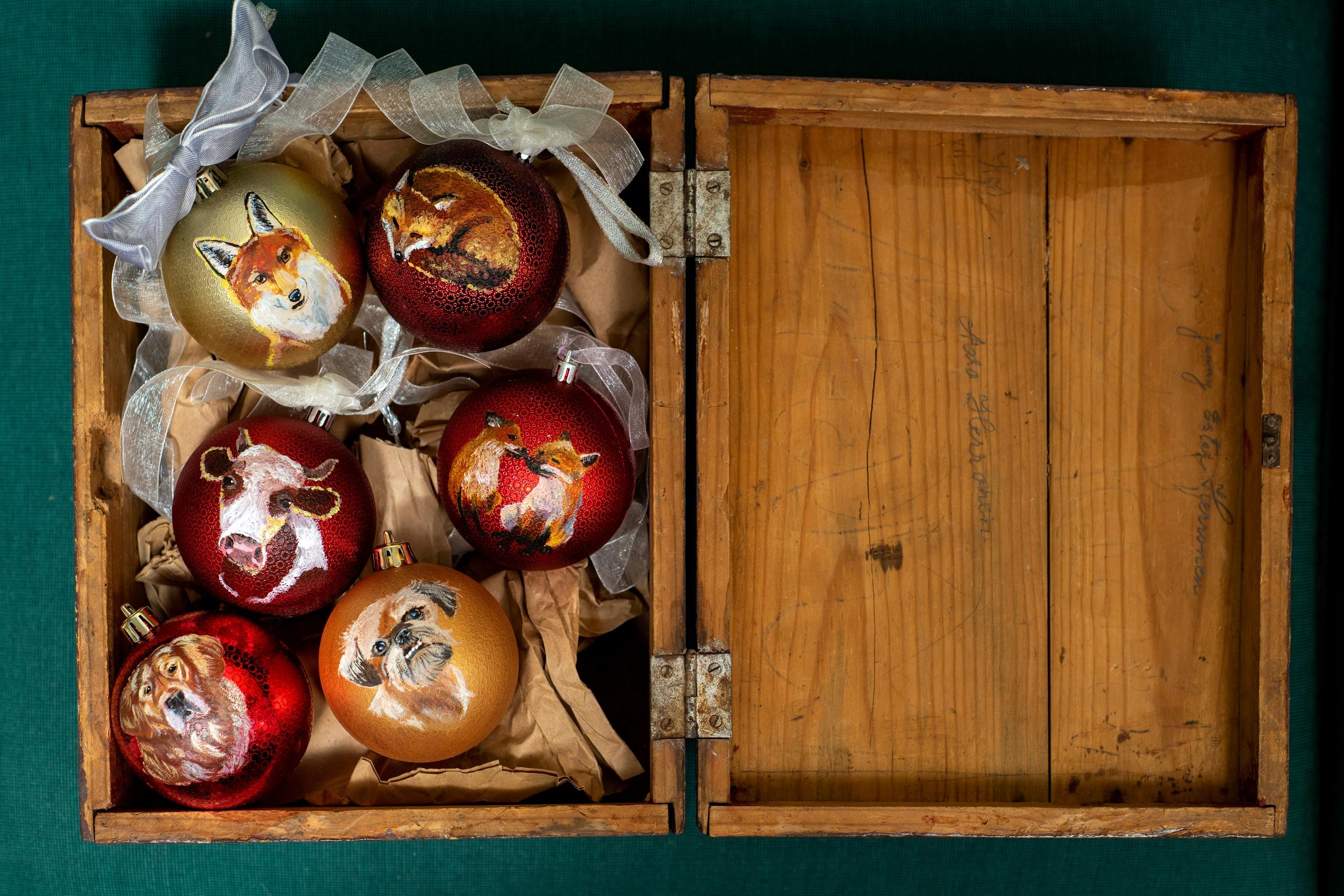
One of the biggest hurdles in painting Christmas ornaments is that nowadays, stores often sell smaller ornaments than when I started. I’m not sure if it’s just a trend, but it can be hard to find ornaments that are at least eight centimeters (3 inches) in diameter. I’ve tried painting on anything smaller, but the subject doesn’t really pop on those tiny surfaces.
Another frustration is that many ornaments on the market are completely smooth. I prefer a rougher surface because it has more character and provides an extra challenge.
I sometimes get requests to paint people’s pets onto ornaments, and now I do paint ornaments for sale. As Christmas approaches, I often have festive music playing in the background while I work. We decorate our home extensively, and of course our own tree is adorned with ornaments I’ve painted.