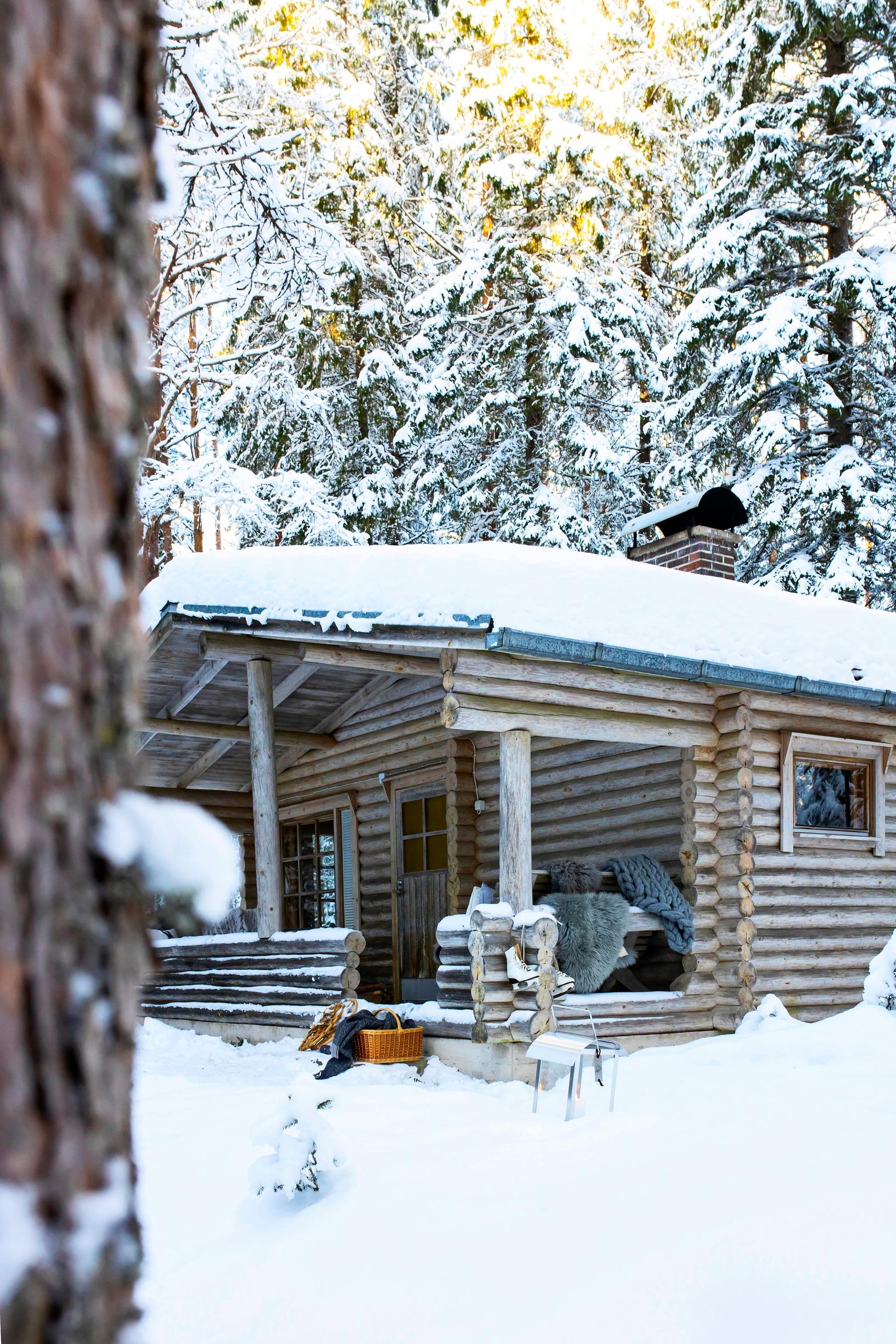
No electricity, no running water: Ulla’s off-grid Finnish cabin is her nature-first escape
This log cabin in Raahe, Finland, keeps comforts to the basics: carried water and wood heat. That’s exactly the way of life Ulla Saarenpää cherishes.
Forget modern conveniences. At this cabin, time is spent much as it was in the early days of Finnish summer-cottage life. It’s beyond the end of the road, and water only runs indoors if the person with the bucket moves fast enough. The place warms up only after enough logs are crackling in the firebox. There’s no electricity—and no plans to bring it in.

This time, Ulla Saarenpää has brought her friend Johanna Kylmälä along instead of the Saarenpää family. Ulla grew up at the nearby Salmela farm—just a stone’s throw away—and now owns it as the third generation.
“Up here on the ridge there used to be, even in my father’s childhood, a log-driving site. Trees were slid down to the river below to be carried away by the current,” Ulla says.

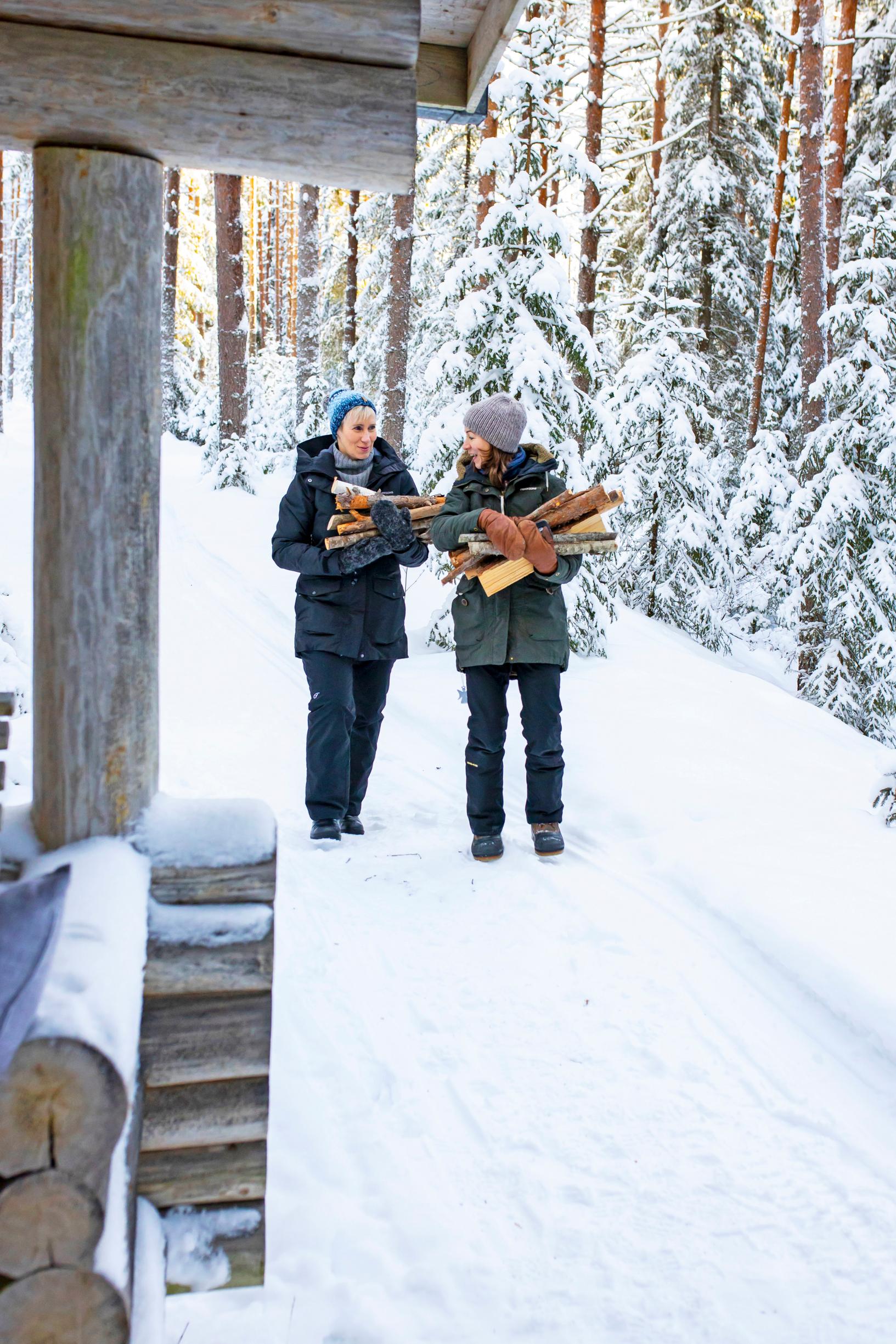
The air outside is brutally cold, dropping far below zero. Inside, it’s only a little warmer than freezing.


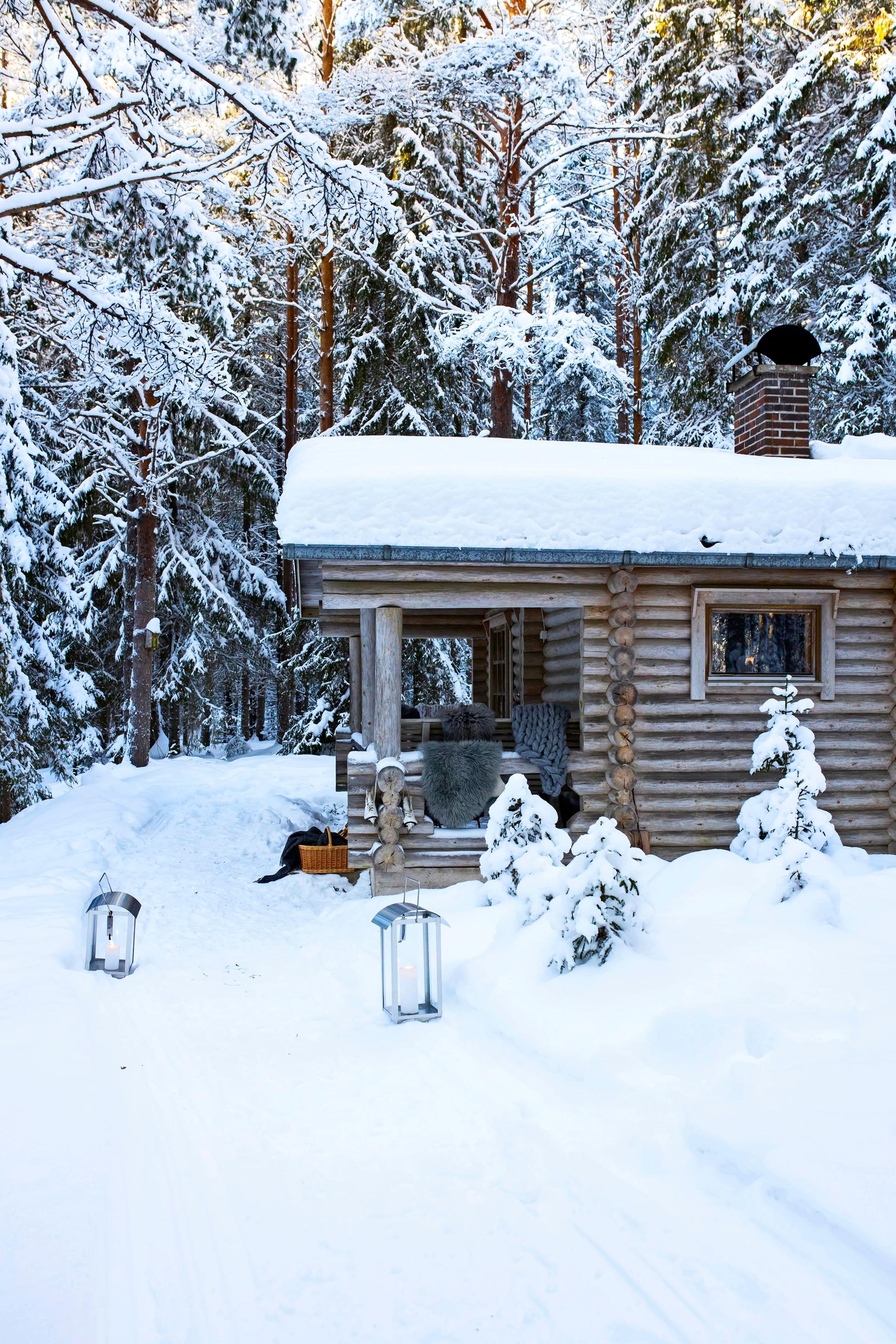
The cabin is dear to Ulla—that goes without saying. Her father felled the logs from their own land, peeled them by hand with a drawknife, and built a hideaway that has weathered to a beautiful gray.
When Ulla was little, she and the other village school kids came here to sled. It was wild, especially when they skied off the jump the boys had built. Winter also meant ski treks along the river with her mother. In summer, Ulla learned to swim in the river and checked fish traps with her father.

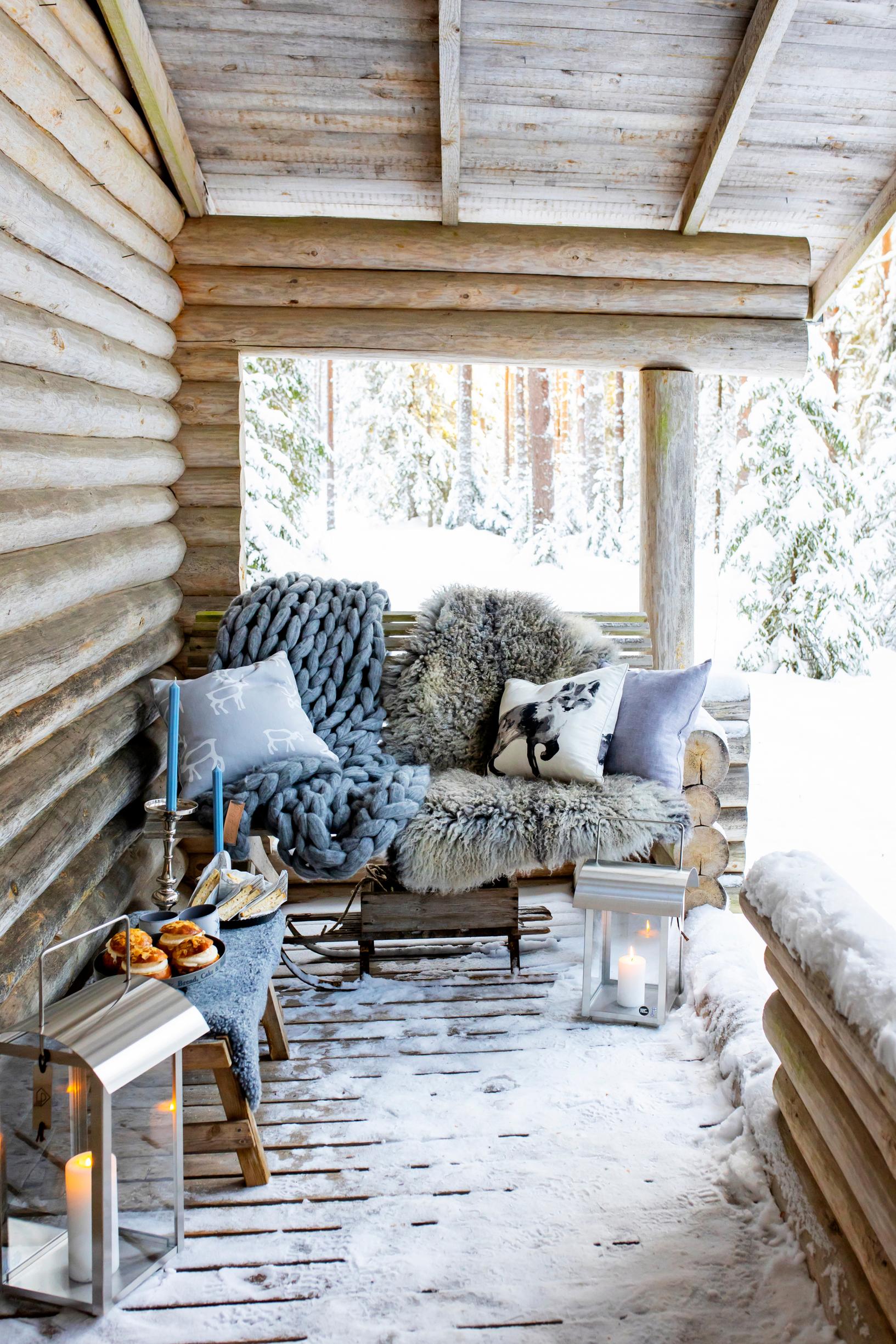
“It’s wonderful to admire the marks on the wall logs my father peeled, even after all these years.”
From her home in Pyhäjoki, it’s a little over an hour’s drive. Ulla’s thoughts turn to cabin life the moment she hops in the car, and as the miles roll by, the rush of the day falls away. On the final stretch she greets the deserted village blacksmith’s house and, with luck, spots a roe deer or a hare in the yard.
“From there, it’s easy to continue toward our own cabin setting. I pack snacks in my backpack and follow the narrow path deeper and deeper into the forest. The familiar ravens let the other forest dwellers know a human is approaching. That’s when I feel I’m coming home,” Ulla says.

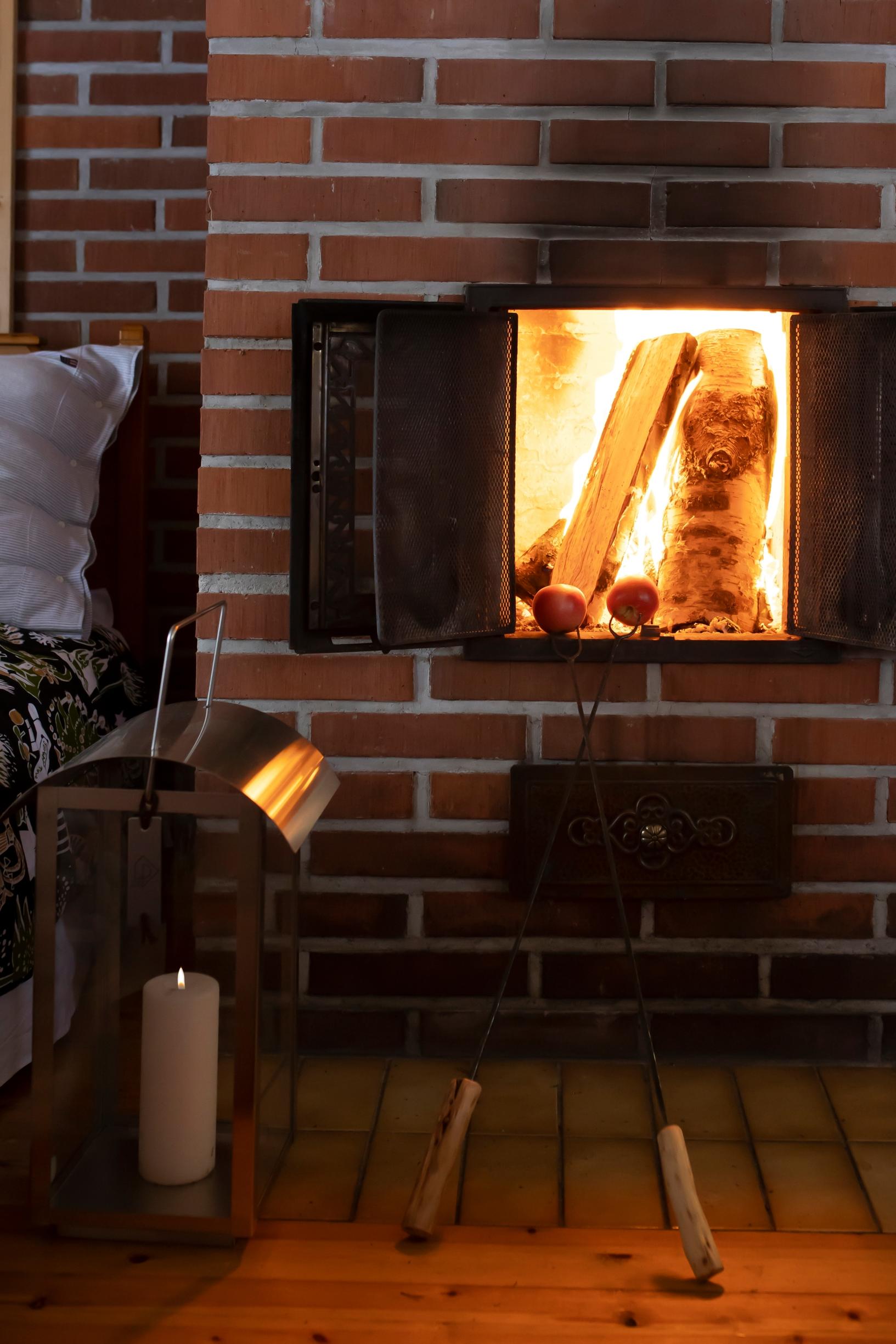
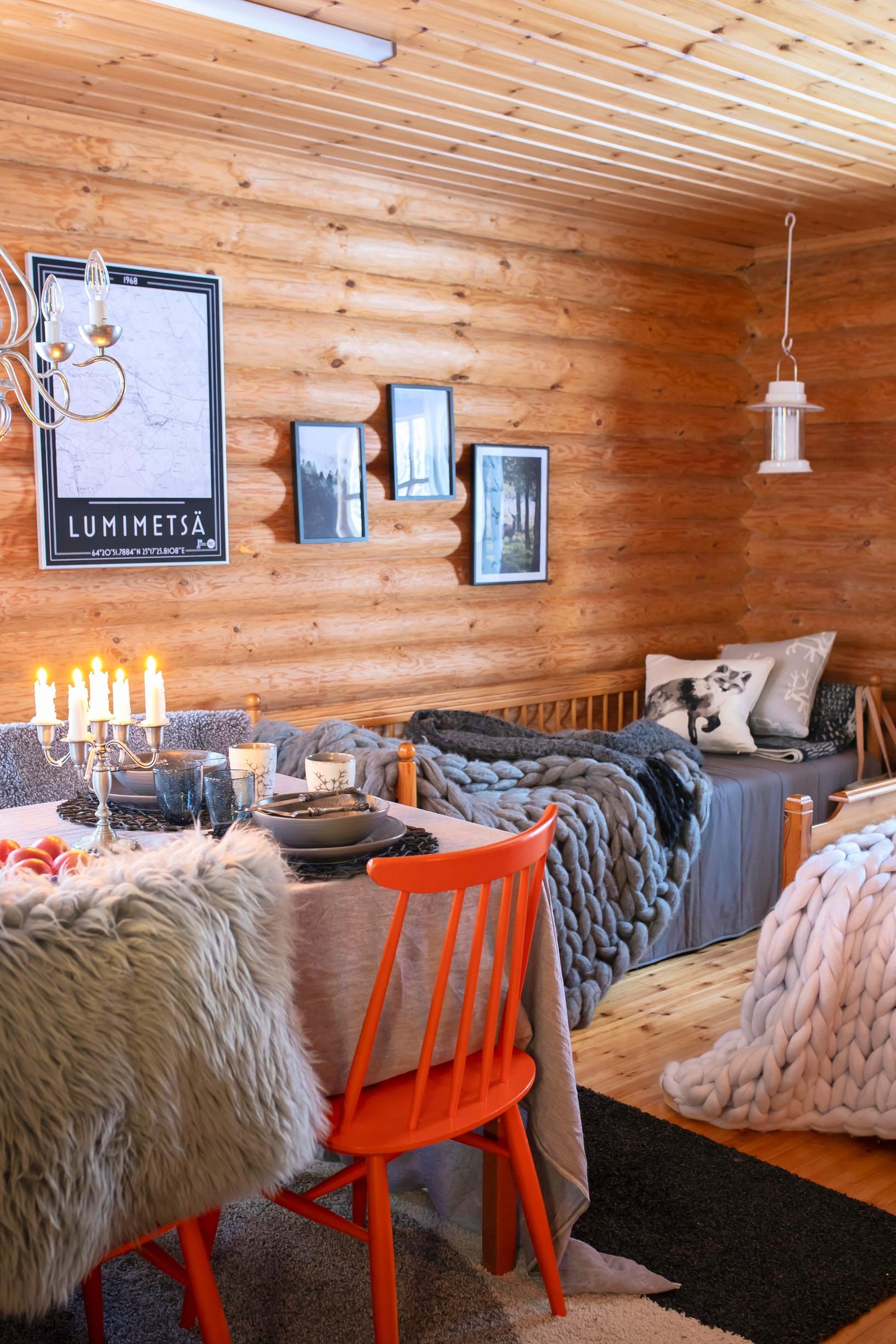
Inside, it’s now just barely above freezing, thanks to Ulla preheating the cabin the day before with her guests in mind. Wool socks add comfort until the temperature climbs to something pleasantly cozy. Besides the fireplace, the only other source of heat is the sauna stove behind the wall.
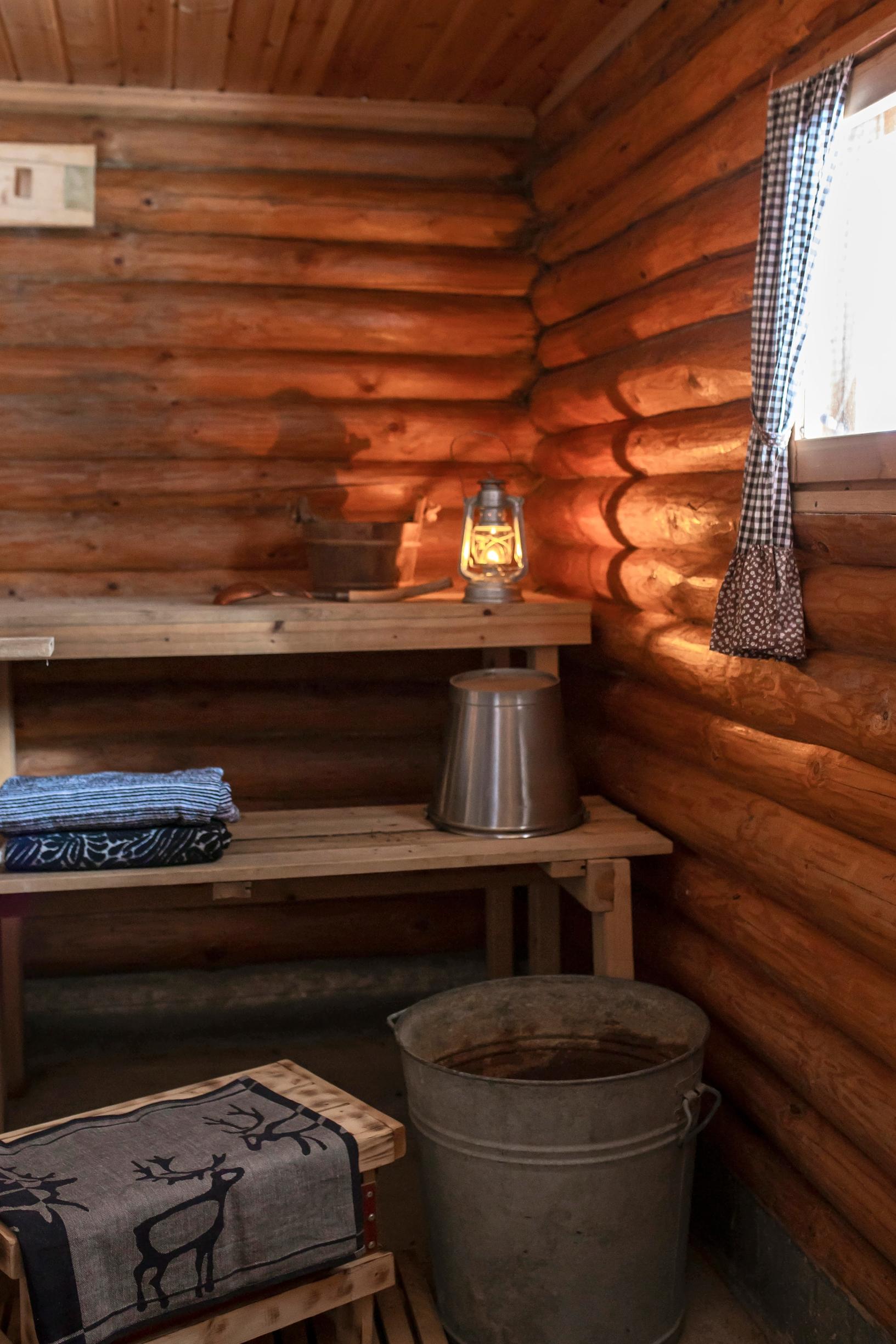
“My grandmother used to be in charge of heating the sauna, and now it’s my turn to slip birch bark under the stove. I haul wash water from the well—it’s a workout in itself,” Ulla says.


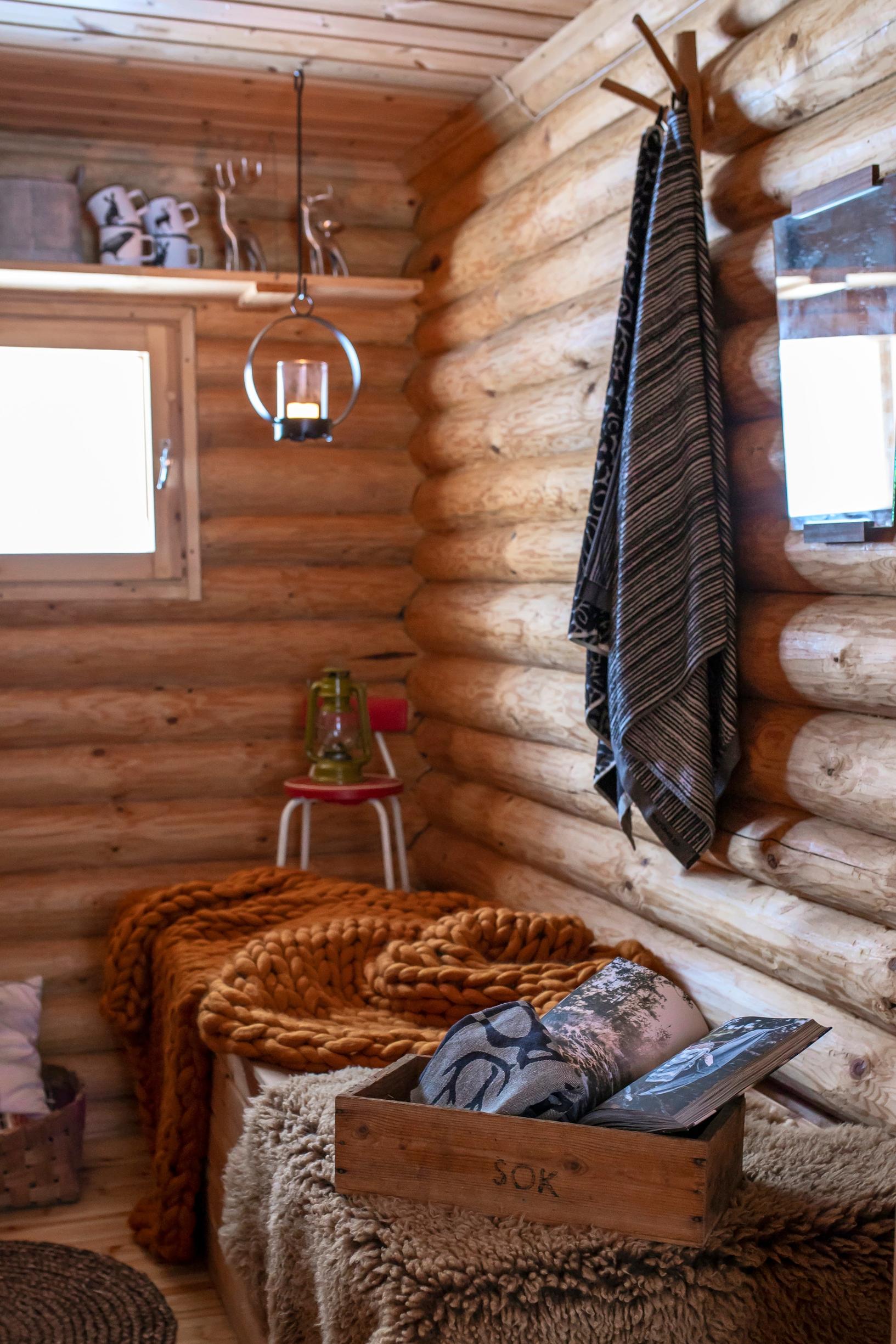
Cooking, on the other hand, is something Ulla keeps to a minimum when she’s at the cabin. She prepares most meals in advance, either at the family home in Pyhäjoki or in the unoccupied main house on her home farm. In her view, it would be impossible to carve out a separate cooking area in such a small cabin, so they haven’t even considered it. There’s a fire pit next to the cabin for grilling sausages.
“No one lives in my childhood home at the moment, but it serves our family beautifully as a cabin base in other ways too, not just for cooking. It has electricity, and running water. On the coldest days we sometimes stop in to warm up before the cabin’s thermometer needle climbs high enough,” Ulla reveals.

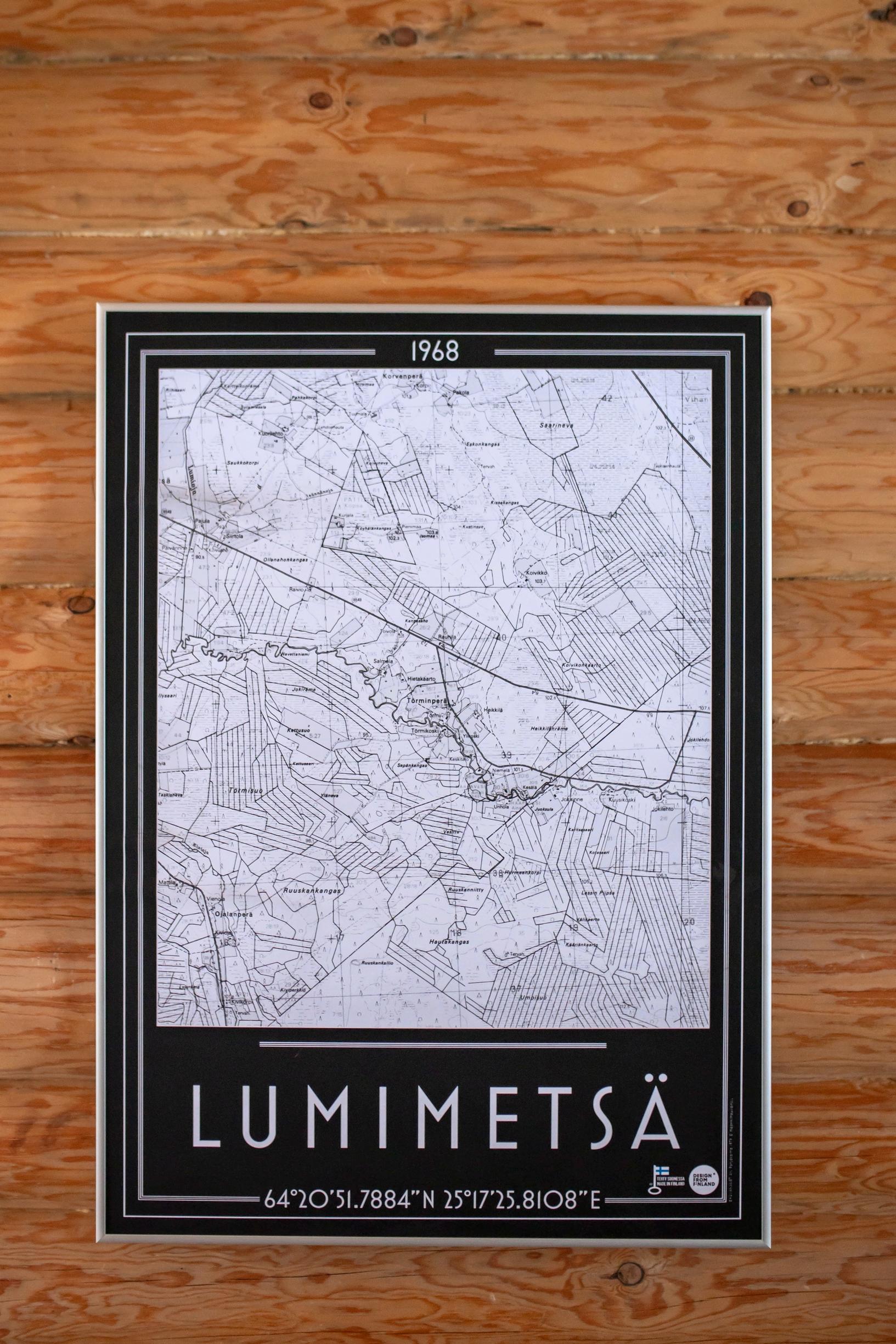
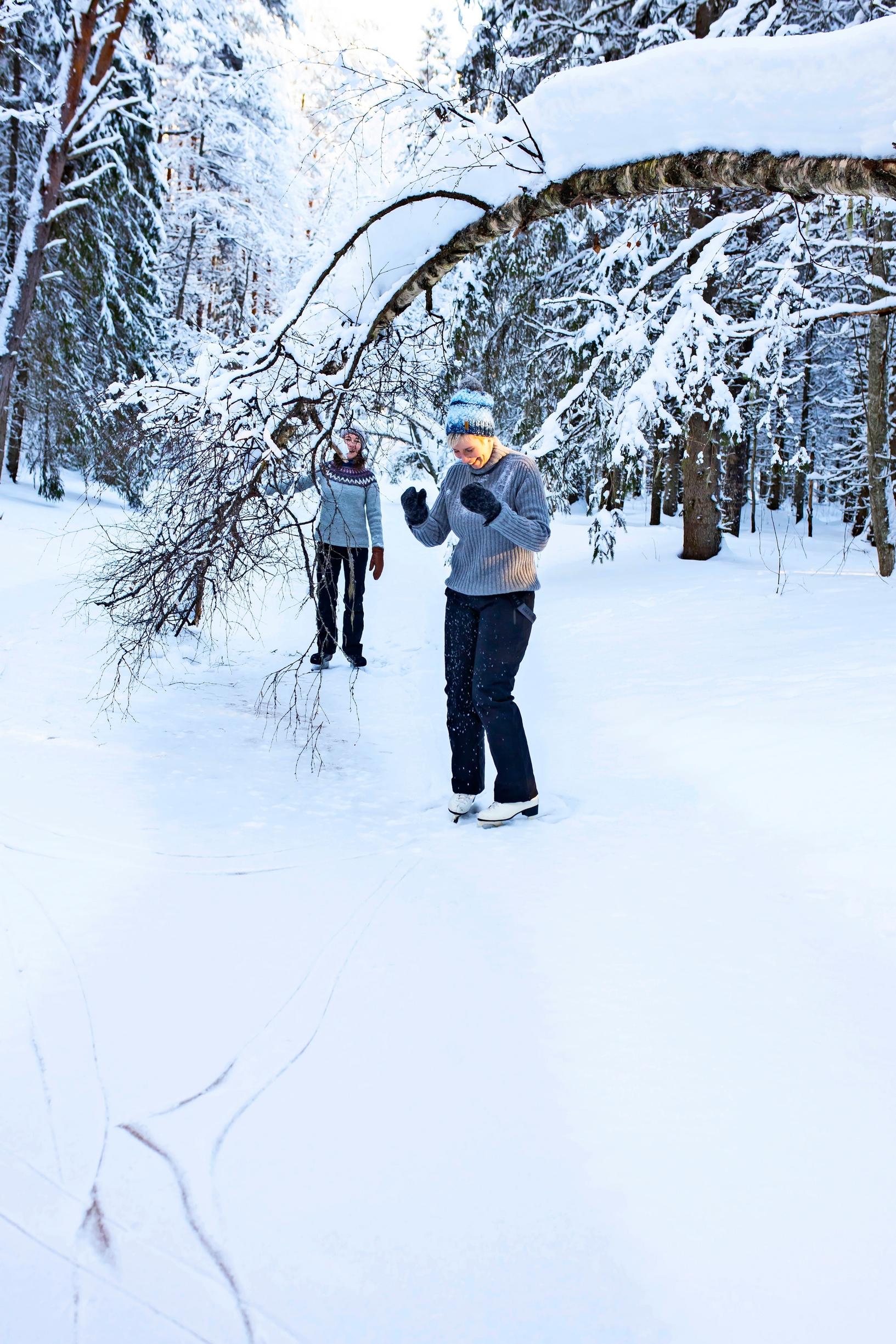
She especially loves being at the cabin when autumn twilight sets in and during the winter months—weather permitting. She happily goes berry picking or hikes along the boardwalks across the nearby bog. Photography often draws her there.
“The mist that drifts off the bogs at sunset pulls me in in a truly magical way. In winter, I usually travel on snowshoes.”

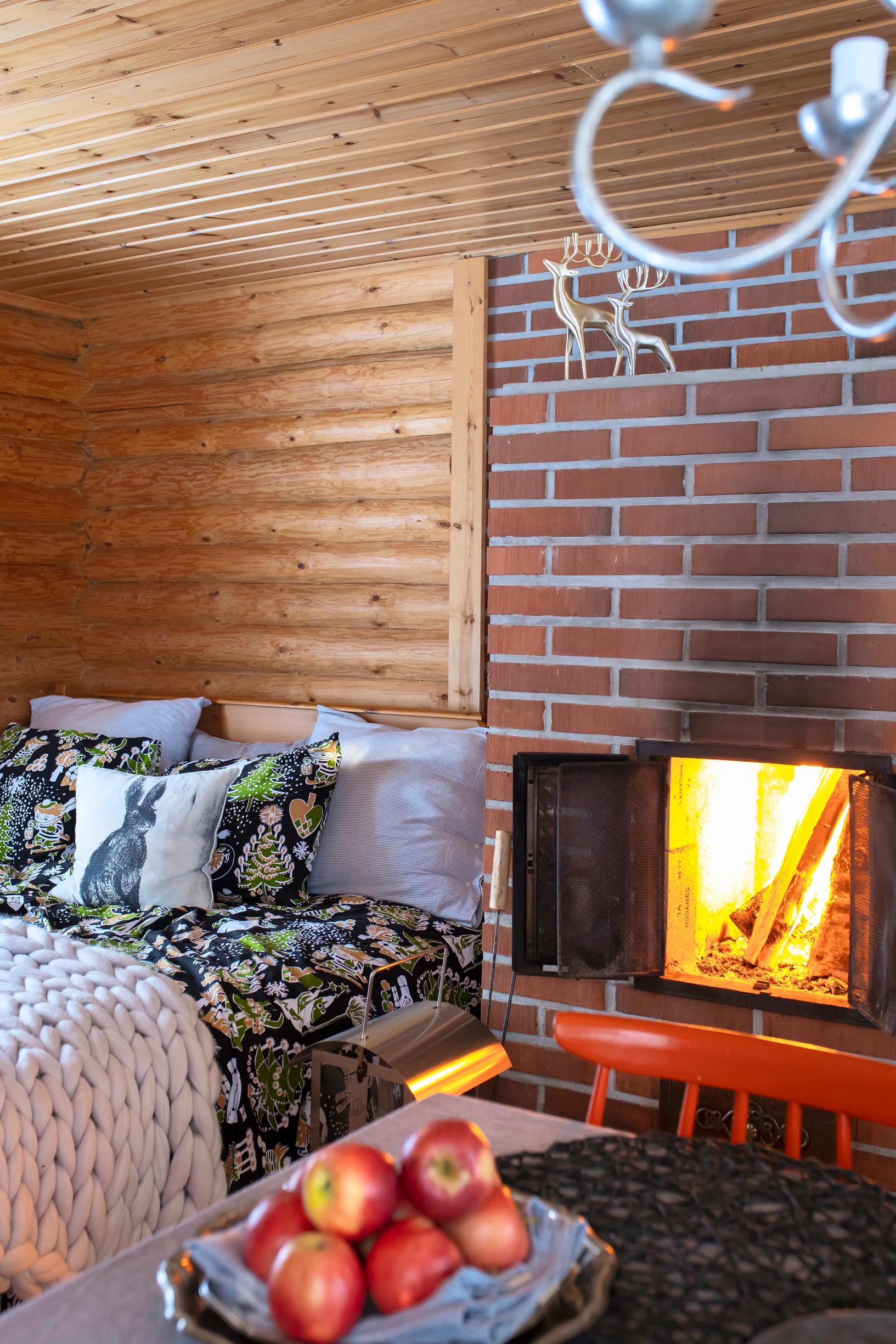

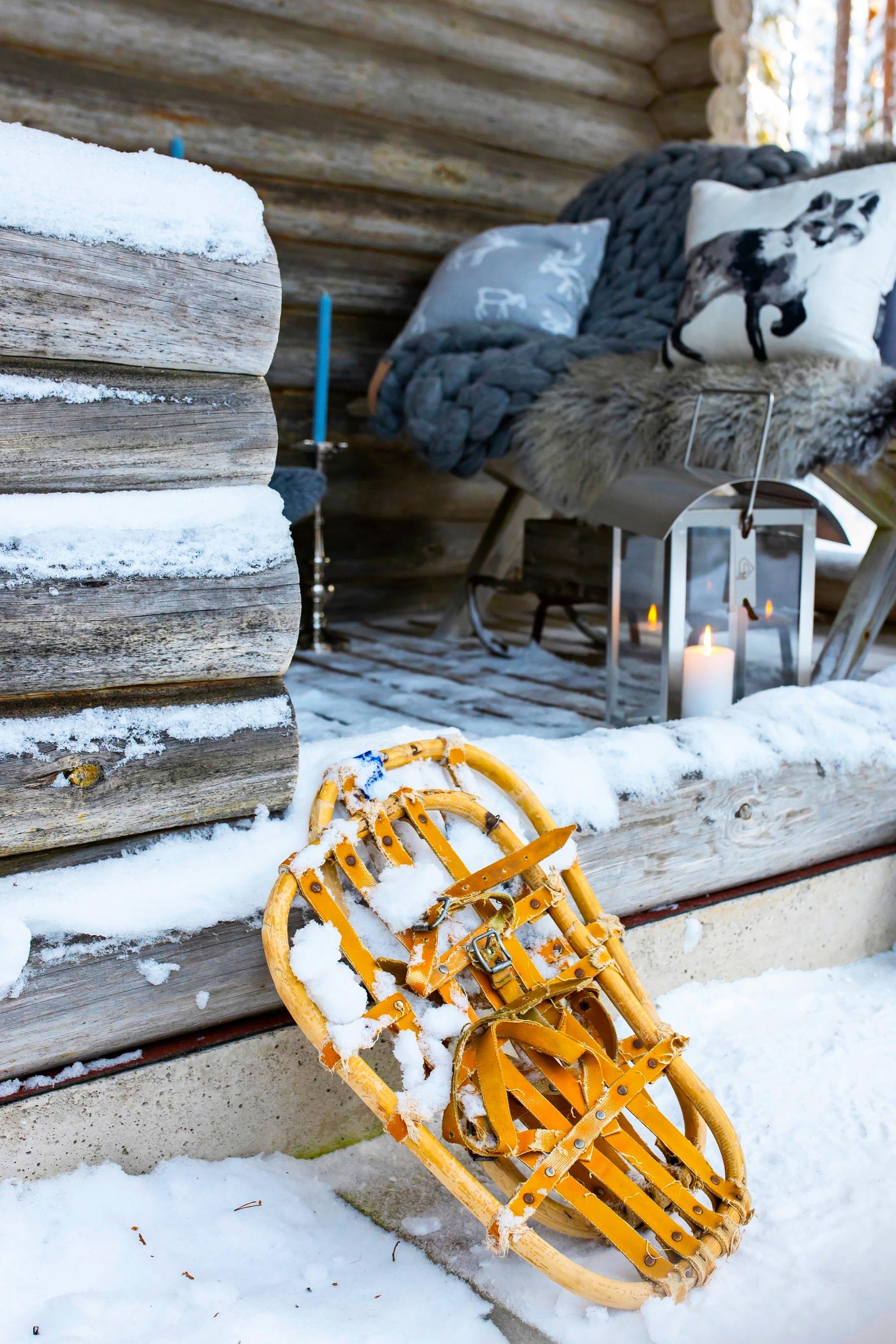
Simplicity and closeness to nature are this place’s trump cards, and that’s why the cabin will stay lightly equipped.
Nothing is updated for its own sake, and under no circumstances will the logs be painted white. The gray of the façades can deepen year after year. The decor has evolved over time, but only with textiles, and the joyful color comes from spindle-back chairs painted red. Candles and the fireplace light what they light.
“It’s wonderful to admire the marks on the wall logs my father peeled, even after all these years. You can’t help but think about how much hard work went into them.”

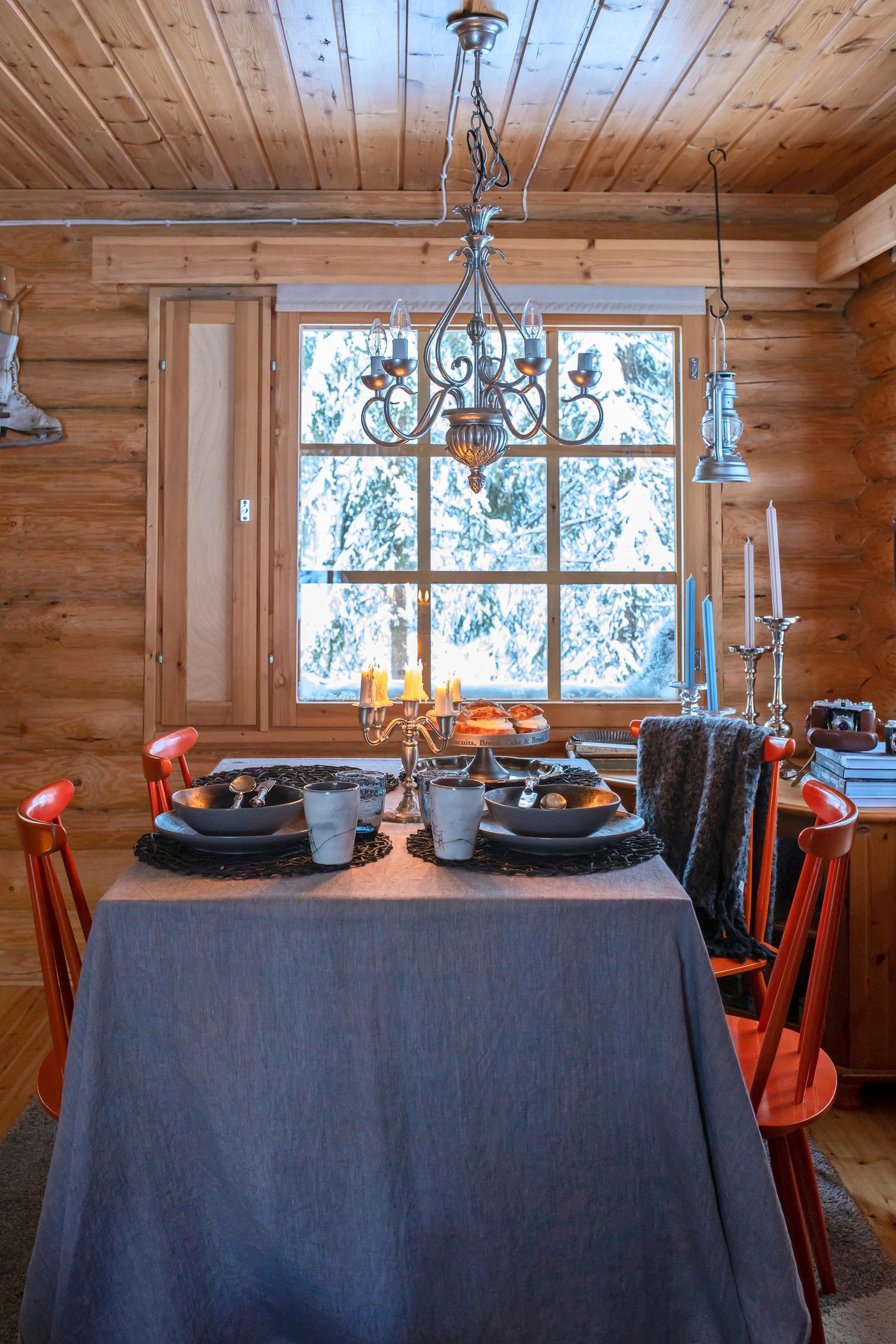
Every log was felled from their own forest. Ulla’s father peeled the logs by hand with a drawknife and built a cabin for his family.
Before dusk, you can try scanning the view out the windows for the occasional wild animal.
“You can spot hares here, as well as otters and beavers. A wolf tracker has revealed that we’ve sometimes passed a pack fairly close by, but we’ve never managed to see a single wolf—or even hear them howl. The otter on the cabin’s riverbank, on the other hand, doesn’t mind us at all and might boldly slip into the water right before our eyes.”
Ulla doesn’t feel afraid in these endless backwoods. She knows the trails and routes like the back of her hand and always finds her way to the cabin.