

The sweet square Finns can’t resist—how mokkapalat became a national crowd-pleaser
Mokkapalat might look unassuming, but their status in Finnish baking culture is anything but small: these cocoa-rich squares with their signature mocha frosting have become a fixture of bake sales and celebrations. Journalist Virpi Salmi explores why this particular bake matters so much to us Finns.
I love baking and have done it all my life, but I have to admit I didn’t hold mokkapalat, Finnish chocolate squares topped with a mocha frosting, in very high regard for a long time.
There are two reasons. In my early teens in the 1980s, mokkapalat were the trendy bake of the moment in Finland, made and served to the point of saturation. Before the internet, the recipe repertoire was much more limited, and hardly anyone had even heard of many American—or even other European—pastries. In our kitchens we baked whatever we found in home cookbooks, home-ec books, or the food pages of magazines.
Back then, alongside traditional buns (pulla), mokkapalat felt youthful—deliciously sweet and chocolatey. There wasn’t a single party without them. And there were plenty of parties. Kids’ birthdays were celebrated over coffee, and everything was home-baked.
Like many Finnish pastries, mokkapalat trace their origins to Sweden.
The other reason for my disdain toward mokkapalat was the baking snobbery I developed over time.
After the mid-1990s the internet began overflowing with recipes, and Finland became more international as we joined the EU. As my pastry knowledge grew, I started to look at mokkapala recipes critically. They don’t contain any chocolate at all—just cocoa powder. There’s only a little fat in the batter, often margarine, thinned with milk. That’s why the base isn’t especially flavorful; it dries out easily and is a bit too airy.
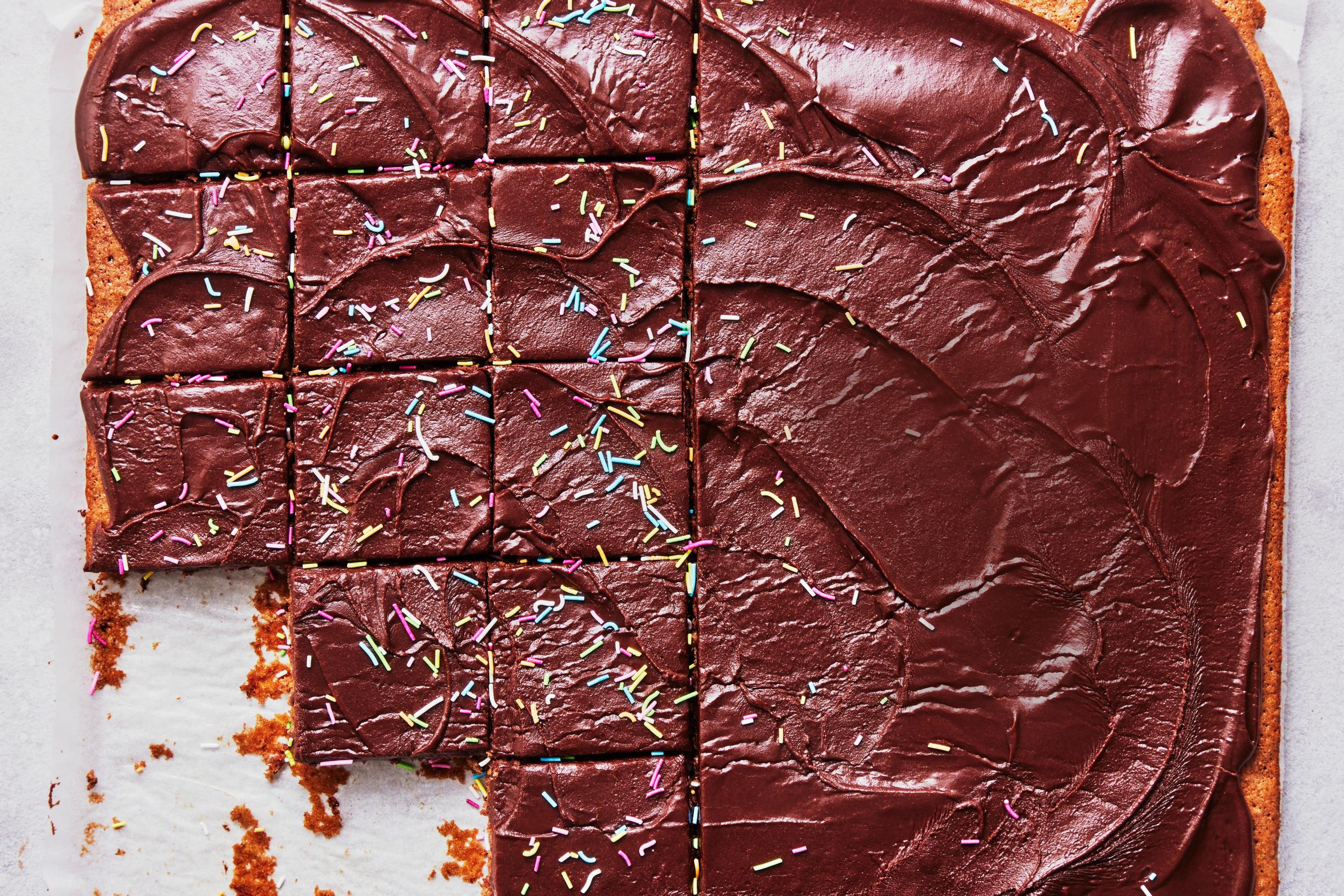
Many recipes also call for so little frosting that it’s impossible to make it cover an entire sheet pan. You need a good, wide-bladed knife warmed in hot water to spread that meager amount. Even then, the edges are often left bare, and at best you end up with a frosting layer only a couple of millimeters thick.
I started calling mokkapalat a poor man’s brownie, and baked the real thing instead—brownies with butter and plenty of chocolate, baked so they stay moist and fudgy inside.
The origins of mokkapalat lead to Sweden, as with many other Finnish pastries. According to Tiina Kiiskinen, a curator at the Finnish Hotel and Restaurant Museum, the first mokkapala recipe was published in the Swedish Sju sorters kakor cookbook in 1945. The book was also translated into Finnish.
It makes sense that coffee-loving Finns embraced the pastry. Sweet baking also took off in the 1950s as food rationing gradually ended after the wars. After years of scarcity, people were truly craving sugar.
According to Kiiskinen, the original Swedish mockarutor recipes used plenty of chocolate, but in Finnish translations it was often swapped for cocoa. Cocoa was easier to find here and cheaper.
1940s
The first mokkapala recipe is published in the Swedish cookbook Sju sorters kakor in 1945.
1950s
In Finland, sweet baking surges in popularity as food rationing ends.
1970s
The recipe is still called mokkaruutu, mocha square, because in Finnish, the word mokkapala also means a piece of suede.
1980s
The word mokkapala becomes established as the name of the pastry.
2020s
In 2025, the treat celebrates its 80th anniversary.
In Swedish recipes, mockarutor are decorated with coconut; in Finland we go for sprinkles. I’ve tried to figure out why Swedes love coconut while Finns tend to dislike it—even though in so many other ways our tastes are similar.
One explanation is that exotic ingredients like coconut reached Sweden during its great-power era and, filtered through the royal court, spread first among the upper classes. Sweden also has a popular cake called silviakaka, apparently named after the current queen, which is a bit like mokkapalat except the base is completely pale. It’s baked on a sheet pan and topped with a vanilla buttercream—and then generously showered with coconut.
Thanks to Asian food trends, I’d say Finland has also become more accustomed to the taste of coconut—and it is delicious. Still, I’m not sure I’d dare bring coconut-topped mokkapalat to the table.
Mokkapala recipes also call for “strong coffee.” It’s a wonderfully old-fashioned note. No thin wartime brew! As a kid, that vagueness worried me and I asked my mother how strong it should be. (Just regular filter coffee, I learned.)
Another laborious part was waiting for the freshly brewed coffee for the mokkapalat to cool enough. Coffee that’s too hot—or melted margarine that’s too warm—will cook the eggs in the batter and ruin the texture.
In modern recipes the batter often doesn’t include coffee at all; it’s used only in the frosting. What if you swapped part of the liquid in the batter for coffee?
It also seems that for 2020s bakers, some recipes have upped the amount of frosting. Now we’re talking!
For the next bake sales we made two sheet pans of mokkapalat per child. Money poured into the class trip fund.
My relationship with mokkapalat had a renaissance when my child’s lower secondary school German group started raising money for their class trip to visit Germany. I was vaguely aware that mokkapalat have long been a bake sale favorite, but come on, it was the 2010s! And one parent even said they could get berliners for the event. I was certain today’s kids would choose those over flat, brown homemade squares.
I was so wrong.
The mokkapalat sold out immediately, leaving only doughnuts—and then nothing at all—to offer. No one wanted the doughnuts. For the following sales we happily made two sheet pans per child. Money flowed into the class-trip kitty. The kids ended up spending five days in Berlin and still had more than 30 euros per day for meals.

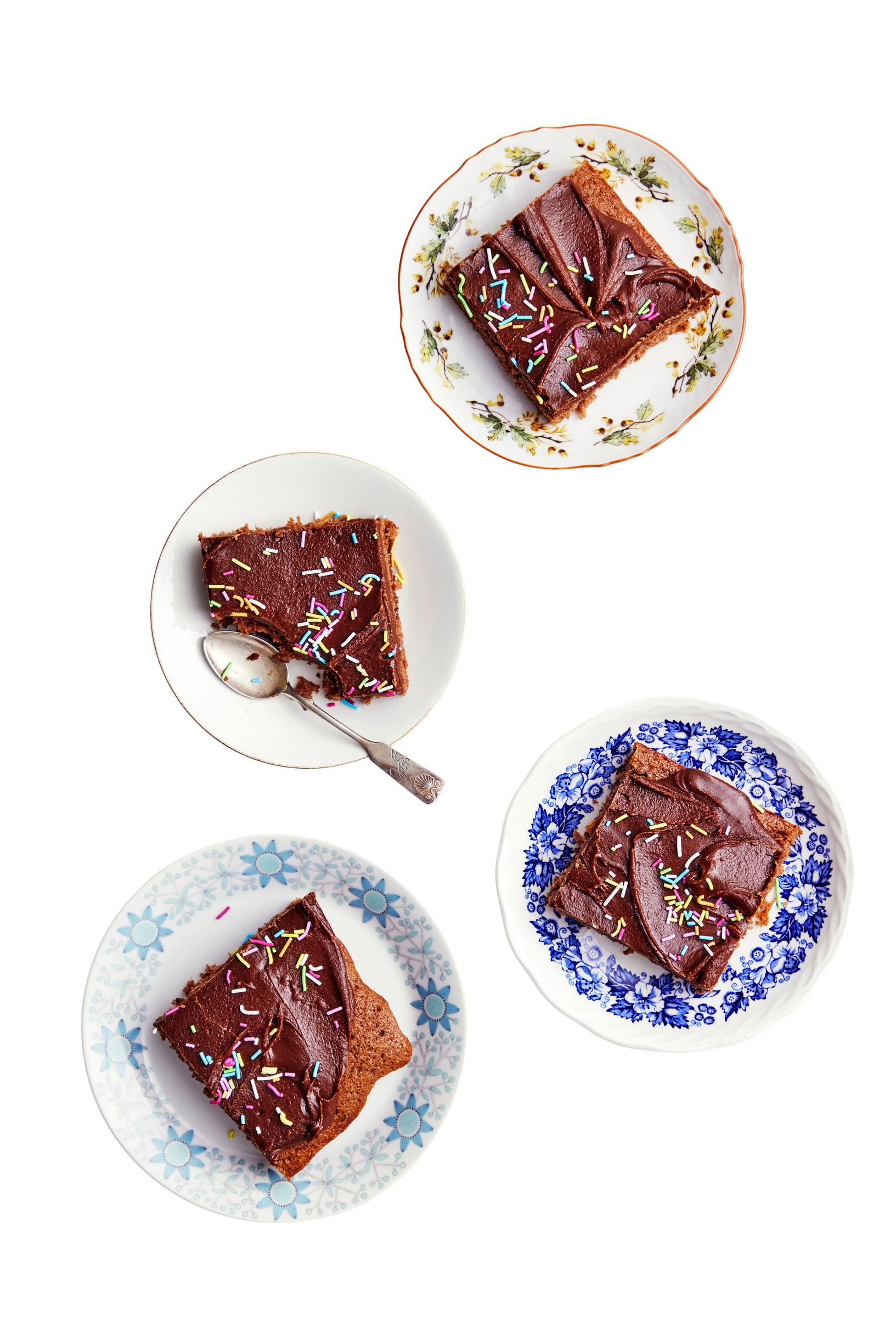
The social significance of mokkapalat isn’t small. Over the years they have surely raised millions of euros for schools and sports clubs. Mokkapalat have become a symbol of fundraising for kids’ schools and hobbies.
The media also loves to debate what to call them. In Swedish, the squares can be kärleksmums or snoddas, and in Finnish, beyond the names already mentioned, you’ll also hear suklaapelti (“chocolate pan”), and in the Pori region masaliisa—the origins of which are murky, as with many folk names.
Ritva Kylli is a university lecturer in history at the University of Oulu and the author of two excellent nonfiction books on the history of Finnish food.
Kylli dug into the historical newspaper archive and noticed that as late as the 1970s, “mokkapala” in the press meant pieces of suede and the garments and accessories made from them. There were, however, recipes for a bake called mokkaruutu. Only in the 1980s did mokkapala start appearing exclusively as the name of the pastry, and by the following decade it had become a coffee time staple.
Why, I wonder, have mokkapalat never been served at the Independence Day Reception? It would be an obvious bake for Independence Day.
Kylli has no trouble understanding the popularity of mokkapalat.
“As kids, baking with my sisters, it was amazing to get a whole sheet pan of something sweet with relatively little effort. Many baking recipes are quite laborious and involve fiddly steps, but mokkapalat were nicely straightforward to make,” she says.
That’s so true! Even pulla is far more work. With mokkapalat you do have to beat the sugar and eggs until fluffy, but that’s the most demanding step. And honestly, when you’ve got a sweet tooth, quantity can very understandably trump quality.
Kylli also recognizes the idea that in Finnish society mokkapalat are more than just a pastry.
Which makes me wonder why they haven’t appeared at the Finnish President's annual Independence Day Reception. They’d be an obvious choice for Independence Day: a pastry that brings together Finland’s relationship with Sweden, the symbolic postwar rise in prosperity, Finns’ love of coffee, and 1980s nostalgia—not to mention today’s election and sidelines coffee, where you sip from a paper cup and bite into someone’s homemade mokkapala.
I also used mokkapalat as a teaching tool. I took it for granted that a lower secondary schooler would bake them themselves for their class-trip fundraiser. From the kitchen came complaints that other kids’ parents were baking for them. I posted a “shocked” update on social media: “You can’t be serious—don’t bake for them! Focus!” (I did advise doubling the frosting.)
During the pandemic, Finns baked far more mokkapalat at home than sourdough bread.
When Google revealed the most-searched recipes by country for the first time, mokkapalat topped the list in Finland. Helsingin Sanomat reported this in early 2012.
Google Trends shows interest in mokkapalat rising and falling. Interest seems lowest in midsummer and at Christmas. Googling the recipe peaked in the spring of 2020, when people were isolating at home. The Finnish media talked about sourdough, but the searches suggest Finns were tinkering with far more mokkapalat than trendy loaves of bread.
There are endless variations on the recipe, such as miso–caramel mokkapalat, pink strawberry mokkapalat, Käärijä mokkapalat decorated with green candies, brownie mokkapalat, mokkapala muffins, and so on.
Every single baking influencer in Finland has their own version. Anni Ihamäki’s recipe uses Turkish yogurt; Kinuskikissa adds orange juice; and of course there are vegan versions. For example, in Chocochili’s recipe the eggs are simply omitted and there’s more liquid. And the batter includes coffee too! Minna Kauppi shows off a sheet pan of mokkapalat on Instagram whose surface is almost white thanks to an avalanche of sprinkles. That, too, was baked for a child’s hobby cafe.
For my part, I’ve made peace with mokkapalat as they are. They’re not a poor cousin of brownies, but a Finnish classic in their own right—one that reflects our recent history in many ways.
At the same time, I’ve grown a bit purist. Mokkapalat are mokkapalat, and if you top them with strawberry–miso–marmalade–caramel, you’ve made a different pastry altogether. But always double the frosting!

