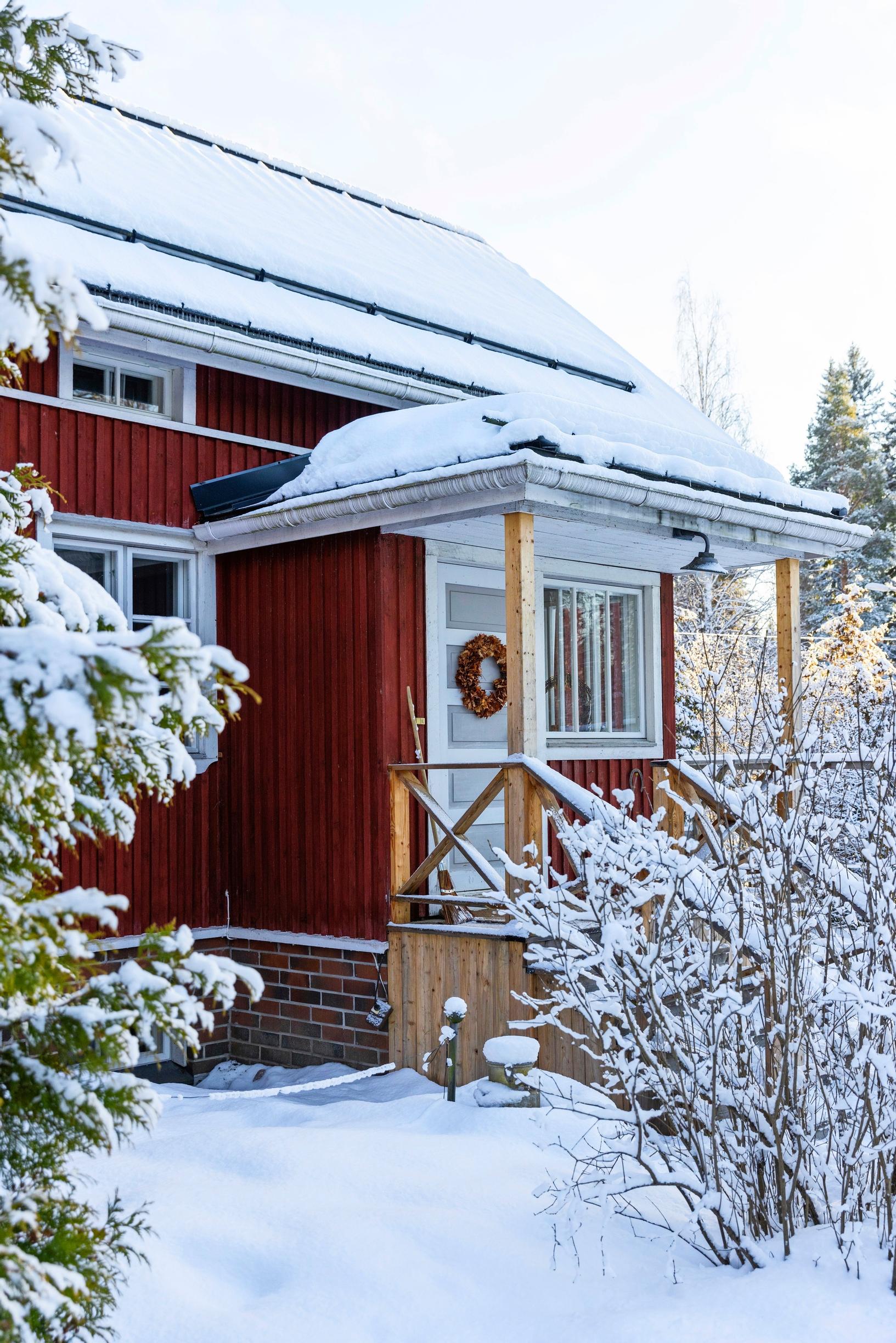
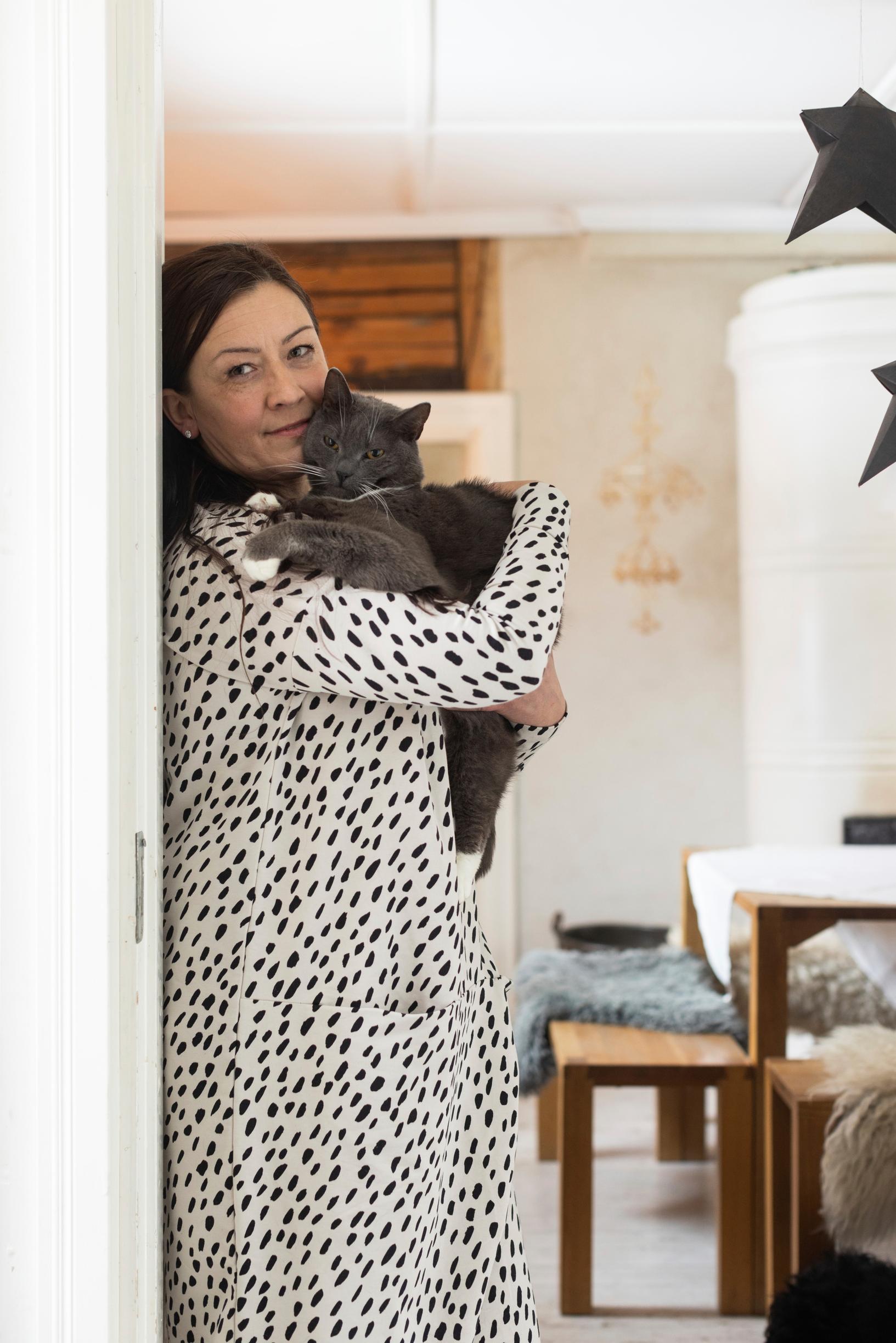
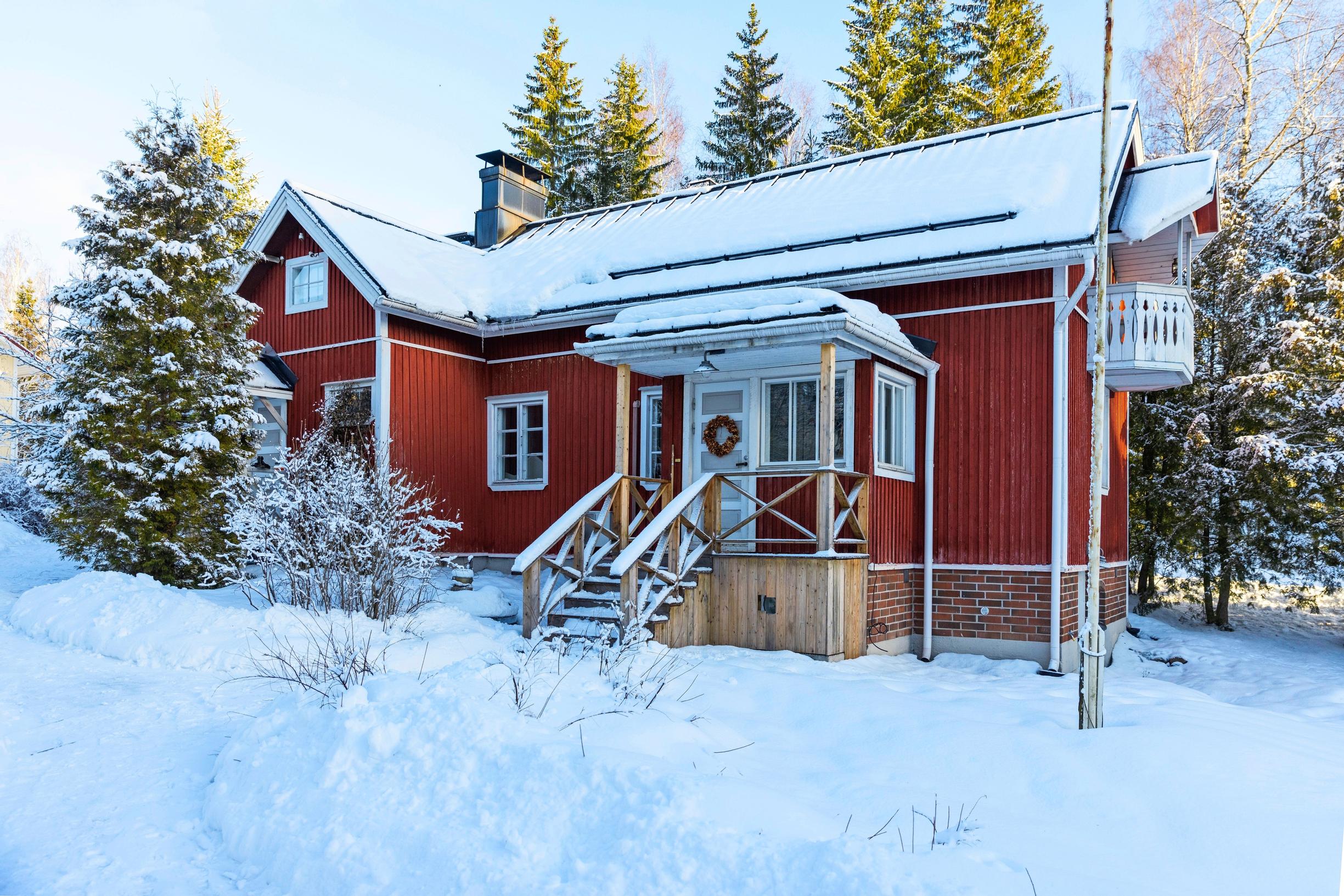
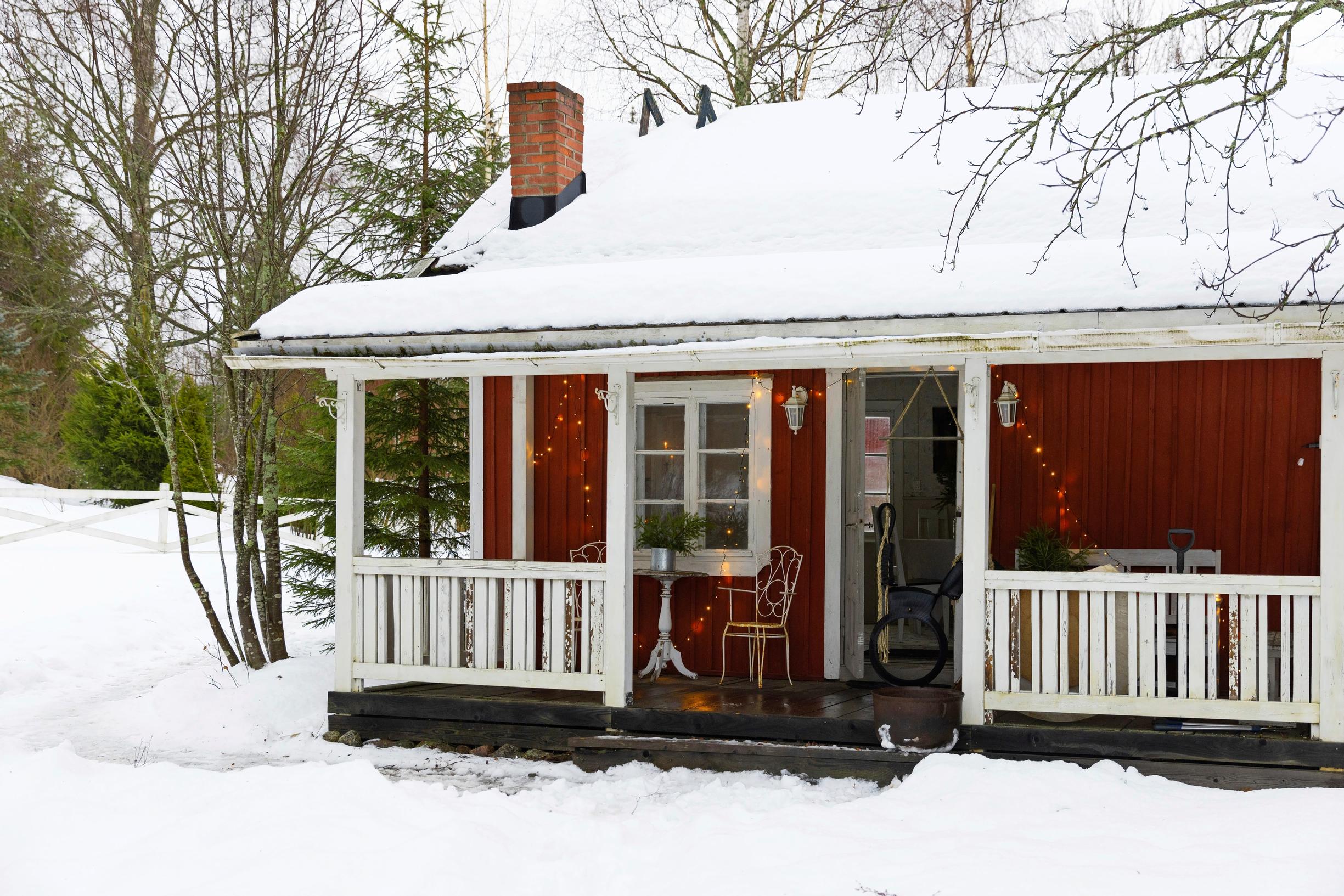
Minni Vierola calls her red 1920s house a shoe house, inspired by an old nursery rhyme about a woman in a shoe house with a hundred children and a very busy life. Out of Minni’s five children, three still live in the house while two have flown out of the nest. Over the past twenty years, the house has also been a favorite hangout spot of many other children, since her kids’ friends have always been welcome.
“I hope everyone feels welcome in our home,” Minni says.
Minni and her then-partner had planned to build a new house, but years ago, while they were inspecting a lot, they happened upon a suitable house by the lakeshore. It turned out to be a beautiful find! One of the best things about Kuohu village is its strong sense of community. Minni fondly recalls a time when ten women in this small village were expecting babies all at once.
“We ran a family café, first while we were pregnant and later with the little ones. Around the same time, nine baby boys and one girl were born in the village.
The house was built in 1929 and then relocated to its current location from across the lake, over the ice. The house has five rooms, two toilets, a utility room, a sauna, and a lakeside cottage, totaling 150 square meters (about 1,615 square feet).
Along with Minni Vierola, her children, plus the cat Friikki and the dog Ruusa, live here. Minni’s older children have already moved out. You can follow Minni on Instagram @kenkataloneukko.
“Here, you can always find help and support from others. You can borrow sugar or eggs from the neighbors, everyone greets each other, and we’ve even discussed in a WhatsApp group what a suitable curfew for the motorbike-riding boys might be,” Minni says.
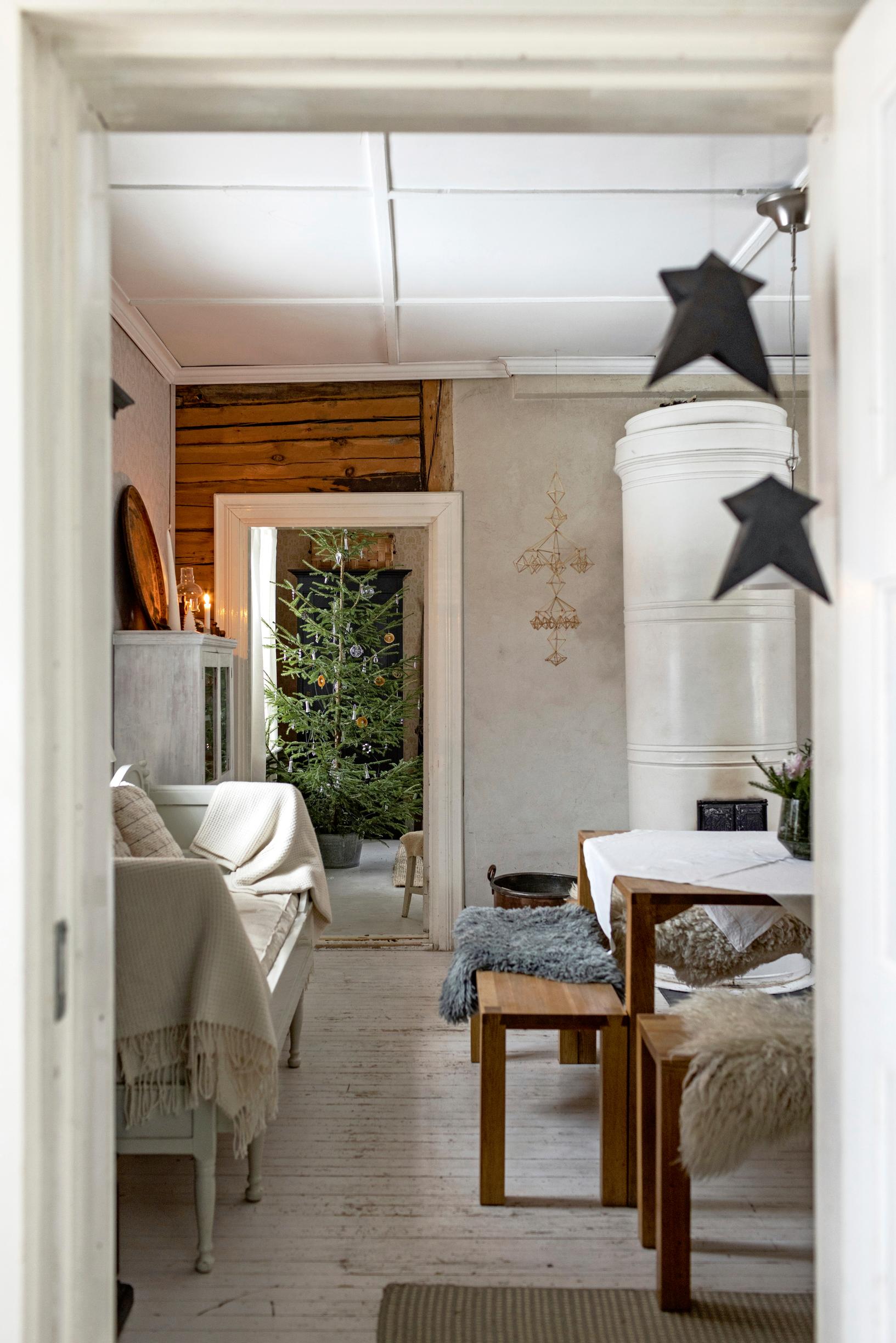
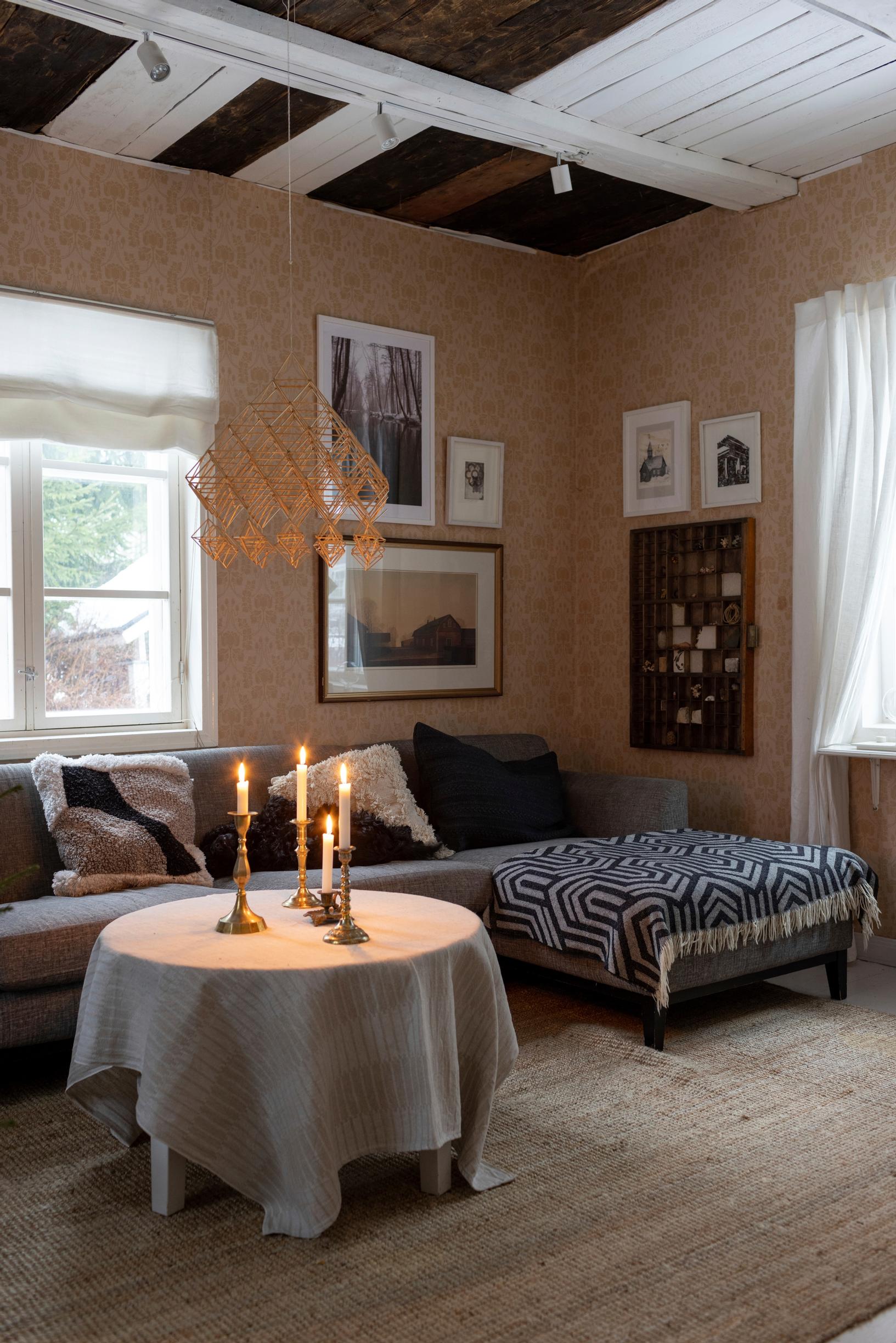
The traditional straw mobile, hanging from the ceiling, also shows how neighbors look out for each other. One winter evening, an older neighbor knocked on their door and presented it as a Christmas gift.
For several years now, the village community’s shared “barn church” gathering has marked the beginning of the quiet Christmas season, with carol singing, hot mulled wine, and taking a solemn moment to wish for Christmas peace.
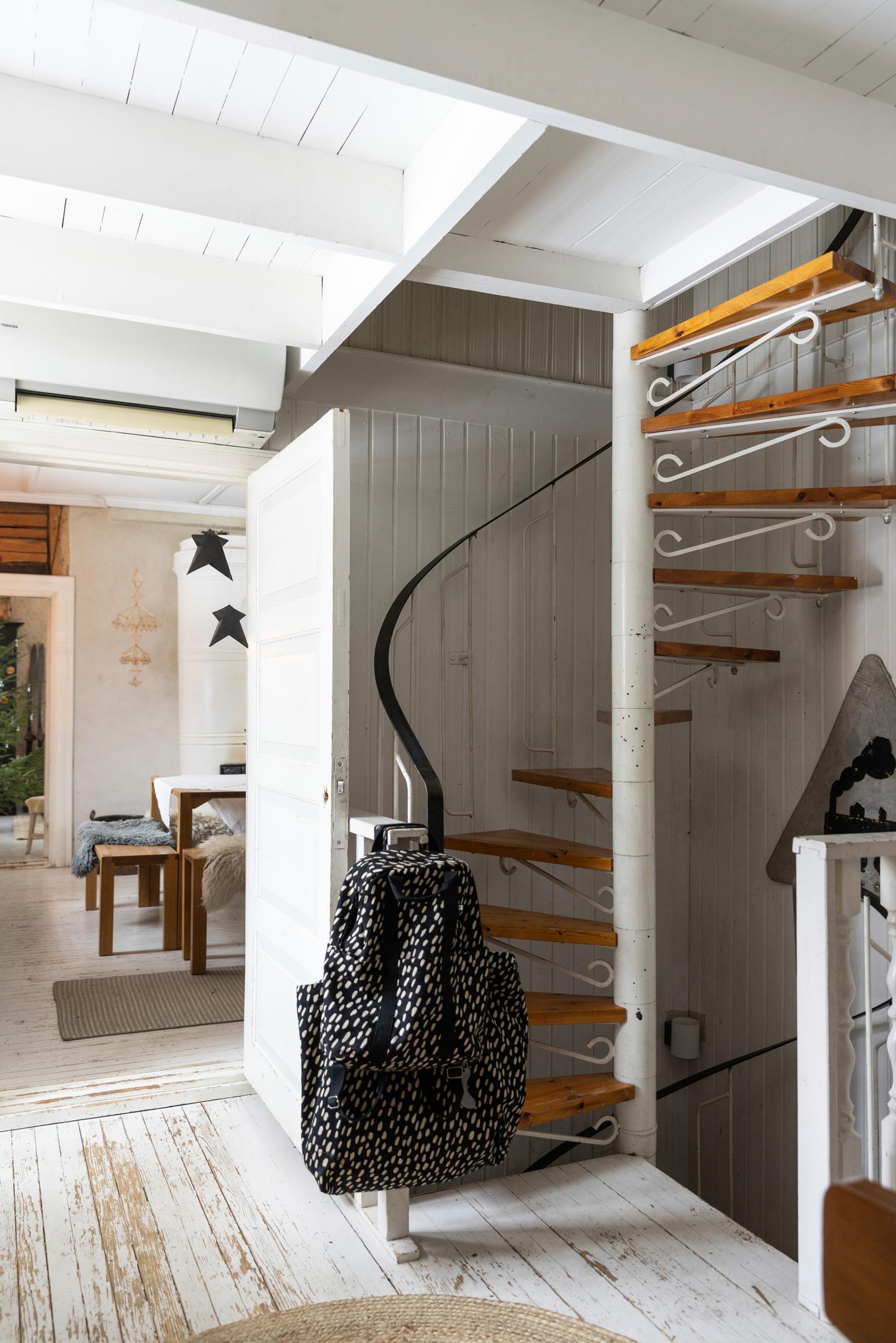
The house was originally a tiny two-room cottage. In the early 1980s, architect Markus Bernoulli, who specializes in old houses, designed an extension. The stairs were his handiwork and they were installed by the previous owners.
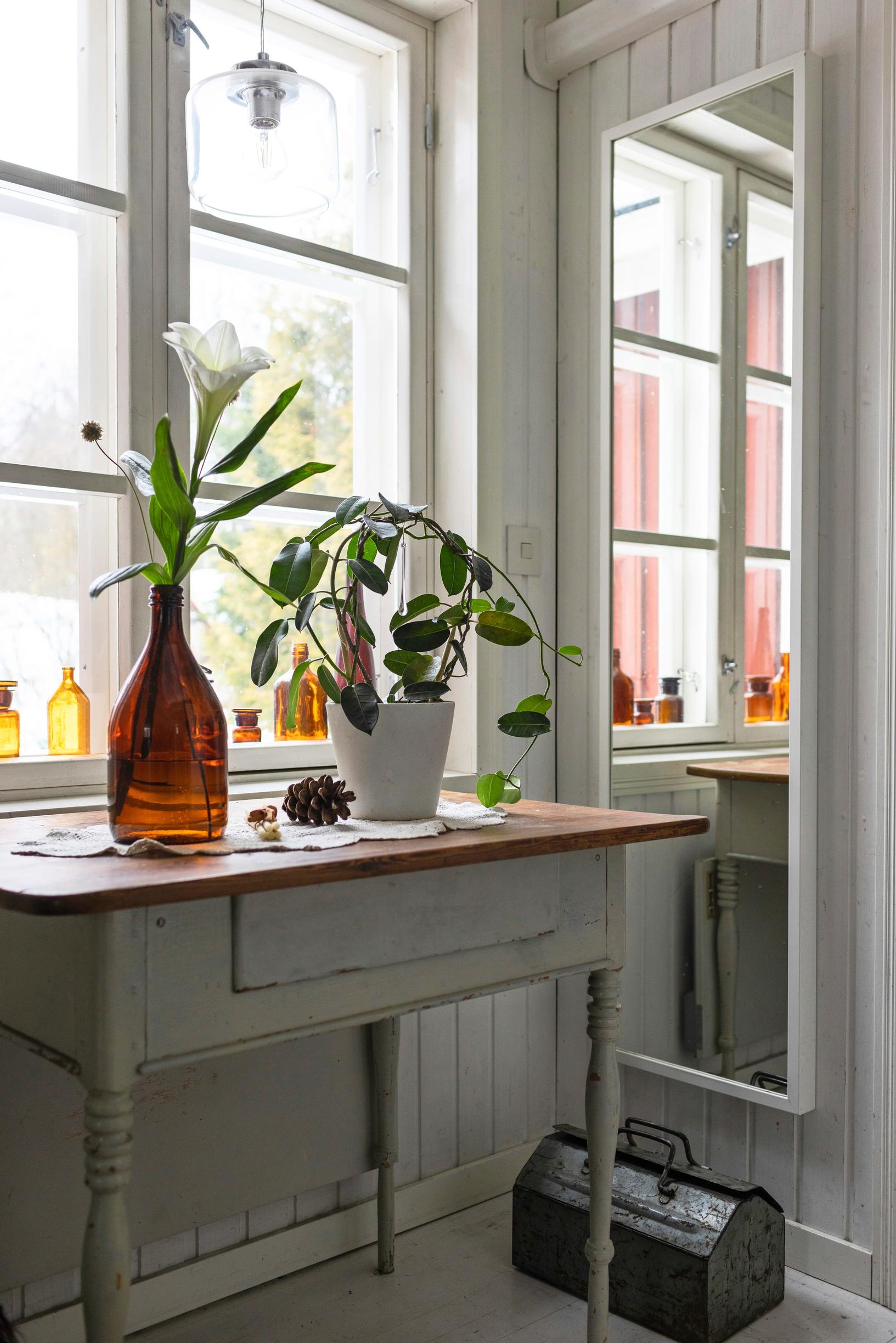
The old table in the entryway is on loan from her colleague, Hanna-Riikka Heikkilä. “One day, if her daughter wants it, she’ll get it back,” Minni remarks.
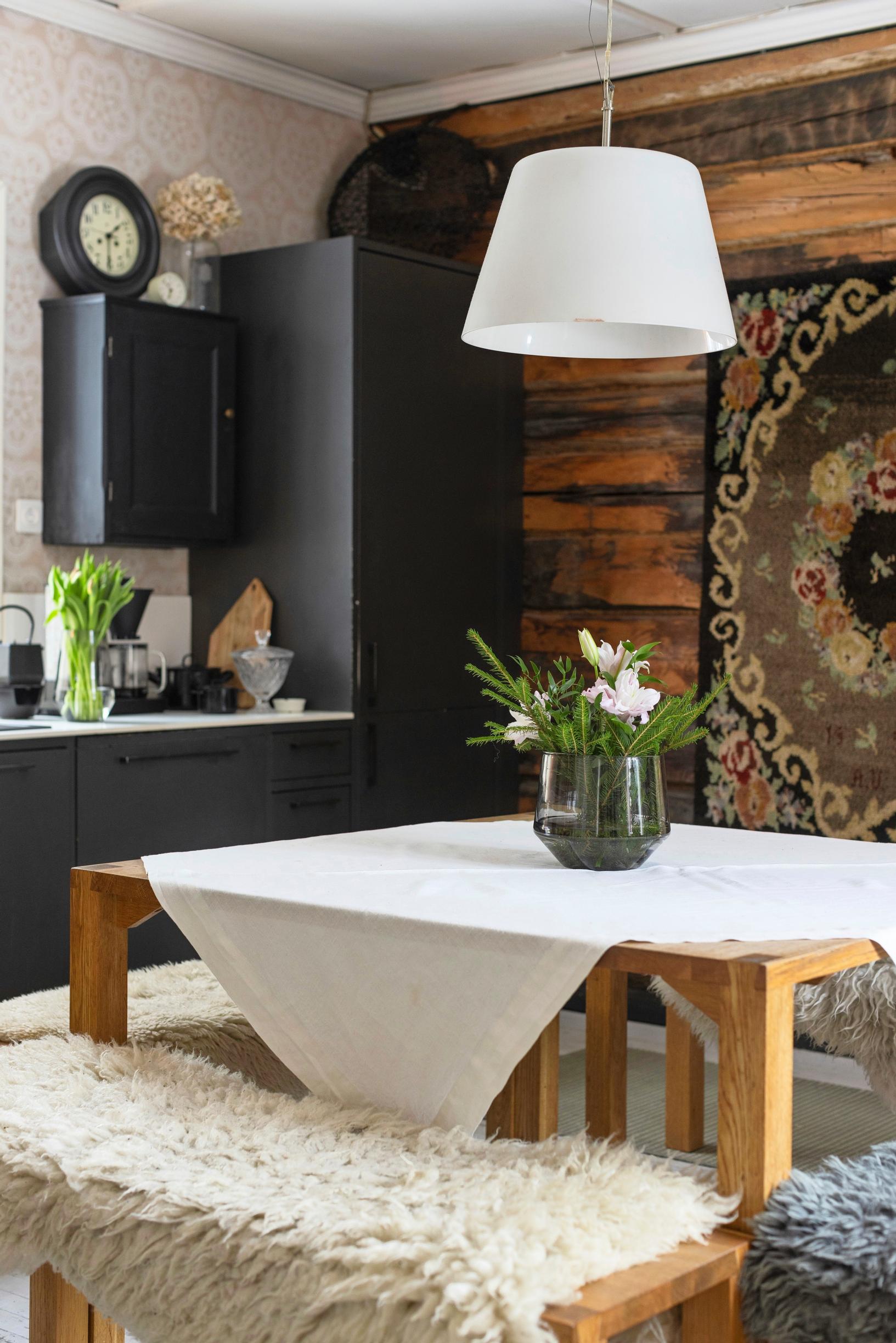
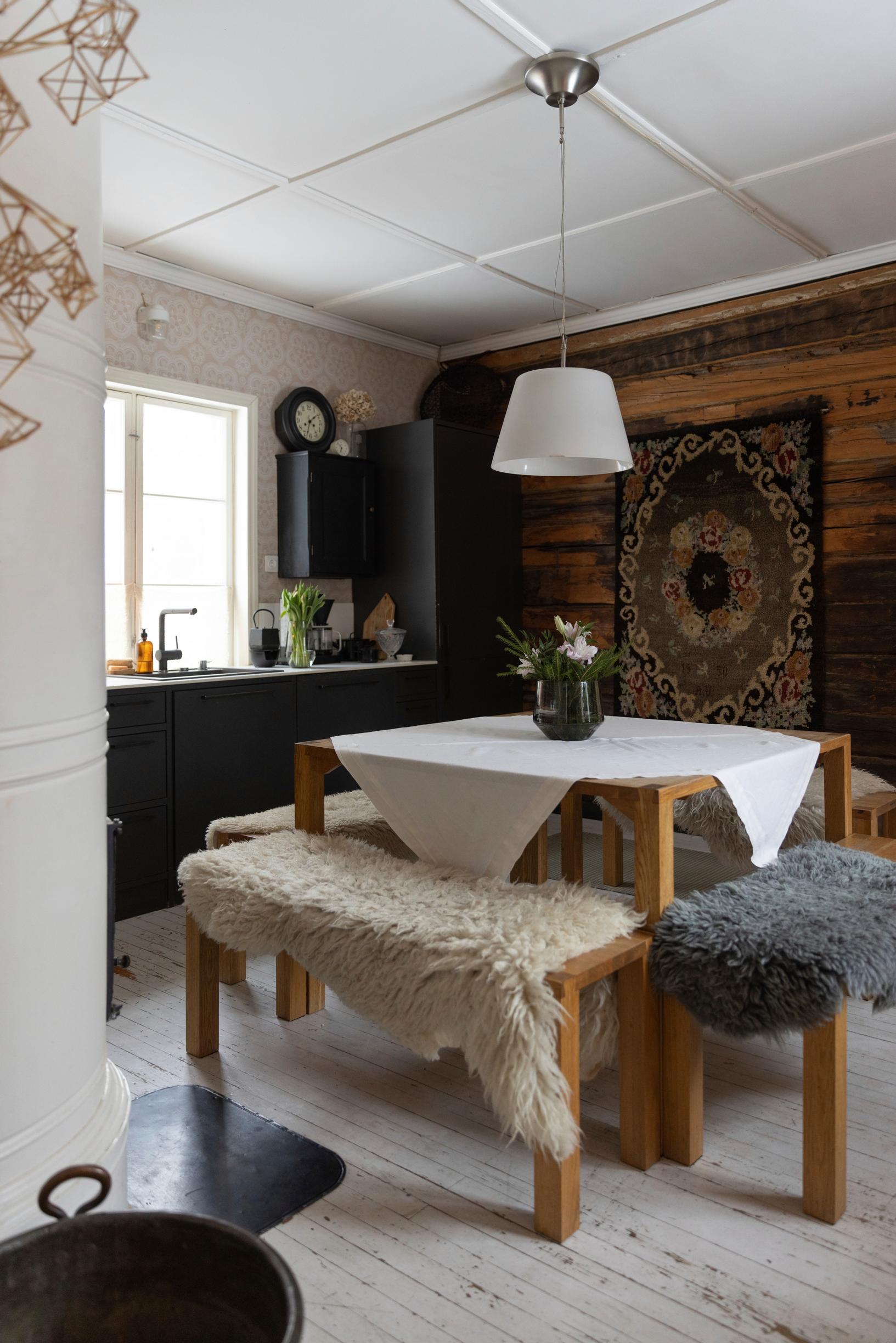
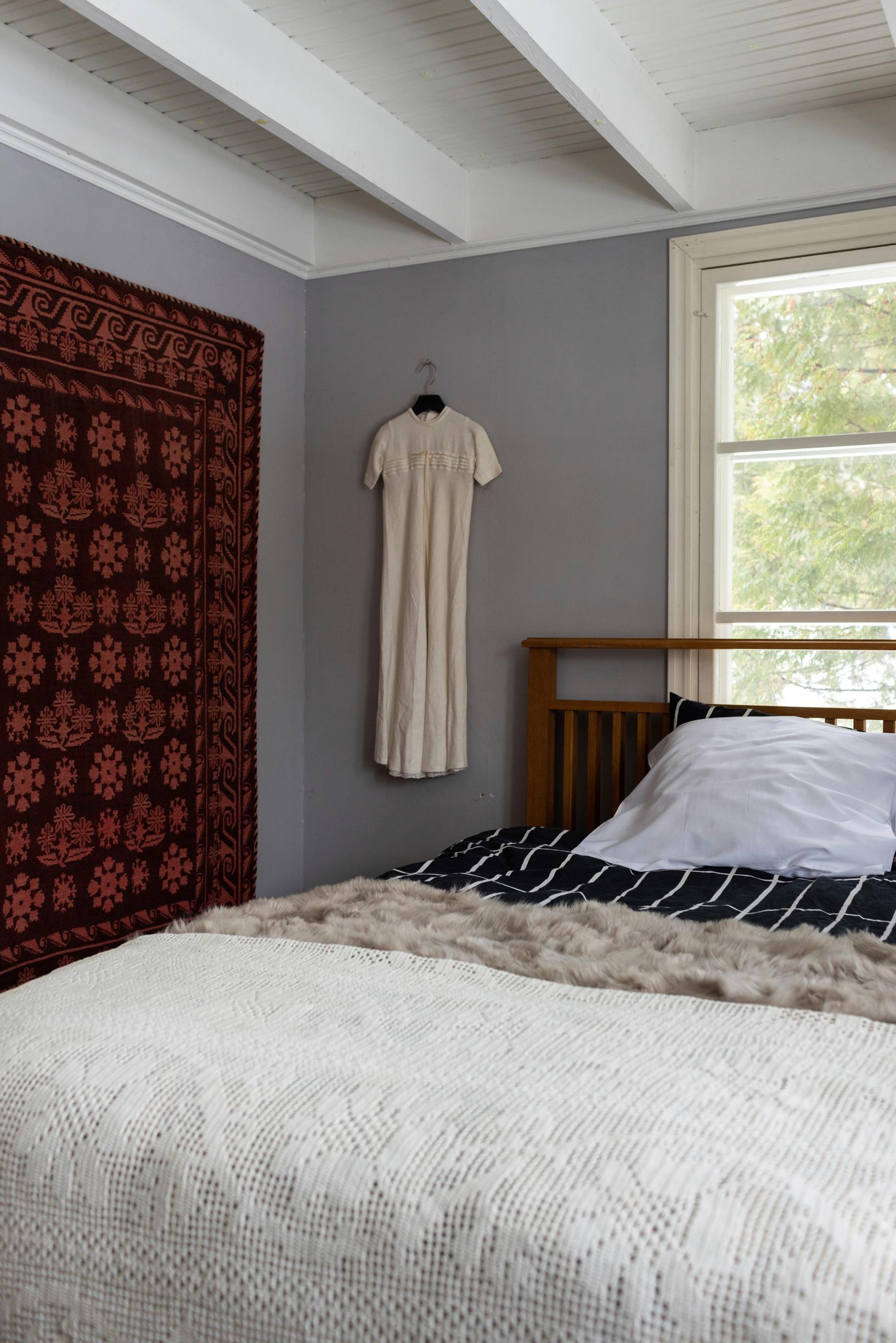
One kitchen bench is higher, so it’s easier for the youngest kids to eat there. The ryijy tapestry woven by Minni’s maternal grandmother is a cherished family treasure.
“I hope everyone feels welcome in our home.”
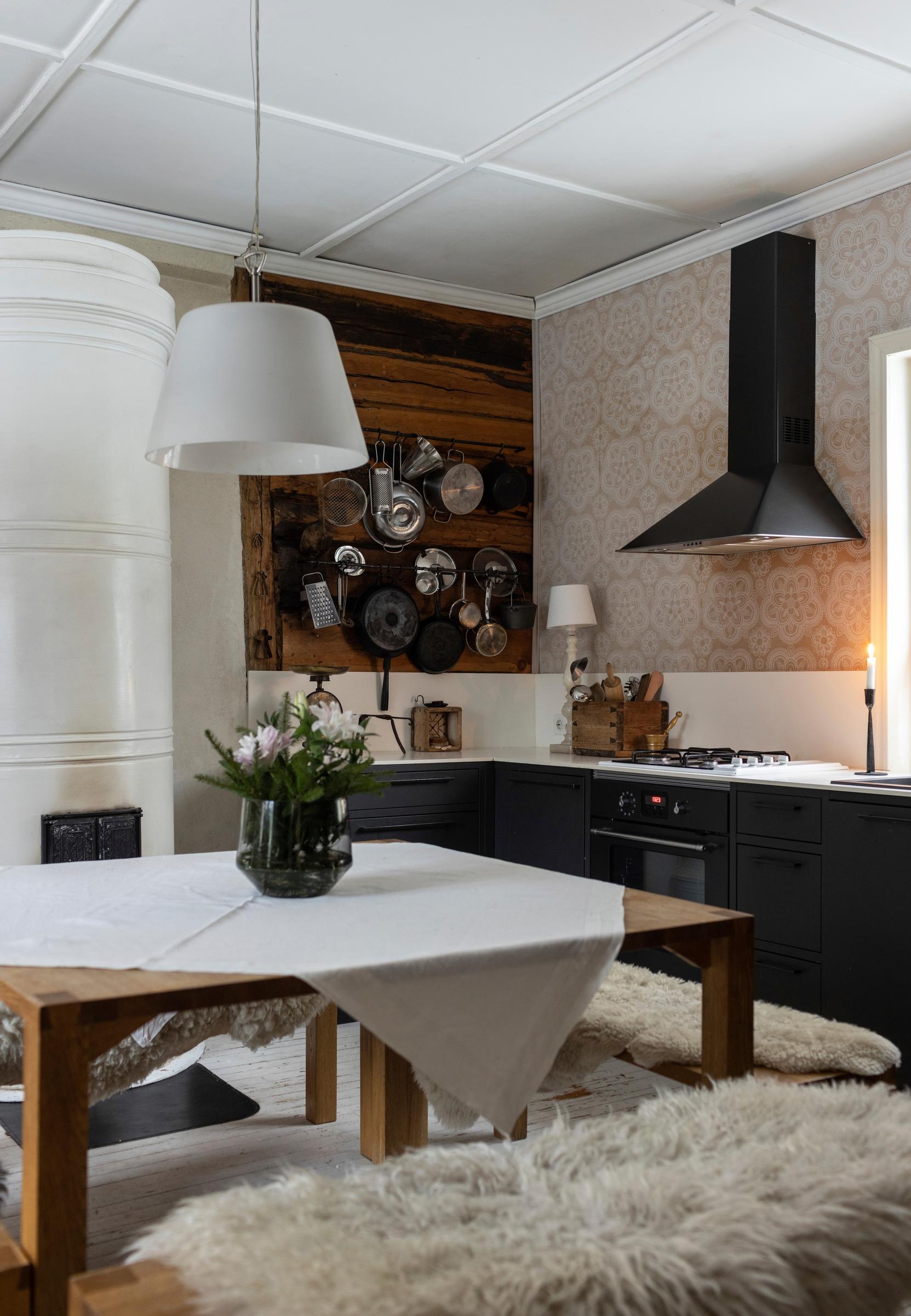
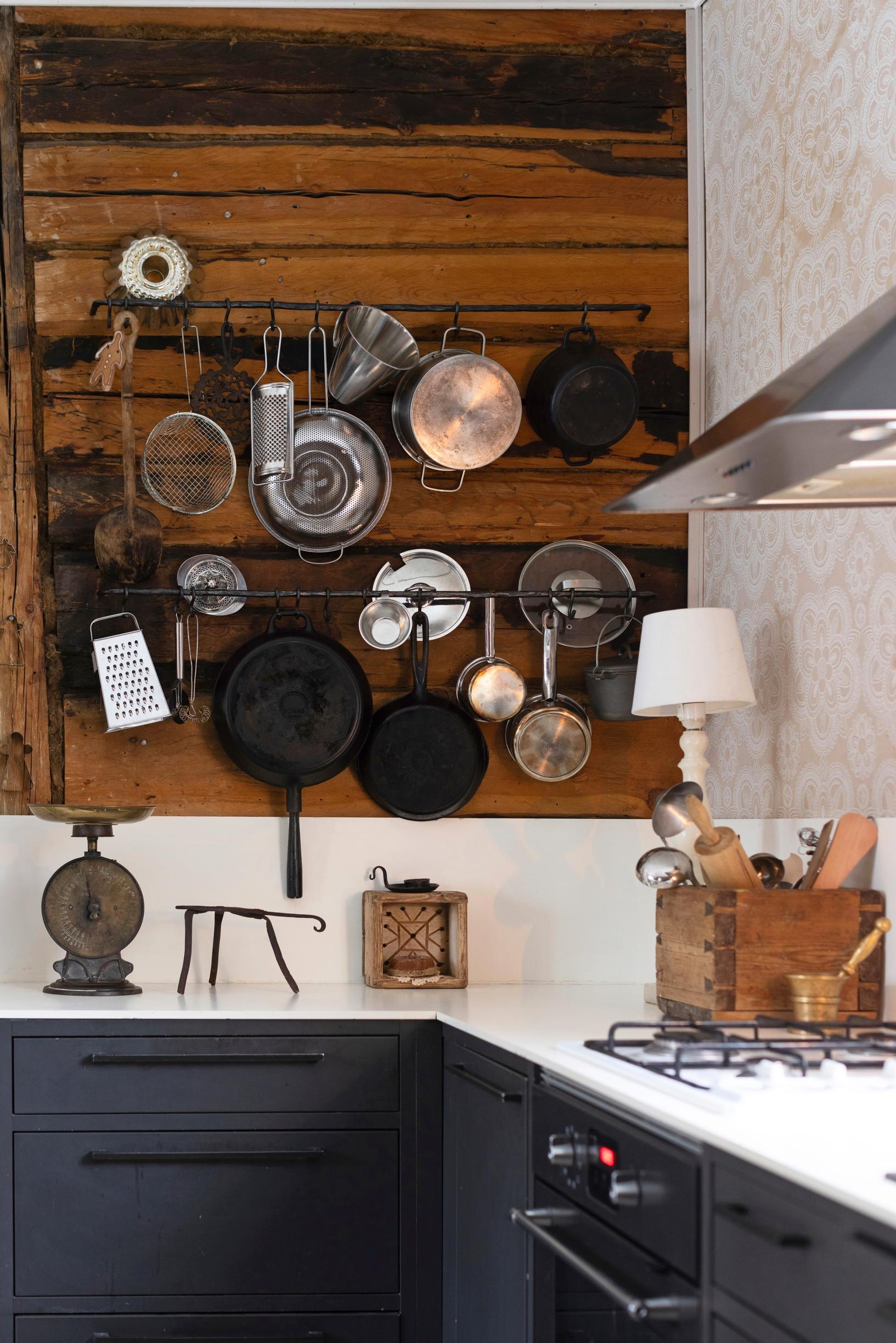
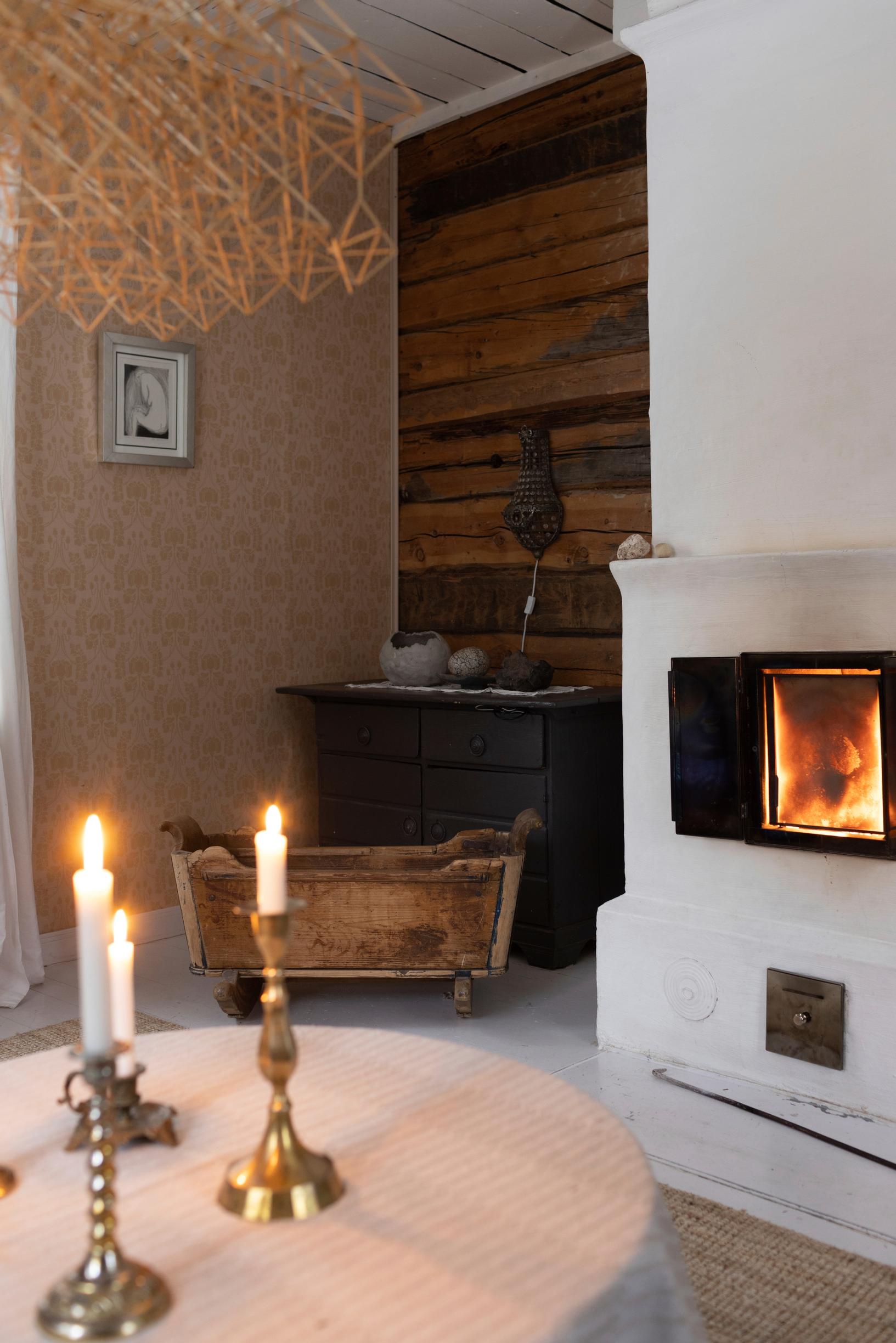
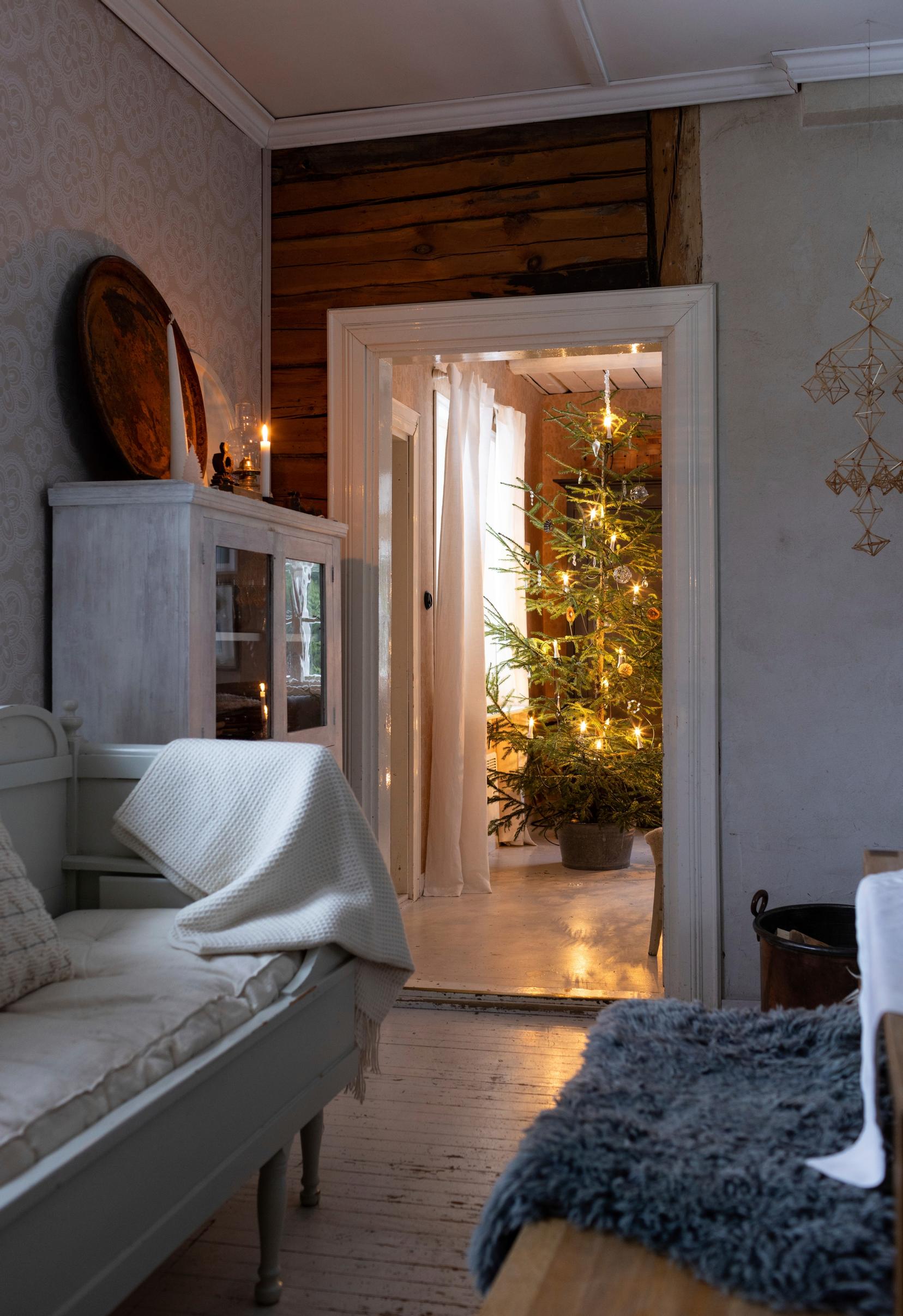
The house has been expanded over the decades. Minni’s family has done a lot of surface renovations, such as exposing the beautiful log walls inside.
Minni has heard that the darker spots on the logs are from oil lamps. She likes that these marks remain visible. She also left a note on the logs for future generations. Originally there were no old wallpapers left—just breathable board and paneling, which were removed. At the same time, the walls were insulated with eco-friendly wood fiber.
The black built-in cabinets are by Nixi. Minni designed the dining set herself.
This ryijy was woven by Minni’s paternal grandmother, Kerttu Hakala, when she was young. “I’m so happy I received it from my father.”
Christmas at the Shoe House includes all the traditional elements, with just one twist.
“We used to open gifts in the evening, but now we decided, why not do it in the morning? There’s no reason we couldn’t! There aren’t any fixed rules saying Christmas must go a certain way. Everyone’s Christmas can look just how they like,” Minni reflects.
The wood-burning sauna offers soothing, gentle heat by candlelight at the end of Christmas Eve. Although everyday life at the Shoe House is busy and full of activity, Christmas is a time to unwind and simply be present.
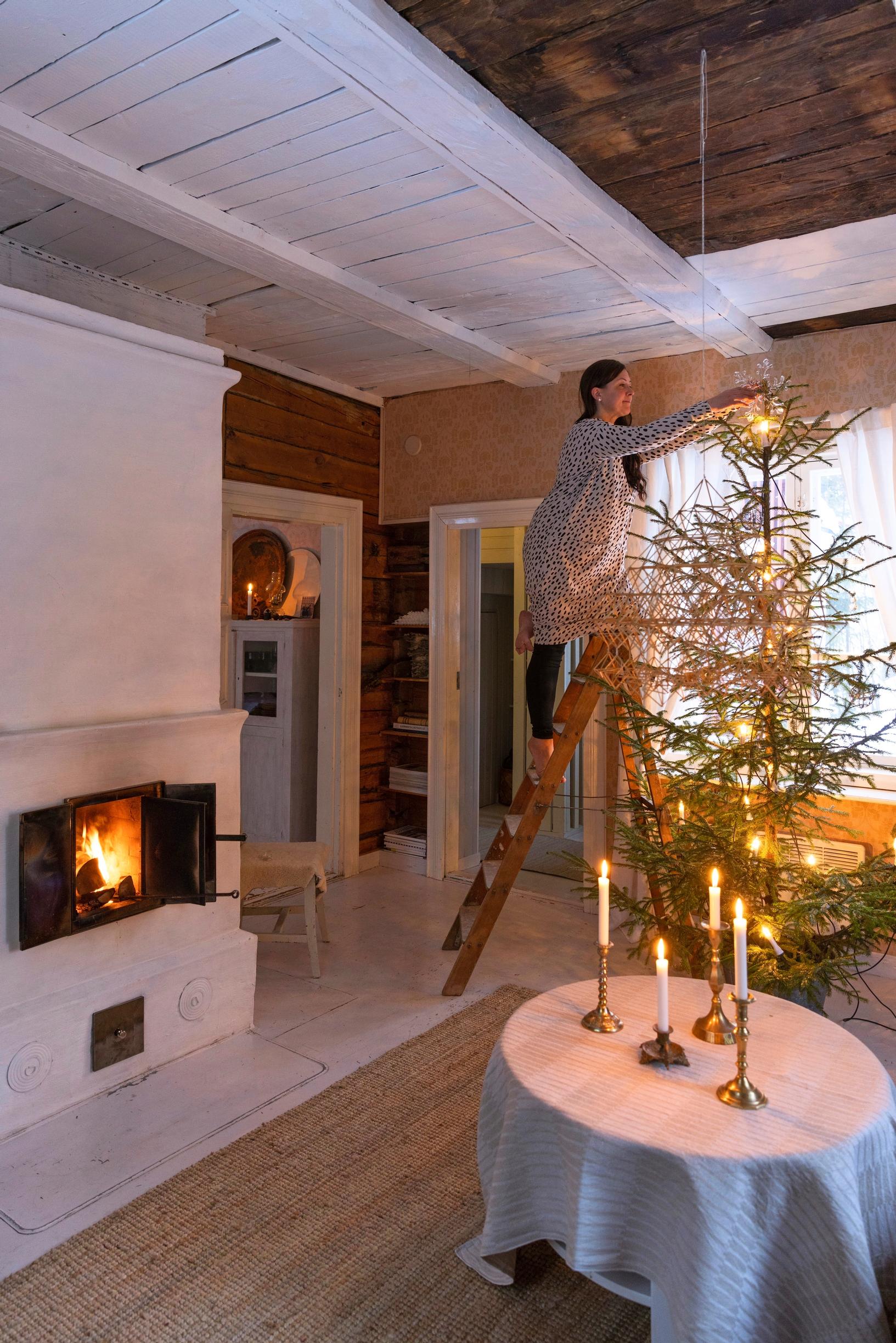
“My father repaired the top landing of the ladder and added a support beam. On one step, he wrote a reminder: ‘No need to fall,’” Minni says. The Shoe House Christmas tree usually comes from their own yard.
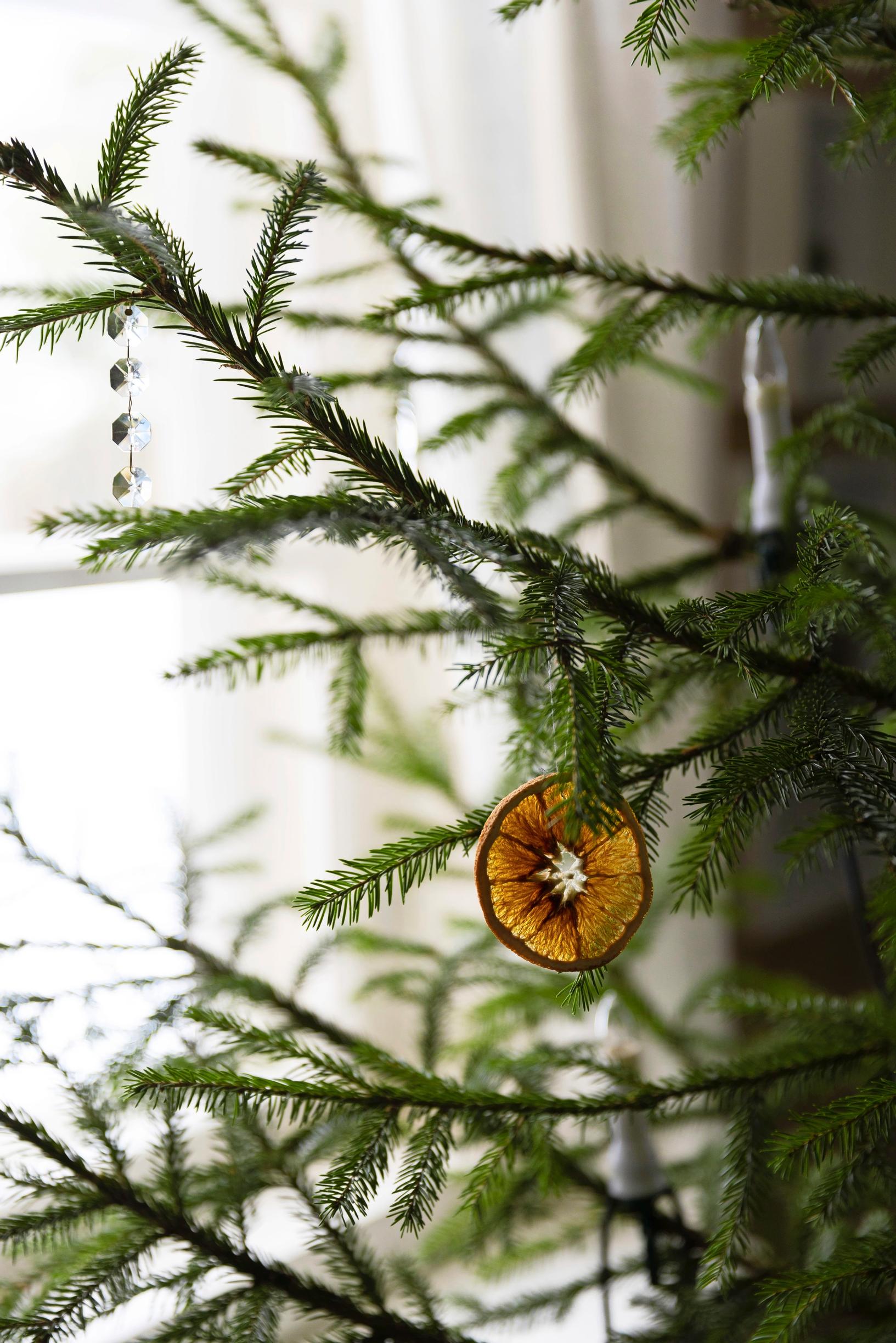
Their tree is adorned with fragrant orange slices, old patinated spoons, and other small treasures.
The Shoe House Christmas tree usually comes from their own yard.
Sustainable development and environmental consciousness are core values for Minni.
In this house, the only new purchases have been the sofa and the beds. Sustainability and ecological living are central to Minni, who works as a designer at the Finnish brand Papu.
Minni received a beautiful old wooden bench as a gift from her godparents. The old round stove warms the kitchen-dining area nicely. The himmeli is a Christmas gift from her neighbor.
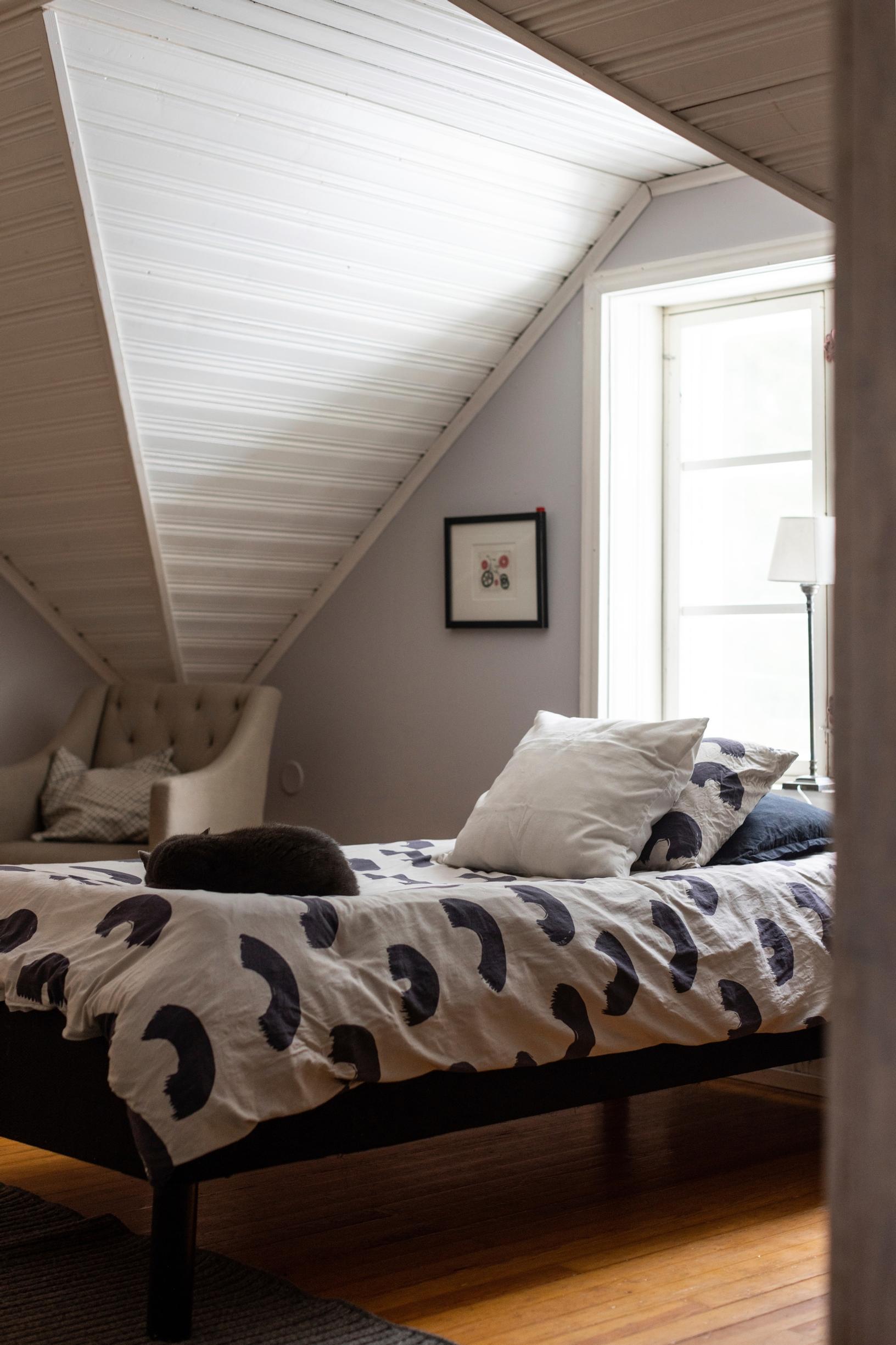
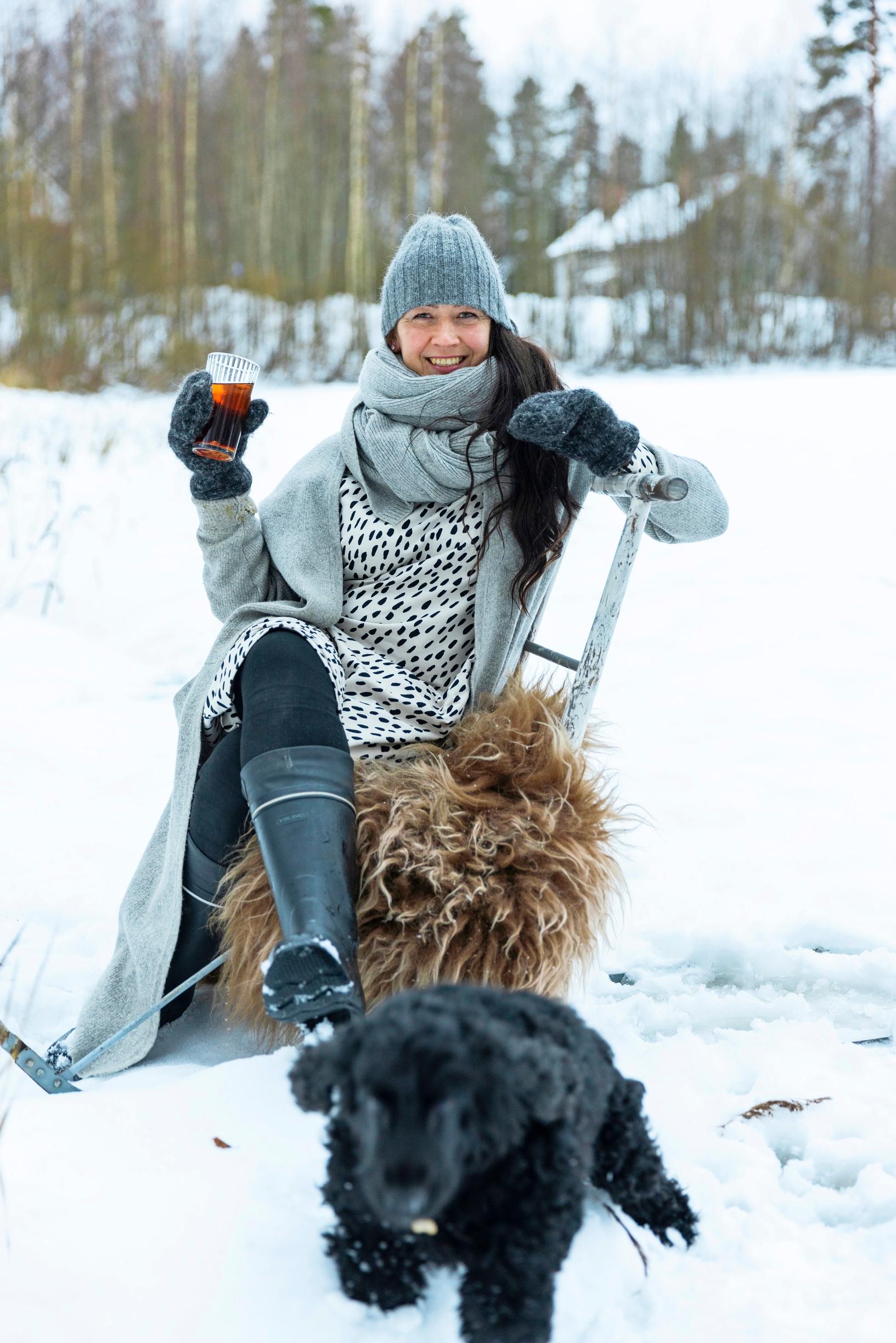
Besides Ruusa the dog, the family also has Friikki the cat, who visits schools to greet children, joins ice fishers, and even hitches rides on kick sleds.
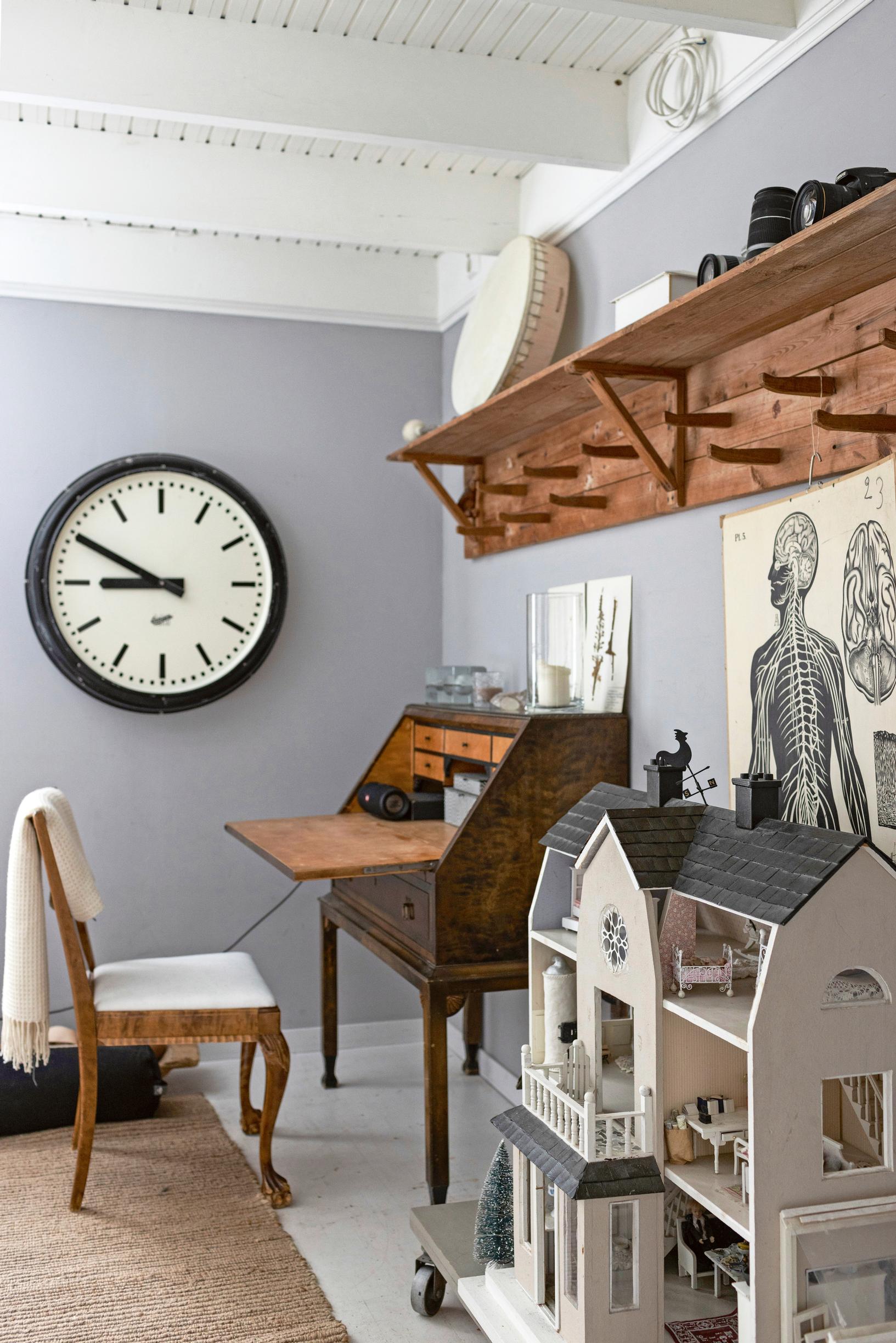
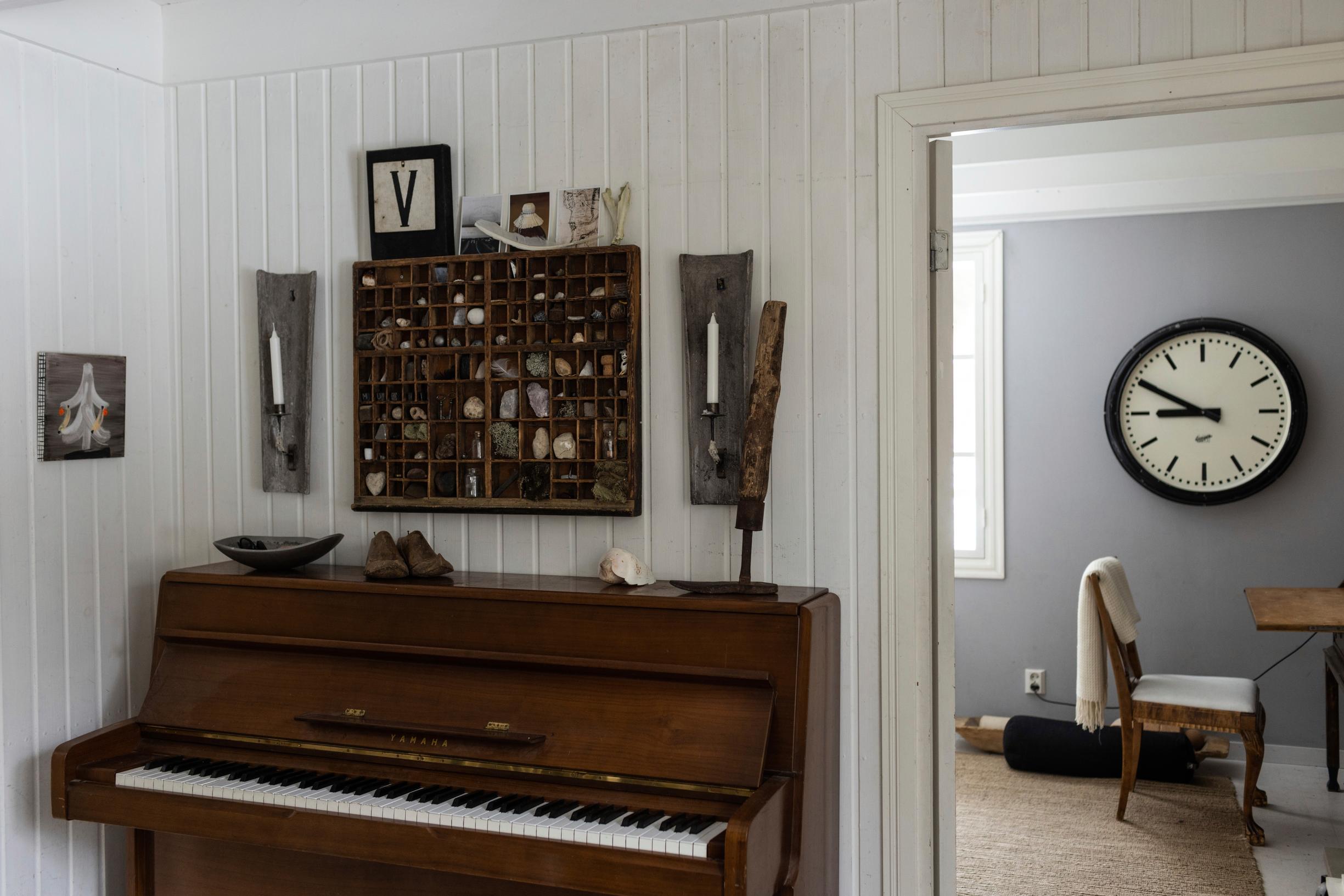
The sweet little table was a gift from Minni’s parents. The long, old coat rack was found at a flea market, and the vintage educational poster showing the nervous system was discovered at another flea market. The dollhouse, built fifteen years ago, has no current playmates, but it’s still put on display every Christmas.
Every Christmas, Minni adds something new to the dollhouse—wood shingles on the roof, tiles for the porch, or window frames.
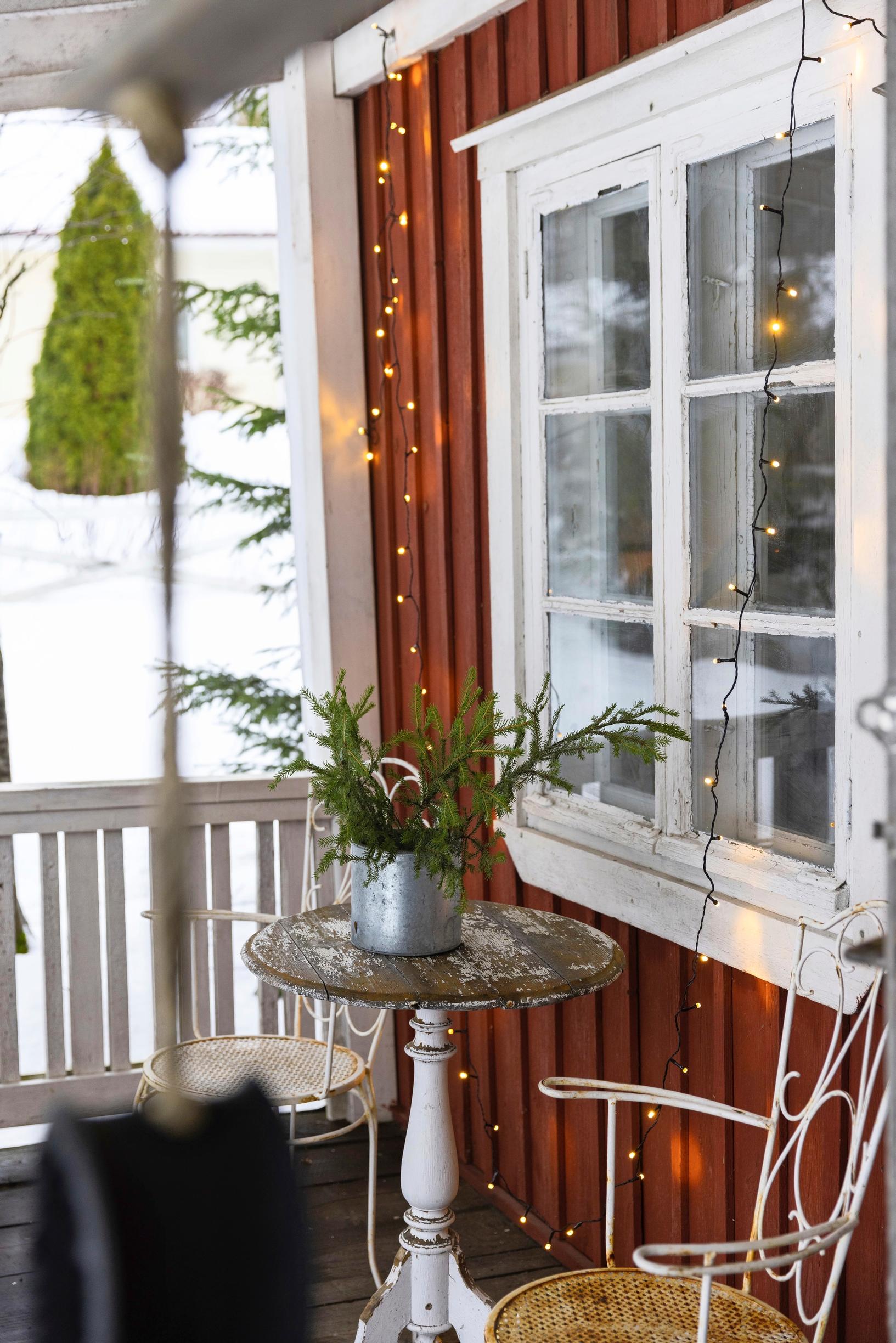
In frosty weather, the windows of the lakeside cottage develop gorgeous ice patterns, highlighted by Christmas lights.
“I love it when the lake freezes. We often plow a small skating rink by the shore, and it’s wonderful to walk around the nearby island or set out skiing from our yard, crossing the ice to neighboring villages,” Minni says. She appreciates nature and animals. Besides Ruusa the dog, the family also has Friikki the cat, who visits the local schools, tags along with ice fishers, and rides on kick sleds.
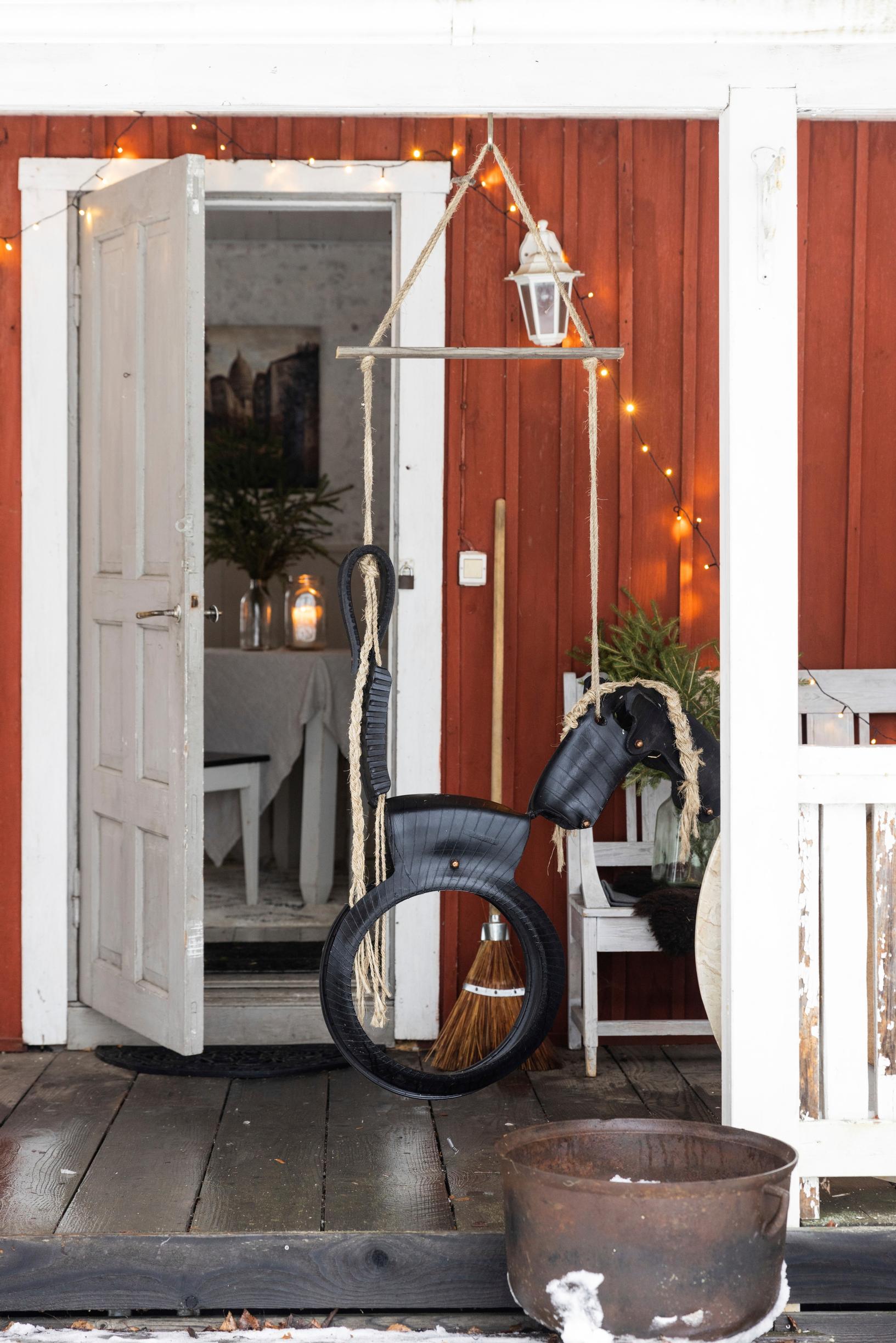
The lakeside cottage used to be a boat workshop where rowboats were made by hand. It’s been standing here since the 1960s. The family loves decorating it for Christmas. Over the years, it has served as a moped repair shed and a cozy spot for treats. They’ve even celebrated friends’ weddings there.
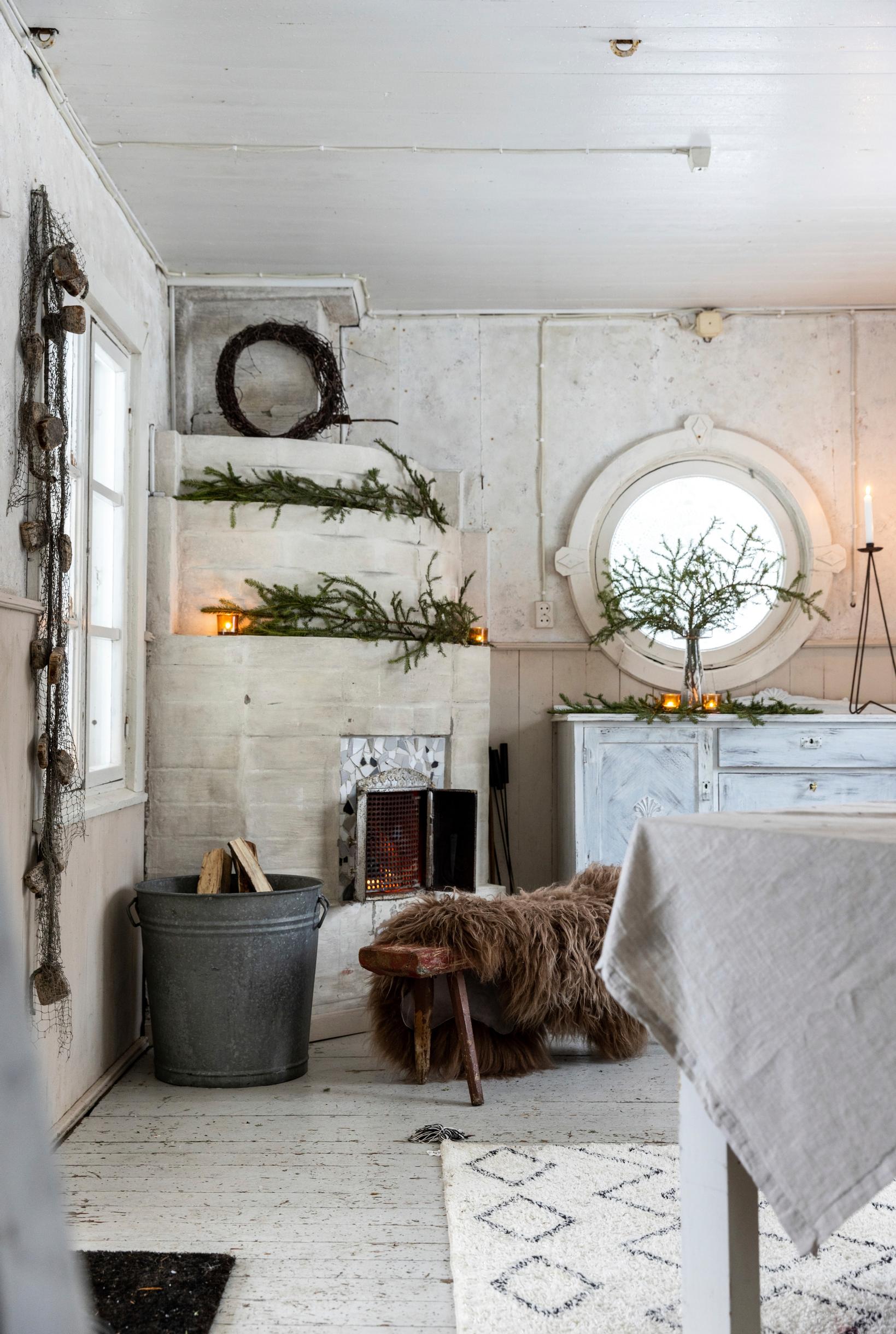
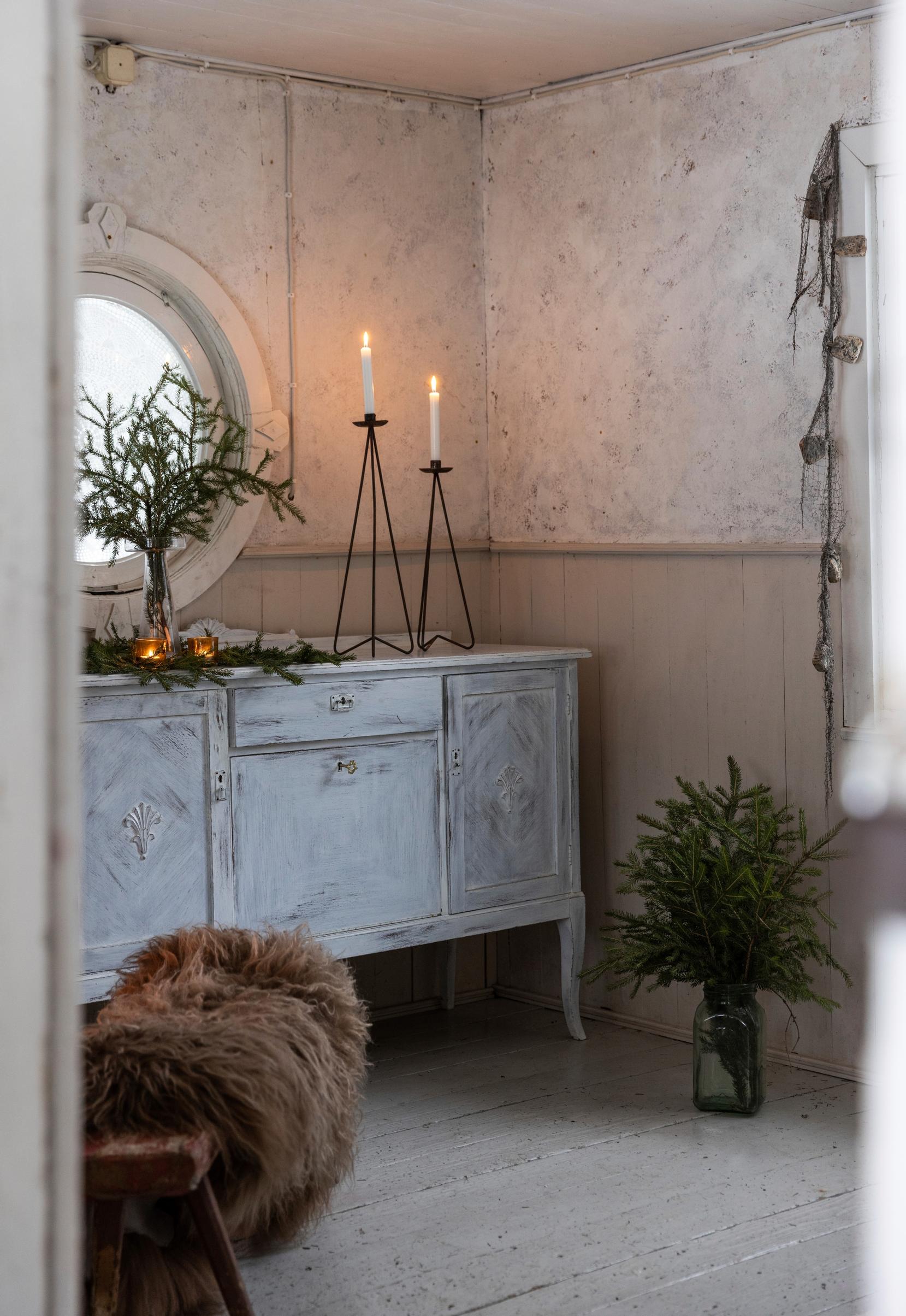
The round window in the lakeside cottage was originally in the main house.
In the lakeside cottage’s large fireplace, they often roast marshmallows.
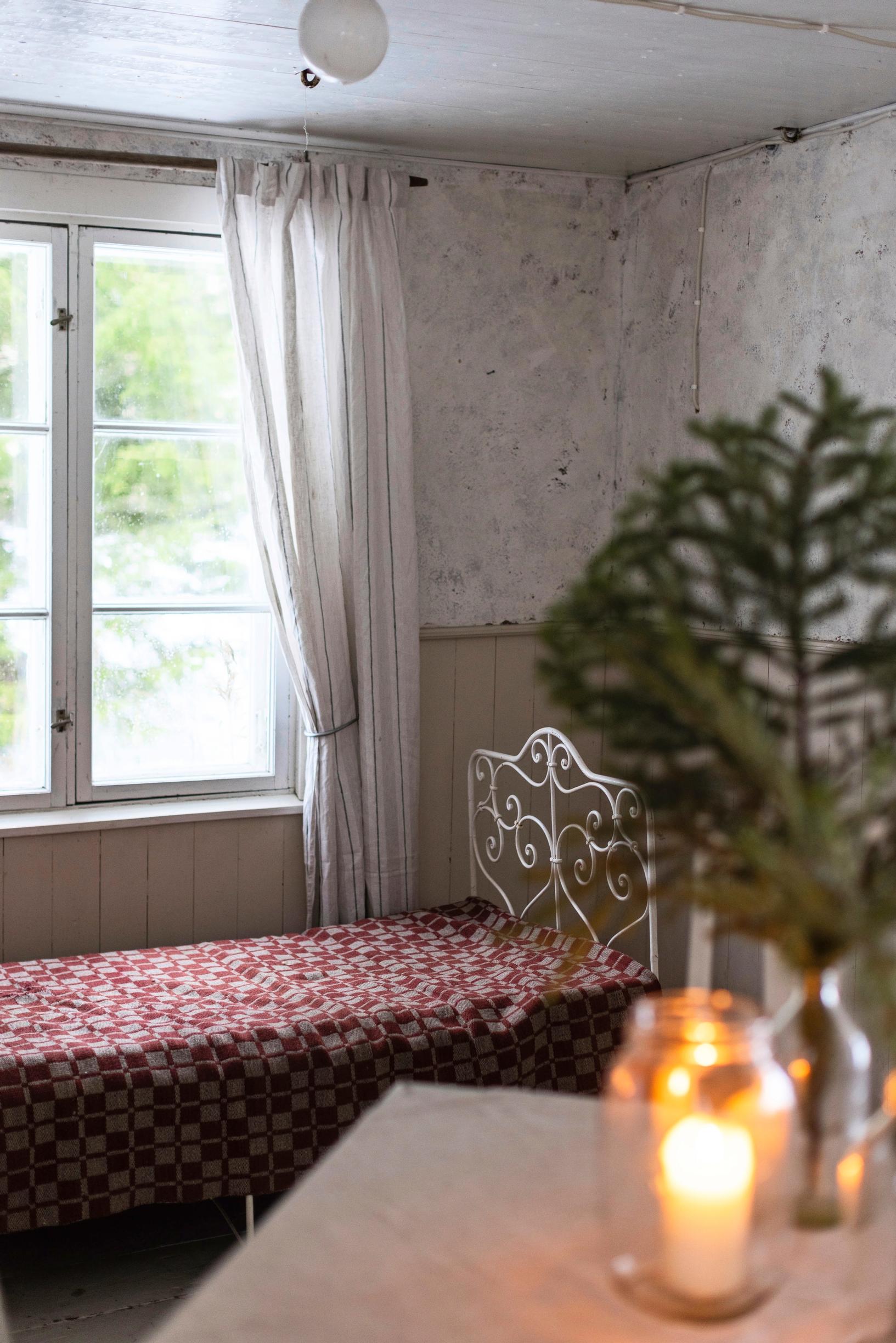
There are extra sleeping spots in the lakeside cottage.
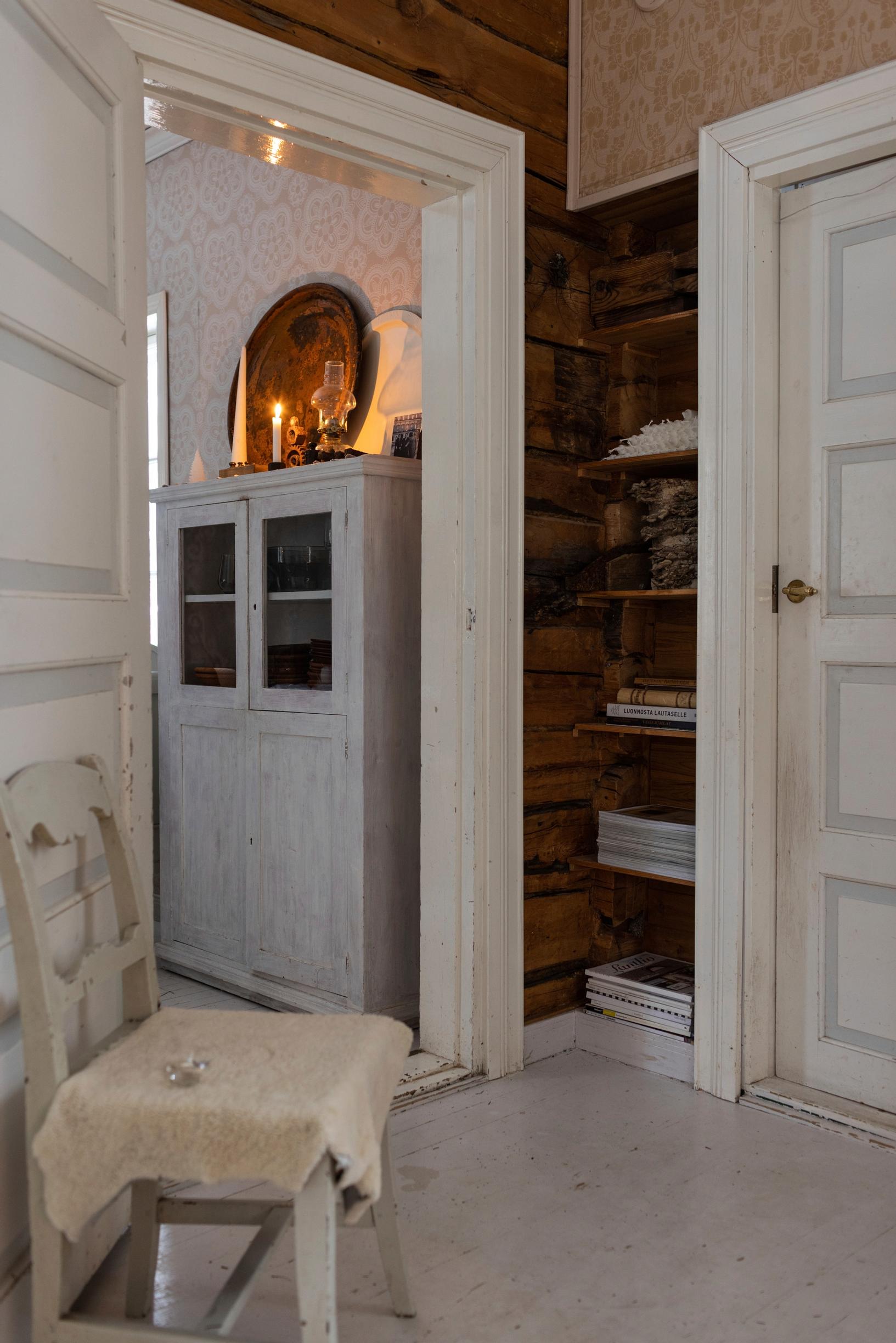
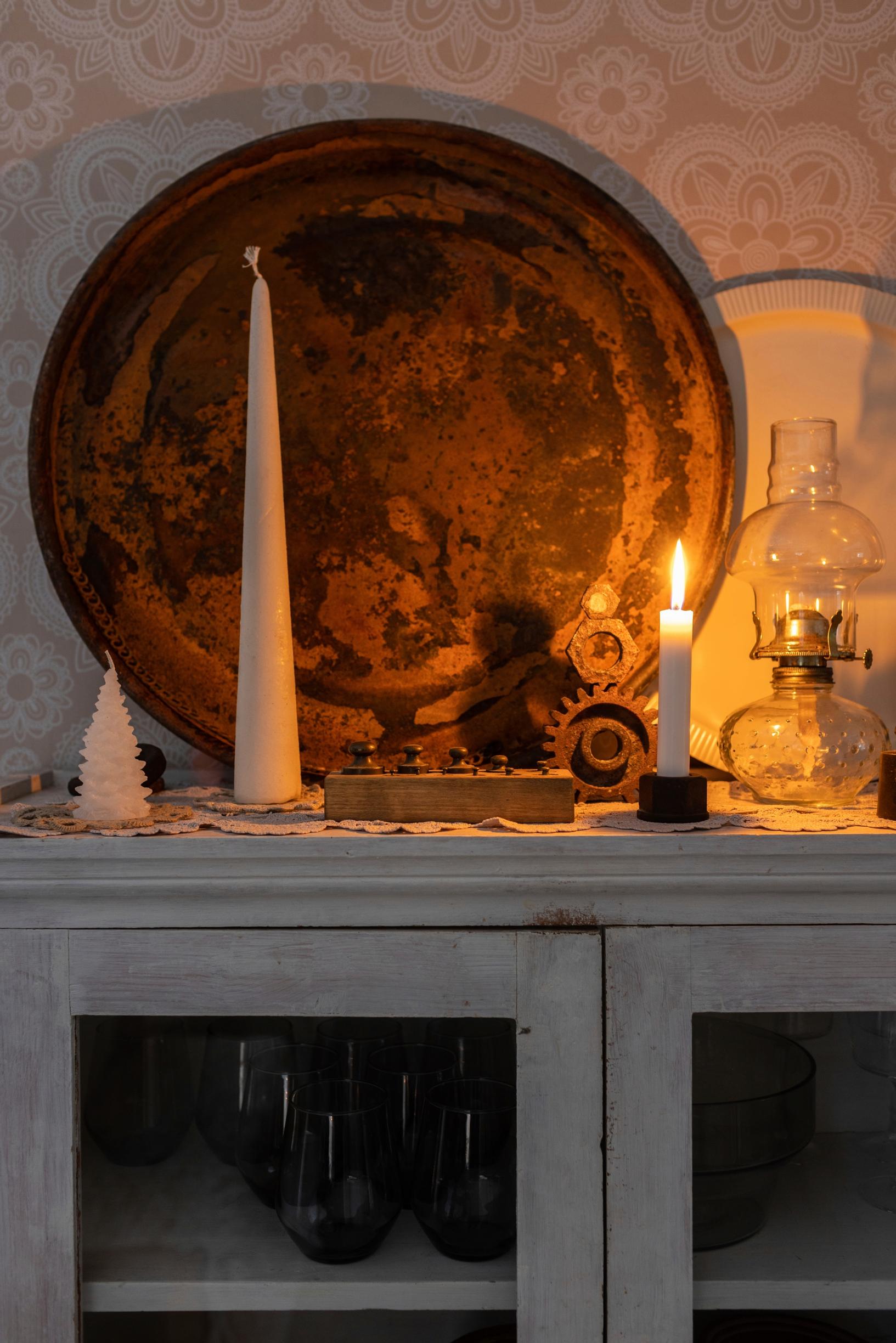
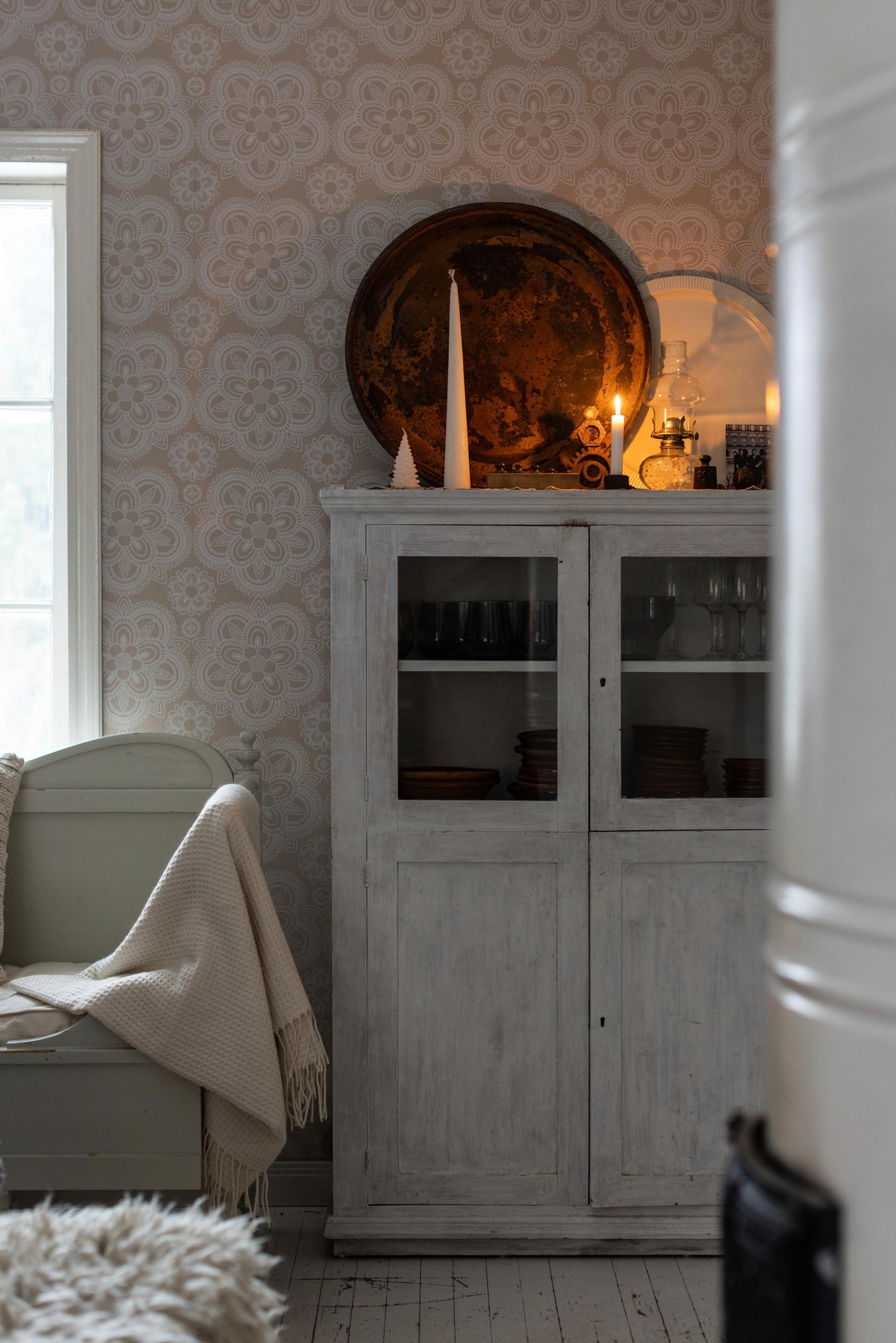
The old cupboard is from Ostrobothnia. To Minni, the aged barrel lid, with its rust pattern, looks just like the moon. There used to be a tar and barrel factory in Kuohu, so it may well be a local artifact and nearly a hundred years old.