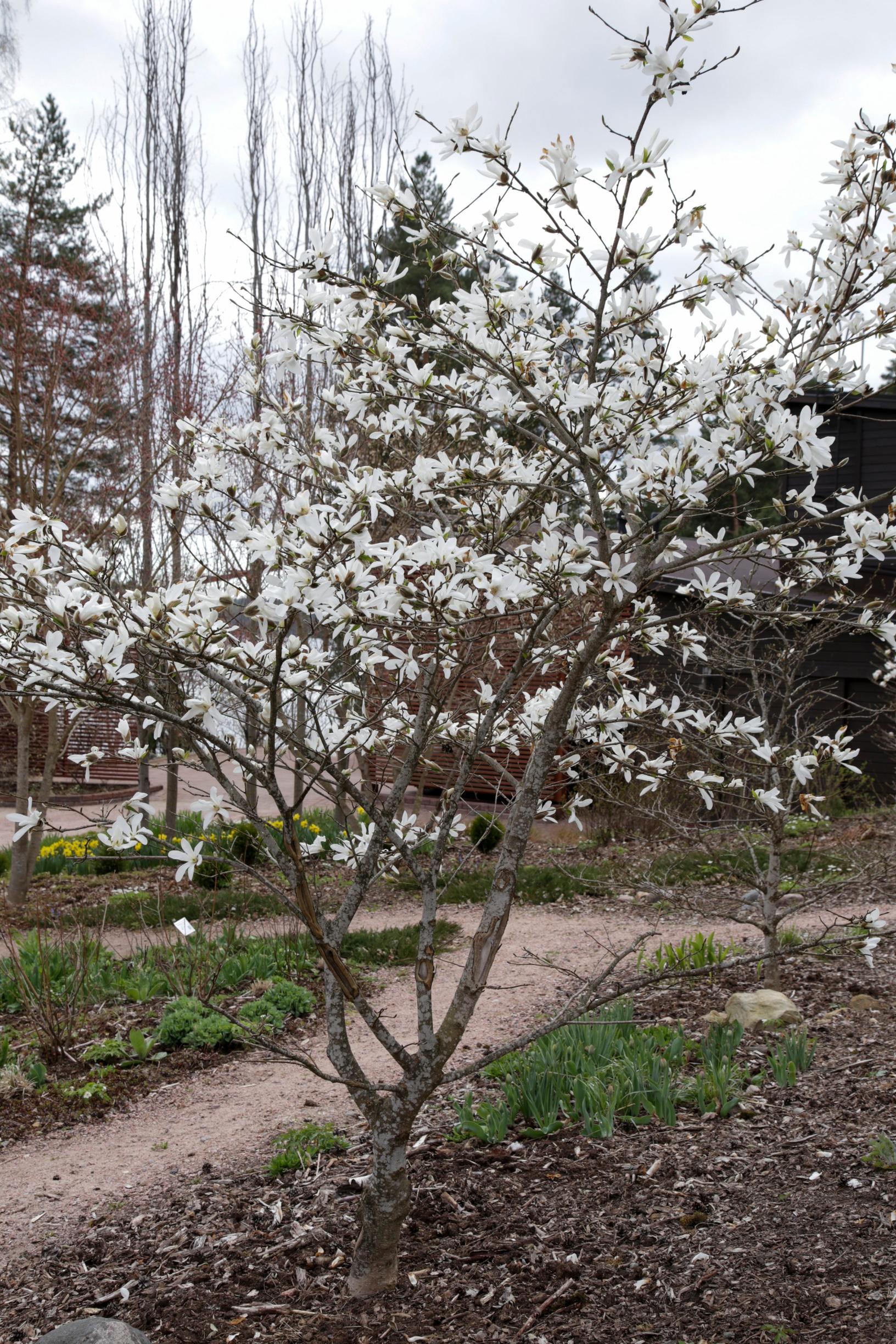
This garden is a magnolia heaven! Check out tips for growing magnolias and different stunning varieties
Excitement and delightful anticipation. The magnificent yet capricious blooming of magnolias is the highlight of spring for Suvi Pohjola-Stenroos and Esa Stenroos.
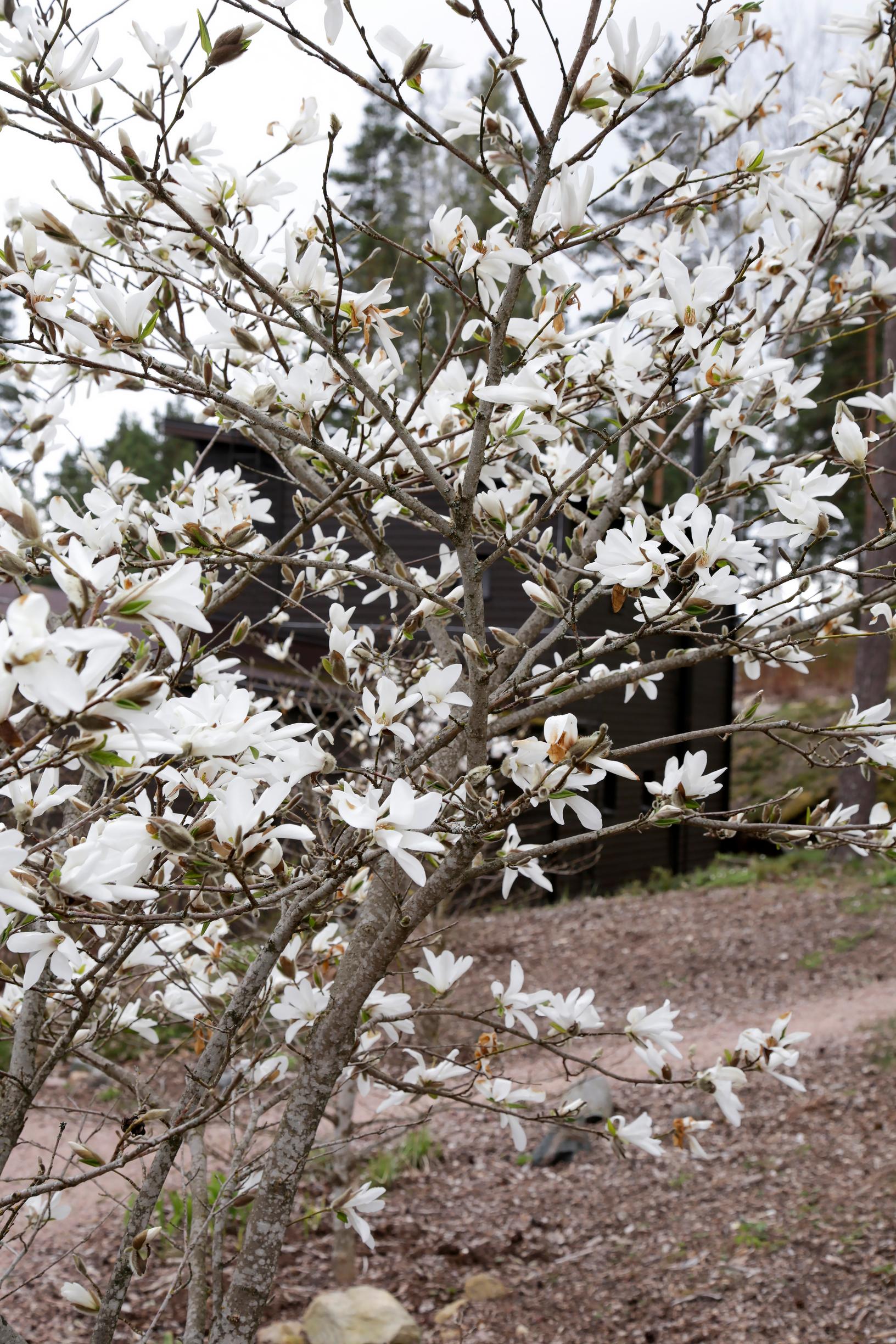
“There are white handkerchiefs hanging from your trees again,” the neighbors would message Suvi Pohjola-Stenroos and Esa Stenroos in past springs. Back then, Arboretum Magnolia in Lohja was still Suvi and Esa’s summer cottage, and due to their work commitments, they didn’t always manage to get there in time to admire the magnolias in bloom.
Nowadays, the couple lives permanently in their house on the shore of Lake Lohjanjärvi. They spend their spring days tending the magnificent arboretum and their own small nursery, so the magnolias’ blooming season, which arrives after mid-May, no longer slips past them. During the bloom, Suvi admits she still feels a delightful sense of anticipation.
“There’s always an element of suspense with the magnolias’ blooming. Even though we do our best to make them bloom as beautifully as possible, we can’t control all the conditions.”
Magnolias open their fuzzy buds whenever they please—or they might drop them to the ground before opening if sudden cold weather strikes, for example. In the best-case scenario, the still leafless trees are covered for a few weeks in stunning clouds of flowers. And as if that wasn’t enough, some flowers emit a fresh, sweet melon scent.

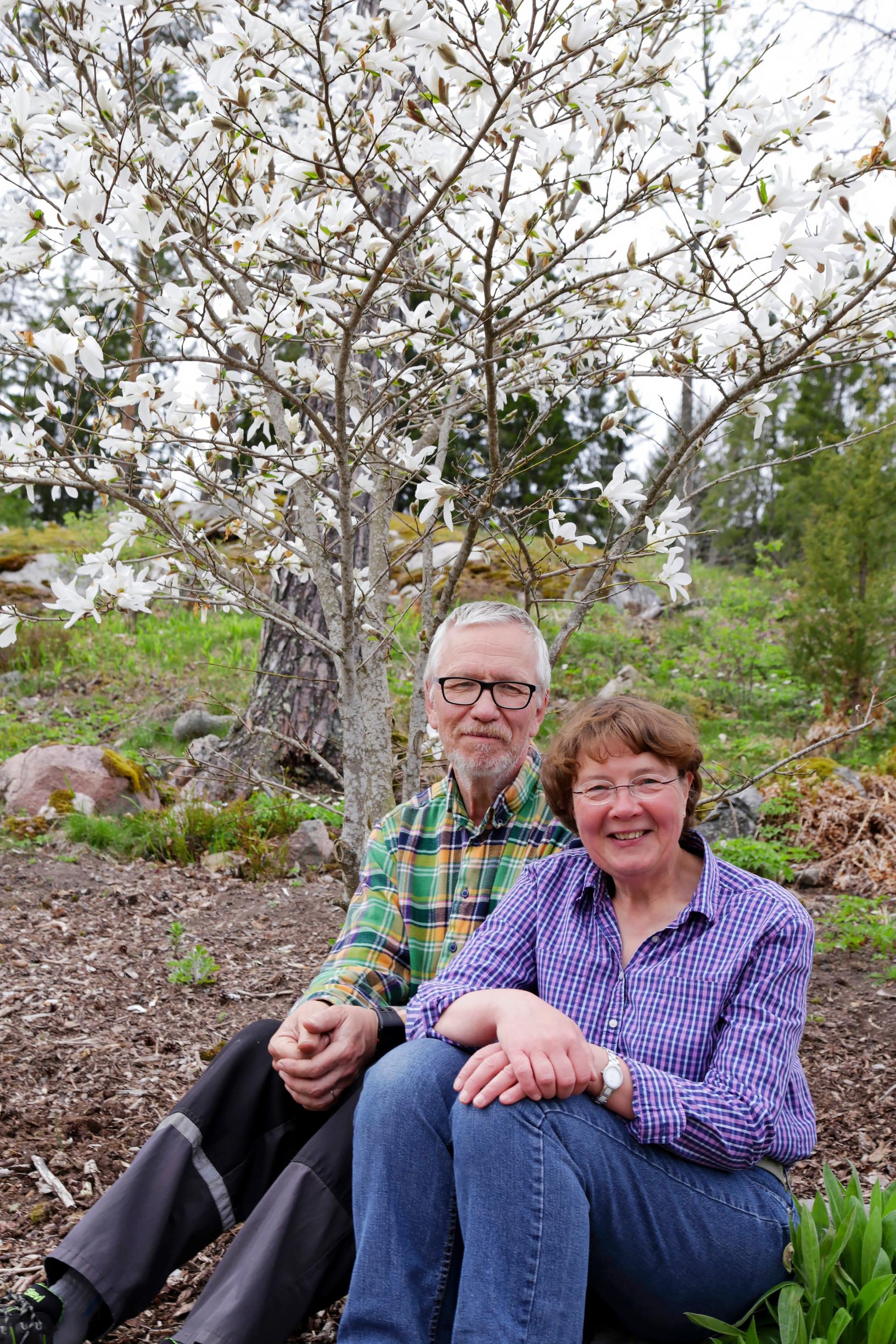


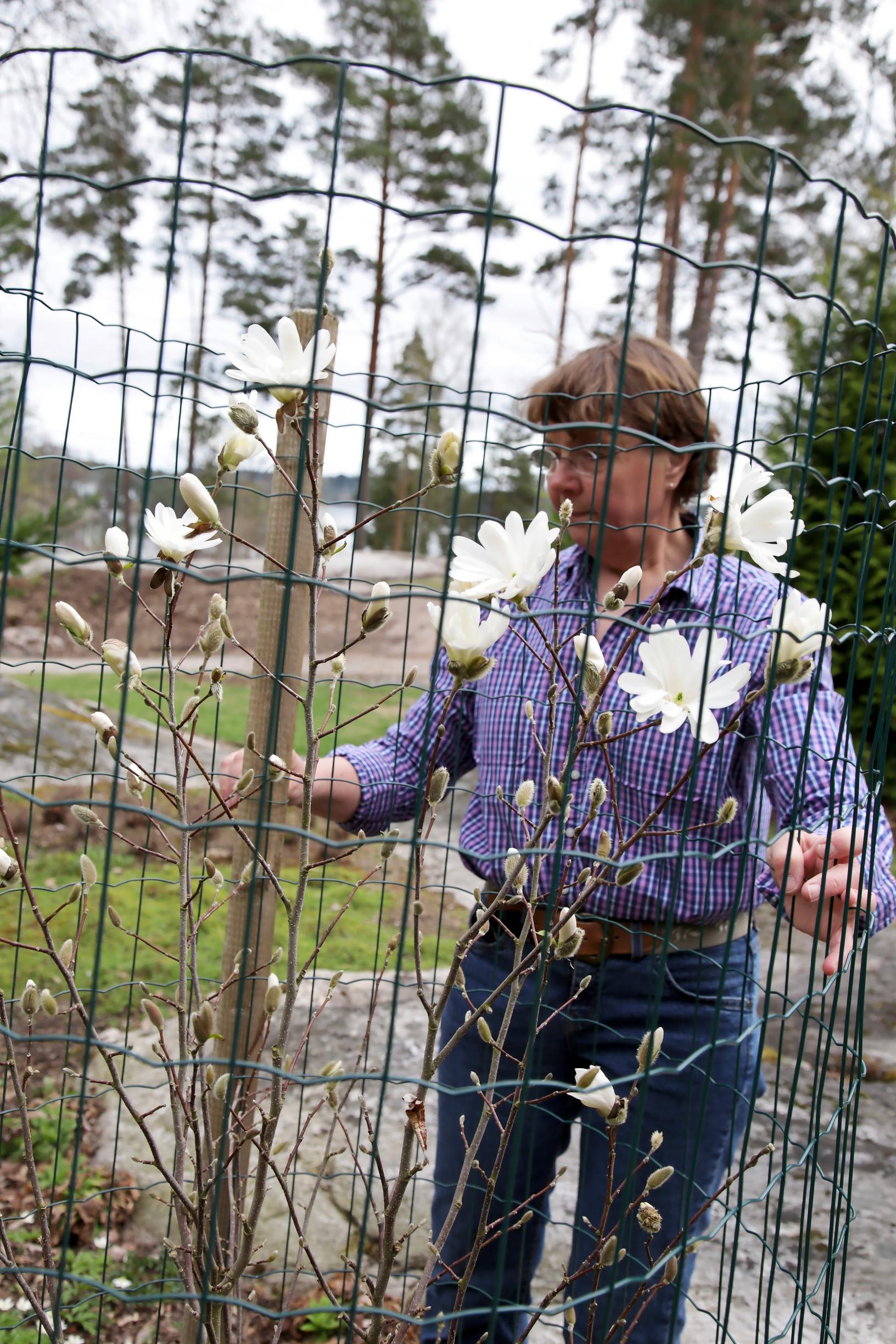
Suvi and Esa became enthusiastic gardeners over 20 years ago. Gradually, their interest expanded from herbaceous plants to woody species—the more exotic the further they progressed in their hobby. As a result, the arboretum now grows, in addition to magnolias, many other special trees, some of them unique in Finland.
In the early 2000s, Suvi and Esa joined a magnolia trial group organized by Arboretum Mustila.
“We received various types of magnolias as seedlings 5–10 centimeters long. At first, we didn’t dare plant them in the ground but overwintered the test plants in a garden shed. Once a month, we waded through deep snow to the shed to water them,” Esa recalls.
The beginning was laborious, but it sealed Suvi and Esa’s love for magnolias. They planted the shrubs grown from the small seedlings along the Magnolia Path they established in the upper part of the plot; more magnolias are growing near the house.
”Magnolias thrive best in a warm and sheltered location.”
In every way, Lohja offers good conditions for magnolias. The Finnish hardiness zone Ib suits even the more tender magnolia species; the soil is permeable, and the sunny plot is on a slope, so water doesn’t stand at the plants’ roots. The forest surrounding the garden on three sides provides the magnolias with a sheltered environment.
The only problem is the deer that frequently visit the arboretum, attracted by an essential compound emitted by some magnolias. For example, the Japanese bigleaf magnolia Magnolia obovata has suffered trunk damage from deer rubbing.
“Even though magnolias seem to thrive with us, we still don’t want to acquire new seedlings hastily. We want to systematically build our knowledge and first familiarize ourselves with the requirements of our current plants. There’s enough to study in magnolias for a lifetime.”



Growing magnolias—Suvi and Esa’s tips
1. Start with oyama magnolia
Our hardiest magnolia species blooms later than other magnolias. Suitable even for beginners, this species establishes well and is a reliable bloomer.
2. Prepare the planting site carefully
The success of magnolias depends greatly on the planting site. Choose a warm and sheltered location for them. Often, it’s warmest next to the house, even up to five degrees Celsius warmer than elsewhere in the garden.
3. Utilize foreign advice
There’s little information available on magnolias in Finnish, but English-language sources include books like Alan Titchmarsh’s “Pruning and Training (How to Garden)” and “Dirr’s Encyclopedia of Trees and Shrubs”. As a general rule, any maintenance task is done a couple of months later in Southern Finland than in England.
4. Provide plenty of water and use a root irrigator
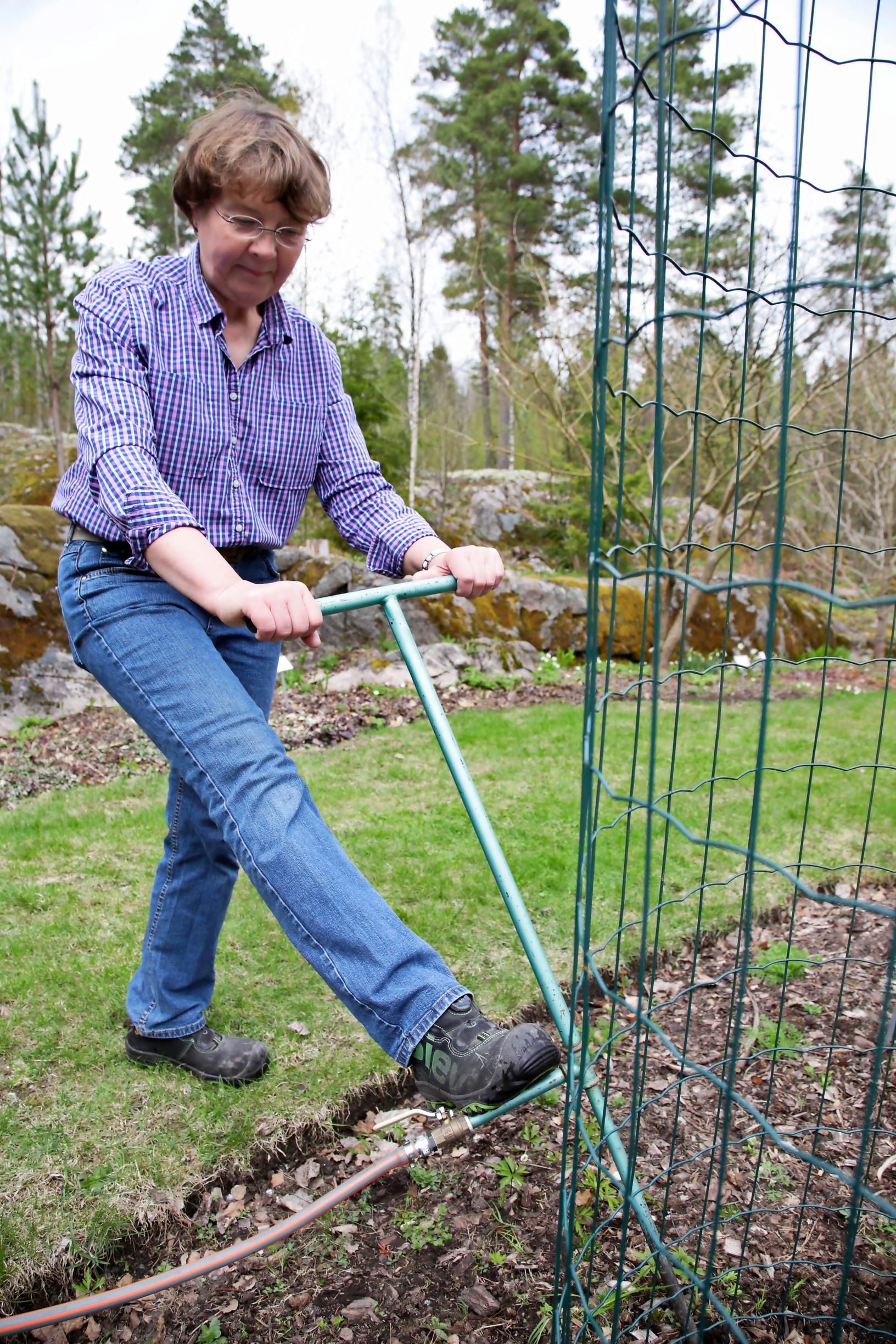
Magnolias need plenty of water. The best way to direct irrigation water to the root area is with a root irrigator. The irrigator is pressed into the ground using your body weight, so it penetrates even dense soil well.
5. Fertilize in spring and late summer
Added to the topsoil, horse manure mixed with peat is a good nutrient supplement in spring. However, be careful not to fertilize young magnolias too heavily; older shrubs can tolerate larger amounts of fertilizer at once. Improve your magnolias’ winter hardiness in late summer with autumn fertilizer.
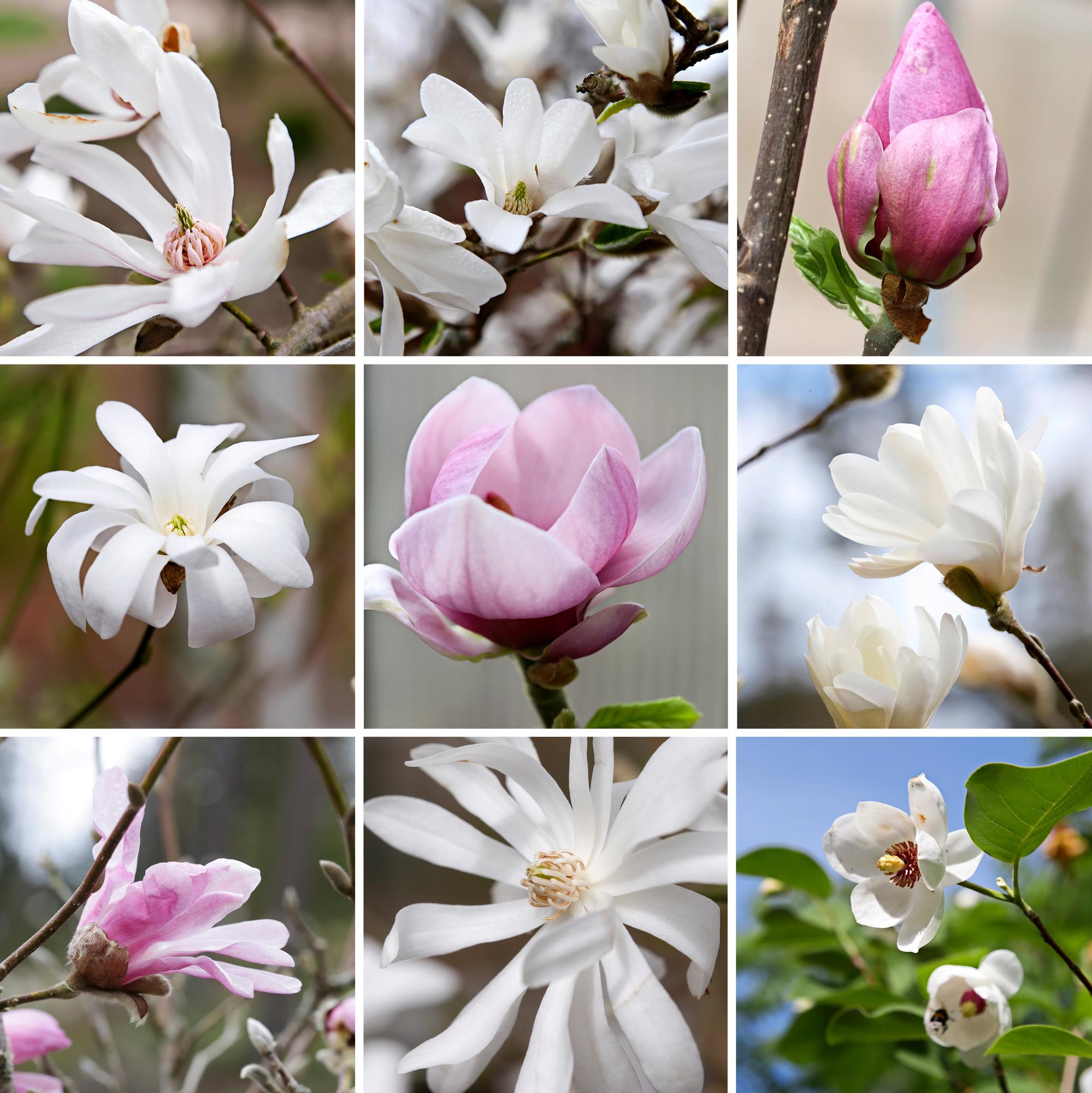
8 × magnolia


1. Oyama magnolia (Magnolia sieboldii)
Finland’s hardiest magnolia species thrives up to Finnish hardiness zone III.
2. Magnolia ‘Genie’ (M. soulangeana × lilliflora)
This new variety from New Zealand grows in a compact size. It’s still a fresh acquaintance for Suvi and Esa.
3. Loebner magnolia (Magnolia × loebneri)
The Loebner magnolia is a cross between the star magnolia and the kobus magnolia, with numerous varieties. Its flowers have a pleasant scent.
4. Saucer magnolia ‘Susan’ (Magnolia Soulangeana varieties)
This variety with beautiful blooms is in Suvi and Esa’s garden for the first year. They expect it to grow to about three meters.
5. Willow-leafed magnolia ‘Wada’s Memory’ (Magnolia salicifolia)
This hybrid of the willow-leafed magnolia and kobus magnolia has flowers about 15 cm in diameter with a strong scent. This fast-growing variety blooms when still young. Suvi and Esa recommend this variety, which thrives in Finnish hardiness zones I–II, even for beginners.
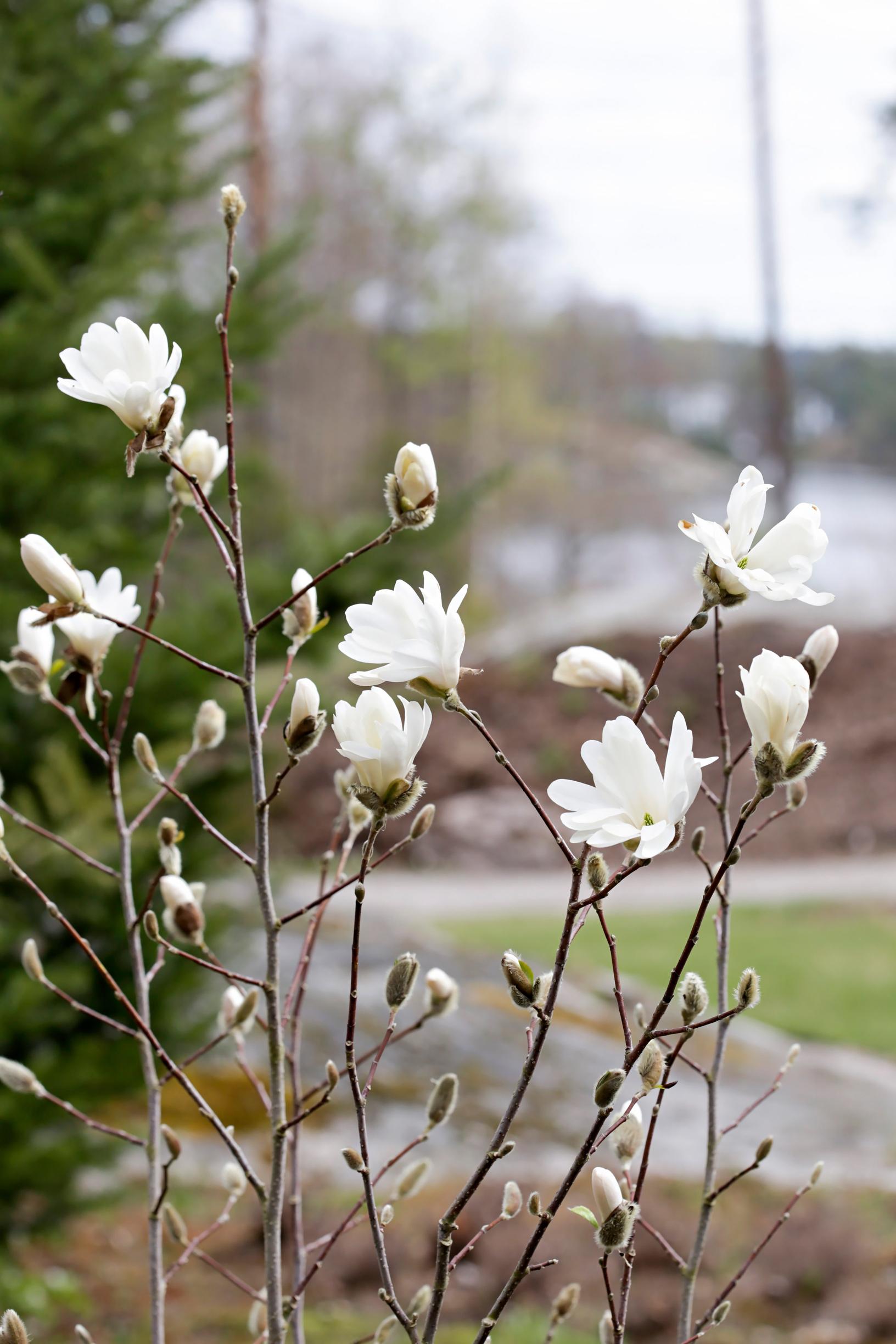
6. Star magnolia (Magnolia stellata)
A small species growing only about two meters tall. It produces abundant flowers and blooms when still young. The shrub also thrives in a pot.
7. Loebner magnolia ‘Merrill’ (Magnolia × loebneri)
This American variety is the second most common magnolia grown in Finland. Suvi and Esa expect it to reach about four meters in height in their arboretum.
8. Saucer magnolia (Magnolia Soulangeana varieties)
The medium-sized and wide-growing varieties are usually quite tender but can survive the winters of Southern Finland under a thick layer of snow. They are also suitable for container cultivation, in which case they need to be overwintered indoors in a cool place.
For more information, visit arboretummagnolia.fi.