

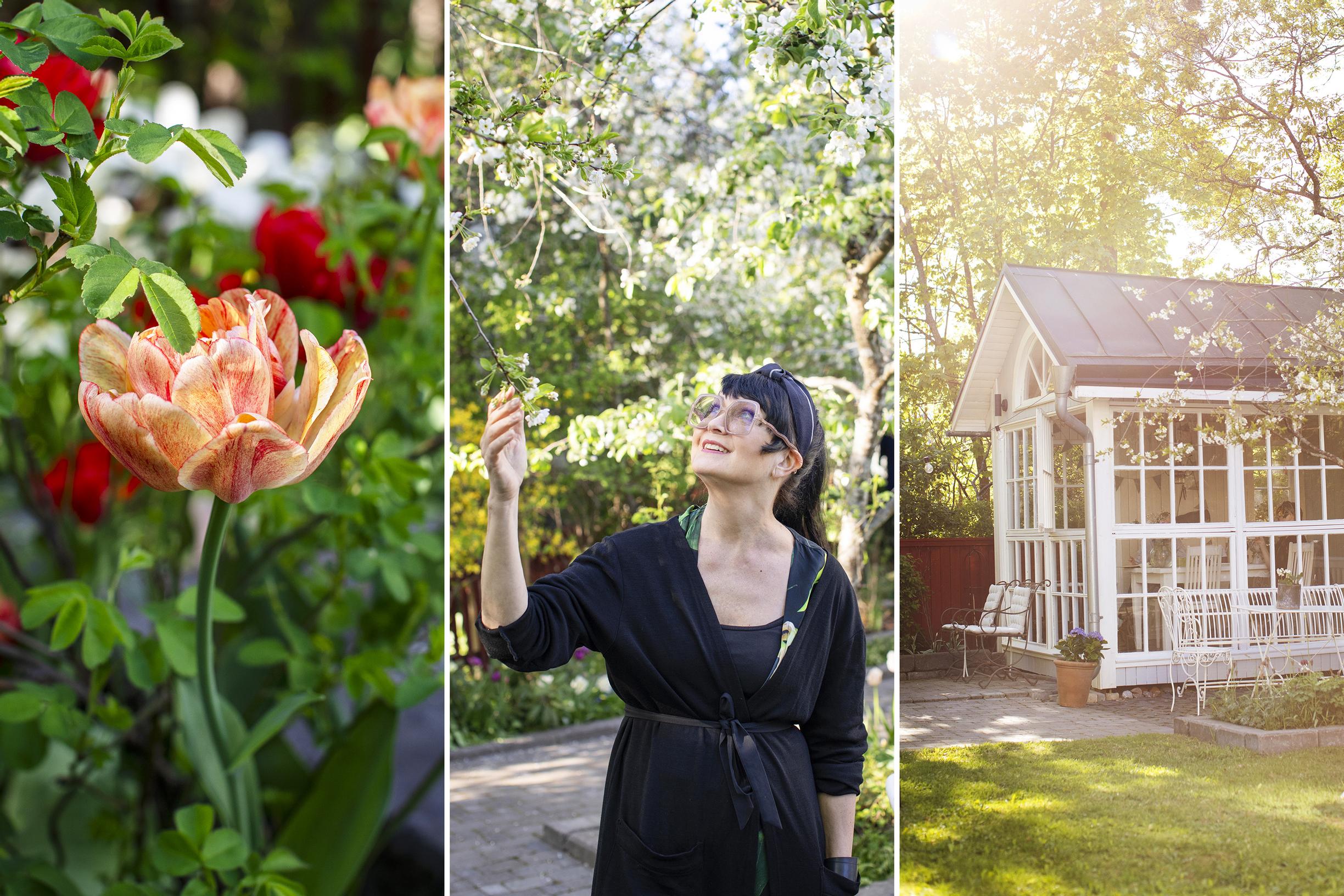
An exercise for the mind—author and interior architect Maaretta’s tulip garden is more than a visual feast
In author Maaretta Tukiainen’s garden, the ‘La Belle Époque’ tulip is a delight for the eyes, while the chirping of little birds is music to the ears. Writing has deepened her relationship with the garden even further.
Garden fever strikes Maaretta Tukiainen early in the year. She feels compelled to do something about it immediately, even if her own garden shows no signs of life yet.
—Usually, I do a ‘quick fix’ as soon as the first bulb flowers go on sale at garden centers. I keep them in a semi-cool porch or, if there’s no frost, on the steps. Sometimes I bring them indoors, she says.
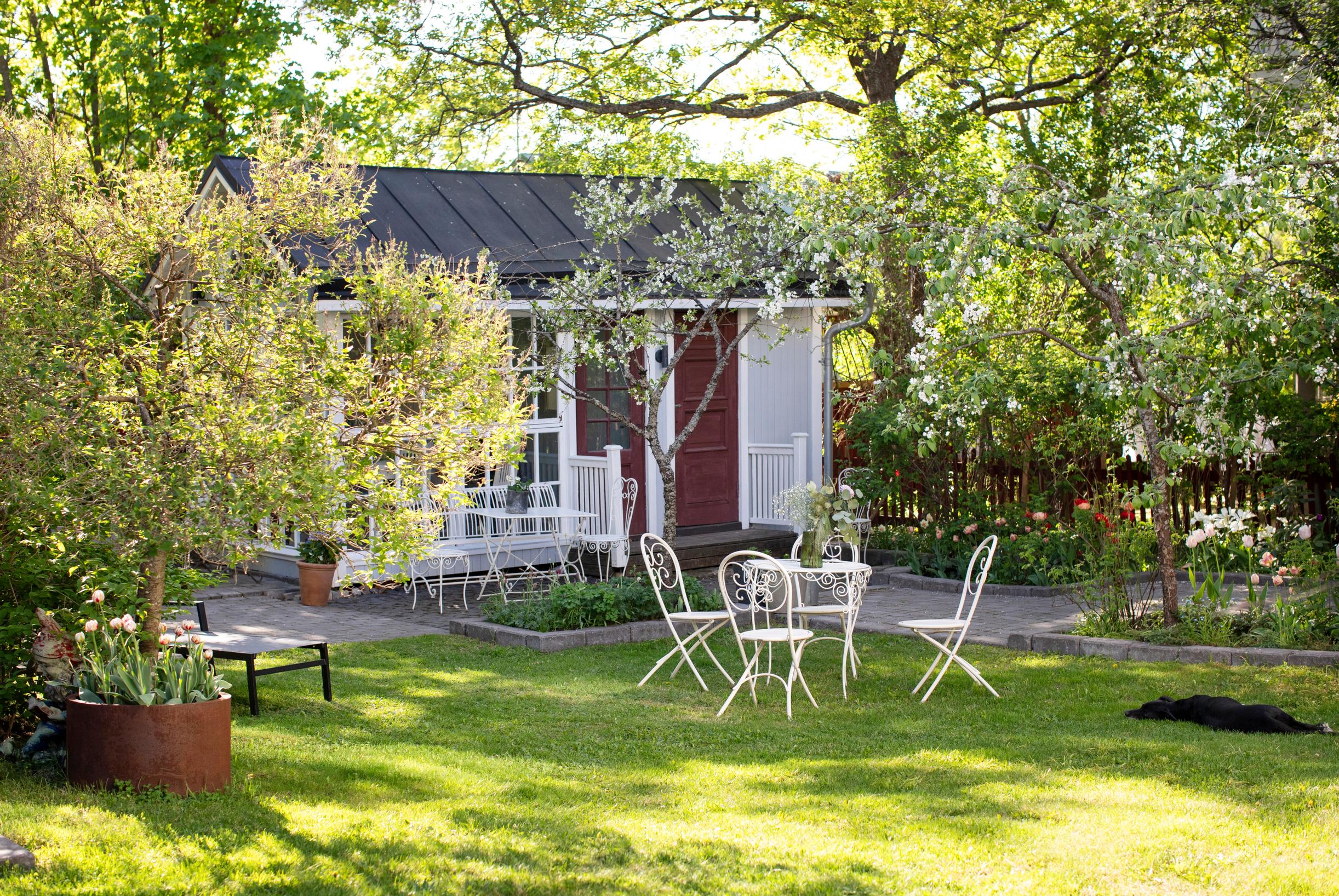
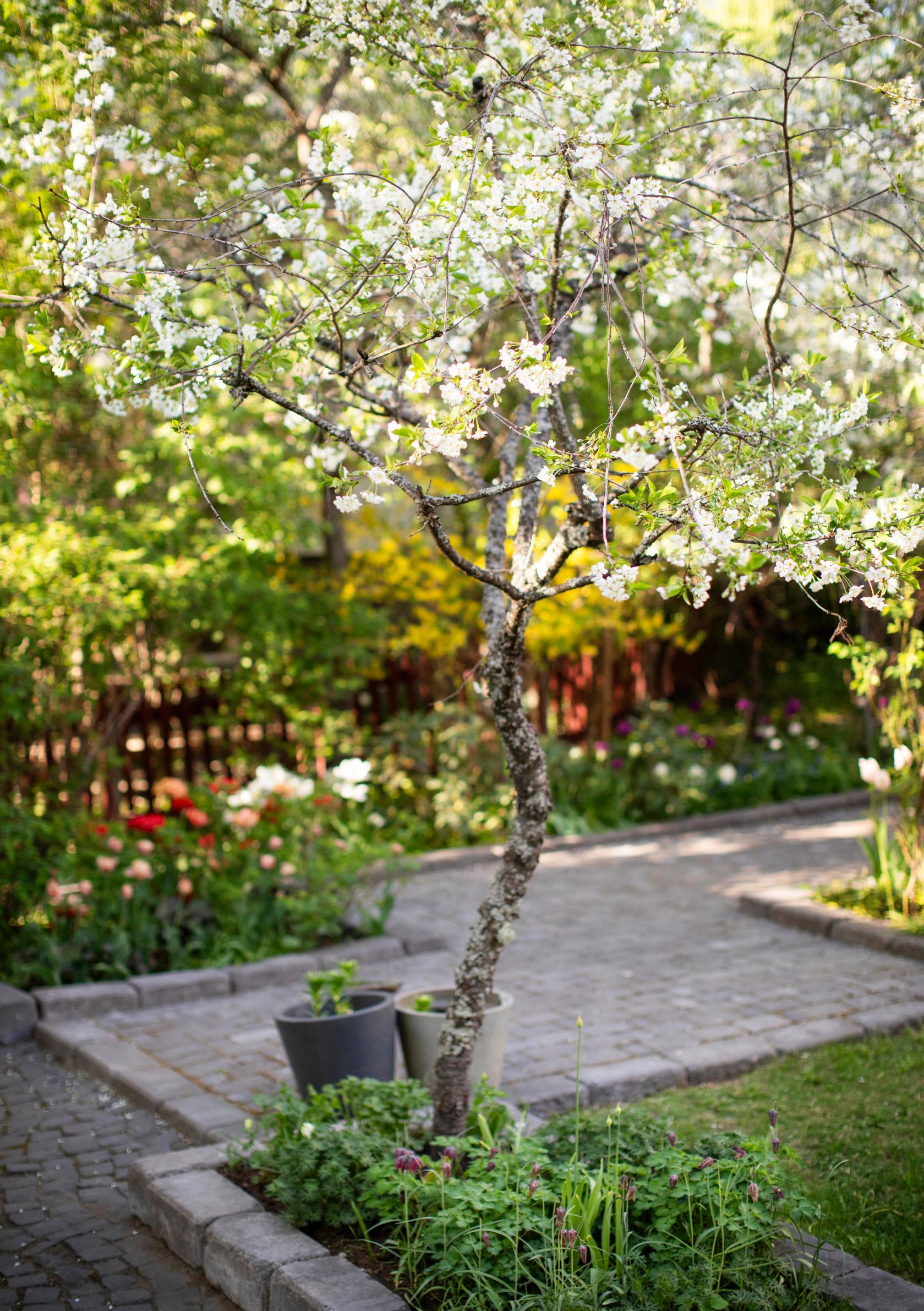
But now spring has finally overtaken winter and arrived with unprecedented vigor. All of the garden’s different fruit trees bloomed at once, which Maaretta finds remarkable because they usually flower in succession.
In the perennial beds, checkered fritillaries, daffodils, and tulips are now taking their turn. They look like regal figures in a grand floral court, basking in the evening sun.

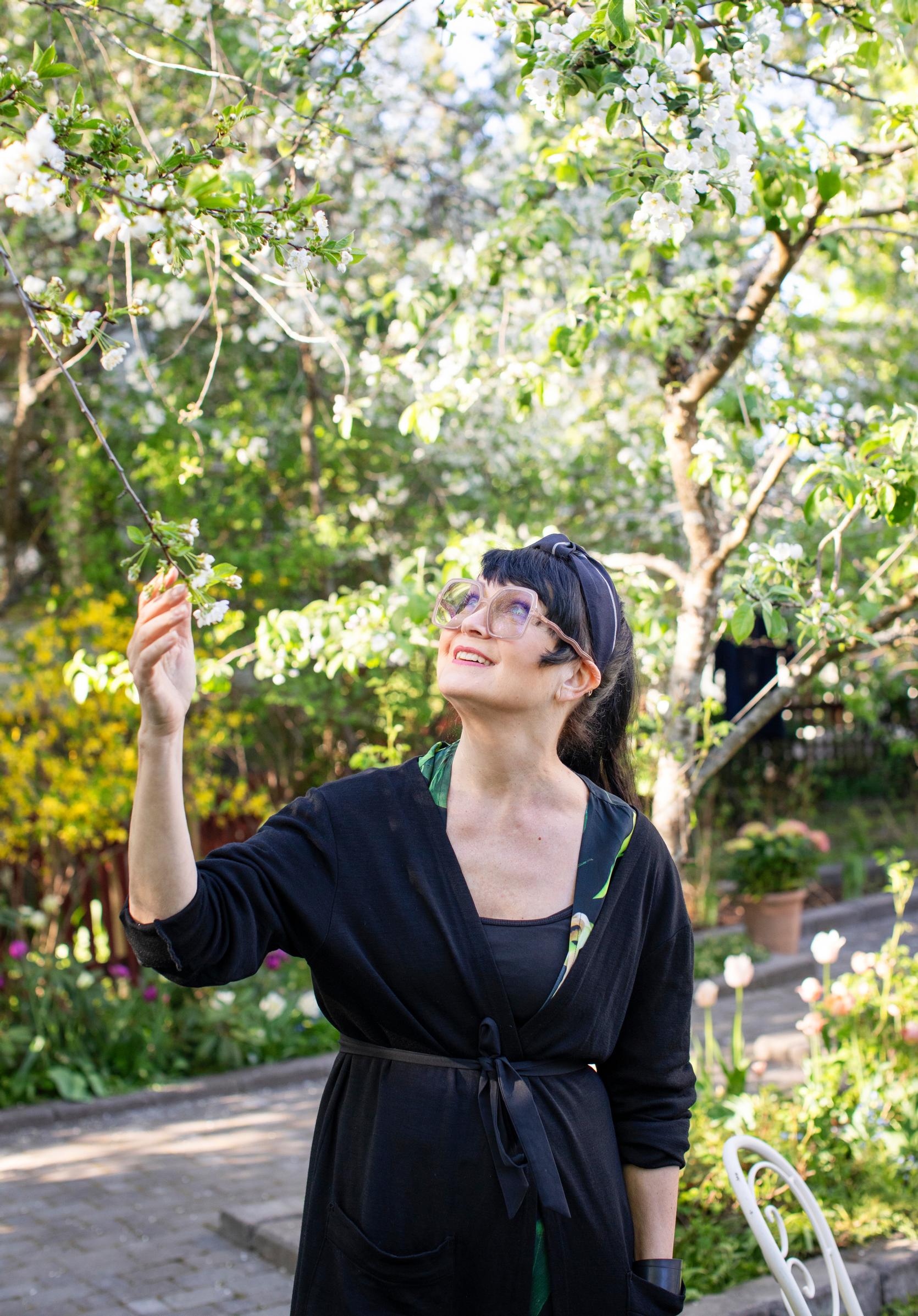

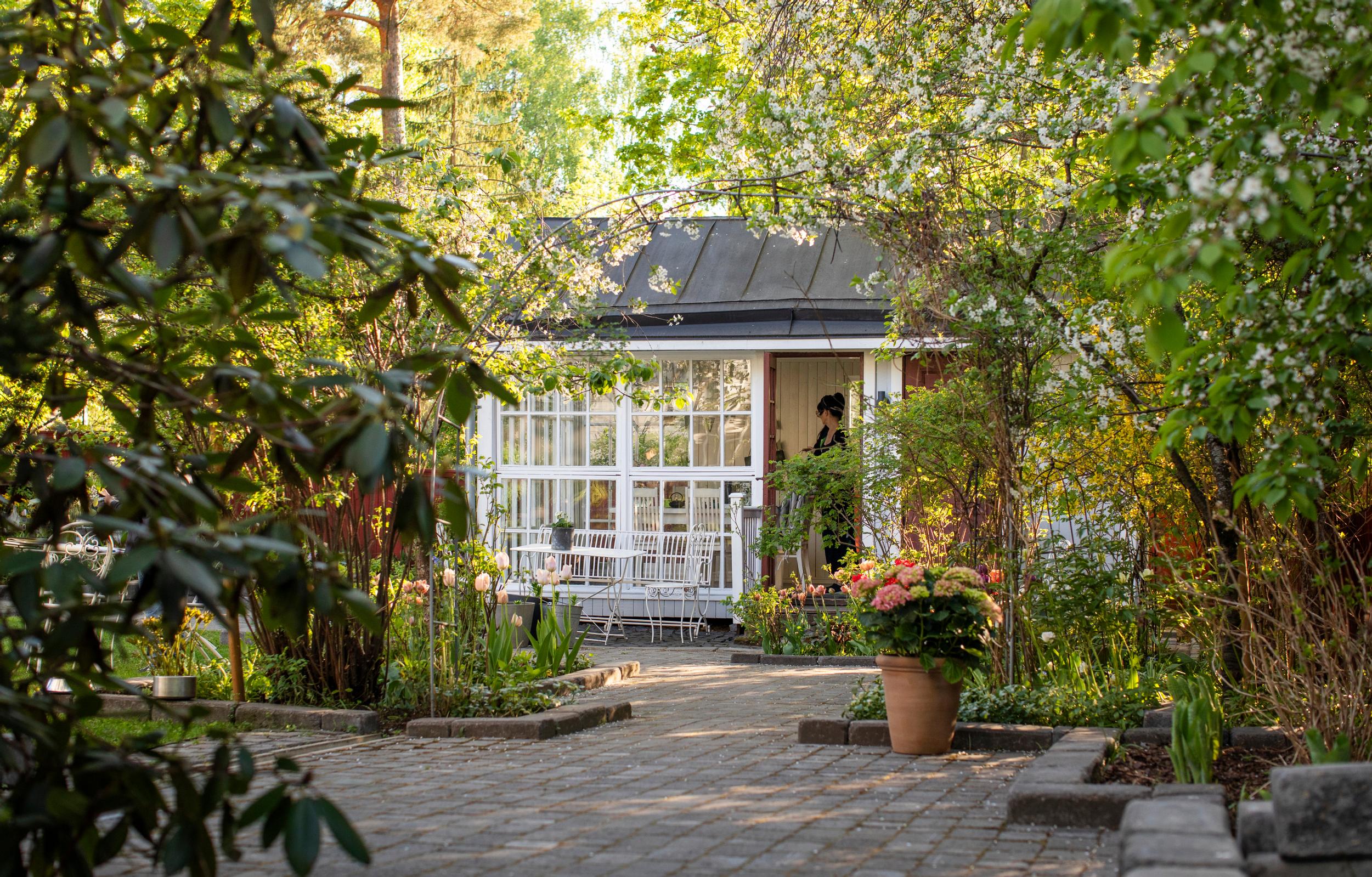
The garden is part of a good life concept.
Maaretta first noticed spring in her garden about twenty years ago. It was May, and she had come to a house viewing with her spouse Markus Frey. The sun danced on the white cherry blossoms, but the garden behind the house was otherwise an overgrown “tangle.”
Maaretta and Markus bought the property. At first, renovating the old wooden house consumed their attention. The garden gradually made its way into their lives. Maaretta worked as a tv channel director, and amid her busy schedule, the garden was like a breath of fresh air. She started shaping it little by little.
The garden reached its current form about five years ago. Markus finished paving the paths, and now a neat stone walkway leads from the main gate into the garden. Wide perennial beds run along the lot’s perimeter and next to the house, with an open lawn in the middle. There are several seating areas to ensure there’s always a sunny place to sit.

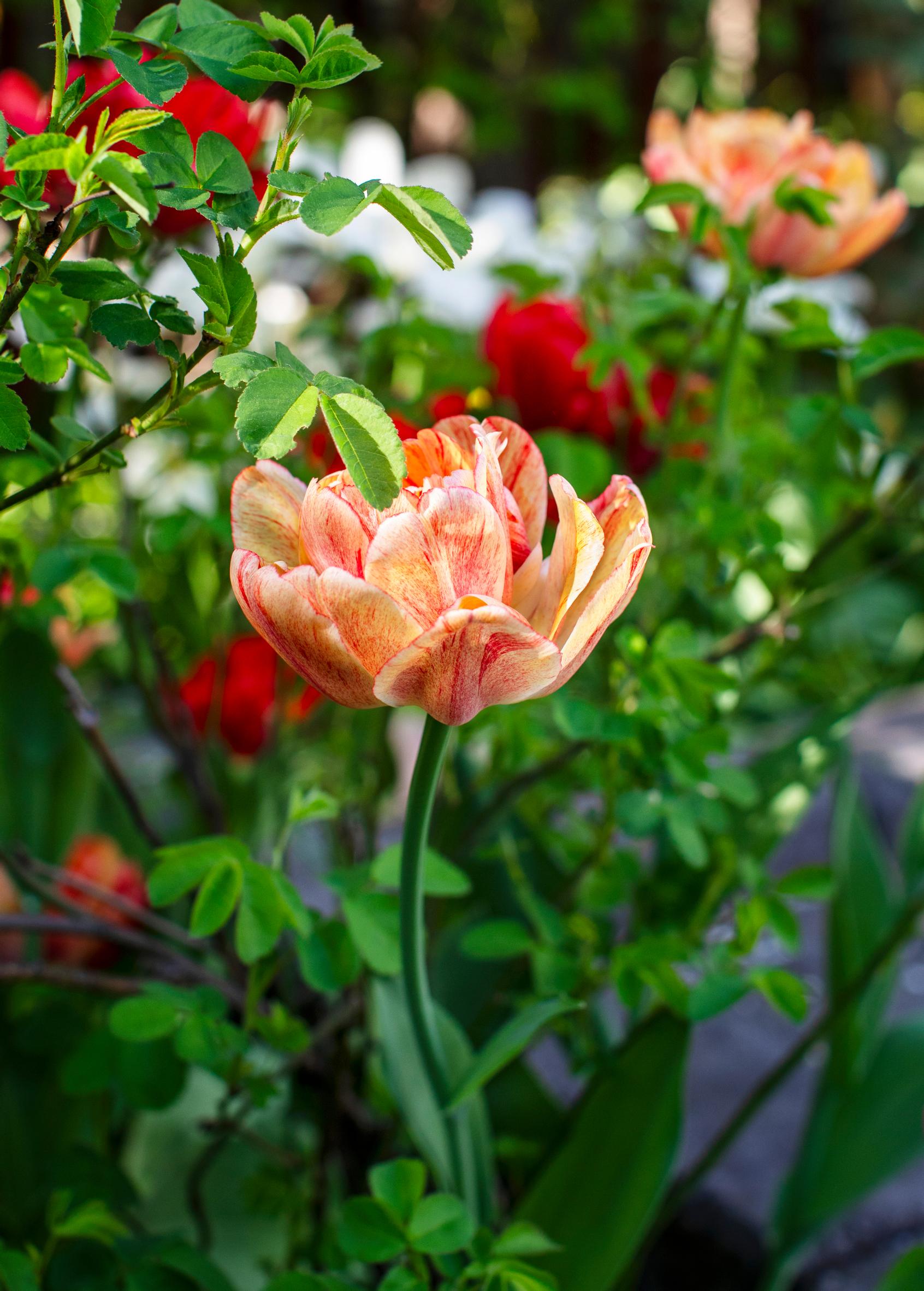


Nowadays, Maaretta is an author. Last year, she published two garden-themed books. Kasvun tarina (The story of growth) explores the cultural history of garden art, interwoven with her own life stories. Its companion book Kasvun vuosi (The year of growth), invites readers to observe nature and reflect on their own lives.
Markus handled the design and illustrated the plants and animals. On the cover of the observation book, he painted a white tulip bud with green-streaked, ruffled petals just beginning to open. By contrast, the bright red tulip on the reading book’s cover has flamboyantly spread petals.

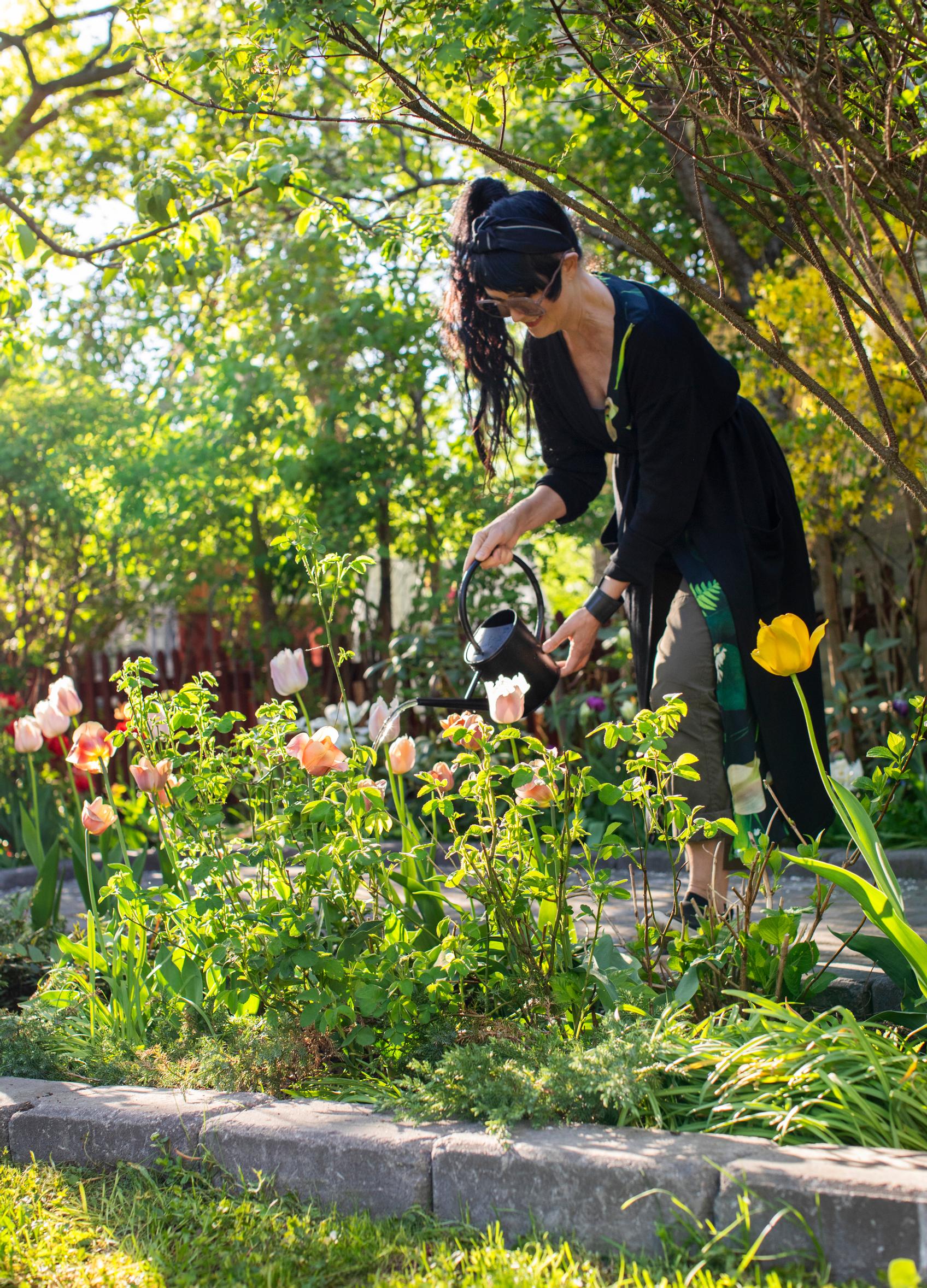

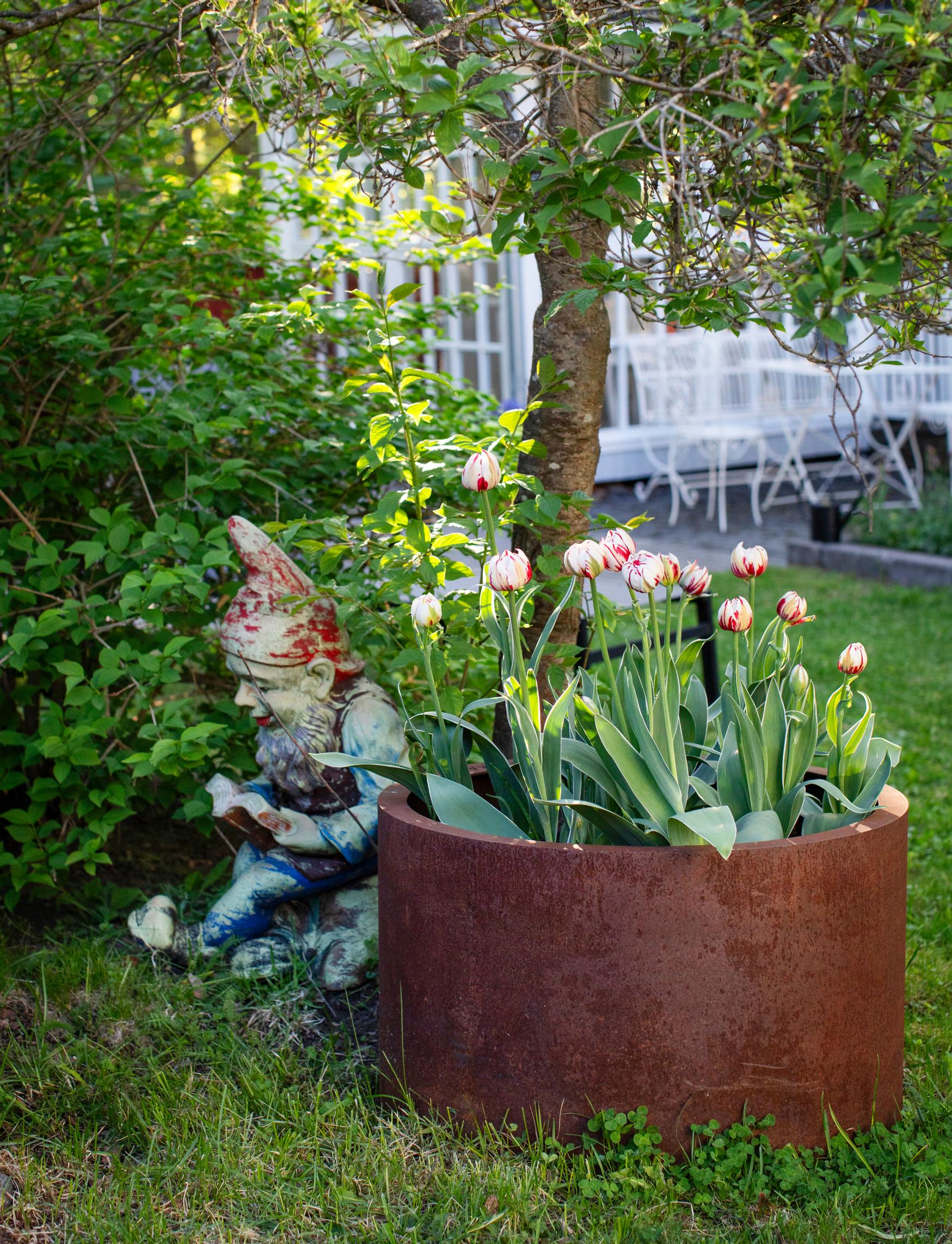
Tulips are a shared hobby for the couple. They grow both single and double varieties, and each autumn they add more bulbs. Maaretta explains how they pick them one by one from open bins at the store.
—It’s wonderful when we get to go to the “candy store” in the autumn. We go a bit wild in those aisles.
For Maaretta, tulips are like an artist’s palette. With them she can create color accents throughout the garden. Right now, the real showstopper is ‘La Belle Époque.’ Its painterly petals have soft shades of pink, violet, and apricot, and sometimes its rounded petals droop gently at the tips like floppy ears. Maaretta planted them with the French baroness Béatrice Maurice Ephrussi (1864–1934) in mind.
Writing deepened Maaretta’s bond with the garden.
In her book, Maaretta describes how the baroness built a villa called Villa Ephrussi de Rothschild and created an oasis of nine gardens around it in the early 1900s. The period before World War I is known as the Belle Époque, and Maaretta’s visit to the baroness’s estate-turned-museum on the French Riviera remained vivid in her memory.

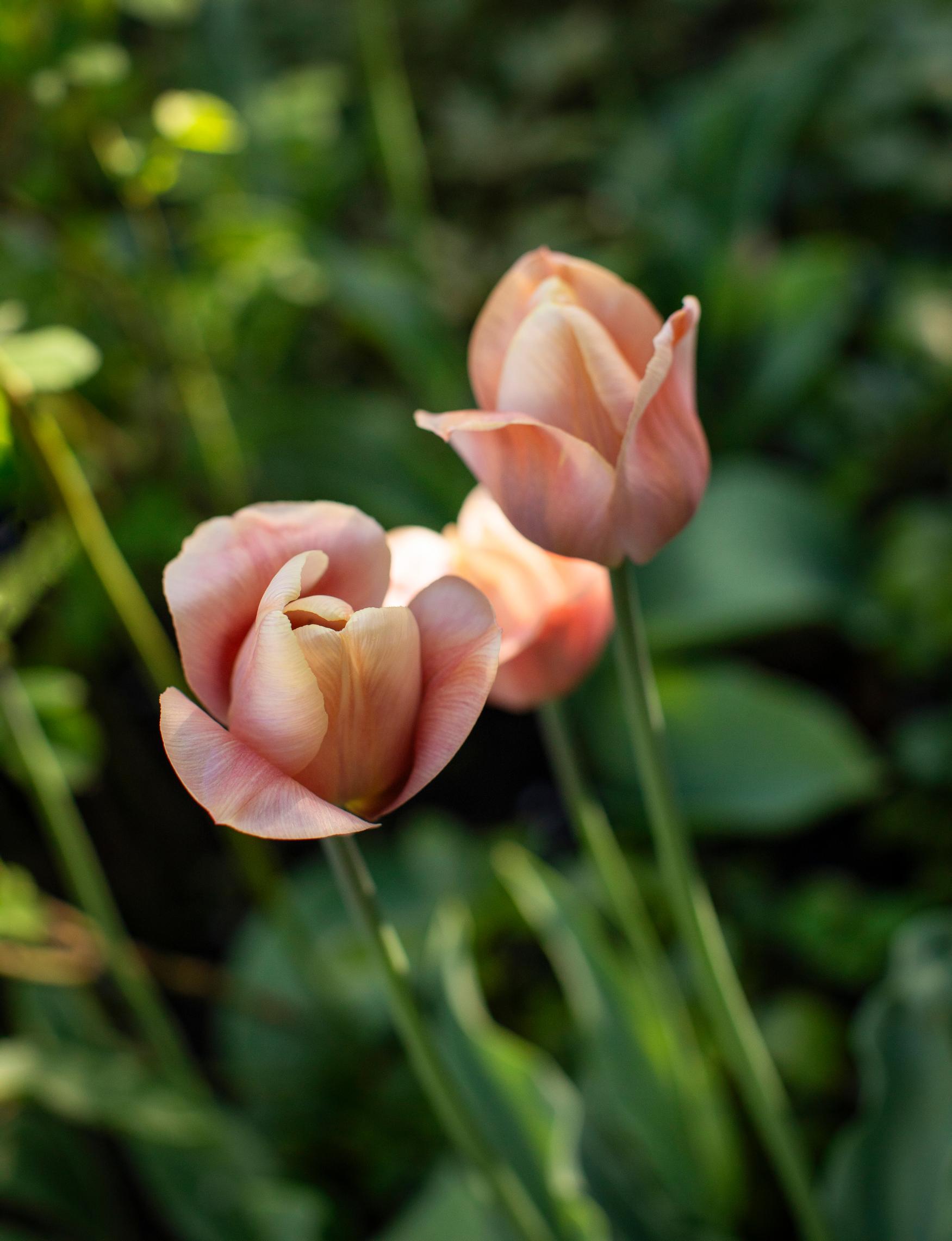
The colors and shapes of plants captivate Maaretta, who also trained as an interior architect. She carefully plans the color harmonies in her plantings. When combining compatible shades—whether in plants or hardscaping—she believes it’s crucial to consider everything which is visible at the same time.
In Maaretta’s garden, early tulips often bloom at the same time as forsythia, Siberian squill, and fruit trees, which is why she selected white, lemon-yellow, and orange-red tulip varieties to match them.

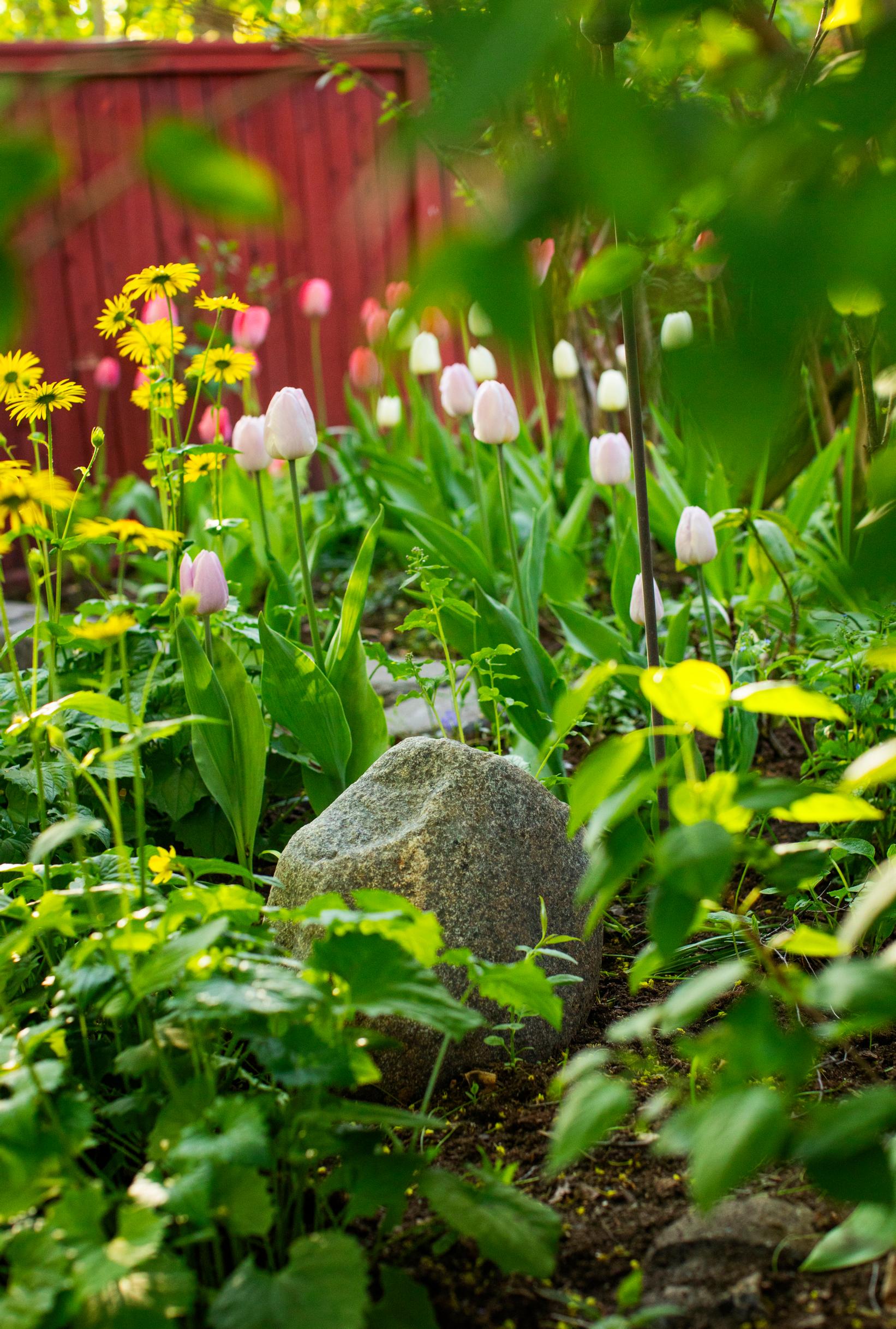

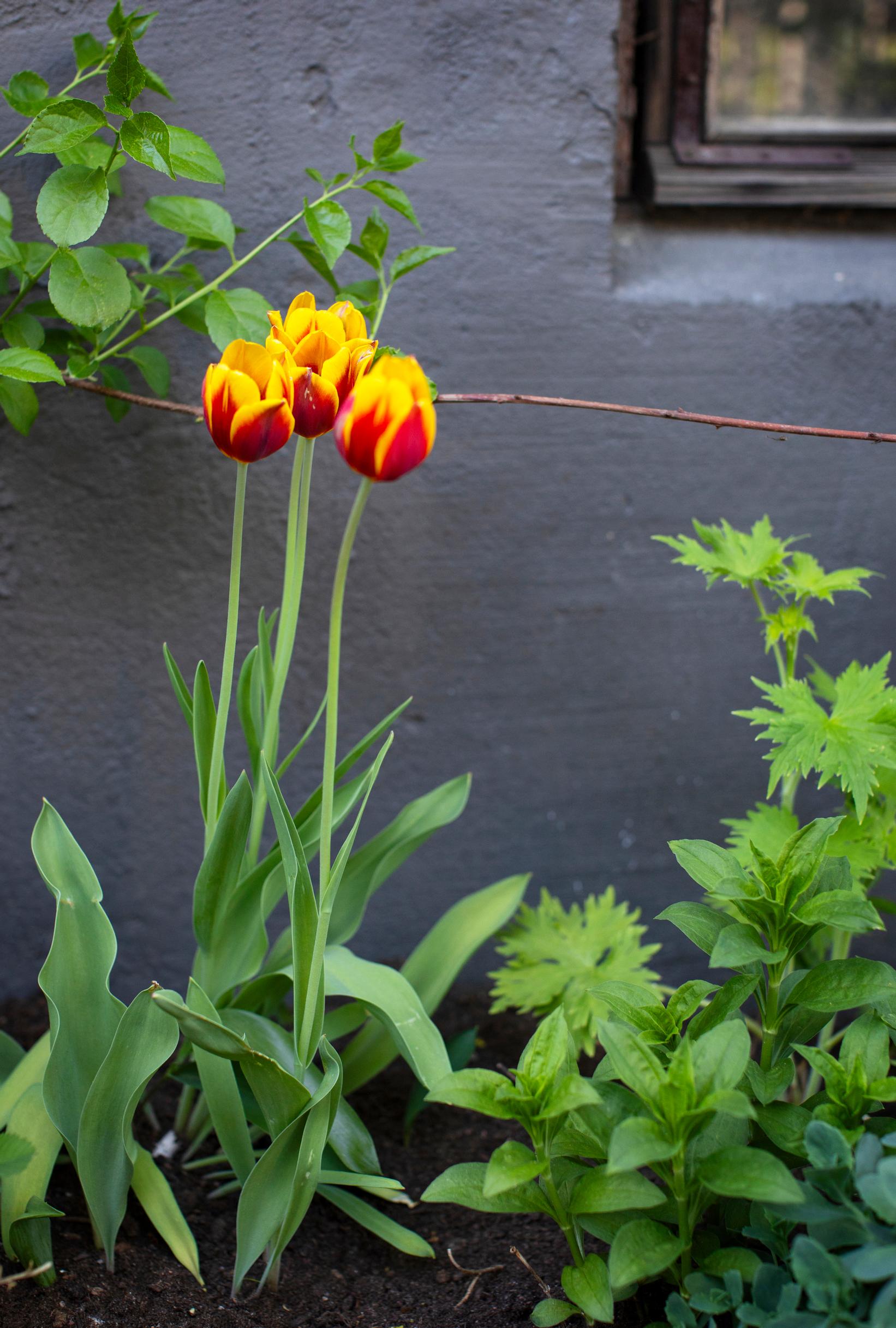
Working on the garden books deepened Maaretta’s relationship with the garden. It showed her how many different meanings and dimensions a garden can have. For her, the most important aspects are beauty, presence, a closeness to the seasons, and continuous change.
At the same time, the garden also represents permanence to Maaretta. Its trees have stood in place for decades, and one of the most majestic is an old birch. She remembers a special moment this spring when a robin sang on one of its branches while she and Markus stood beneath it, arm in arm.
However, she keeps a close watch on the old birch’s condition. The looming possibility of having to cut it down already makes her sad.
—We just haven’t had the heart to part with it yet, she says.
The garden also acts as a creative source for Maaretta, both artistically and philosophically. She views it as part of a good life concept. Could tending it, with all its ups and downs, be seen—like in Eastern philosophy—as an exercise for the mind?
—Absolutely. That’s exactly what it is.

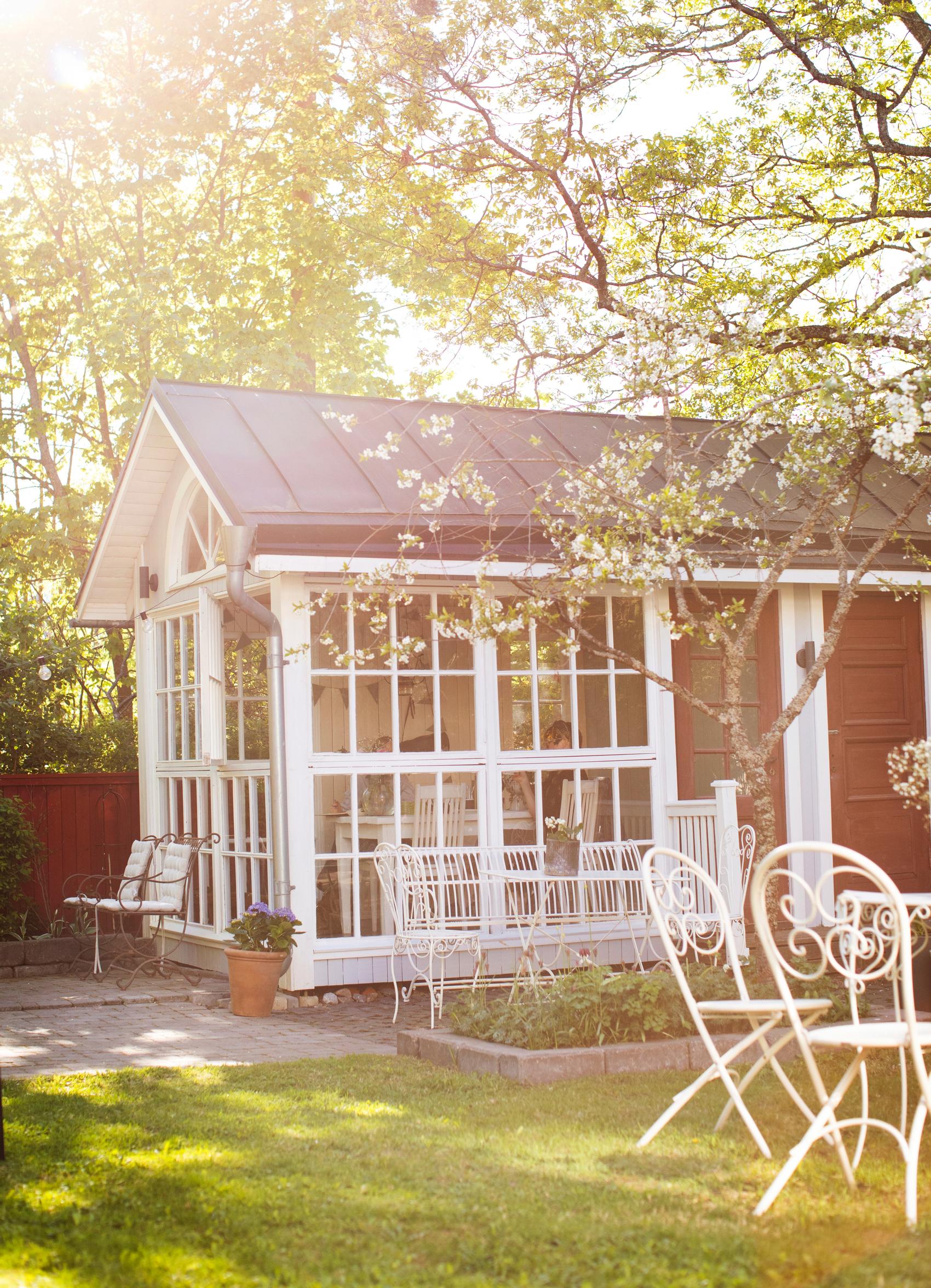
Place: Maaretta and Markus’s garden in Helsinki’s Tapanila
Hardiness zone: Ia
Size: 560 m²
Soil: Sandy soil enriched with garden soil
Special features: The author’s gently colored tulip garden beneath blooming fruit trees.
Instagram: @maaretta.tukiainen

