Your cart

Your cart is empty.

Continue shopping
You'll love these, too
Notes from the past

Uncovering Toni and Kati’s hidden gem: “We were instantly charmed by the tall ceilings”

Toni and Kati returned to their home region and renovated a more than century-old house. Although the renovation is still ongoing, the family’s dream of a spacious old home came true.

November 15, 2025Lue suomeksi

Did we just become homeless? This thought crossed Toni and Kati Koski’s minds when their once too-small house sold faster than expected. The couple had long dreamed of owning an old house, but when Kati’s little brother tipped them off about a home for sale, their excitement really began to grow.

“We weren’t planning on returning to our home region, but we went to see the house out of curiosity. The tall rooms, spaciousness, and atmosphere won us over right away. The yard and surroundings were also very much our style. It almost felt like the house itself decided on our return for us,” the couple says.

The house is one of two that a certain landowner built for his sons. He sourced the building materials from his own farm or the village. Even the nails were forged in his own or a neighbor’s smithy. According to local stories, this house also once served as the village’s first bank.

Toni and Kati purchased the property in the summer of 2016 and named it Kissankulma (Cat's Corner). About 60 years had passed since the house’s previous major renovation.

“There was plastic on the walls and floors, so every area had to be redone,” Kati says.

Still, the house was in livable condition, so the family moved in with their three children right in the midst of the renovation. They washed dishes in the bathroom and cooked on a small stove. The bathroom renovation took two months, since the washroom facilities had to be completely dismantled.

“Luckily, we had family and relatives living nearby where we could head over for a shower,” Kati says.

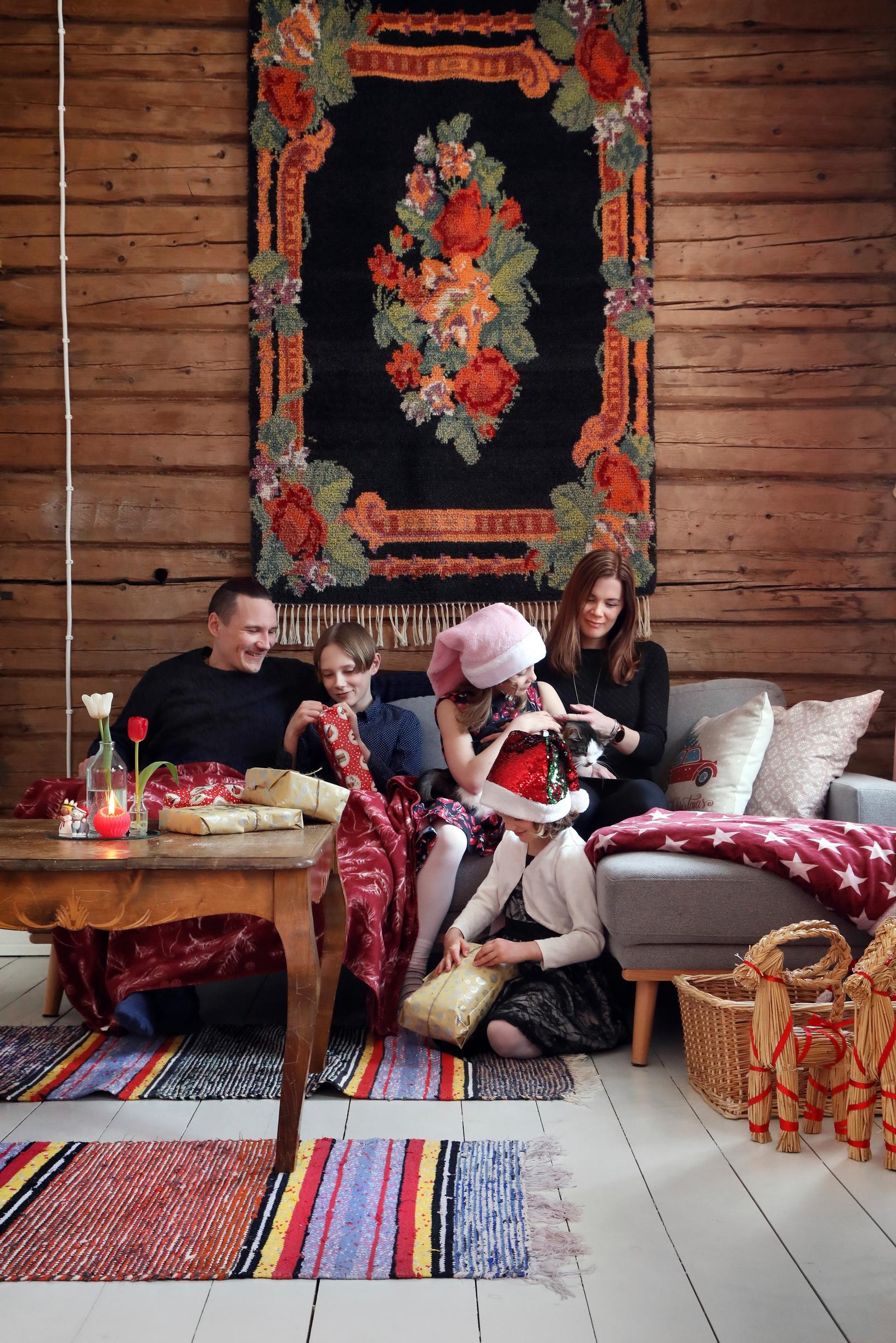
Koski family on the sofa
In addition to parents Kati and Toni, the Koski family includes children Luukas, Venla, and Neela, as well as cats Eetu Lila and Lipsu.
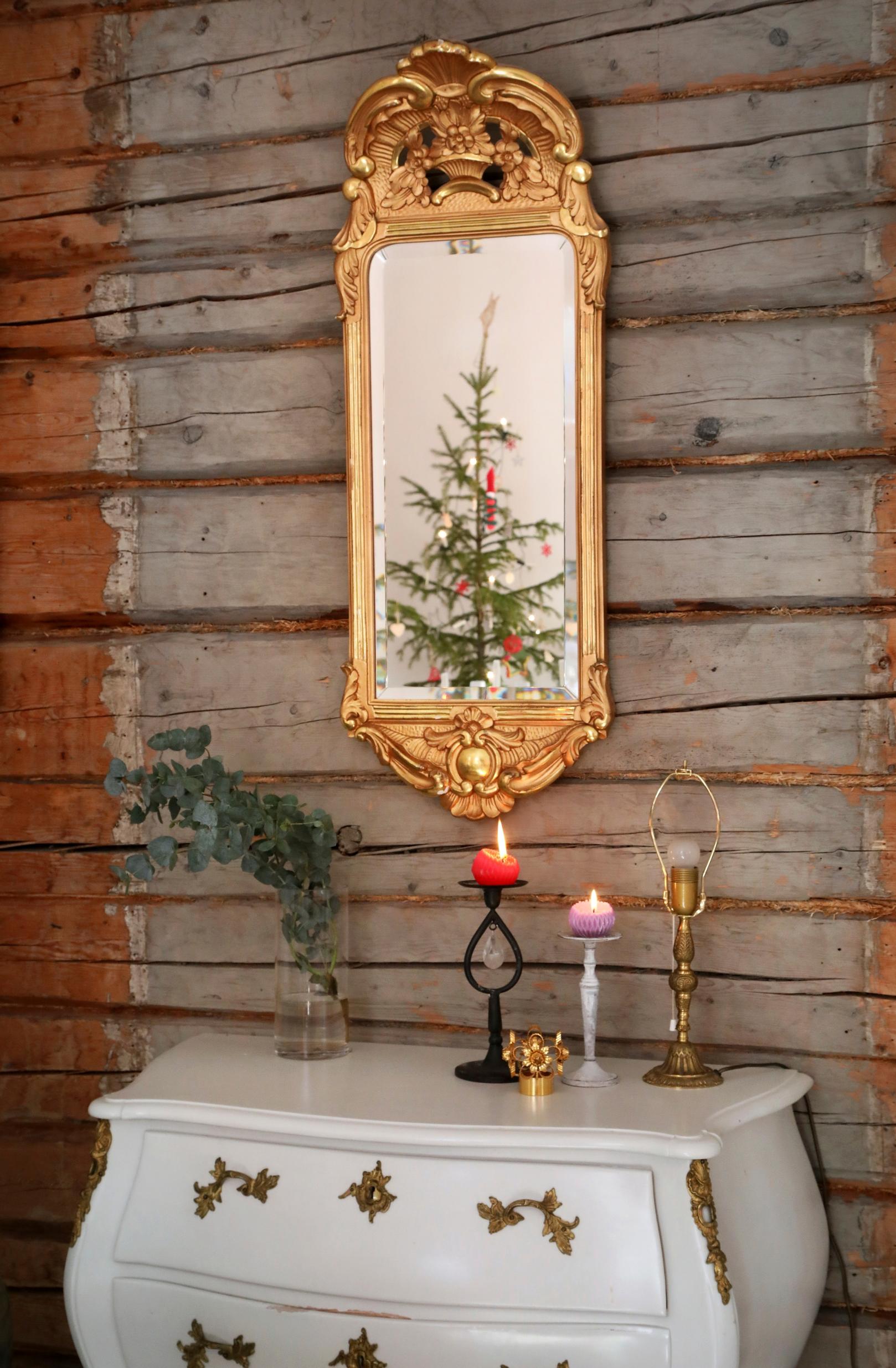
A decorative mirror and a chest of drawers
The bombé chest and the ornate mirror are permanent fixtures in the house.
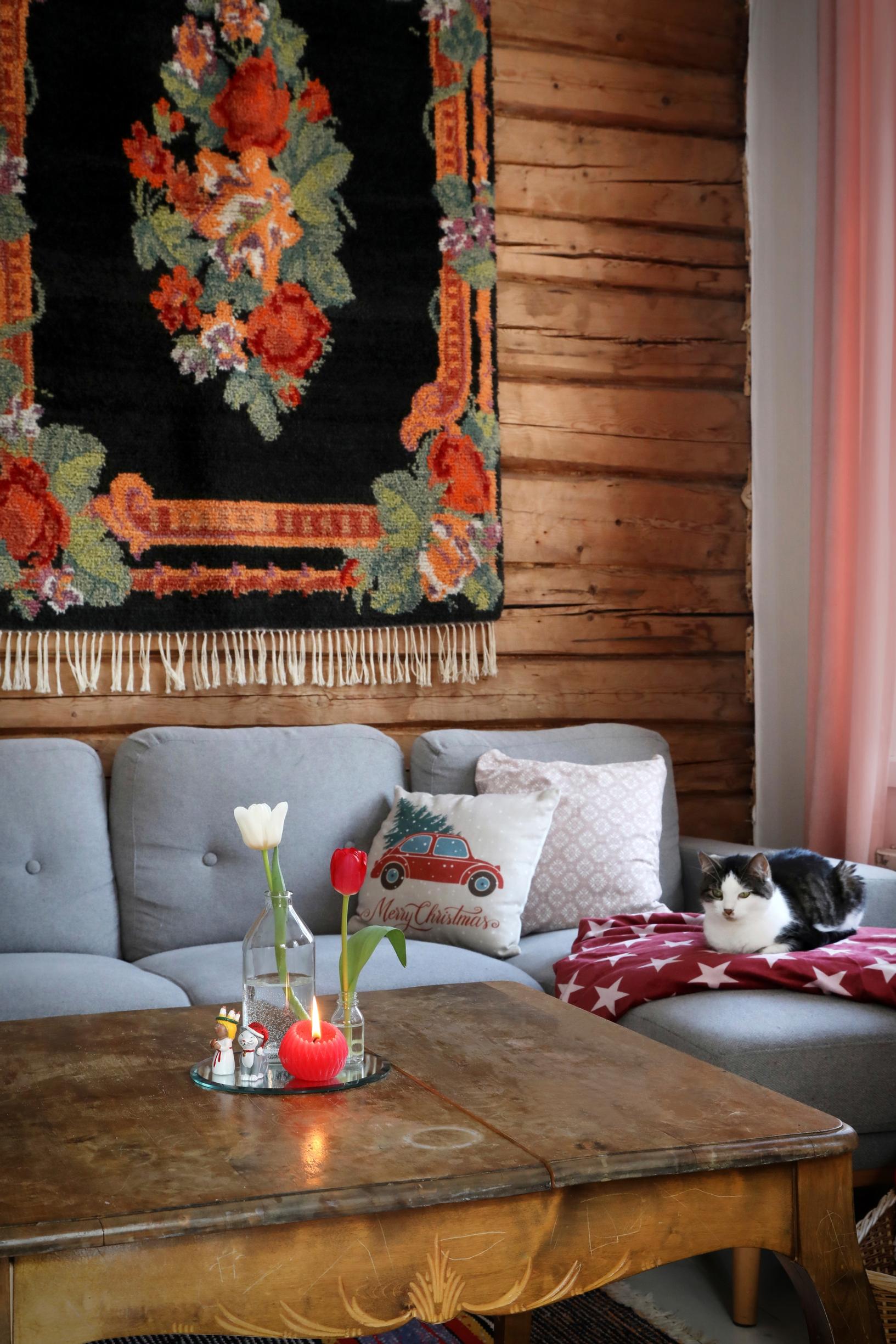
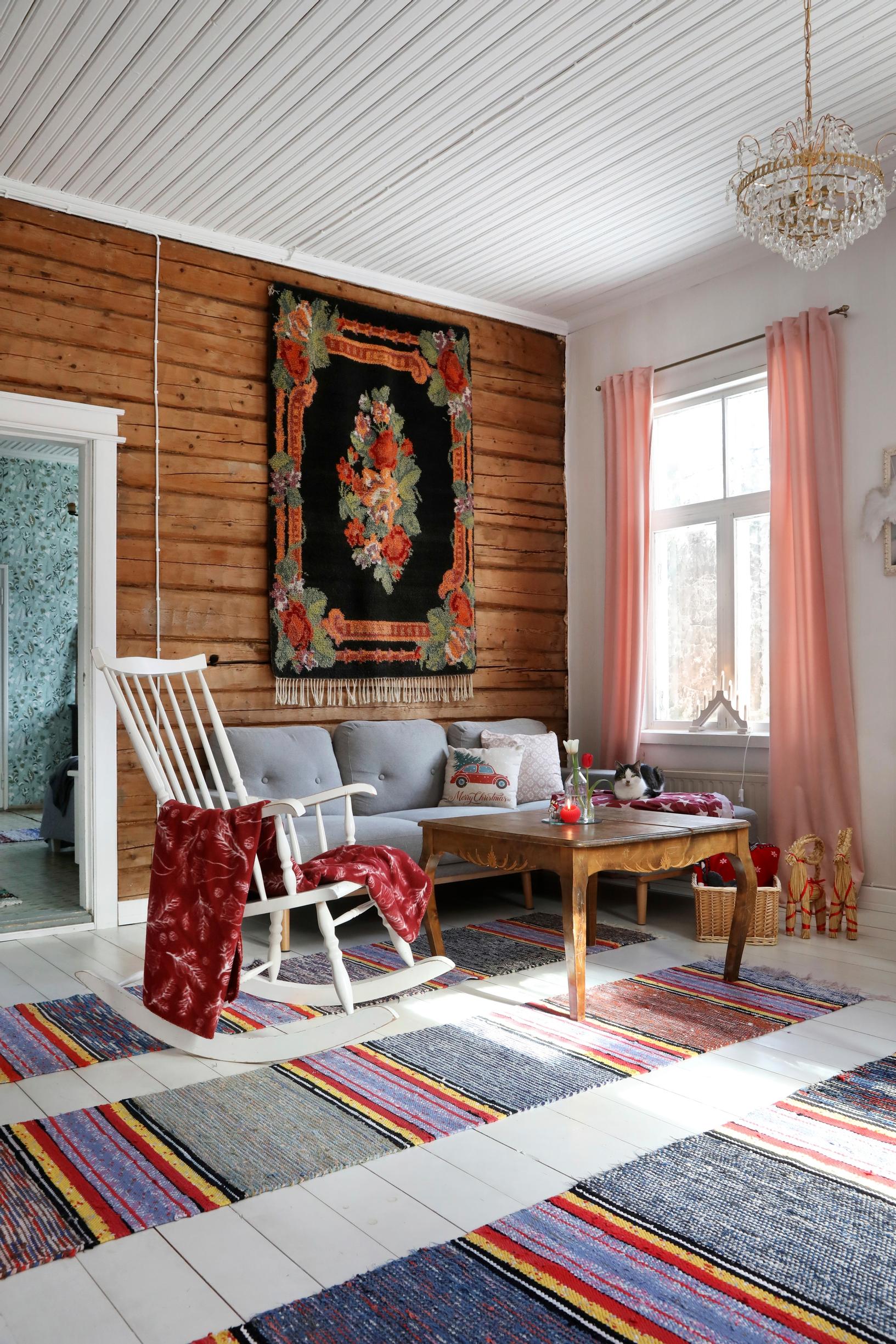
A rose-patterned ryijy rug on the living room’s log wall
The rose-patterned ryijy tapestry in the living room was found in the attic. Toni and Kati bought the table at a flea market and shortened its legs to a suitable height.
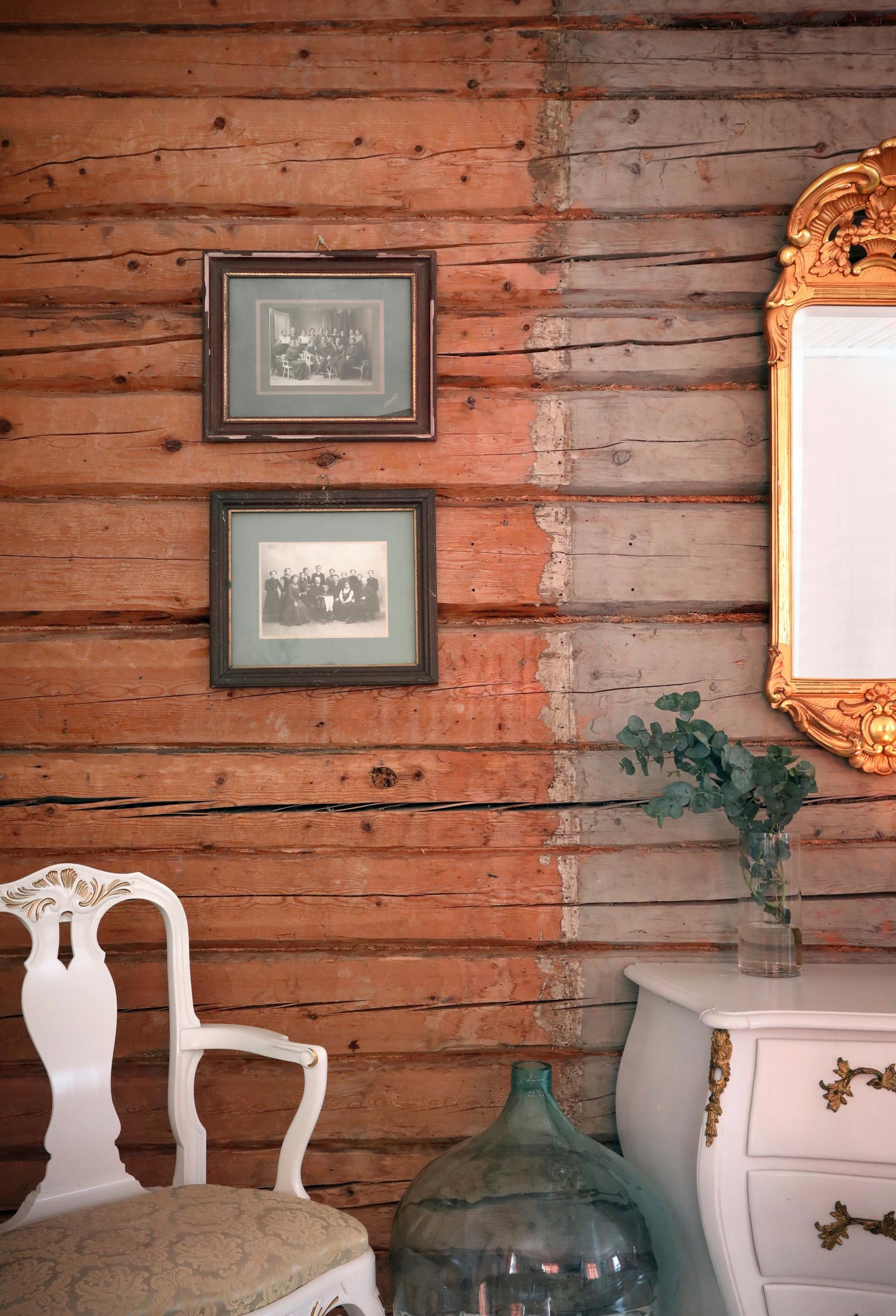
A log wall with color variations
Kati is charmed by the artful clash of different styles.
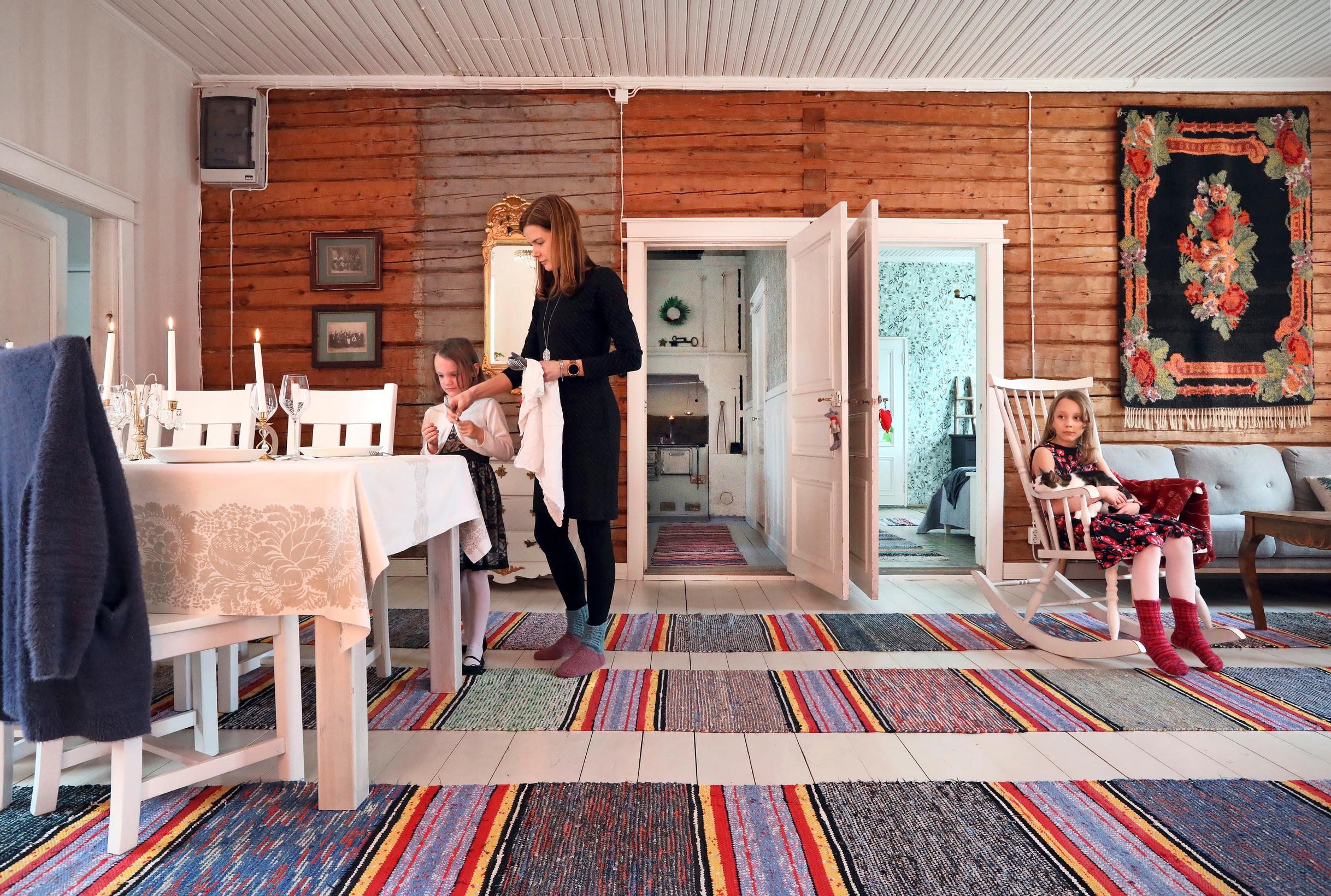
We bought the house along with an entire bedful of rag rugs. Some of the rug rolls had a neatly handwritten note pinned on them that said “Christmas rugs”.
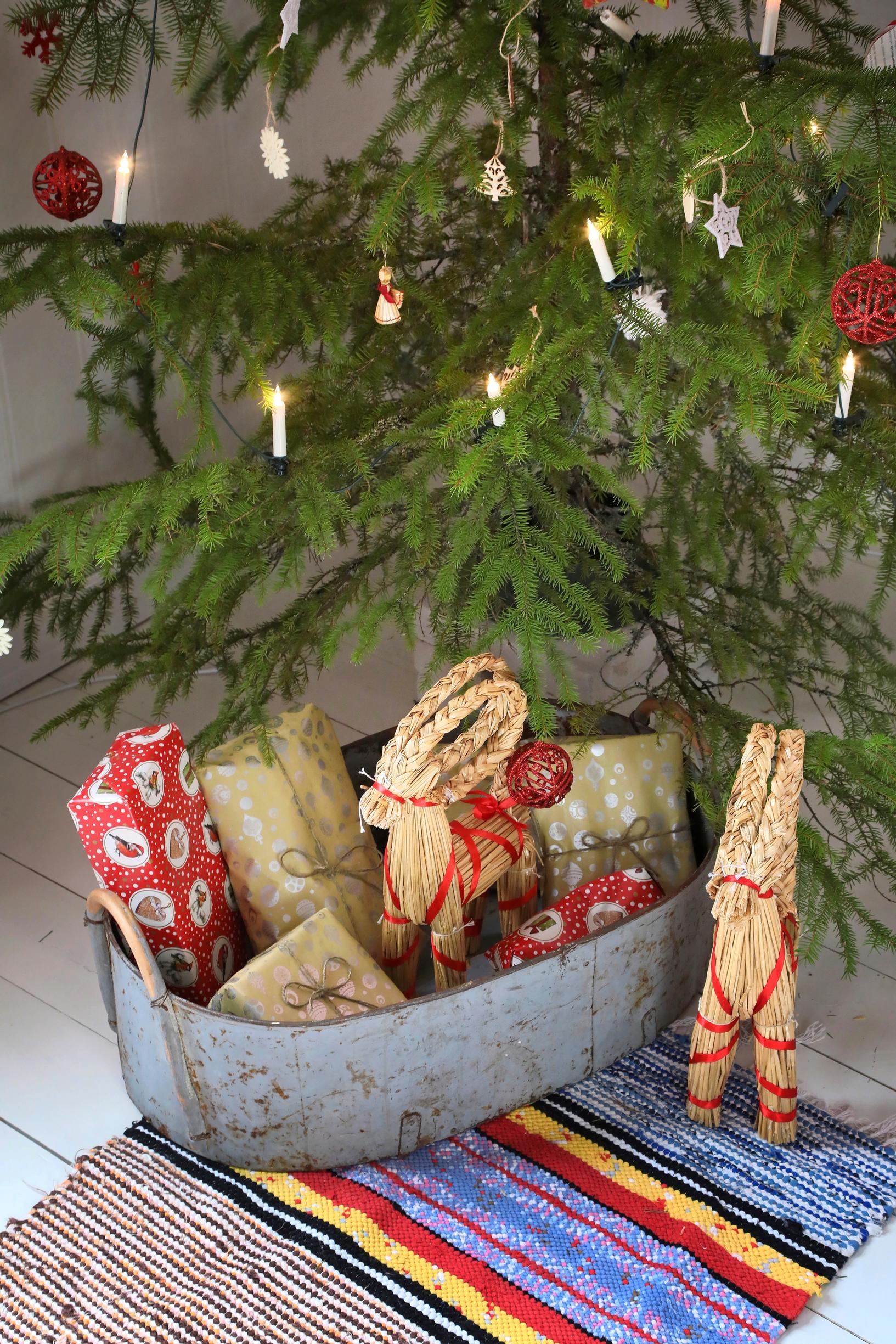
Christmas presents in a zinc grain bin under the tree
In a zinc grain bin found at the back of the barn, we store wool socks and blankets. At Christmas, you’ll find gift packages in there. The straw goats have traveled with the family for 15 years.
Long rag rugs on the living room floor
The rocking chair was a gift from Kati’s parents. During the renovation, the log frame was revealed under the panel walls. Hundreds of tiny nails were pulled out of the logs, and then the surface was vacuumed and washed.
The family in the large living room
Meals are only enjoyed in the living room on special occasions, such as Christmas holidays. The house came with an entire bedful of rag rugs. On some of the rug rolls, there was a neatly handwritten note pinned on them that read “joulumatot” (Christmas rugs). Kati continues the tradition by laying out these long rugs at Christmastime.

After a renovation that favored traditional methods and materials, the home has been furnished with pieces that suit a country house: not brand-new and glossy, but suitably old and sturdy. The signs of everyday life show, and any new scratches don’t worry them, as more will surely come in a household with children. Kati’s go-to shopping sources are online flea markets.

“I have a habit of discovering furniture that requires either a bigger car, a trailer, extra hands to carry it, or even a bigger house. Recently, I snagged a piano from a dumpster. Nobody here plays it, but it fits here perfectly,” Kati says with a laugh.

Decorating and rearranging furniture is something Kati really enjoys. Despite the secondhand finds, the house is not packed with items—in fact, Kati prefers to keep things more spacious. The venerable old house has also influenced her interior design eye.

“My color palette has expanded, but I still favor subdued base tones that can be accentuated with stronger shades. Thanks to wallpaper, I’ve also become excited about patterns. Toni and I make a good wallpapering team. I spread the paste, Toni puts up the strips,” Kati says.

The home has been furnished with pieces suited to a country house: not brand-new and glossy, but fittingly old and sturdy.

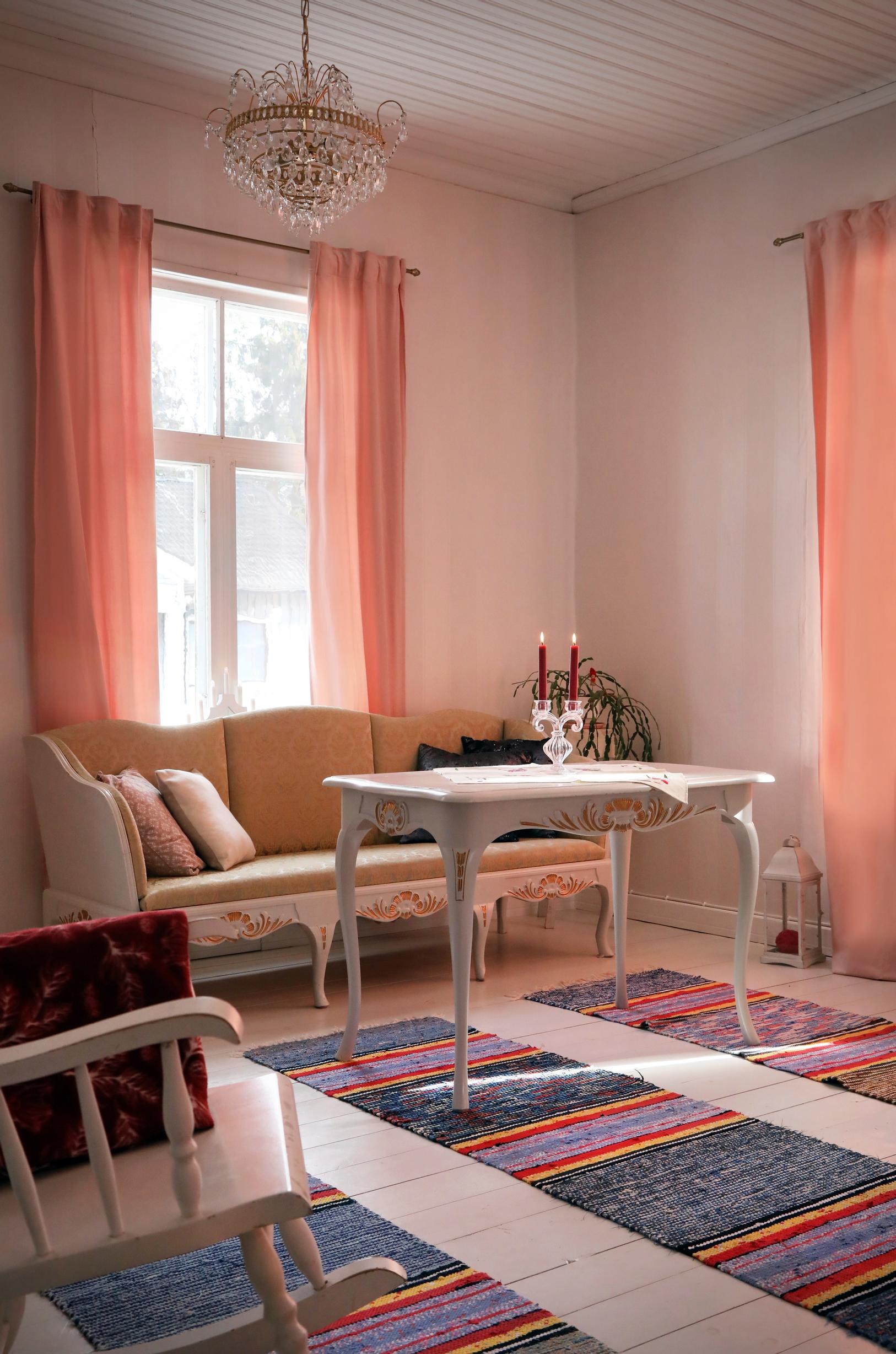
Previous generations have also left their mark on the décor. The light-colored country rococo set in the living room was likely made for the house in the 1930s. Attached behind the ornate golden mirror is a note that reads: this stays for whoever remains here.

“If we ever move out, they’ll stay here for whoever comes after us,” Kati says.

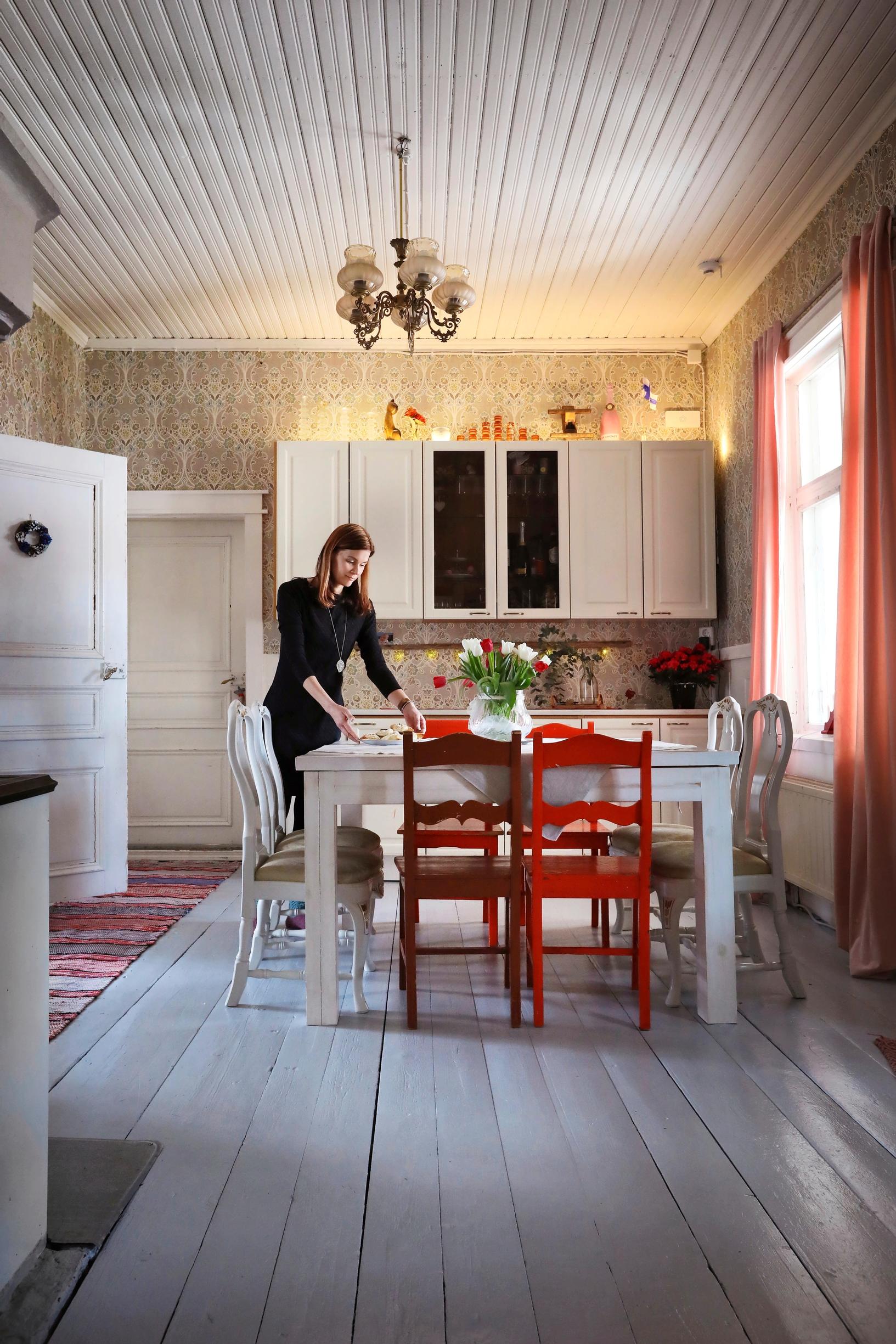
A bright kitchen renovated with respect for the old
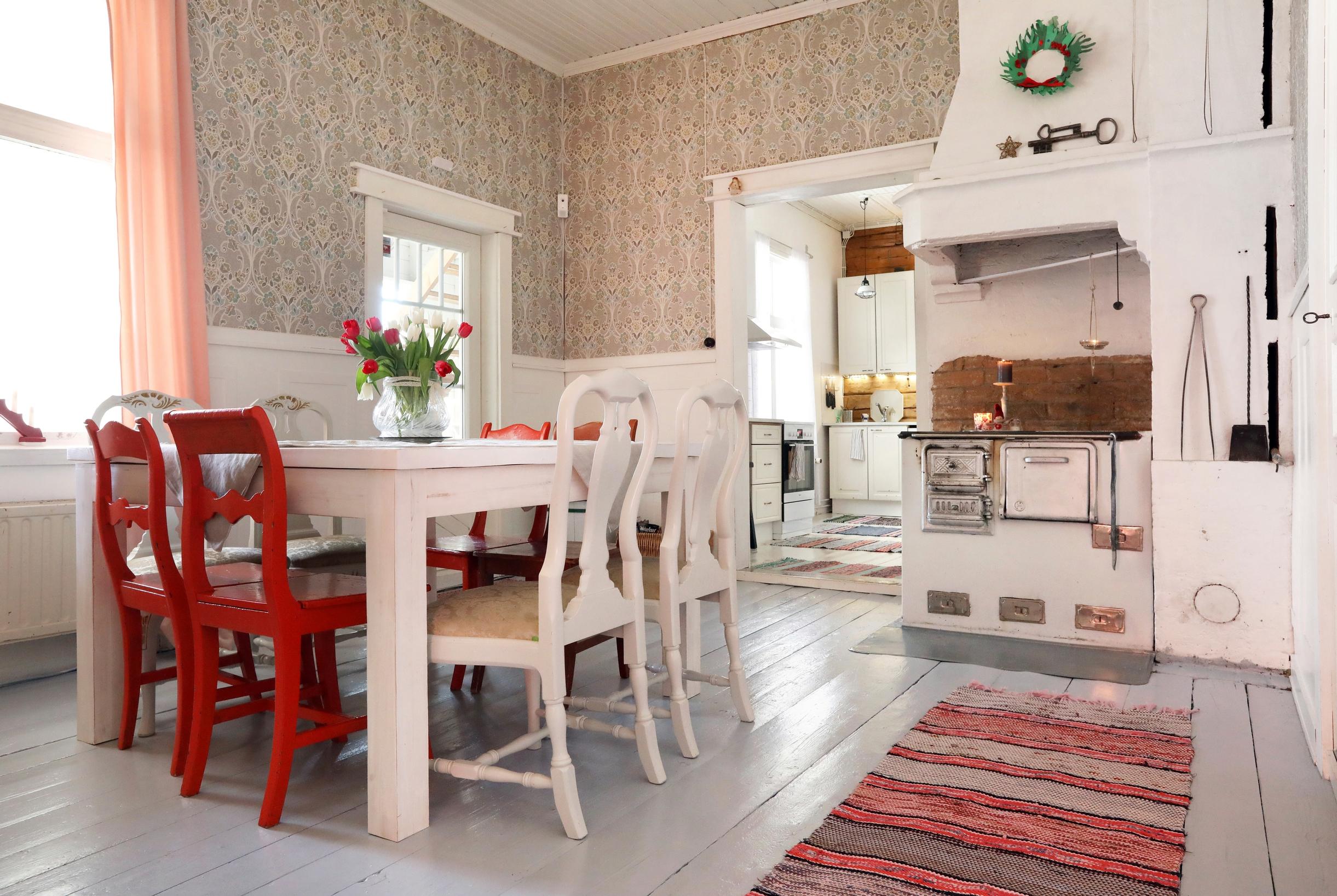
The kitchen and dining area were renovated immediately after moving in. Toni built the dining table, and Kati painted it. The red chairs were found in the attic, and the white chairs were part of the house’s original furniture. The lamp is a find from an online flea market. The floorboards for the dining room also came from the attic.
A wood-burning stove in the kitchen corner
A red-and-white dining set
The other side of the kitchen is behind the door. It had been sealed off, but the couple reopened it during the renovation. Apparently, part of the house had at some point been unheated to cut costs.
There’s a note attached behind the golden mirror that says: “This stays for whoever remains here.”
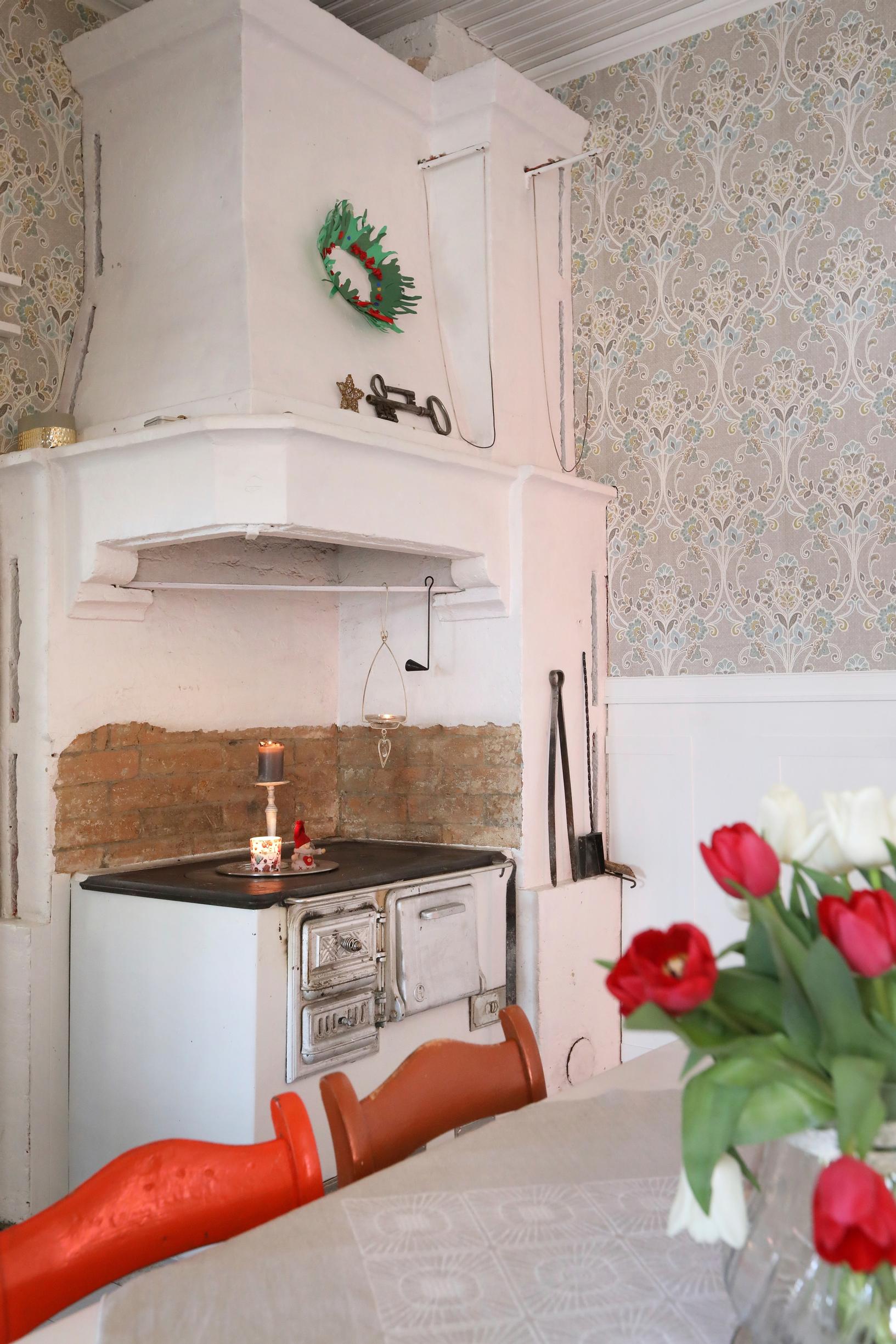
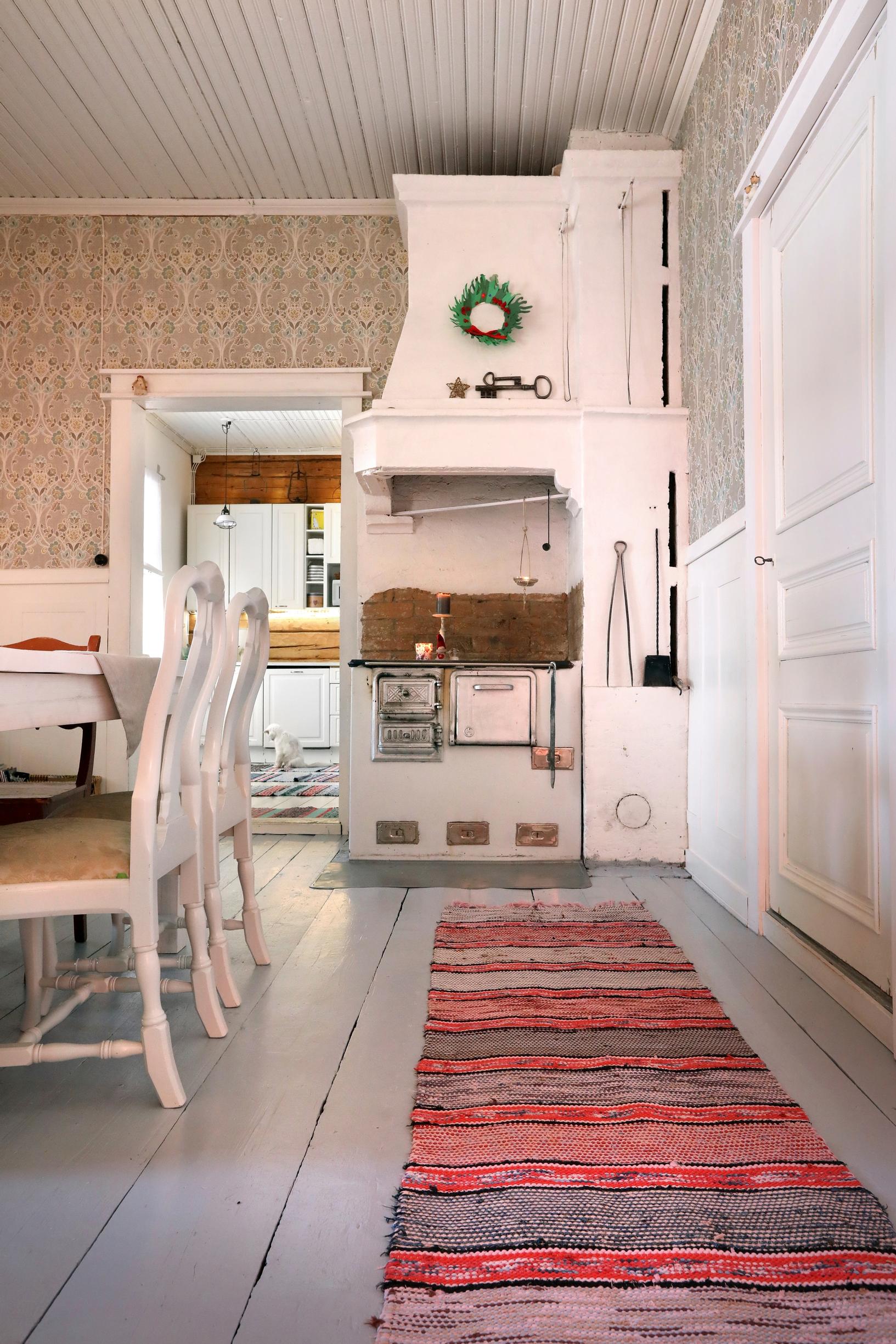
A wood-burning stove and a red rag rug
Venla made the paper decoration on the wood stove’s hood a few years ago. The giant key fits the door of the shed.
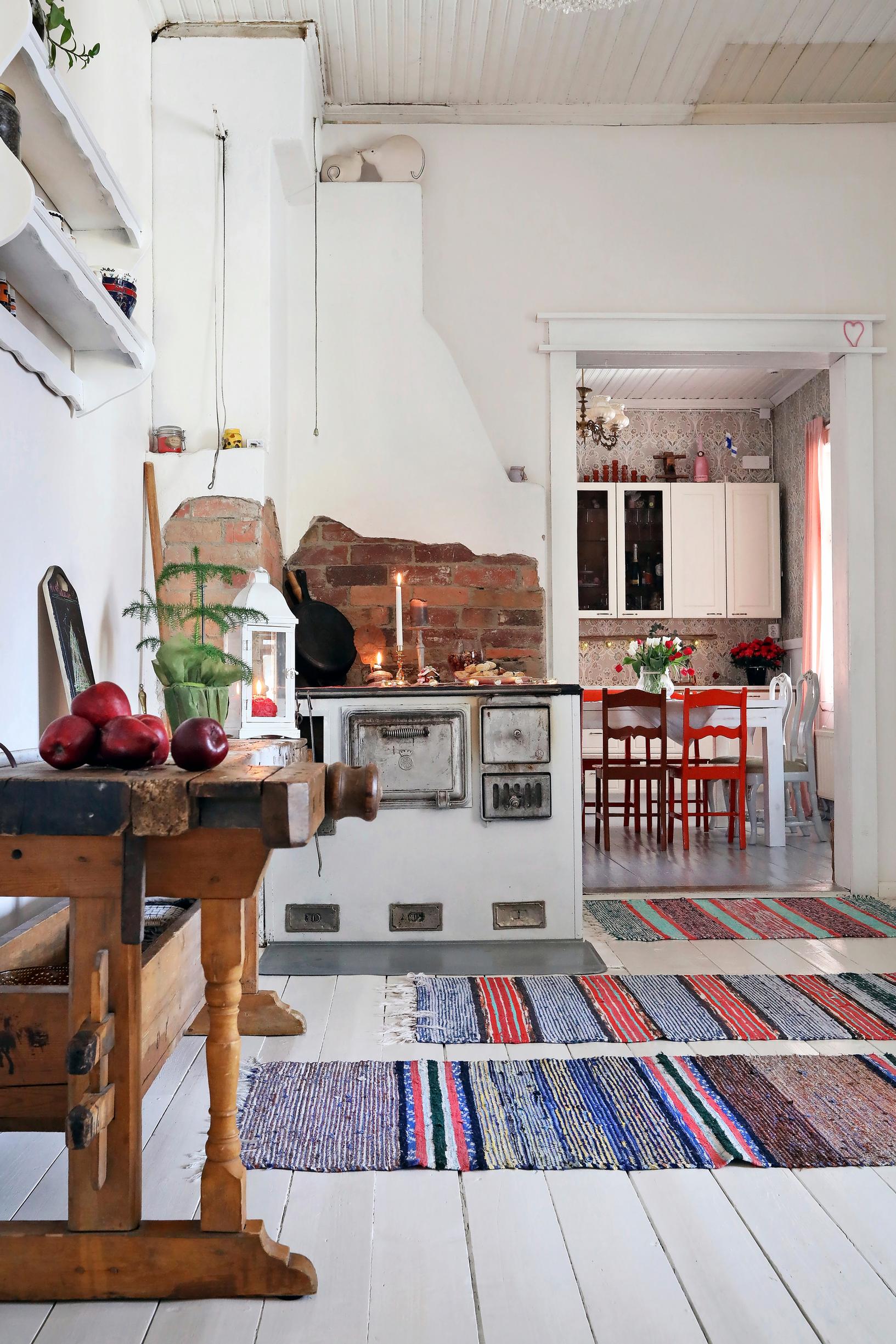
A planing bench used as an extra surface in the kitchen
The planing bench, worn smooth by time, was bought from an old house, and it came with a box of antique tools. Kati wanted to use the bench in the kitchen as an extra work surface. Kati chipped off the tiles on the bottom part of the wood stove’s masonry, revealing the brick beneath. There’s another wood stove on the other side of the kitchen as well.
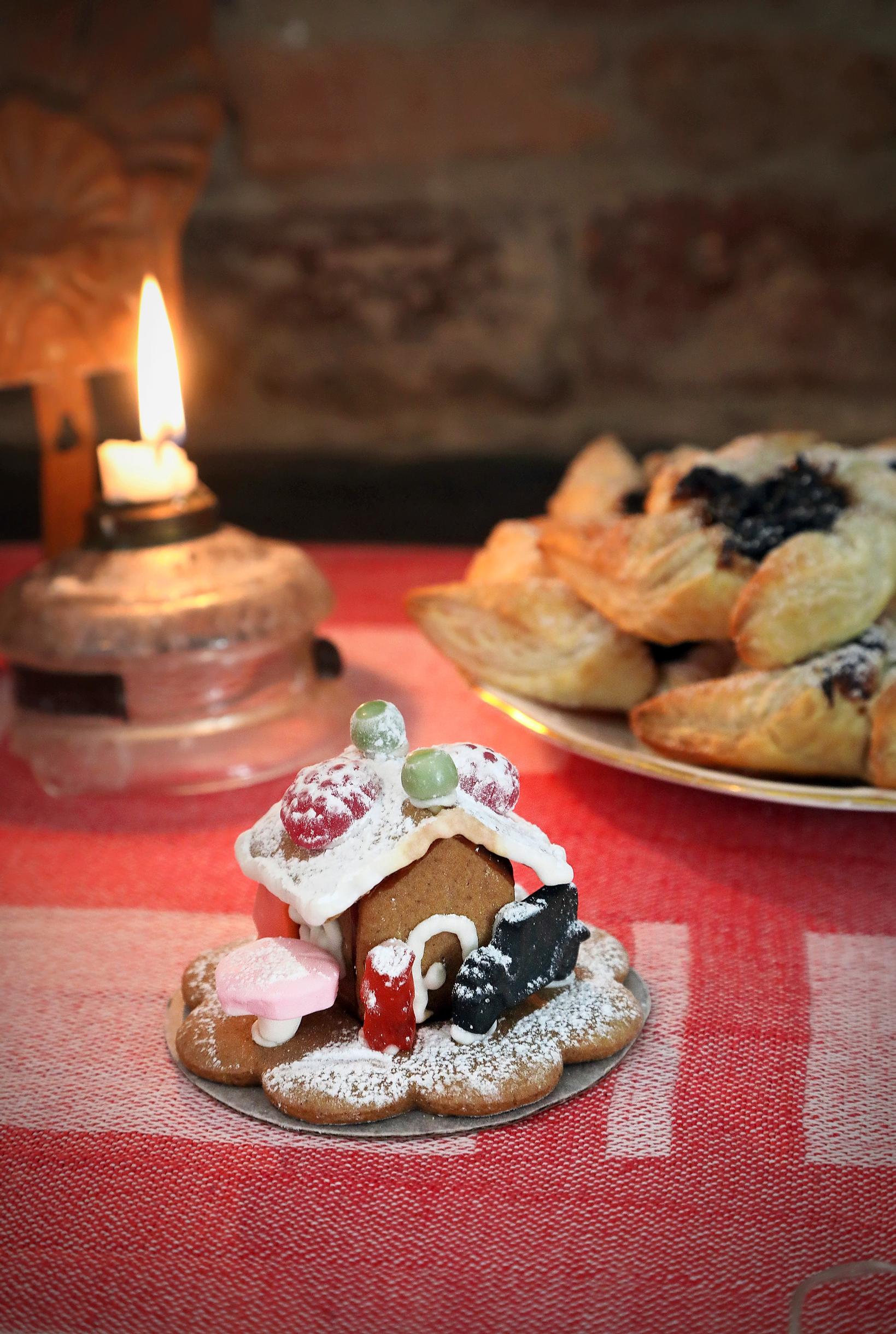
A tiny gingerbread house
An old, decorative wooden sofa in front of the window
“The tall rooms and the house's atmosphere captivated us almost immediately.”
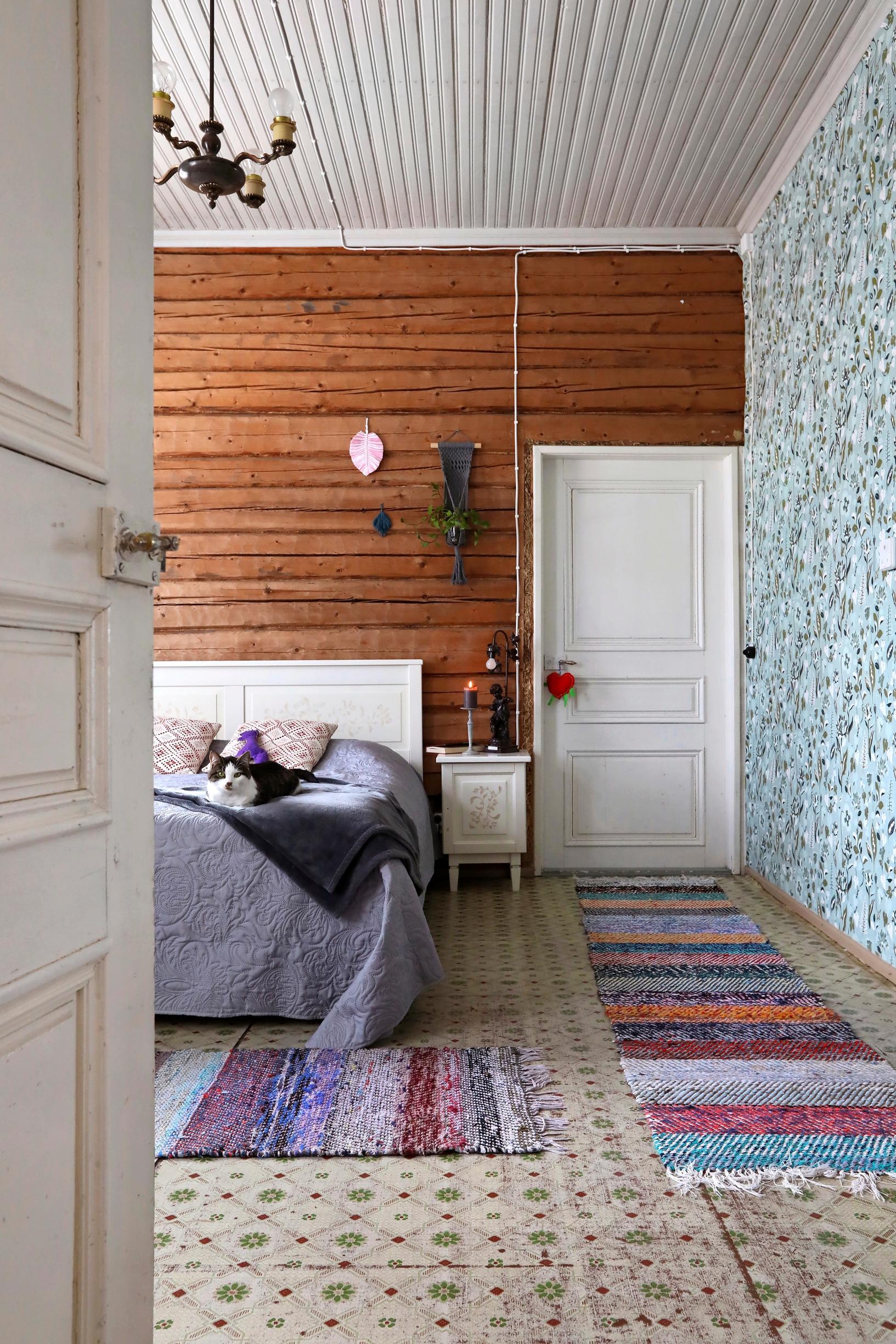
The bedroom has a linoleum floor and wallpaper on the side wall
After removing two layers of plastic flooring, a linoleum surface was uncovered. The wallpaper had been purchased years earlier and waited in the attic until it found the perfect spot on the bedroom wall. Kati ordered the macramé planter from the Kastehelmi craft shop. The bed and nightstands are local and handcrafted.
A children’s room with a pink floor
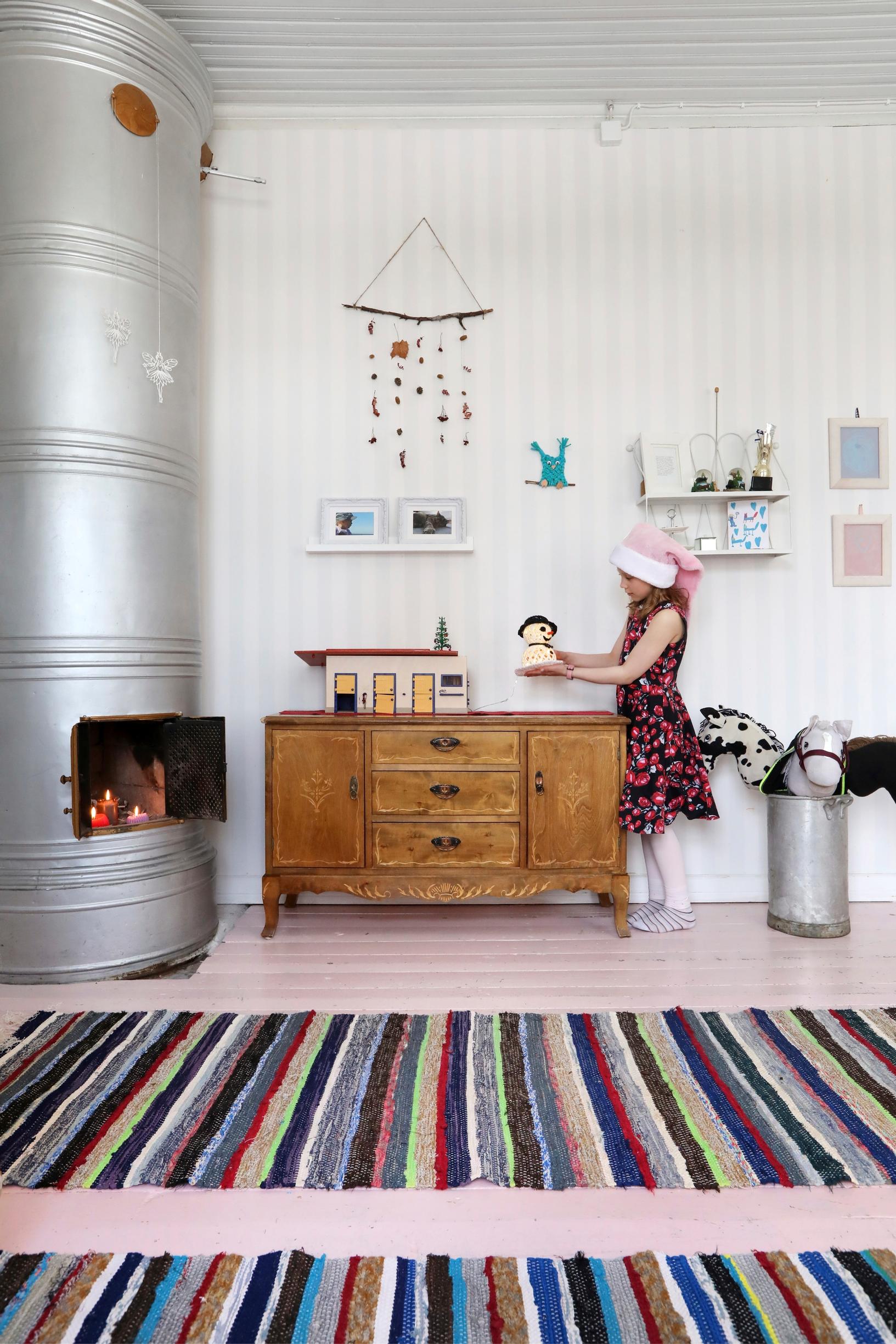
The girls’ room was the only one where the original plank floor was found under the plastic flooring. They chose a light pink shade for it. The sideboard was found second-hand online. The lace-stiffened snowman lamp is a gift from Kati’s mother.
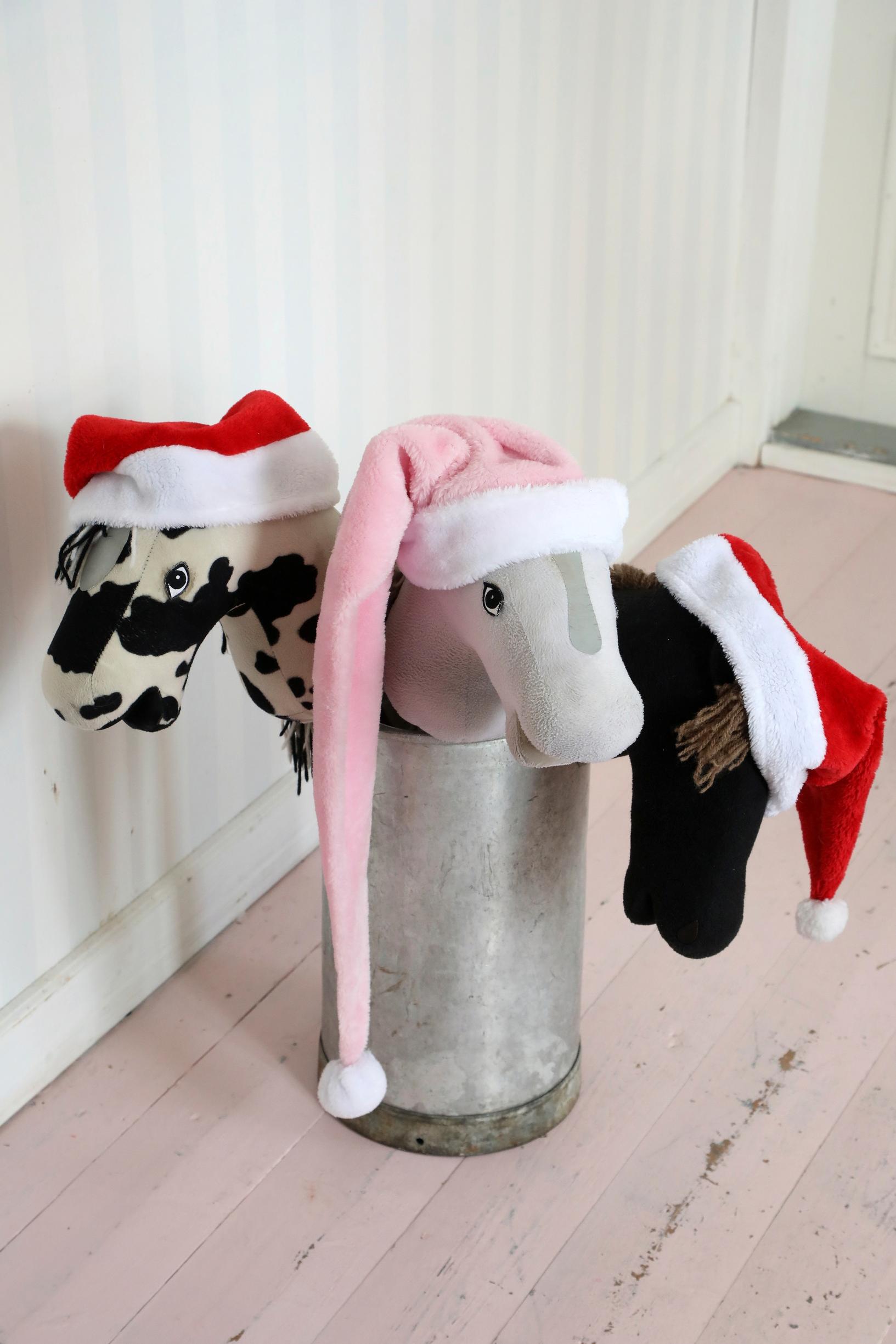
Hobbyhorses decorated with elf hats
Venla and Neela love hobbyhorses. The black horse was made by Neela’s godmother.
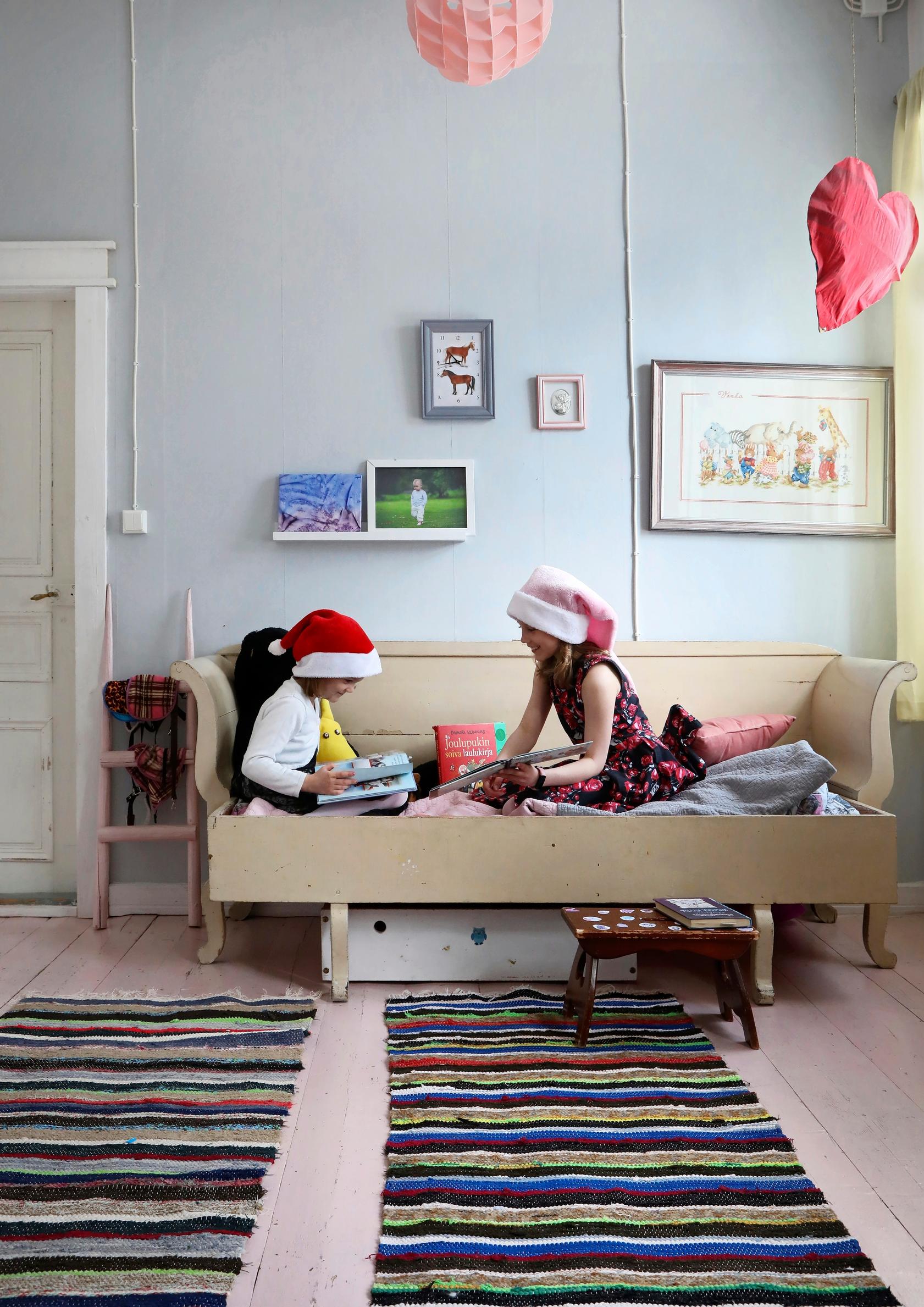
The children sitting on a wooden sofa
Venla and Neela boost the festive anticipation by reading Christmas books. Venla’s bed is a pull-out wooden sofa found second-hand online. Kati’s cousin’s uncle made them their own stools. Kati’s grandmother on her father’s side cross-stitched name plaques for each child.
The landowner acquired the house’s building materials from his own farm or the village. Even the nails were forged in his own or a neighbor’s smithy.
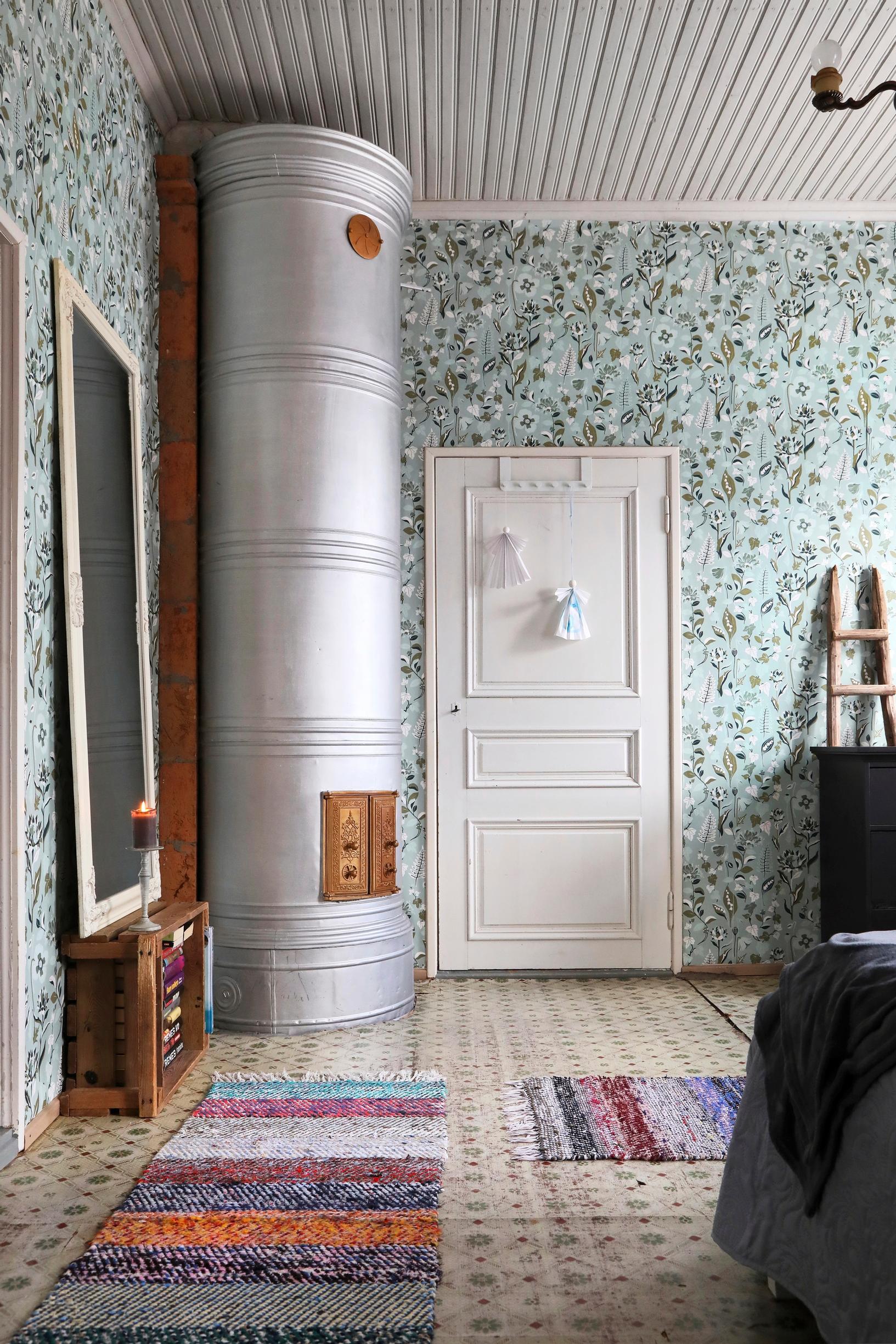
A metallic-hued barrel stove
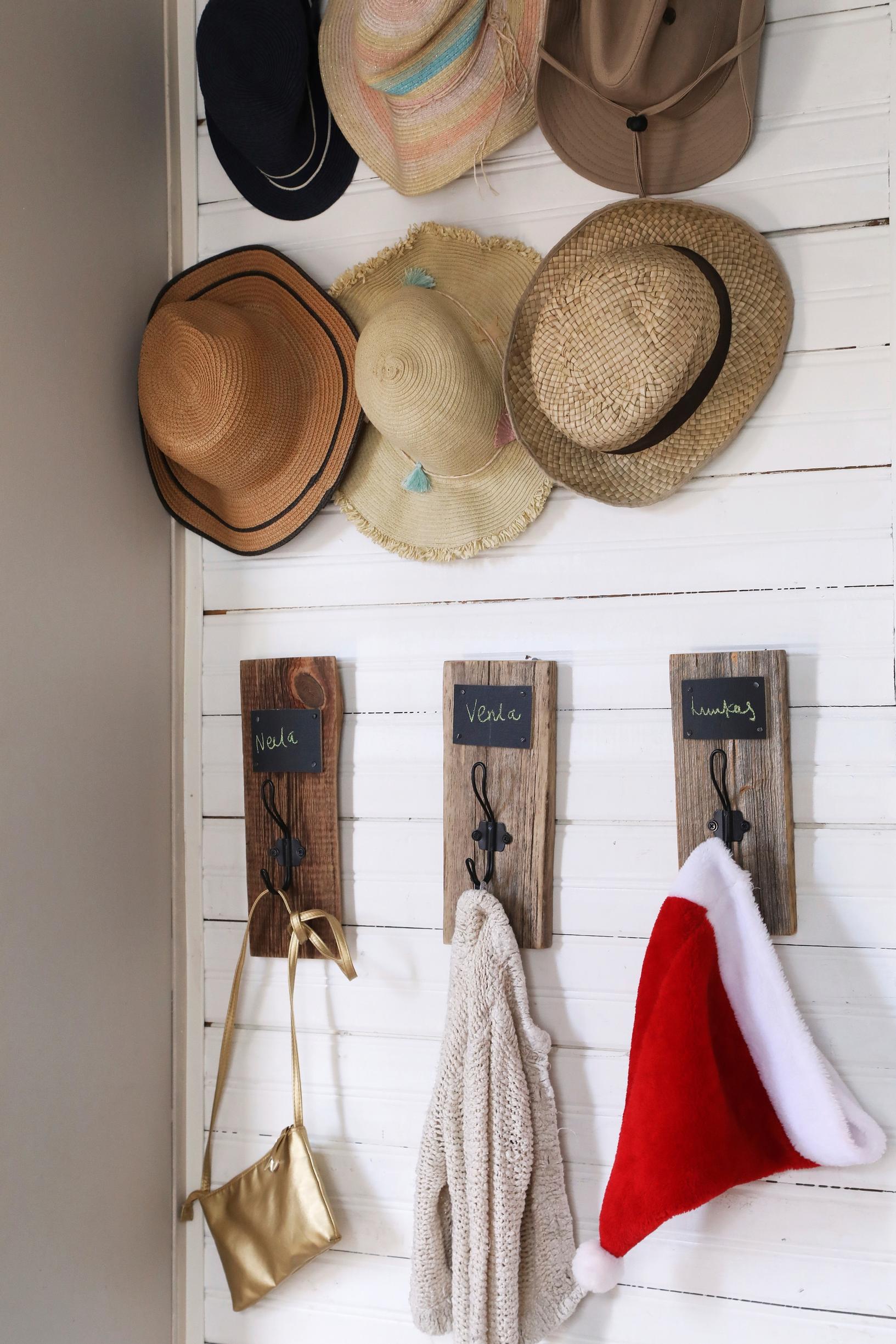
Wide-brimmed hats on the wall
The wide-brimmed hats hang on a rack made by Kati’s business, Sisustus Heinäkuu. The girls also wear them in their play.
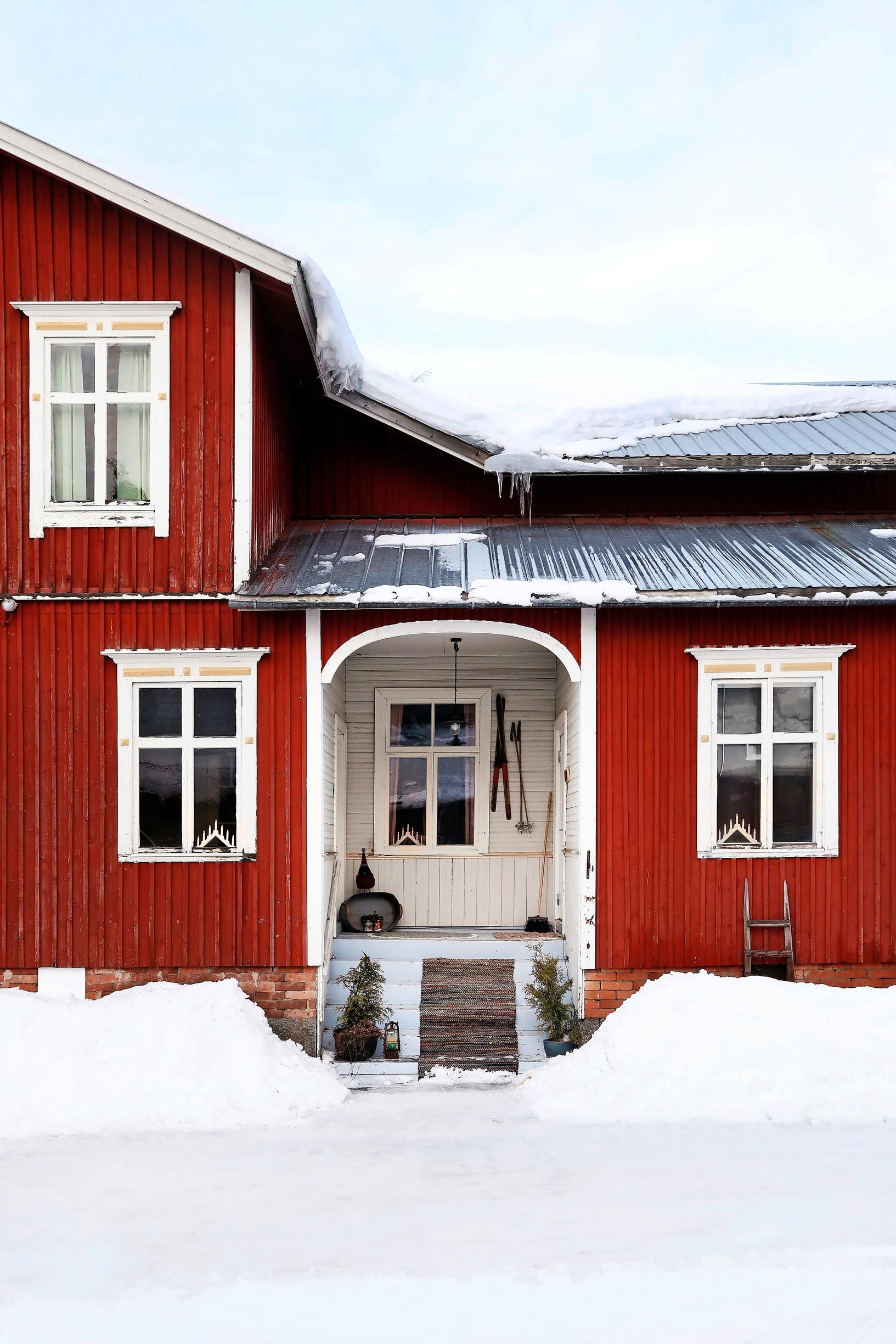
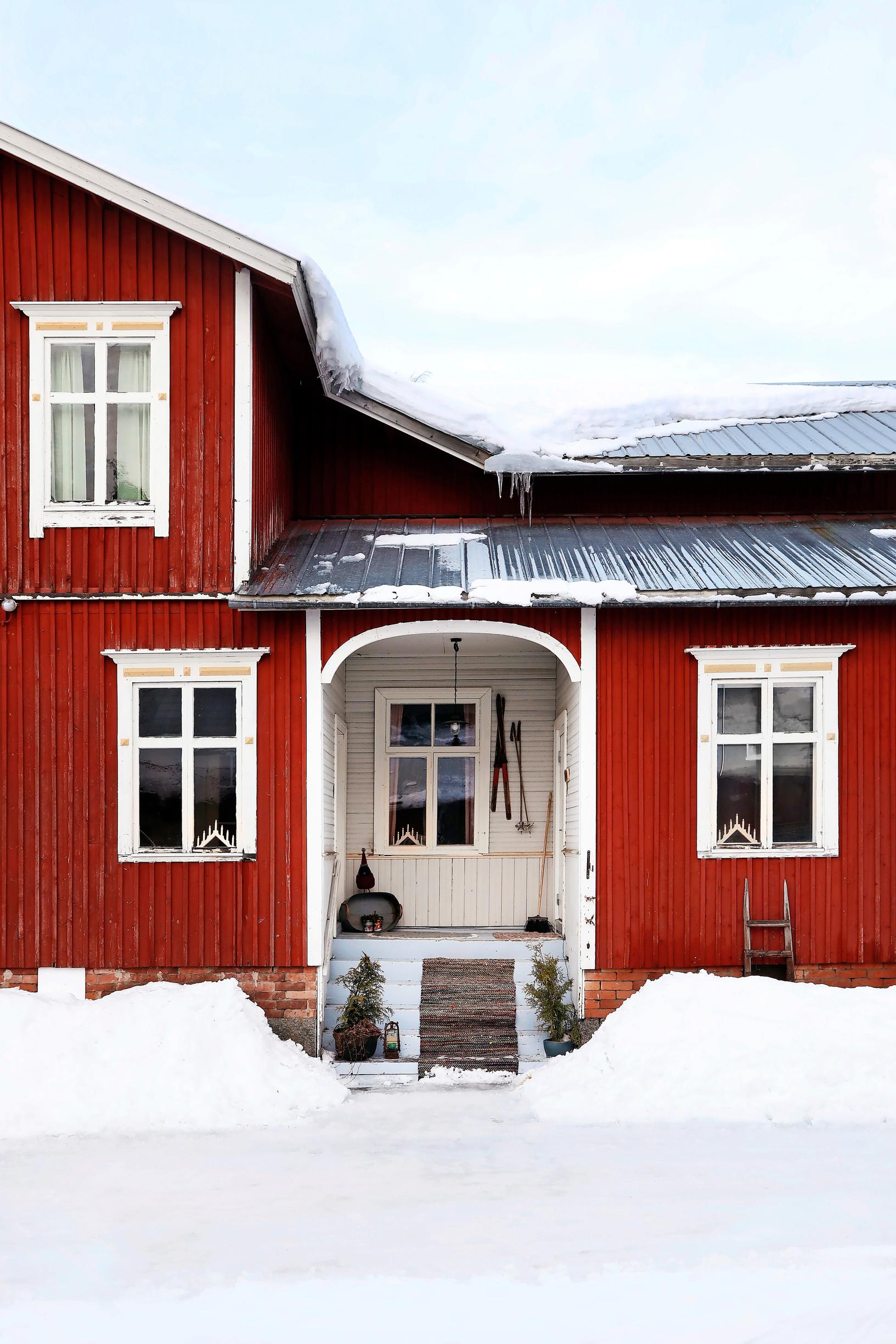
Entrance to the Ostrobothnian house
The recessed entrance provides good shelter. The Koski family’s house was constructed between 1911 and 1917.
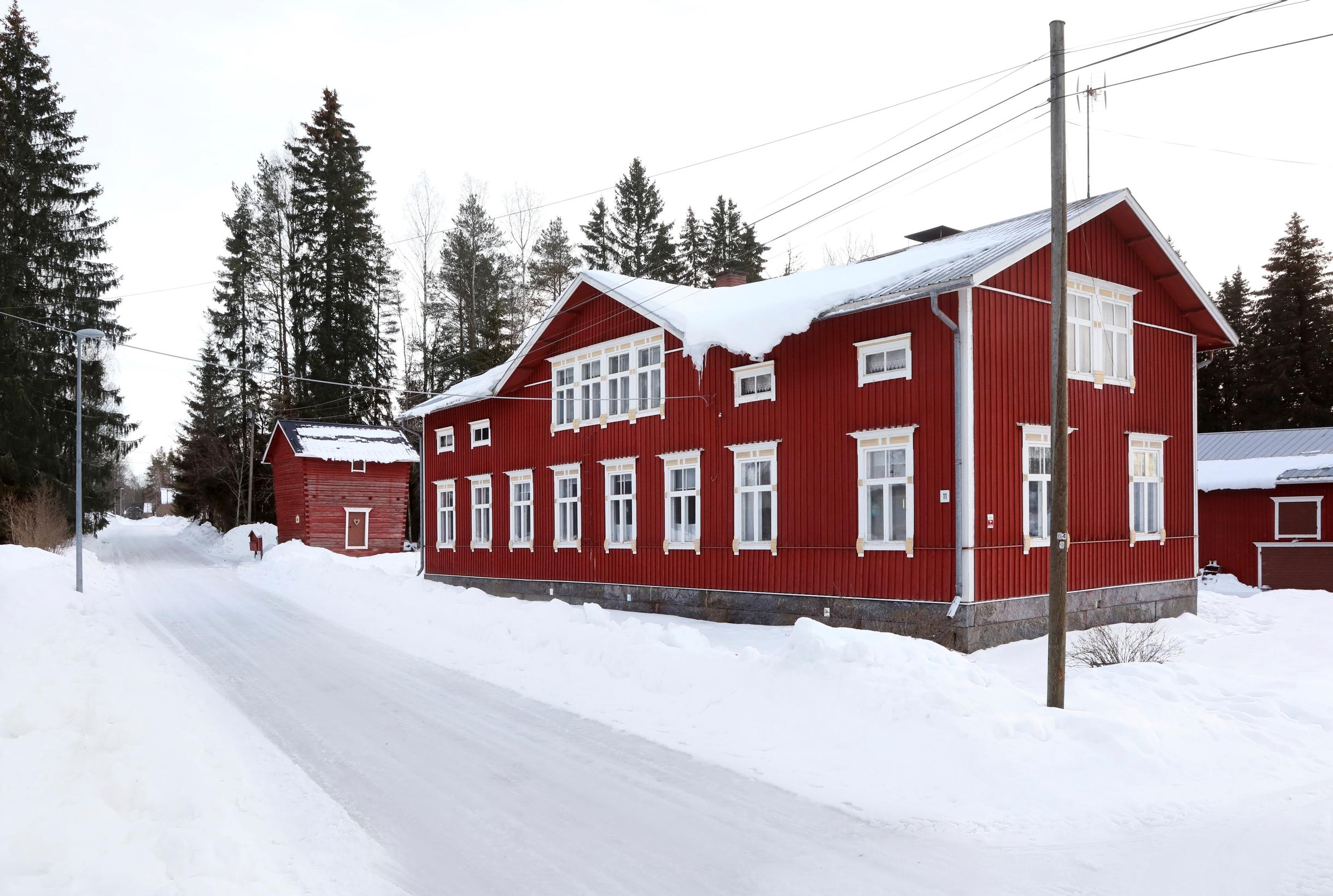
The facade of the Ostrobothnian house
The dignified house stands proudly along the quiet road. You can almost hear how horse-drawn sleighs once passed by, bells jingling.

Most recent
Latest
terve
Terms and conditionsPrivacy policyOur cookie policy