

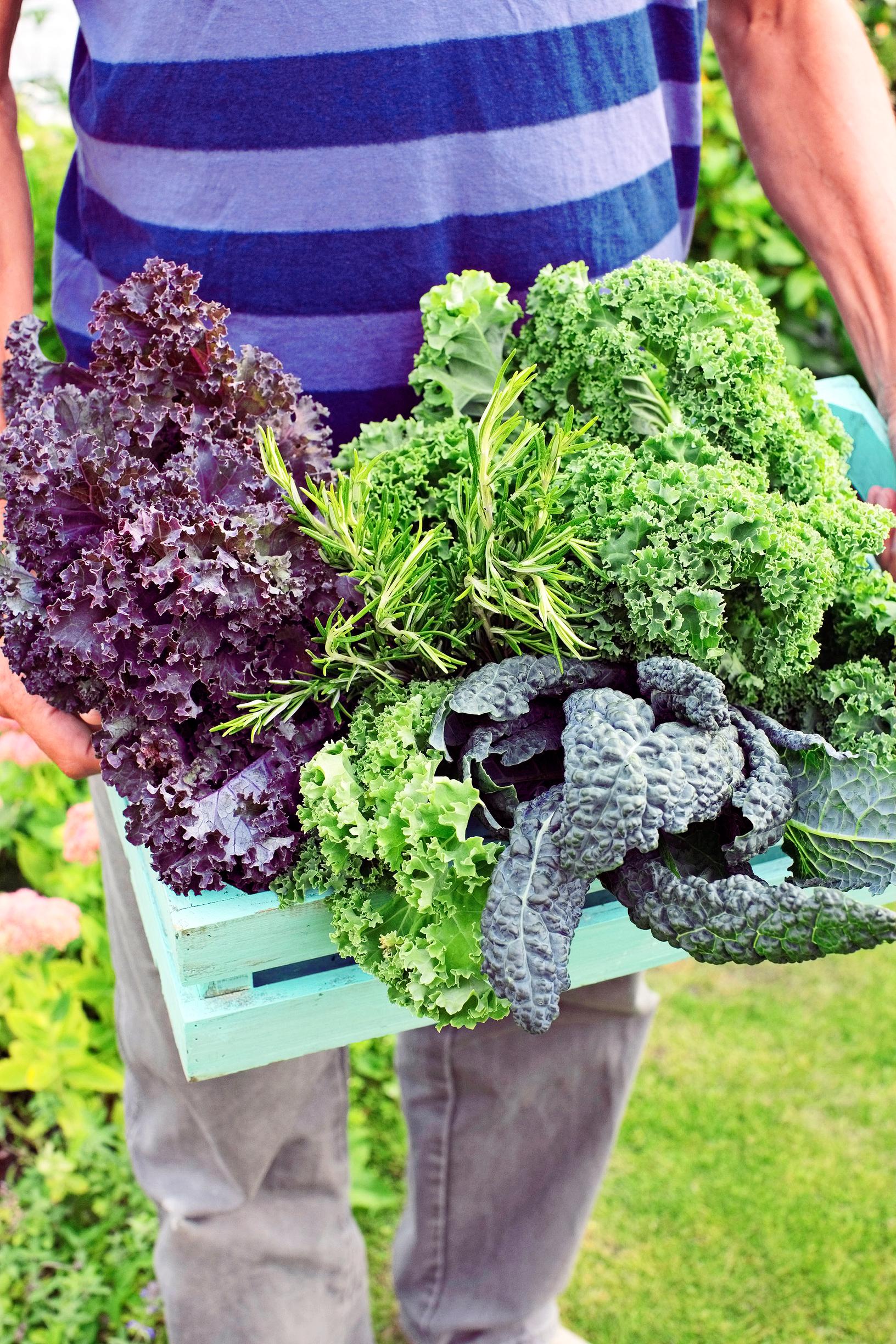
Kale: beautiful, nutritious, and easy to grow
Kale can be grown in flower beds, vegetable gardens, or pots. Once the harvest season begins, it continuously produces new leaves month after month, provided it receives enough nutrients and water. You can harvest baby leaves, shoots, and large leaves from this delicious plant. When cultivating kale, it’s important to be prepared for controlling pests, especially the diamondback moth.
Kale offers variety all summer long, as its taste and texture change with each growth stage. In summer, the leaves grow quickly—they are thin, tender, and mild in flavor. This harvest is perfect for salads and green drinks just as it is. By sowing a new batch of seeds, you can enjoy juicy leaves throughout the season. Enthusiastic gardeners begin growing kale sprouts in pots starting from early spring.
Towards autumn, the temperature differences between night and day increase, and the taste of kale intensifies due to the sulfur-containing essential oils in the plant. The glucose produced during photosynthesis begins to be stored as starch. At this stage, kale’s growth slows down, and the leaves and stalks thicken. The sturdy leaves are particularly suitable for cooked dishes such as soups and stews.
The onset of subzero temperatures triggers the third growth stage, during which starch begins to convert into sugars. This process mellows—and many think also improves—the flavor of the leaves.
Kale is an ancient cultivated plant, with several 19th-century varieties still available today. One of the most delightful is ‘Nero di Toscana’, also known as Lacinato kale, among other names. In autumn, the dark plant resembles a palm tree when only a tuft of leaves remains at its top. The fastest-growing varieties, such as ‘Starbor F1’, can be harvested at an early growth stage. You can snap off young leaves from the plant or use the entire seedling at once.

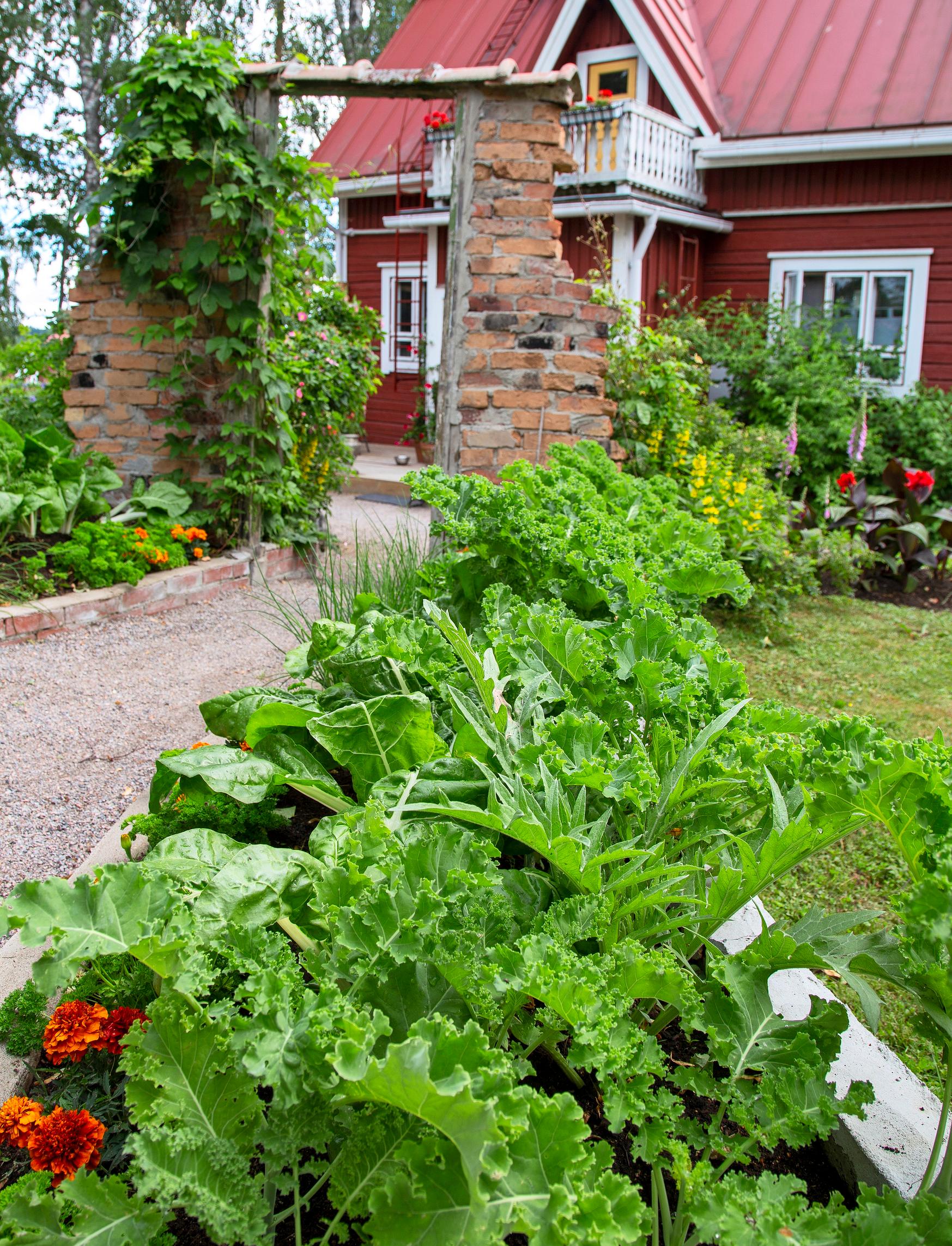
Growing kale: how to succeed
Growing site
Kale is not demanding regarding soil type. It achieves the best yields in limed, nutrient-rich, and moisture-retentive soils with a pH of 6–7.5.
Seed starting
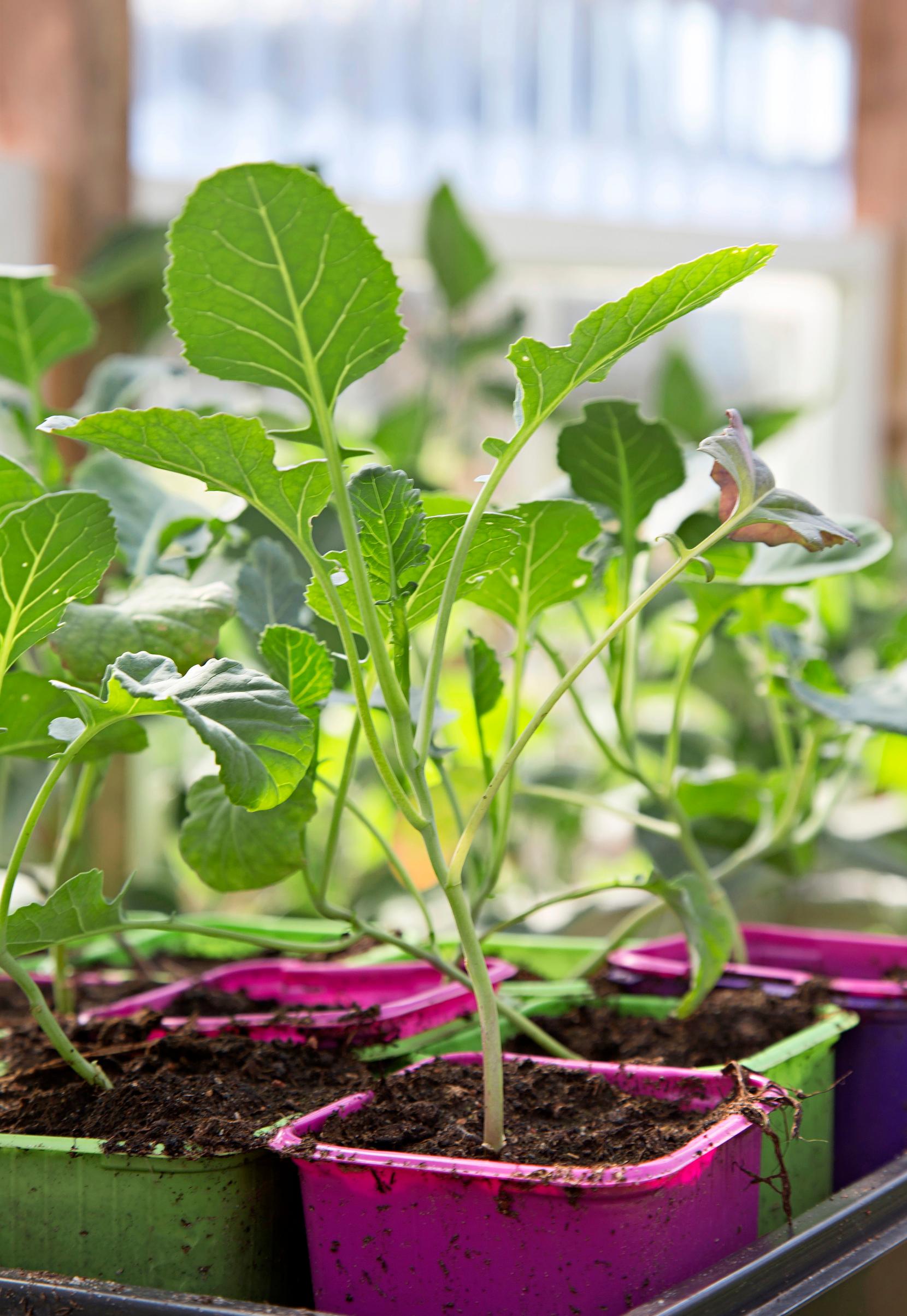
Sow seeds directly into seed trays or pots 3–6 weeks before planting out. Avoid keeping seedlings too long in warm and dim conditions, as kale seedlings are prone to becoming leggy. Protect seedlings from pests. The optimal temperature for kale is around 18°C. In cool weather, a row cover is beneficial; in warm weather, a breathable insect net. Harden off seedlings before planting, for example in a covered growing box.

Planting
After hardening off, transplant seedlings into the bed in May or early June. Mix nutrients into the root zone or place them at the bottom of the planting hole. Plant seedlings 50 cm apart if you want them to grow large. To harvest while still small, space plants 5–10 cm apart. For container cultivation, choose a pot about 40 cm in diameter.
Direct sowing
You can sow seeds directly into the ground, outdoor pots, or raised beds once the soil has warmed to 5–10°C. In northern regions of Finland, direct sowing produces at least small plants. In Southern and Central Finland, even directly sown plants have time to grow large. Repeat sowing in June–July if you want young leaves for fresh use.
Watering
Kale benefits from consistent and abundant watering. Mulch the soil surface with grass clippings or straw.
Fertilization
Provide additional fertilization to the plants in June–July, and, as needed, into August. Avoid excessive nitrogen fertilization, which increases nitrate levels in the leaves.
Support
Support a leaning plant with a stake. You can also hill up soil around the base to support the plant.
Pest control
Kale is a healthy plant, but it can be affected by all common cabbage pests.
Place protective covers tightly around seedlings immediately after planting. Southern air currents often bring masses of diamondback moths to Finland in May, and their larvae eat the leaves. Egg clusters, small larvae, and lace-like pupae are found on the undersides of the leaves. Diamondback moths have 2–3 generations during the summer.
Also watch for the appearance of the yellow-green and black-spotted larvae of the cabbage white butterfly. Cabbage whites also travel with spring air currents. Protective covers help in control, but you can also hand-pick the larvae. The second generation flies around cabbages in late July.
Rotating the growing site annually helps prevent damage from cabbage root fly larvae and clubroot. Plant seedlings in different parts of the garden and vegetable patch to stay ahead of pests.
Harvesting
Kale’s harvest season lasts from midsummer until winter arrives. Also grow baby leaf crops, for example in raised beds or pots. Snip individual lower leaves from the plants when they are sturdy and about 30 cm high. Continue harvesting leaves into autumn, and finally break off the top rosette. Depending on the variety, kale can withstand temperatures as low as –10 to –15 degrees Celsius.

Kale—varieties
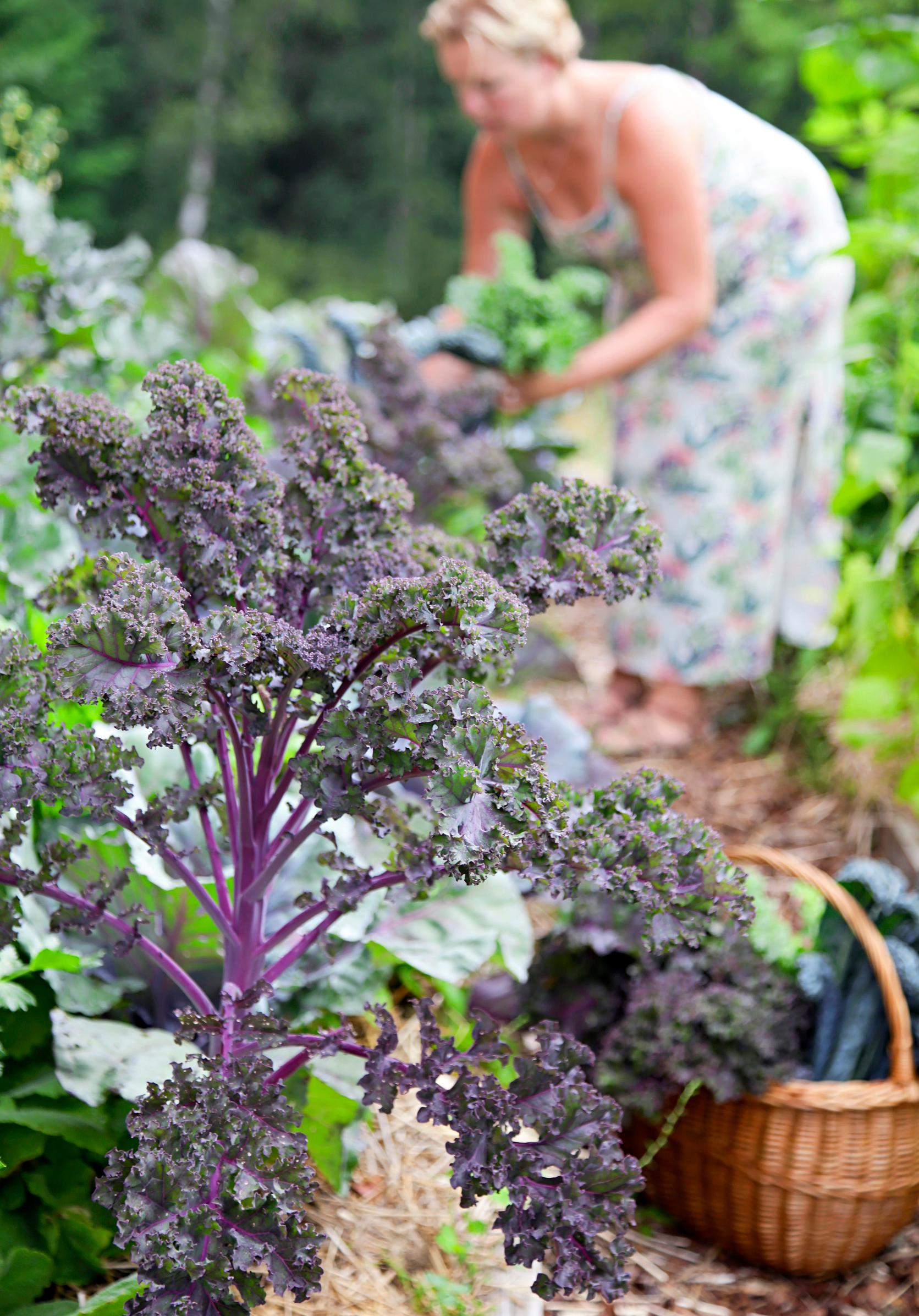
New, often ornamental varieties of kale are continually being developed. Varieties differ in leaf color, texture, and taste.
- ‘Nero di Toscana’: An Italian heirloom variety also known as Lacinato kale, among other names. Wrinkled, dark green leaves; the crinkled leaves are tasty and mild in flavor. Height up to 90 cm.
- ‘Red Russian’: Juicy and mild leaves that are smooth except for the edges. The color is grayish with purple stalks. Also known as ‘Ragged Jack’. Height 40–60 cm.
- ‘Baltisk Röd’: The entire plant is a striking dark purple. Height 50–60 cm.
- ‘Dwarf Green Curled’: A curly-leaved, green, and low-growing variety from 1868. Height 30–40 cm. Also suitable for container cultivation.
- ‘Redbor’ F1: Curly-leaved, vibrant purple-red color. Fast-growing. Height about 60 cm.
- ‘Starbor’ F1: Fast-growing variety recommended for sprout and container cultivation. Harvest small leaves individually or cut the whole plant when about 30 cm tall. Compact growth habit, height about 40 cm.
- ‘Westland Winter’: Exceptionally cold-hardy variety that can be harvested well into winter. Crinkled, dark green leaves. Height about 50 cm.
- ‘Scarlet’: Scottish variety from 1868. Purple, curly leaves make a statement in the garden and in pots. Less demanding in nutrient needs than other varieties. Height 30–40 cm.
- ‘Midnight Sun’: Purple-green variety also suitable as an ornamental and for baby leaf cultivation. Height about 50 cm.
- ‘Black Magic’: A black kale variety recommended for northern climates. Resprouts well after cutting.

