

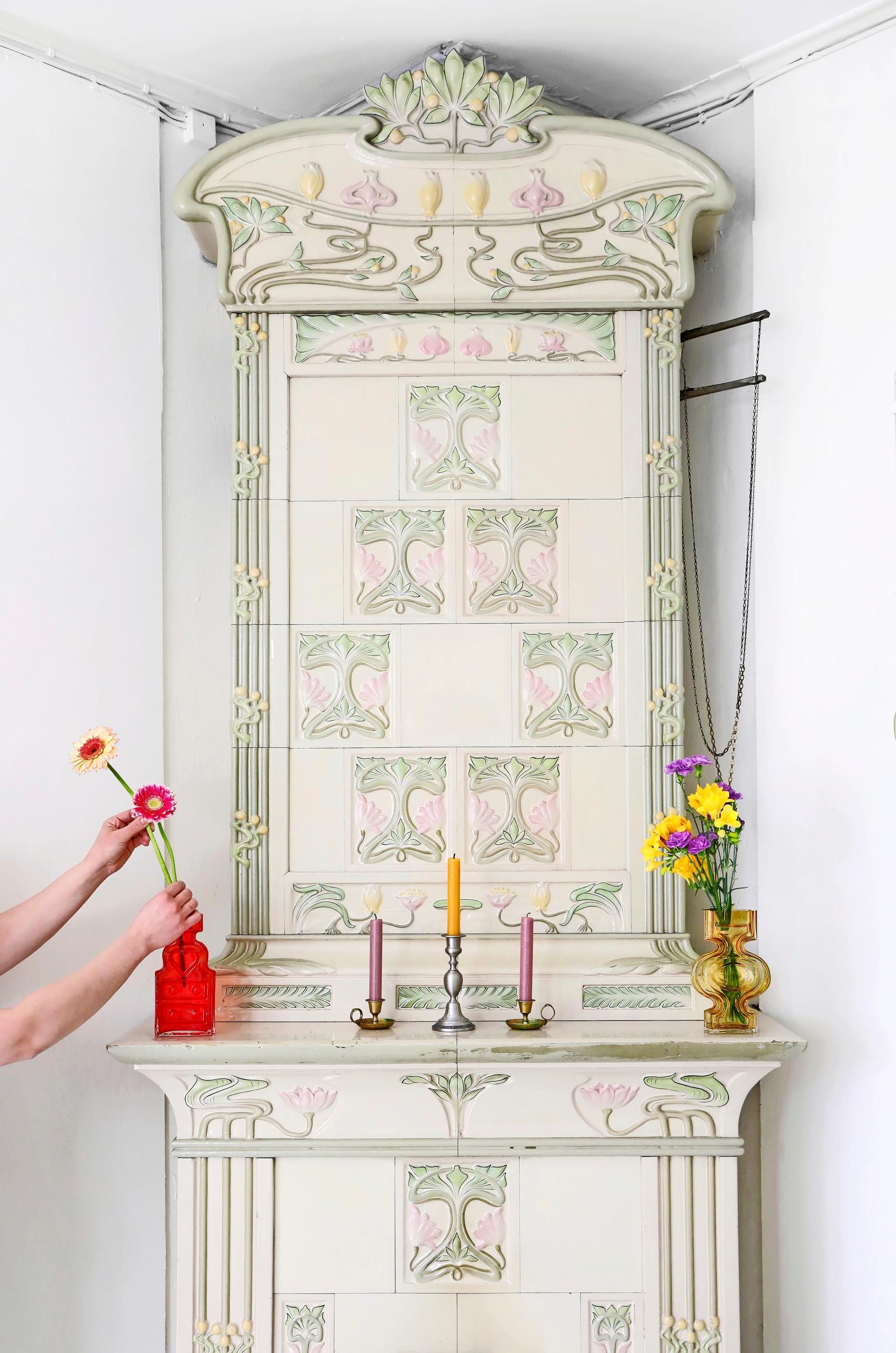
From water lilies to dragons: exploring the intricate artistry of Finland’s traditional Jugend tile stoves
Sturdy, colorful, and masterfully crafted, the early 1900s Jugend-era tile stoves — once symbols of Finnish cultural pride — have gone from demolition-bound hulks to true national treasures.
In the late 1800s, Finland experienced an economic upswing that fueled rapid urban growth. Amid old, low wooden towns, new apartment buildings emerged thanks to this thriving economy. In Helsinki, for example, the number of apartment buildings doubled in a short time. These stone structures were heated with wood, leading to the installation of dozens of tile stoves that offered steady, pleasant warmth.
It was also a politically charged era, as Russification measures threatened the Grand Duchy of Finland’s autonomy. Often called the oppression era, it stirred Finnish national sentiment, and cultural figures in art, architecture, and design emphasized attributes seen as distinctly Finnish.
Tile stoves played a significant role in the era’s National Romantic architecture, which was rooted in the idea of a total work of art. Architects designed not only a building’s exterior but each detail as part of a cohesive whole. Indeed, the architects themselves often designed the stove models featured in factory catalogs. Many were initially drawn for a specific project, then remained in the factory’s lineup.
Initially, tile stoves were found only in manor houses, parsonages, and affluent bourgeois homes.
Tile stoves had been growing more common in Finland as far back as the 1700s. Suited to northern conditions, they conserved firewood and retained warmth for extended periods. Initially, they were found only in manor houses, parsonages, and affluent bourgeois homes. By the 1840s, they were produced industrially, making them more broadly accessible.
Throughout the 1800s, tile stoves were often lavishly ornamental, in line with the revival styles then in fashion. When Jugend tastes steered preferences toward simpler forms, older revival-style stoves were deemed gaudy behemoths, and more streamlined designs took their place.

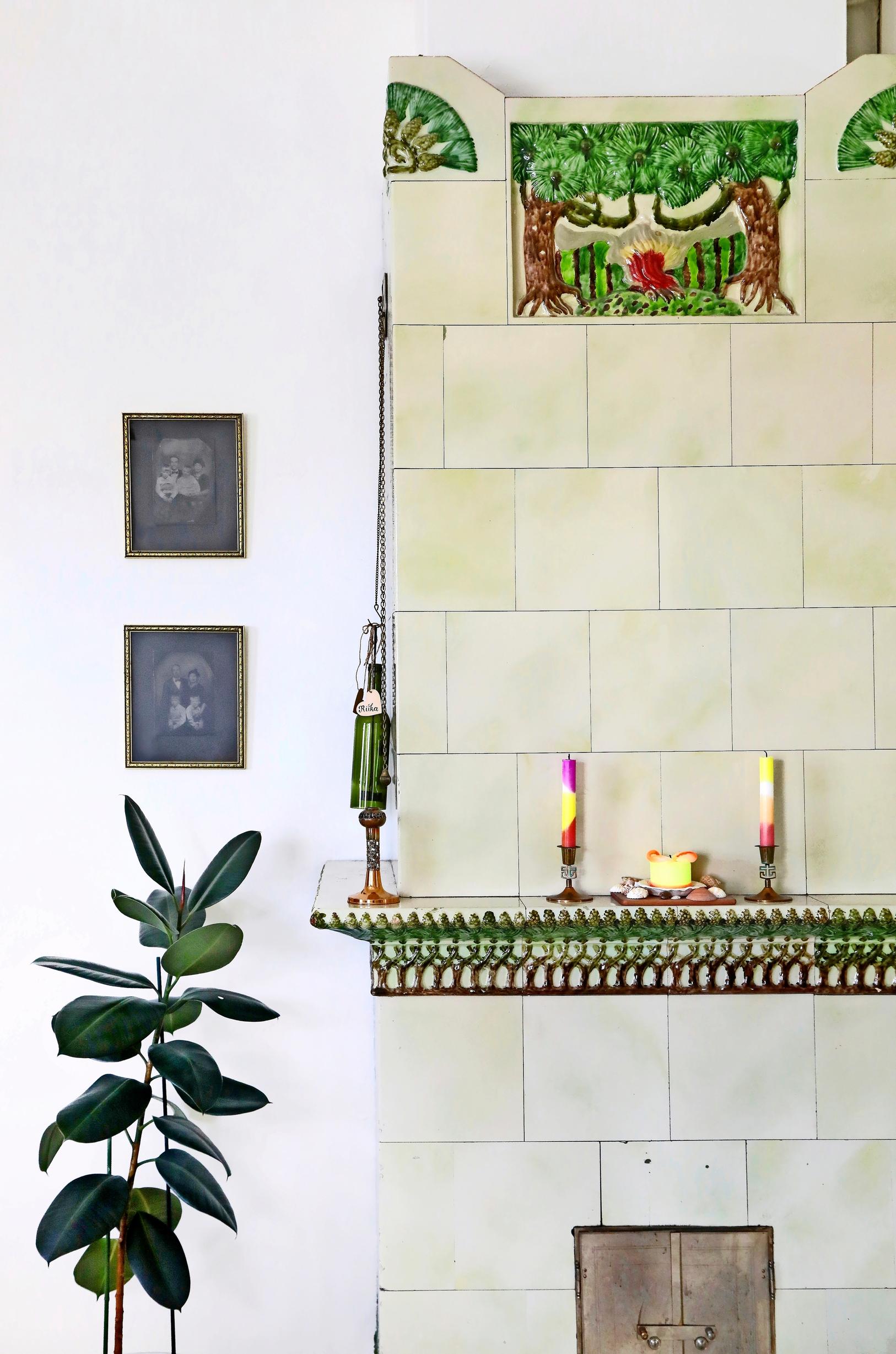
Common decorative elements included water lilies, cones, trees, ferns, and bears. These figures showcased the flowing lines typical of Art Nouveau.

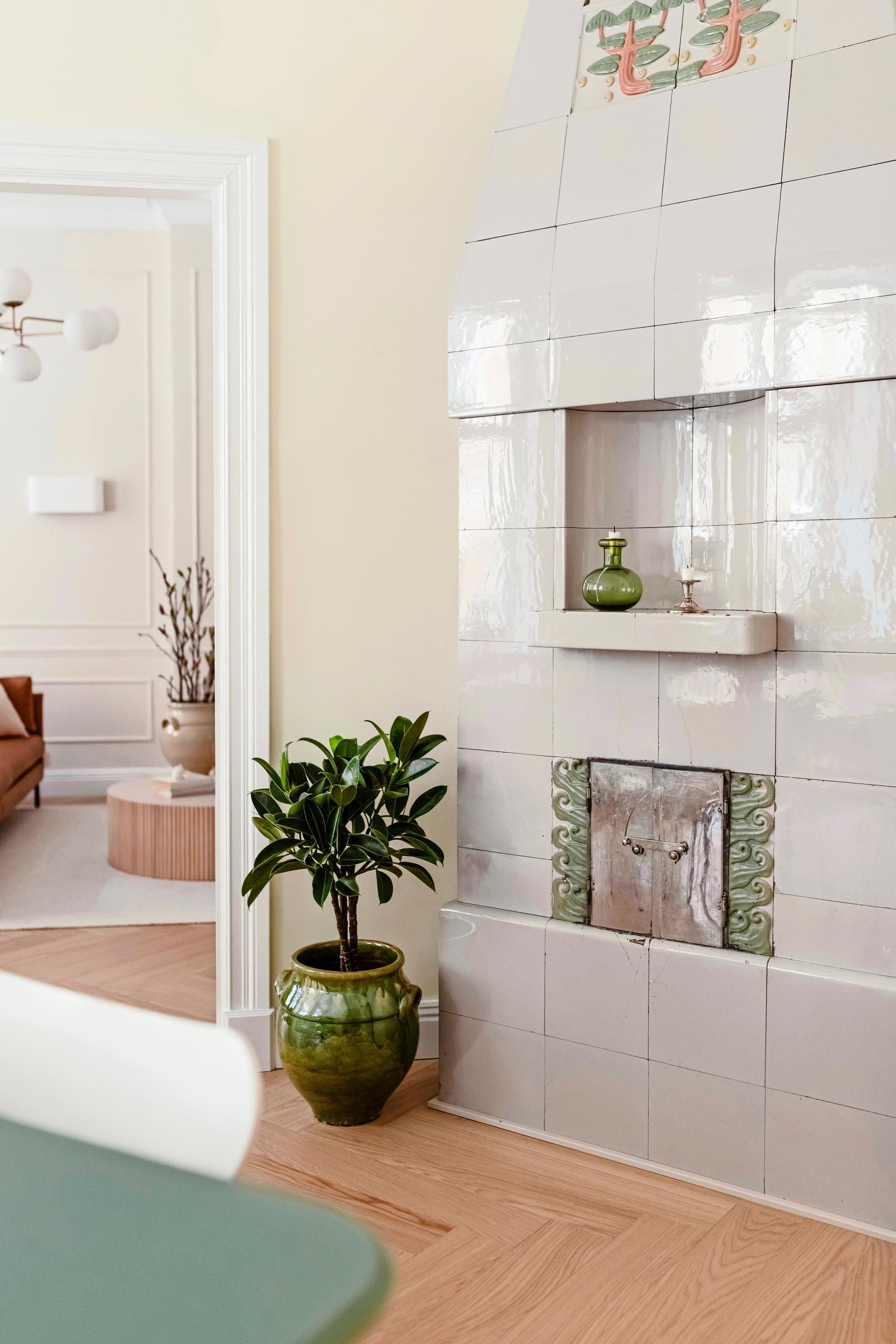
Finland’s first Jugend tile stoves debuted in 1897 at Ruoholahden Kaakelitehdas tile factory in Helsinki, when it began producing three Jugend-style stoves by the artist Acke Andersson. Among the most influential were three tile stoves showcased in Finland’s pavilion at the 1900 Paris World’s Fair, including one by Axel Gallén for the Iris factory, and two from Arabia’s catalog.
As new influences spread, tile stoves became more streamlined, their shapes sturdier and more box-like.
Though many stoves had a minimal look, stoves placed in a home’s principal reception rooms—such as salons, gentlemen’s rooms, or dining areas—were decorated with stylized Finnish plant and animal motifs. Common decorative elements included water lilies, cones, trees, ferns, and bears. These figures showcased the flowing lines typical of Art Nouveau.
Alongside these highly adorned models, simpler stoves were also produced, generally for what were considered secondary rooms, like children’s quarters, servants’ spaces, and kitchens.

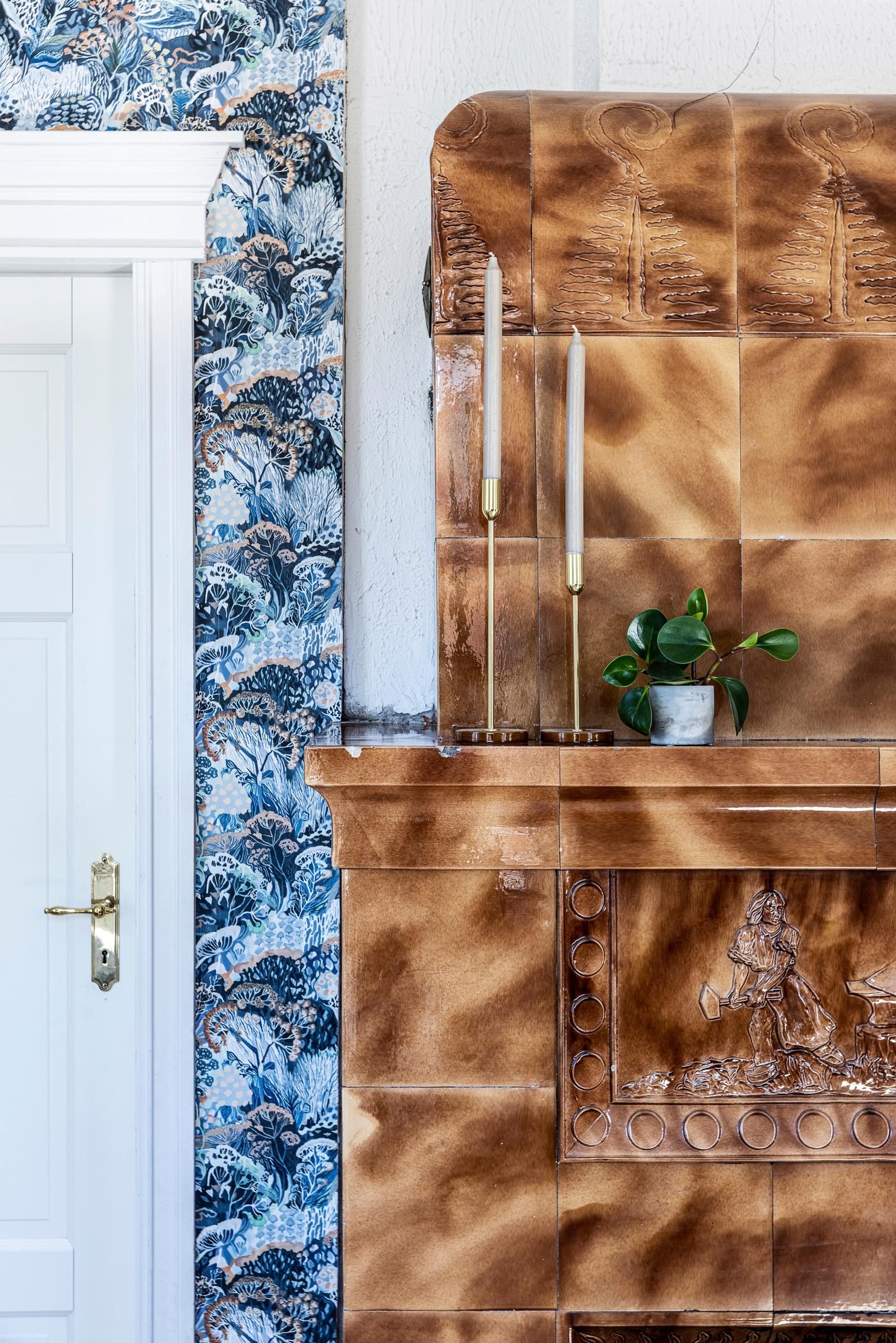
What was new about Jugend stoves were the vivid ceramic tile colors and rustic glaze effects. Rather than sticking to the once-fashionable smooth white, people embraced animated greens, cobalt blues, and browns—often with uneven textures, mottling, or drips reminiscent of art ceramics.
Beyond the ceramic finish, great care was devoted to stove doors and metal details, all designed in the same Jugend spirit. Doors became a key, jewelry-like focal point on the stove.
The most elaborate stove doors might feature copper reliefs with brass or copper rivets, while more affordable models used cast iron doors produced by foundries like Högfors.

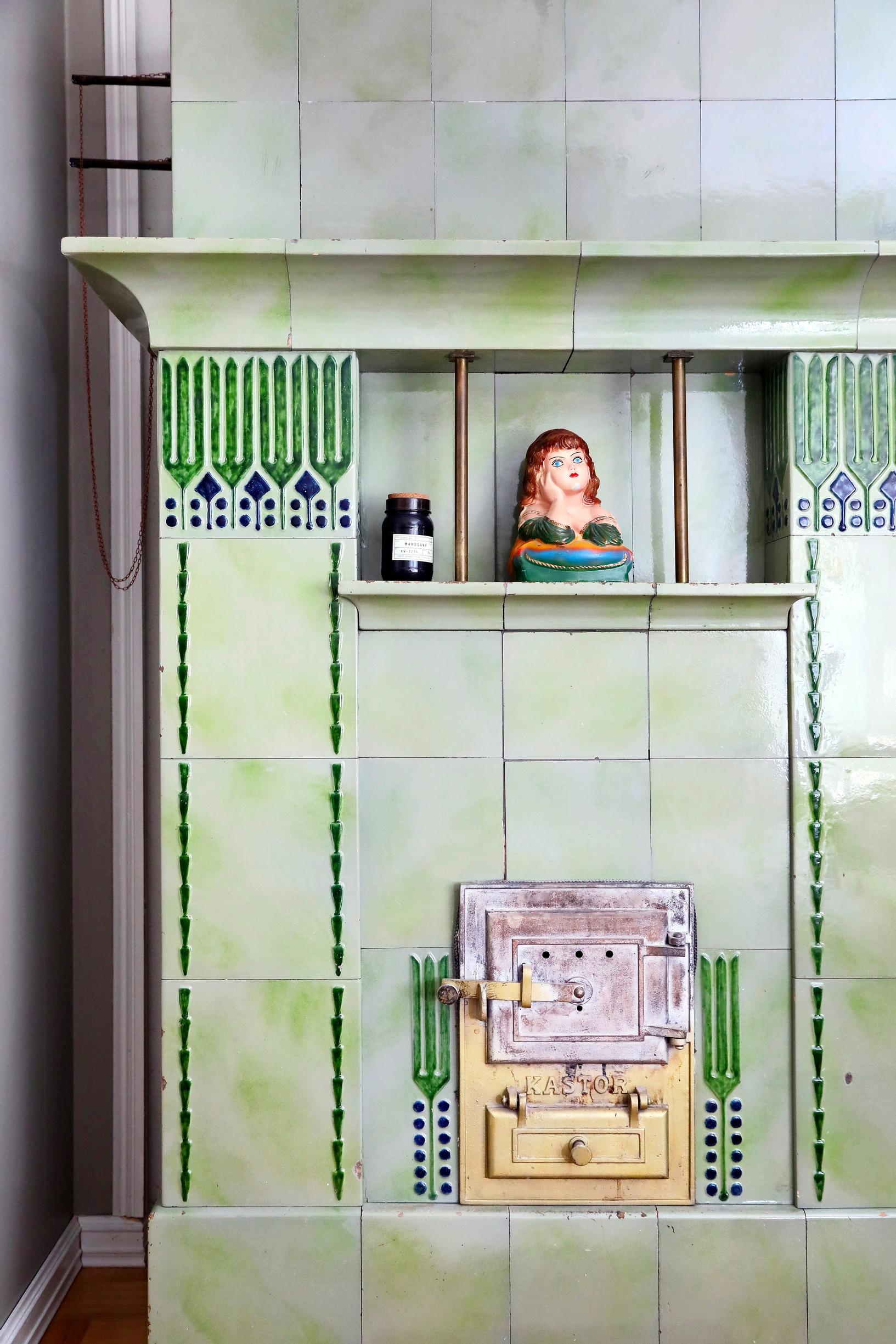
Jugend-style stoves became widely popular in the early 1900s. By the 1910s, a single factory catalog could list numerous Jugend stoves alongside older models. Arabia, for example—manufacturing tile stoves in addition to tableware—offered nearly fifty Jugend models by 1909.
Renowned architects and notable artists of the time were behind these new designs. For instance, Porvoo’s Iris factory (founded in 1897) enlisted Swedish artist and designer Louis Sparre as well as Belgian-born painter-ceramicist A. W. Finch, who settled in Finland, plus the painter Axel Gallén. Although Iris was hugely influential, it went bankrupt after only five years.

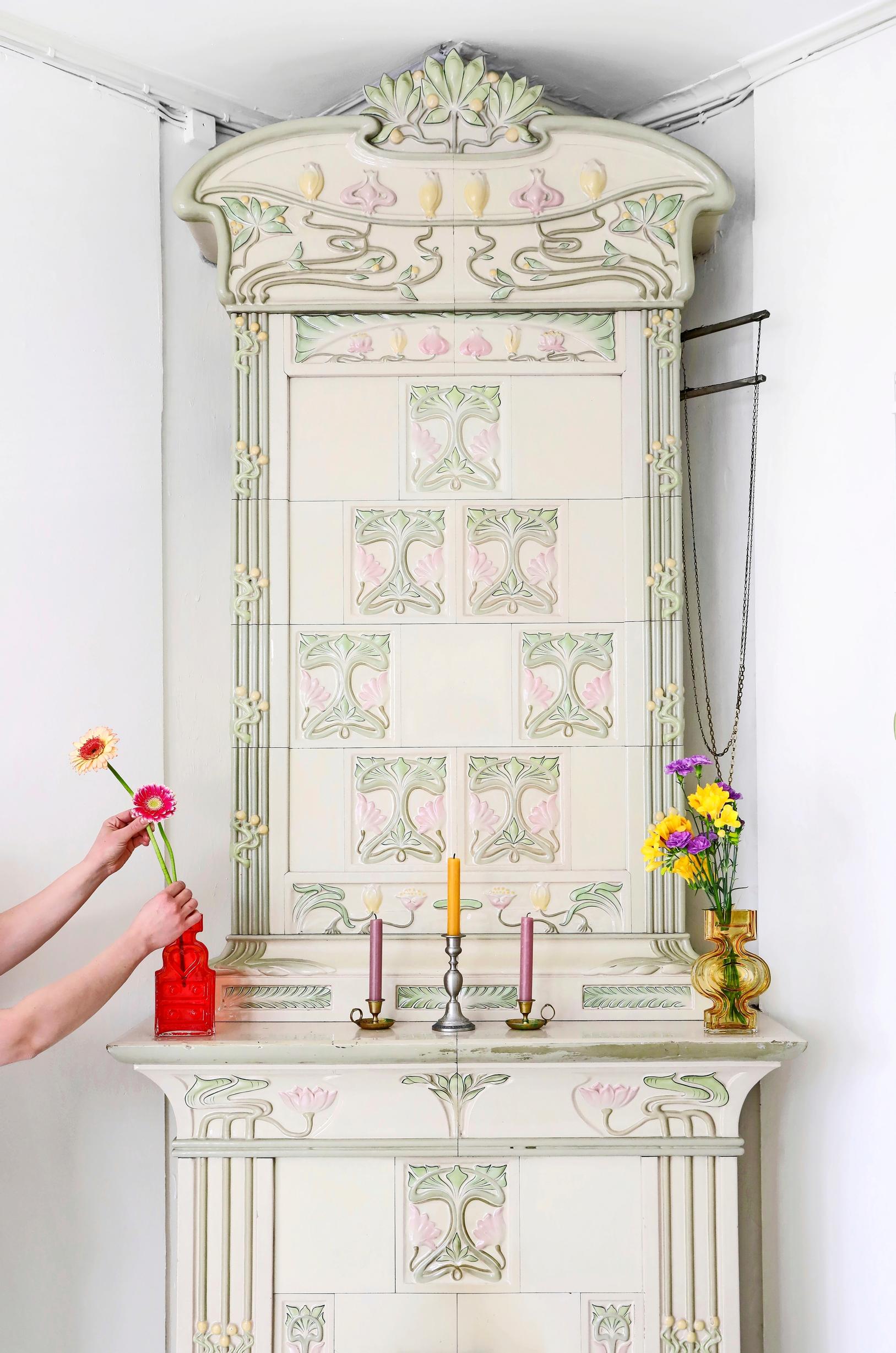
Other major tile stove manufacturers included Ruoholahden Kaakelitehdas in Helsinki, Rakkolanjoen Kaakelitehdas in the ceded Karelia region, and the Helsinki-based Oy Wilh. Andstén, whose list of designers reads like a who’s who of top architects: Gustaf Estlander, Gustaf Strengell, and the trio Gesellius-Lindgren-Saarinen, credited with 15 stove designs for the factory.
Turun Kaakelitehdas, founded in 1874, grew into the largest tile stove manufacturer in the Nordic countries, aided by close ties with local architects. In the 1910s, the Tikkurila and Tampere factories—once independent—were brought under Turun Kaakelitehdas, along with Oy Wilh. Andstén.
These stoves are coveted showpieces and selling points, reflecting the style ideals of their time and the layered history of living and architecture.
The First World War and the severe recession that followed halted almost all construction in Finland from the late 1910s to the 1920s. Around the same time, central heating and other technologies replaced wood as the primary heating source. This ended the roughly century-long reign of tile stoves, and demand declined.
Many tile stove manufacturers shut down between the world wars, but tile stove production continued until 1943, when Finland’s last tile stove factory—Turun Kaakelitehdas—closed its doors.

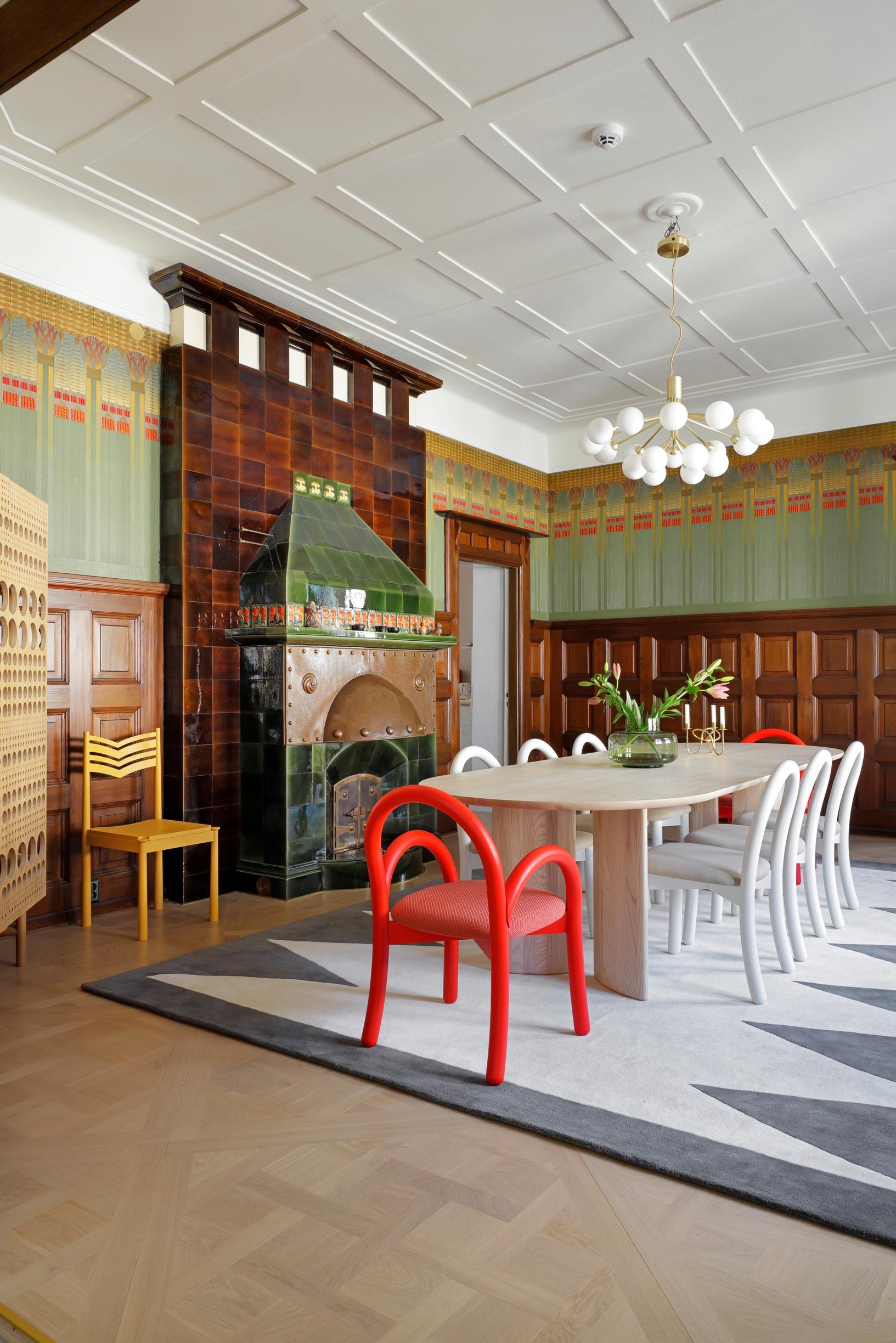
Once tile stoves were no longer crucial for heating, many saw them as taking up unnecessary space. By the 1930s, large numbers were removed as central heating spread. For instance, most stoves in Smolna, the Council of State’s ceremonial venue, were discarded during a major renovation in 1938, though the true removal surge took hold in the 1970s. Thousands more vanished when older buildings were torn down.

Nowadays, old tile stoves are coveted showpieces and selling points, reflecting the style ideals of their time and the layered history of living and architecture. Restored stoves also provide welcoming warmth.
These days, many older buildings are being re-equipped with the tile stoves they once lost, reviving both their authentic charm and cozy heat. You can also opt for a brand-new tile stove, with choices spanning from classic to modern designs.
Further reading (in Finnish):
Heinämies, Kati: Kaakeliuunit Suomessa 1800–1900-lukujen vaihteessa. Suomen antiikkiesineet jugendista modernismiin, Weilin+Göös (2006).
Hämäläinen, Pirjo: Jugend Suomessa, Otava (2010).
Soiri-Snellman: Turun kaakelin kakluunit. Turun kaakelitehtaan uunimallit vuosina 1874–1954, Turun maakuntamuseo (2003).
Supinen, Marja: A.b. Iris: suuri yritys, Kustannusosakeyhtiö Taide (1993).

