

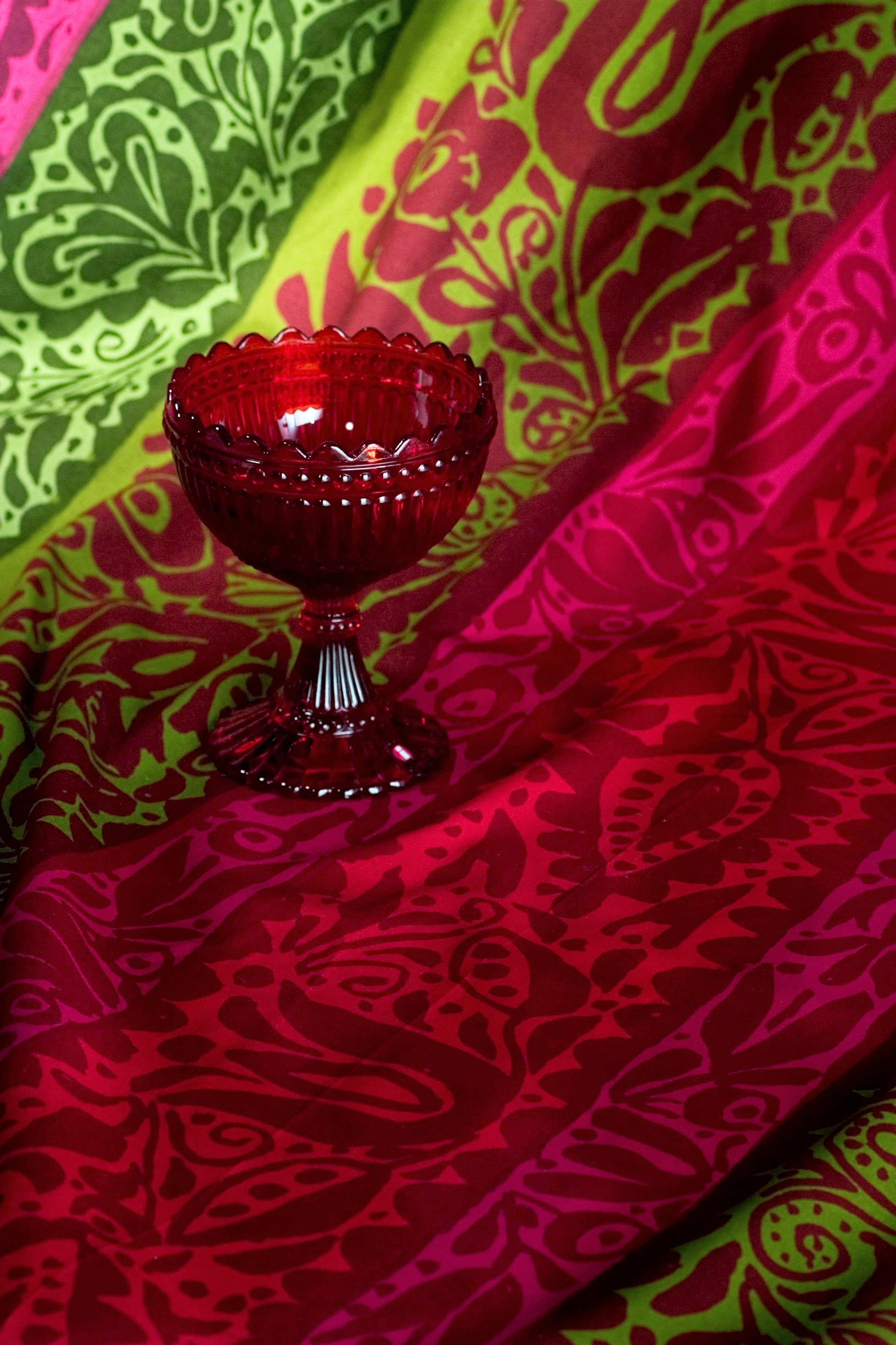
How the Mariskooli bowl became a phenomenon—and why collectors covet three colors
The origins of the Mariskooli are partly shrouded in mystery. That hasn’t stopped the bowl from becoming one of Finland’s most popular glass objects. Rare colors also carry monetary value.
The Mariskooli bowl as we know it has remained unchanged since 1965, apart from small tweaks caused, for example, by wear in the pressed-glass mold. Its predecessor was the Onni sugar bowl, introduced in Iittala’s 1892 catalog. The sugar bowl was made in two sizes, with either a straight rim or a rim turned down. Later, Riihimäen Lasi manufactured the footed bowl until the 1950s, when its popularity waned.
The Mariskooli traces back to a German pressed-glass model that apparently came to Finland with Central European glassblowers. The design may also have been purchased or copied. The earliest predecessors appear in Italy and date to the Middle Ages.

But how did Onni become Mariskooli? Marimekko designer Vuokko Nurmesniemi recounts that in 1957 she worked at Kaj Franck’s invitation as a designer at the Nuutajärvi glassworks. While rummaging through the factory shop’s storage, she came across a stemmed glass bowl, bought a dozen, and took them home. Marimekko’s owner Armi Ratia saw the bowls at Vuokko’s home being used for desserts and fell in love. She began ordering the footed bowls for Marimekko in ever-new colors. At Nuutajärvi, Mariskooli bowls were made from 1965 to 1968 and again from 1973 to 1993. From 1987 to 1995, Humppilan Lasi produced them as a subcontractor. Today, Mariskooli is a licensed product jointly produced by Marimekko and Iittala, and it is manufactured at the Iittala glassworks in Hämeenlinna, Finland.
In the Mariskooli, festivity meets folk appeal.
According to another story, Armi Ratia discovered the pressed-glass bowl herself at Nuutajärvi, and her son Ristomatti Ratia played a major role in the bowls’ return.
In his memoir, Ristomatti Ratia writes that the bowl surfaced by chance in the early 1960s, when his mother had sent him to buy dessert bowls for the Sköldvik manor: “At Stockmann I found pressed-glass sugar bowls that also worked beautifully as dessert bowls. I bought all four dozen the store had, and Armi was thrilled. She sent me to get more. The sugar bowls had sold out and were no longer in production. Armi wanted more, in different colors, so we set out to track down who made the bowls. The mold was found at Riihimäen Lasi, but they no longer wanted to produce the item, because they didn’t believe in pressed glass. We bought the mold and took it to Nuutajärvi. From there, Marimekko ordered the bowls.”


Nuutajärvi manufactured Mariskooli bowls until 1969, when Marimekko’s board trimmed the product range. The bowls then became the first product—and a success—of Décembre, a company founded by Ratia. When Décembre was sold to Marimekko, the bowls came back with the deal.
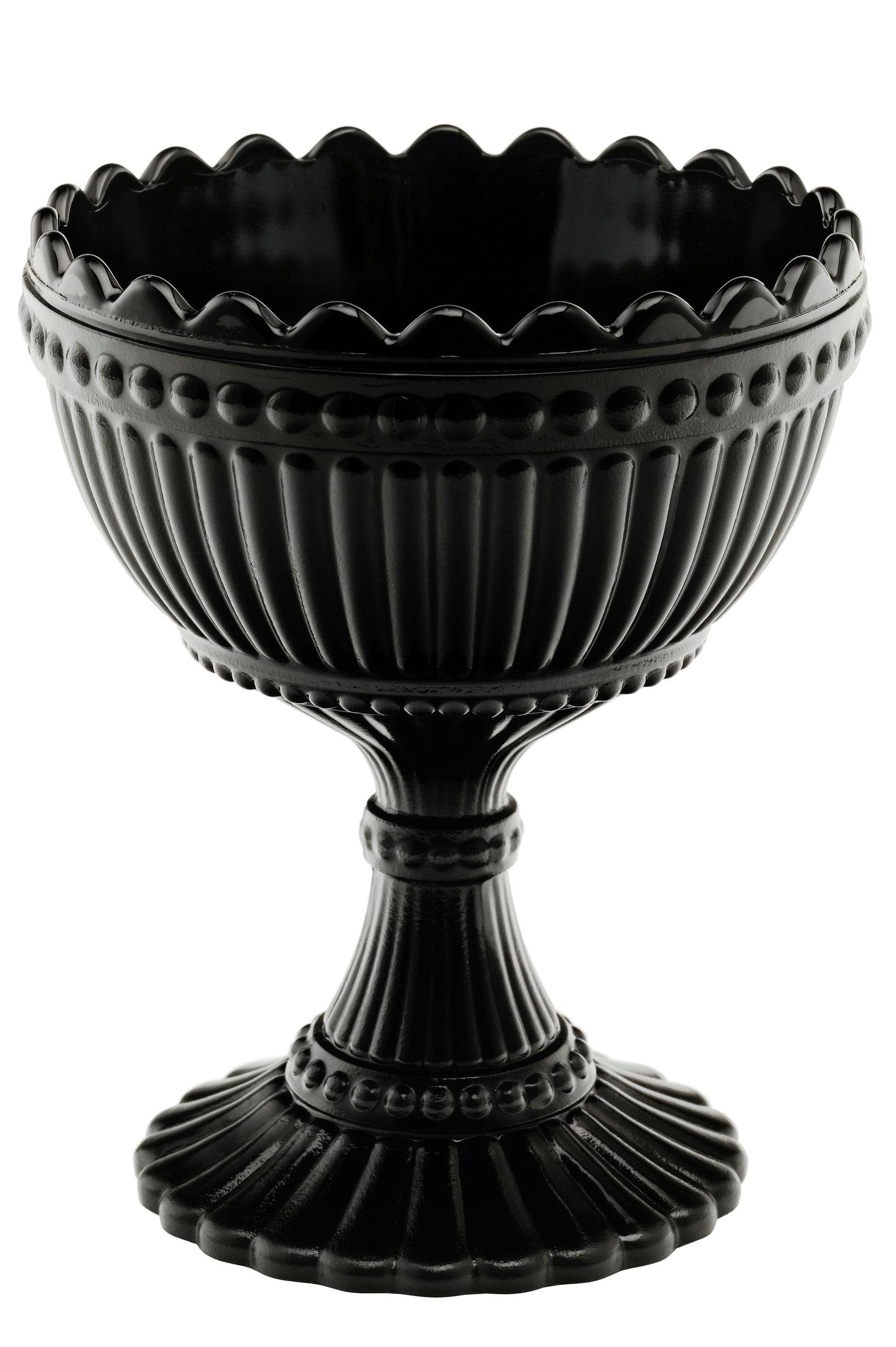
Large Mariskooli bowls have been made in 69 different colors. Small Mariskoolis were produced until 2015, and they came in a total of 25 colors. Production years and quantities vary widely. In addition to the official colors, collectors are especially interested in test batches and bowls produced during color changeovers in the glassworks’ furnaces. One such example is the opal yellow bowl. Matte-finished bowls are also sought after, especially matte plum and matte black.
Large Mariskooli bowls have been made in 69 different colors. Small Mariskoolis were produced until 2015, and they came in a total of 25 colors.
The more popular a product is, the more likely it is to be copied. You can recognize a genuine, new Mariskooli made in Finland by the Iittala sticker and the Marimekko base mark, as well as by the clear, high-quality glass and regular patterns. Every part, right up to the rim, is symmetrical. The mold leaves three seams in the glass. The authentic stem is slender and narrow.

