


How to plant potatoes—succeed with our guide!
Learn how to plant and grow potatoes successfully by choosing the right potato varieties, knowing when to plant potatoes, and preparing a fertile bed. There’s nothing better than freshly harvested potatoes from your own vegetable patch!
Understanding how to plant potatoes successfully involves crop rotation and using healthy, certified seed potatoes. It’s best to plant potatoes in the same spot only every 3–4 years because many potato diseases and pests spread via seed potatoes and can persist in the soil. The year before you plant potatoes, you can grow peas at the spot, which helps enrich the soil with nitrogen.
Store your seed potatoes in a cool place until planting time. Allow the tubers to sprout for two to three weeks in a bright, room-temperature location. If you purchase pre-sprouted seed potatoes in May, you can plant them directly into the ground.
How to plant potatoes
Plant potatoes in May when the soil is dry enough to be tilled. Early potatoes can be planted soon after the snow melts. Covering the area with horticultural fleece helps encourage early growth.
When you plant potatoes, suitable fertilizers include mature compost as well as manure and fertilizer granules. You can apply fertilizer directly into the planting furrow or mix it into the soil. If potatoes lack nitrogen, they will grow poorly and have pale foliage.
Potatoes thrive best in sunny locations with loamy, sandy soil.
Loosen the soil to a depth of about 20 centimeters and create furrows approximately 5 centimeters deep. Place small seed potatoes 20–30 centimeters apart; for vigorous varieties and large tubers, space them 30–40 centimeters apart. Wider spacing can speed up the harvest.
At first, cover the potatoes with only a 5–10 centimeter layer of soil to allow their shoots to emerge quickly.

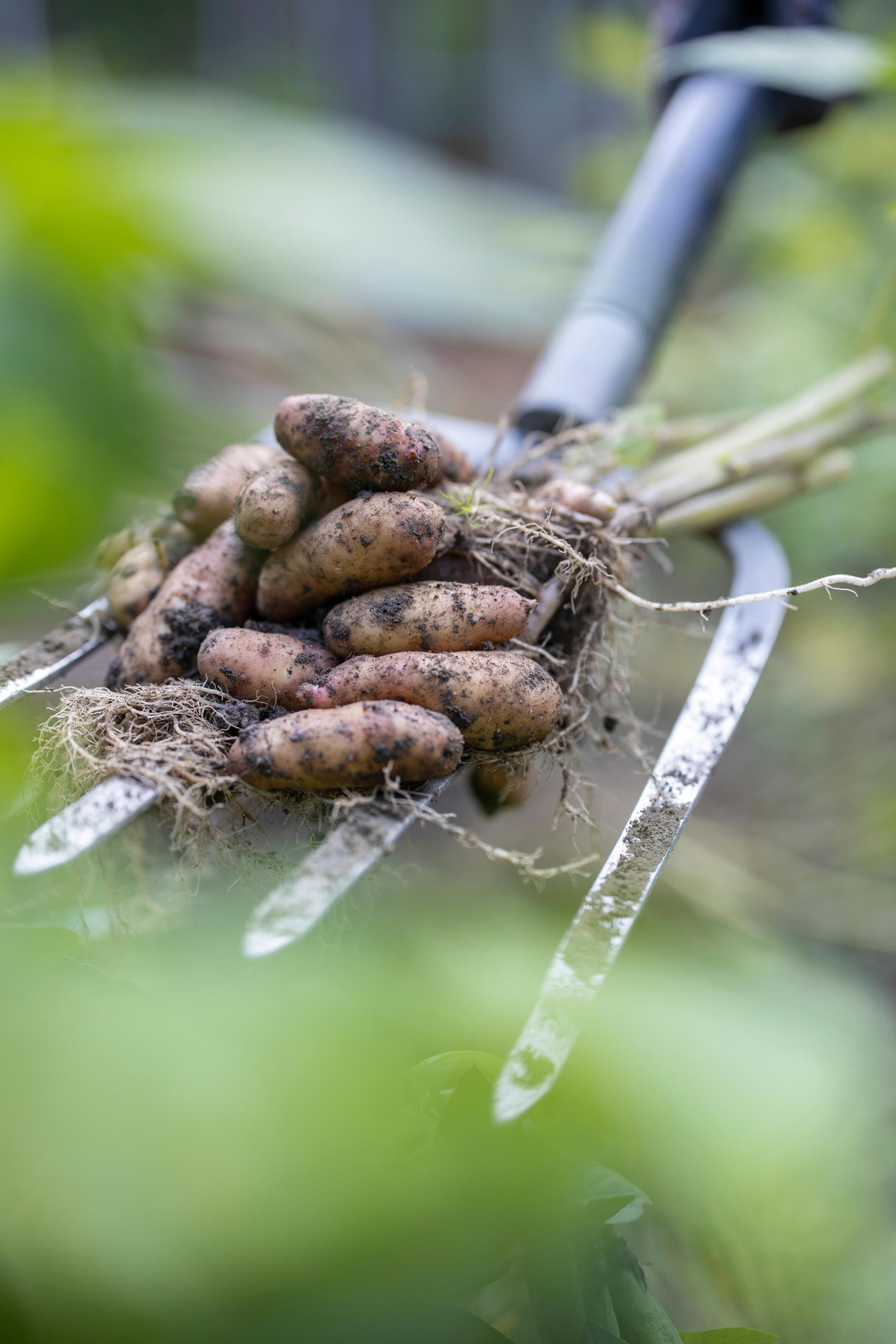
Growing potatoes: hill up the bed and take care of watering
Keep weeds under control by hoeing the surface of the bed before the shoots break through the soil. About four weeks after planting, hill up the plants by mounding soil around the stems with a hoe or mattock, leaving the shoot tips visible. Hill up the potatoes again during the summer. A generous mound prevents the tubers from greening. Additionally, tubers close to the soil surface are prone to drying out, which increases potato scab.
Adequate watering is essential for producing a good harvest and potatoes free from scab, so potatoes benefit from watering during dry periods. If you aim to grow potatoes that are as smooth as possible, start watering once the shoots have emerged and continue every few days for about a month.
Scabby potatoes? Don’t worry, it’s only a cosmetic issue.
Potato scab is more common in scab-prone varieties and soils with a high pH. Varieties highly susceptible to scab include ‘Siikli’ and ‘Annabelle’.
However, it’s important to maintain proper soil liming, as a pH of 5.8–6.8 is optimal for the taste, texture, and nutritional value of your potatoes. And remember, potato scab only causes cosmetic damage to your tubers.
Harvesting potatoes
Harvest early potatoes once the tubers have reached a good size. Don’t wait for flowering, since only some varieties bloom.
In August, cut down the stems and remove them from your potato patch to prevent any potato blight spores from getting into the soil. Wait at least a week after cutting the stems before harvesting, allowing the skins of the tubers to thicken.
Storing potatoes
Let the potatoes dry briefly on the ground before storing them. The storage area should be completely dark and, for long-term storage, preferably around four degrees Celsius.
If you don’t have a cellar or other storage space, you can leave the tubers in the ground and harvest them throughout fall. Just make sure the potatoes are well covered with soil and protected from the cold.

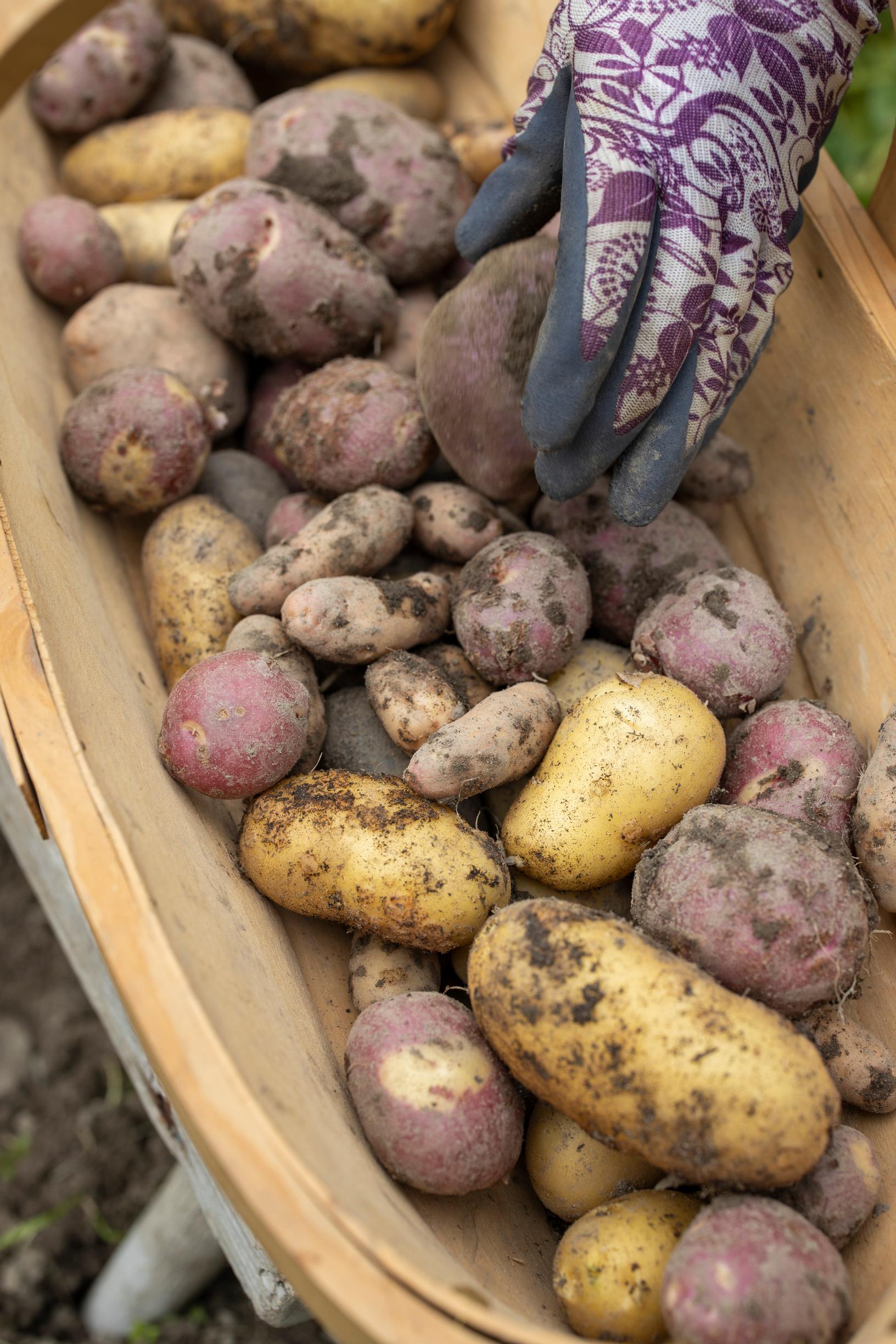
Don’t wait for potato plants to flower before harvesting, as only some varieties bloom.
Potato blight: how to avoid damage
The most destructive potato disease is potato blight, whose spores are carried into the potato field by air currents. Blight causes dark spots on leaves, and once it reaches the soil, it attacks the tubers. Sunken-in, brown spots appear on the potatoes, and as the disease progresses, the tuber turns brown and dries out.
Developing completely blight-resistant varieties is challenging because blight strains constantly evolve. Therefore, the gardener’s actions play a crucial part in combating this destructive disease.
How to keep potato blight under control
- Plant only healthy seed potatoes. Even tubers that look healthy can spread blight.
- Grow potatoes in well-drained, loose soil. Hill up the potatoes thoroughly.
- Favor early varieties in your home garden, and try to plant the tubers as early as possible in spring. This way, the tubers have time to grow large before potato blight strikes.
- Choose blight-resistant varieties when selecting late-season potatoes.
- Avoid dense foliage by leaving 75–90 centimeters between your potato rows. Airy foliage slows the spread of blight within the crop.
- Water the soil directly; don’t spray water onto the foliage.
- Remove infected leaves from plants as soon as you see dark spots caused by blight. Otherwise, rain will carry spores into the soil, infecting the tubers. Soil-borne blight can infect tubers early in the summer.
- Cut down the foliage when removing individual leaves is no longer enough to keep blight under control.
- Thoroughly collect all plant parts from the ground when harvesting potatoes.
- Wait at least four years before planting potatoes again if you find blight in the tubers.
Potato varieties differ in earliness, cooking qualities, and disease resistance.
Potato varieties for your home garden: 9 options
- ‘Annabelle’: An early variety that is popular for its creamy, smooth taste. Stores well.
- ‘Carrera’: A very early and tasty variety that also keeps well in storage.
- ‘Challenger’: A fairly late and vigorous variety that produces floury-textured potatoes. Stores well.
- ‘Colomba’: A very early and high-yielding variety, also suitable for storage.
- ‘Jussi’: A very early summer potato with slightly floury, yellow flesh. Suitable as an early, summer, and autumn potato.
- ‘Rosamunda’: A fairly late variety with floury, pale-fleshed tubers—a classic for baked potatoes. Stores well.
- ‘Siikli’: A traditional and delicious summer potato with many loyal fans.
- ‘Timo’: A popular early potato that starts growing even in cool soil.
- ‘Violet Queen’: An entirely bluish-violet tuber rich in healthy antioxidants that turn your mash violet. Stores well.

