

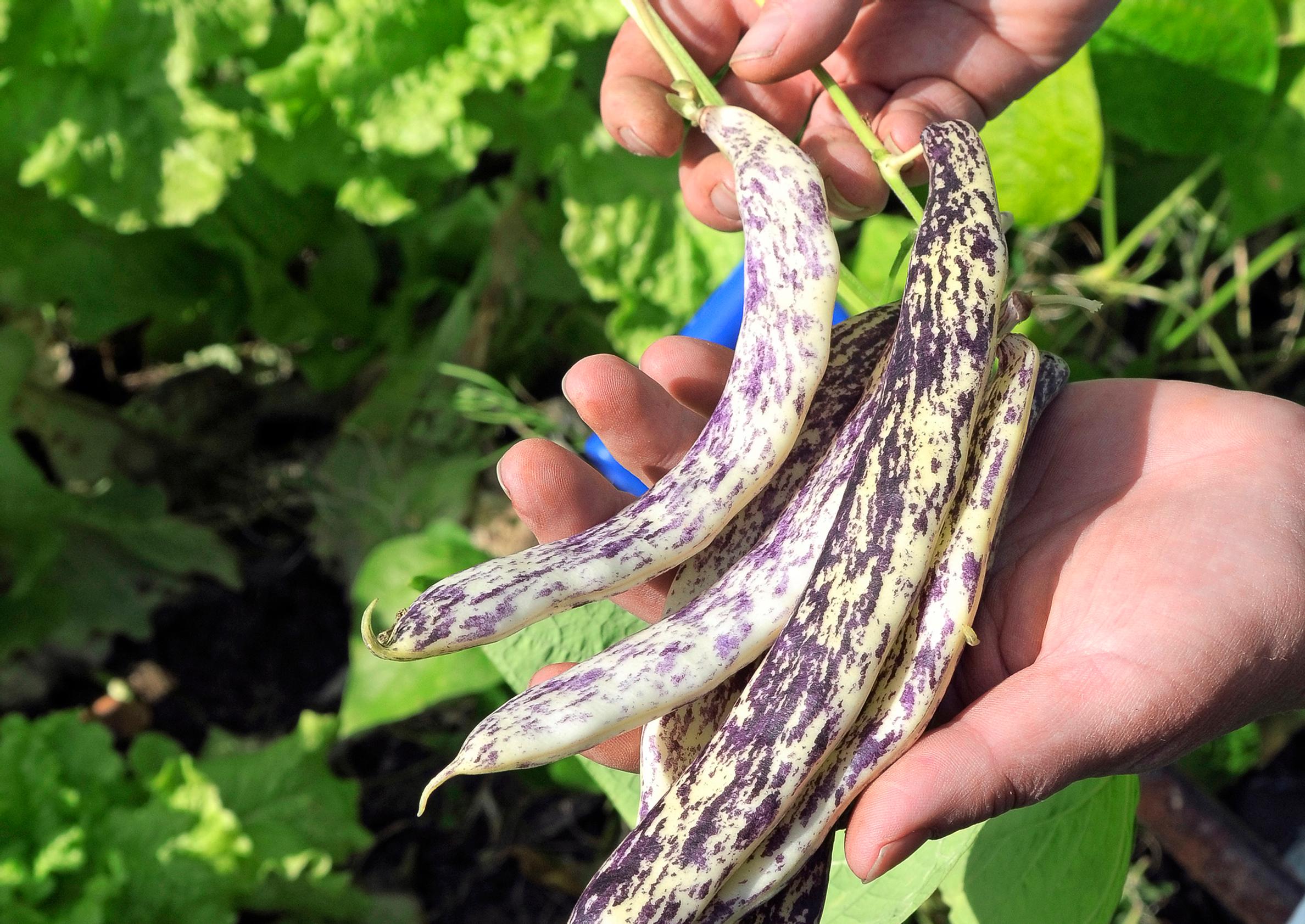
Beans in your own backyard: top tips for a bountiful harvest
Grow your own delicious broad, runner, and bush beans. These versatile beans are healthy and work in many dishes. While they thrive best in loose soil, they can also help improve it.
Most bush and wax beans are easy to grow outdoors and remain upright without support. Meanwhile, pole and scarlet runner beans grow long vines that can form a beautiful privacy screen or living wall. Scarlet runner beans, with their lovely flowers, are especially decorative. If space is limited, choose low-growing varieties.
All beans provide valuable, protein-rich food. When harvesting, pick pods early, while the seeds are still small and the pods crisp. If the pods grow bigger, they become tough. If you’re growing beans for dried seeds, wait until the seeds are fully developed.
If you have more fresh beans than you can use right away, blanch and freeze them. You can also ferment blanched beans. Light-colored wax beans are particularly delicious.
Beans must always be cooked before eating, since they contain a toxic compound called lectin. Luckily, heat destroys this protein. A quick boil is enough for fresh beans, while dried beans should be soaked overnight.
Beans improve soil by fixing nitrogen. Generally, beans grow best in loose soil, but broad beans also enhance soil structure. Gardeners with clay soil appreciate the sturdy roots, which help crumble the soil by spreading wide and fairly deep.
How to grow beans successfully
Growing medium
Use loose, low-nitrogen soil with a neutral pH of about 6. You can lime with wood ash and use low-nitrogen fertilizers. Broad beans also grow in clay soil.
Light and location
All but broad beans need a warm, sunny spot. Broad beans tolerate light frosts (down to about -2°C or 28°F). A raised bed is recommended to keep the roots warm. Choose a sheltered location, and provide supports for tall pole and scarlet runner beans.
Starting indoors
It’s not essential, but starting garden beans and scarlet runner beans indoors can speed harvest by about 3–4 weeks.
Planting
Transplant seedlings outdoors only once the soil temperature exceeds 10°C (50°F).
Direct sowing outdoors
To speed germination, you can soak seeds overnight. Broad beans can be sown from +5°C (41°F), while others need above 10°C (50°F). Sow small seeds 5–10 cm (2–4 in) apart at a depth of a couple of centimeters (about 1 in). For broad beans, sow seeds 20 cm (8 in) apart at a depth of 5 cm (2 in). Keep row spacing at about 50 cm (20 in). For pole and scarlet runner beans, sow a few seeds together at the base of each support.
Earthing up
When seedlings are about 10 cm (4 in) tall, mound soil around their bases.
Row cover
Keep the row cover until flowering begins to provide warmth and a good start.
Watering
Water as needed. Let the water warm up overnight, since cold water can harm bean roots.
Harvest
Harvest two or three times a week as soon as pods appear, with seeds inside grown to only small bumps. If you plan to collect seeds, let them grow until fully formed.
If you plan to dry beans, allow the pods to fully mature. You’ll know they’re ready when the pods turn brown and a leathery layer forms around the beans.
Tasty bean varieties
Bush beans
- ’Purple Teepee’: Dark purple pods. Short, does not require support. Reliable to grow and high-yielding. Harvest pods young. They turn dark green when boiled. Delicious and tender.
- ‘Mascotte’ F1: Compact with a dense growth habit, ideal for container growing. The pods are tasty and stringless. They’re also easy to pick, as they form on the plant’s outer edges.
- ‘Borlotto Lingua di Fuoco Nano’: White pods with red spots. Young beans are eaten with pods, or you can grow them for dried seeds. Sow outdoors only when the soil temperature is above 15°C (59°F). Provide support. Excellent flavor.
Scarlet runner beans
- ‘Celebration’: 2–4 m tall (about 7–13 ft). Salmon-pink flowers and delicious long pods. Grows quickly. Start seeds indoors in May or sow outdoors when the soil temperature is above 12°C (54°F).
- ‘Hestia’: Under 50 cm (about 20 in) tall. Good for containers. Red and white flowers, and delicious pods.
- ‘Lady Di’: Up to 4.5 m (about 15 ft) tall. Warm red flowers. Straight, juicy pods.
- ‘Enorma’: Red-flowering and high-yielding. The pods are long and smooth.
Pole beans
- ‘Blauhilde’: 2–3 m tall (about 7–10 ft). Prolific. Purple, long pods that turn green when boiled. Excellent flavor.
- ‘Cobra’: A French heritage variety dating back to the Middle Ages. The beans are round, and the flowers are mauve.
- ‘Markant’: Early variety with stringless pods about 25 cm (10 in) long.
- ‘Carminat’: Purple, slender pods that turn green when cooked.
Broad beans
- ‘Hangdown’: Robust, does not need support. Grows to about 120 cm (47 in). Pendulous pods with large seeds.
- ‘Karmazyn’: Sturdy, about 50–60 cm (20–24 in) tall. Each pod has 3–4 pink seeds. Delicious.

