“It’s important to us that our children grow up in Sámi culture”—home on Finland’s northernmost edge
“The place is like a postcard of Sápmi’s nature. It’s incredible that there’s an almost untouched wilderness right next door,” says musician Anna Näkkäläjärvi-Länsman. The daily life of Anna and her husband, reindeer herder Asko Länsman, in Finland’s northernmost corner follows Sámi traditions.
In the Näkkäläjärvi-Länsman household, the day starts on Norwegian time. Dad Asko Länsman is already up when mom Anna Näkkäläjärvi-Länsman and the children Anni-Siviä and Ántte-Issát wake to the alarm at half past seven.
After cereal and morning coffee, the family heads its separate ways: Asko goes to work tending the reindeer so they make it through the harsh spring conditions, and musician mom Anna drives the kids to daycare in the village of Nuorgam. First-grader Anni-Siviä gets to play at daycare before her school day starts.
It’s 4.3 miles from home to the village. Ten children attend Nuorgam’s village school in two classes, one in Finnish and one in Sámi, which is where Anni‑Siviä studies. There are two teachers. More children are coming in the fall, so the school will get a third teacher.

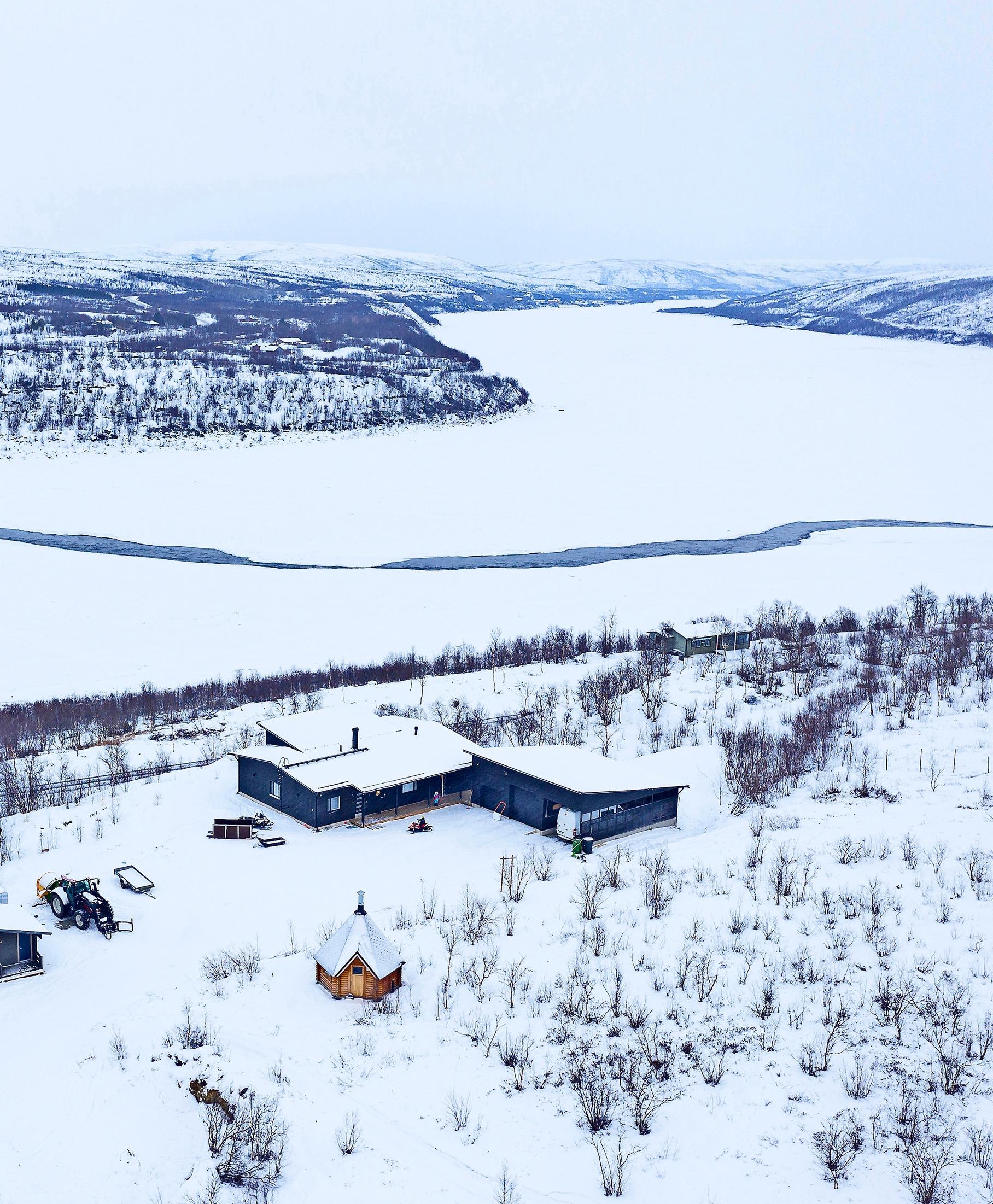
You can’t get any farther north in Finland. The village of Nuorgam sits at the very top of the country, in the municipality of Utsjoki.

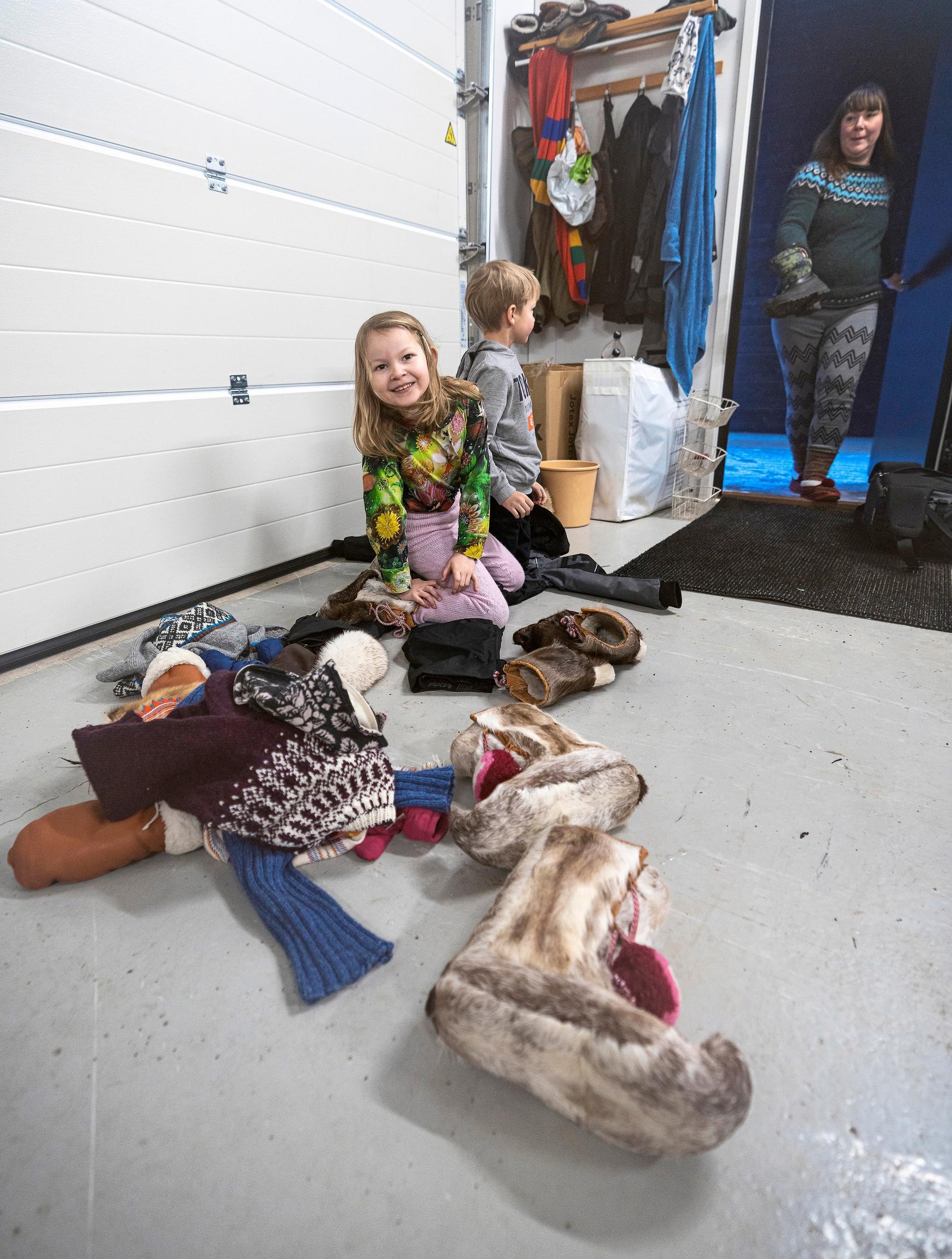
School and the shops don’t get going until around ten, because some villagers work on the Norwegian side, where the morning starts an hour later than in Finland.
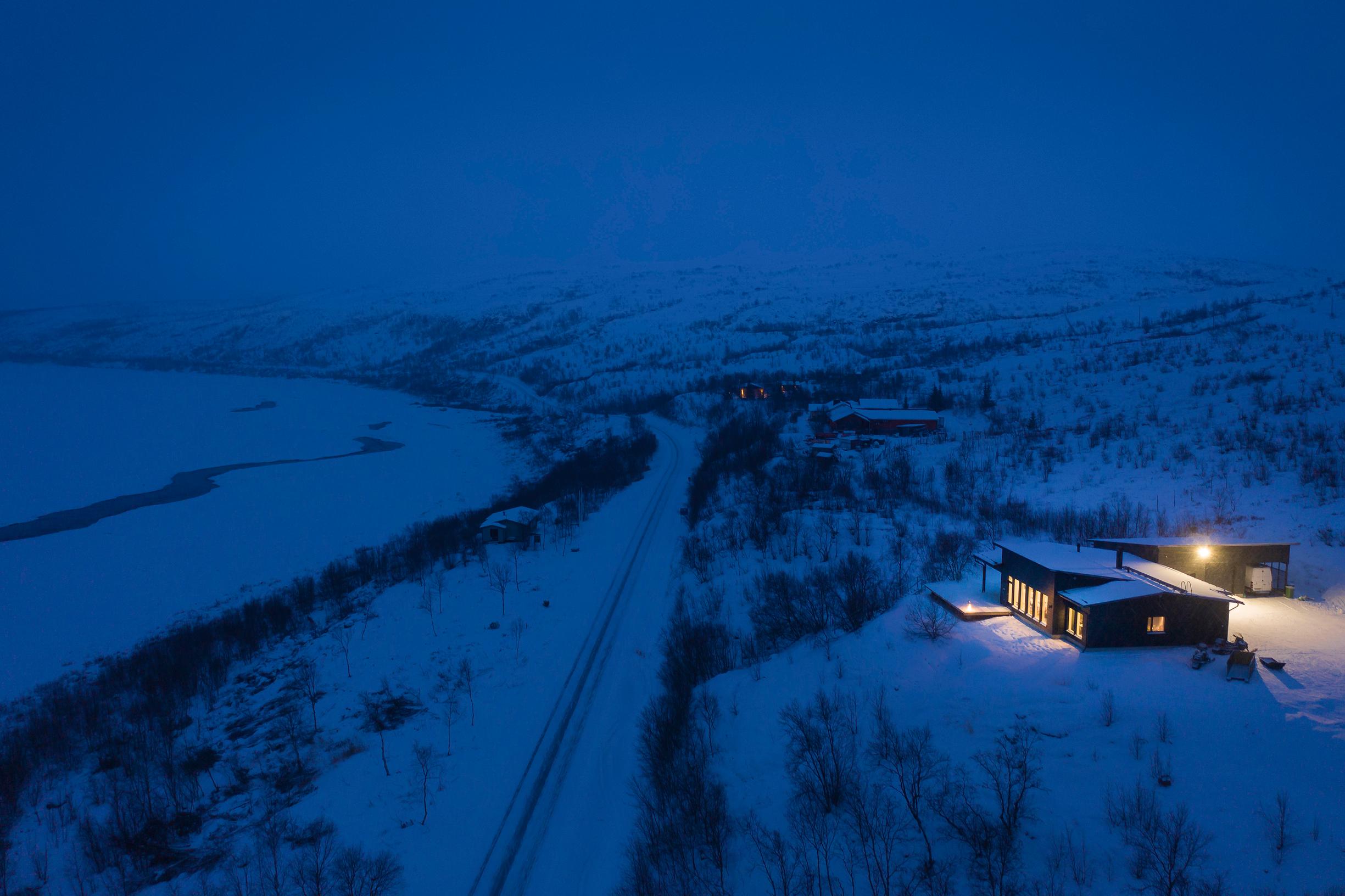
You can’t get any farther north in Finland. The village of Nuorgam sits at the very top of the country, in the municipality of Utsjoki. From the windows of Anna’s family home you can see the Norwegian fells, and right at the foot of the house roars Boratbokca, Europe’s largest salmon rapids. From the yard, Anna can also see the Alaköngäs rapids. It’s 285 miles to Rovaniemi and 19 miles to the Arctic Ocean.
Anna and Asko’s family moved here from central Utsjoki. They built their detached house on the bank of the Alaköngäs rapids on the Teno River a year ago, when they bought a share of Asko’s parents’ plot. The yard is shared with the grandparents, and in winter about a dozen male reindeer live there too.
“We train them for reindeer races,” Anna says.
“It’s a shared hobby for the men in the family, but my mother-in-law feeds them enthusiastically too.”
These landscapes are Asko’s birthplace—and they feel like home to Anna, too.

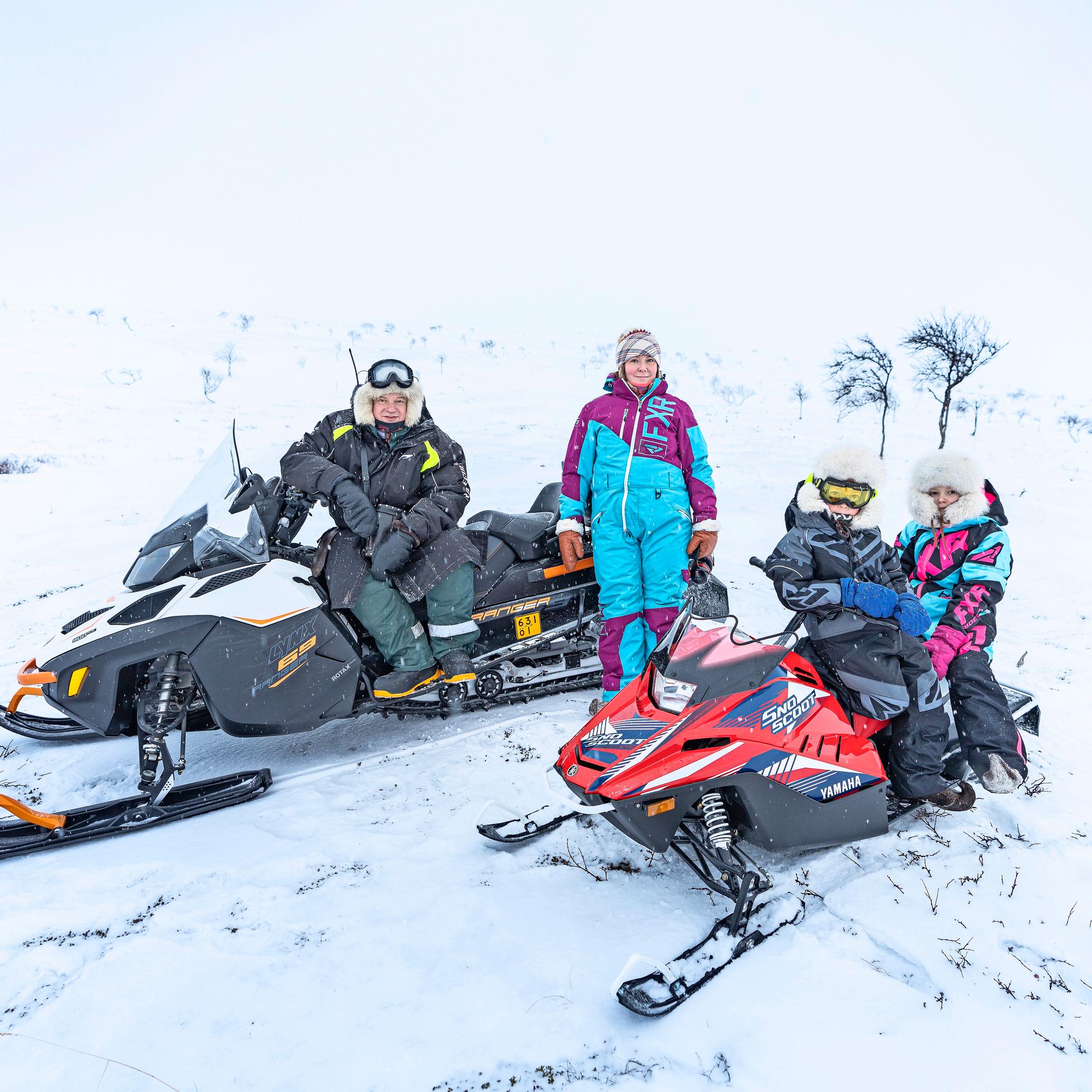

These landscapes are Asko’s birthplace—and they feel like home to Anna, too. She grew up in Inari, surrounded by northern nature. Moving with Asko to the far side of the tree line turned out to be the right decision.
“This landscape felt like home. The place is like a postcard of Sápmi’s nature. It’s incredible that there’s an almost untouched wilderness right next door,” Anna says.
In the new home, it was important that it be in harmony with nature. Anna also wanted her own workspace, plenty of room for outdoor clothes, a terrace facing the river, and large living-room windows looking the same way. They couldn’t have hoped for a better result.
“This is a dream come true. It’s really important to us that the children grow up within Sámi culture. And it’s wonderful that the reindeer are right next door.”
“Sámi culture is very family-centered. We don’t think in terms of separate couple time and time for the kids—we’re together.”
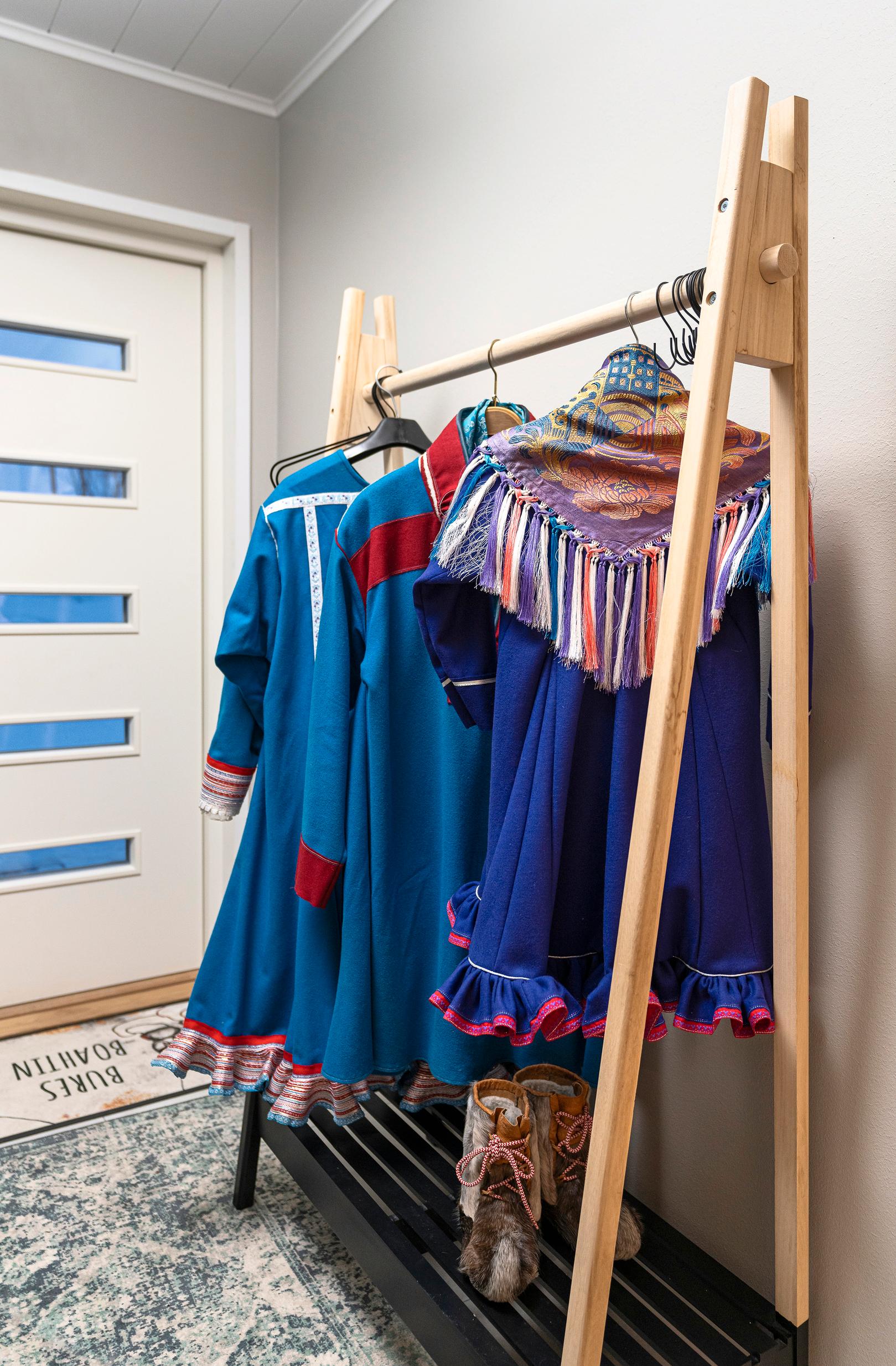
Reindeer-hide fur boots wait in the entryway, and the wooden kitchen bench is softened by a traditional raanu rug woven by Anna’s mother in a Sámi-inspired pattern. In the wedding photos hanging on the living-room wall, both Asko and Anna are wearing Sámi dress.
From a global perspective, northern Lapland sits at the center of events. The climate is warming in the Arctic at twice the rate of the planet on average. That threatens Anna and Asko’s family’s way of life, too.
“Everything is good for the Sámi when everything is good in nature. That’s when we have the conditions to make our living from nature: from reindeer, or here on the Teno, also from salmon fishing,” Anna says.
“The old reindeer herders notice climate change in their work: the tree line has climbed, and winters are very windy, which makes the snowpack hard so it’s difficult for the reindeer to dig up lichen to eat. In winter it can go above freezing, and when it freezes again the ground ices over and ruins the pasture.”

Now northern Lapland attracts outside land users, such as mining companies. Anna says the Sámi voice doesn’t necessarily get heard in decision-making. They also worry about the survival of their language. In the Näkkäläjärvi‑Länsman family, they speak Sámi, just as both parents did in their childhood homes.
“I worry whether I can pass the Sámi language on to my children. I’ve noticed that, in this, parents end up acting as cultural workers.”
That, at least, is where Anna is a professional. She has worked to advance the teaching of Sámi music and, under the name Ánnámáret, makes Sámi-language music with Nordic folk influences. Lately she has worked with the traditional yoik.
“Having our home in the North helped me find my musical roots. I’ve discovered my relatives’ yoiks in the archives and gotten to know what our music culture was like a hundred years ago.”
“Everything is good for the Sámi when everything is good in nature.”
An unfinished yard is a good exercise for the mind. Last summer, the family was still so dazed from building that yard work had to wait.
“The yard will probably never be completely finished, but I think that’s how life is in general—never finished. The important thing is learning to live with yourself,” Anna says.
Plans are simmering now: we won’t touch the kuntta, the forest floor turf. We’ll sow only as much lawn as we have to. Stone paving would make pretty paths. We need to find the warmest possible spot for rhubarb. Anna already has one in mind.
“Even my houseplants tend to die, and I’ve never been a gardening person. But with the state of the world, everything revolves around home much more than before. I started dreaming about shaping the slope into a rock garden planted with vegetation that suits the fell landscape,” Anna says.


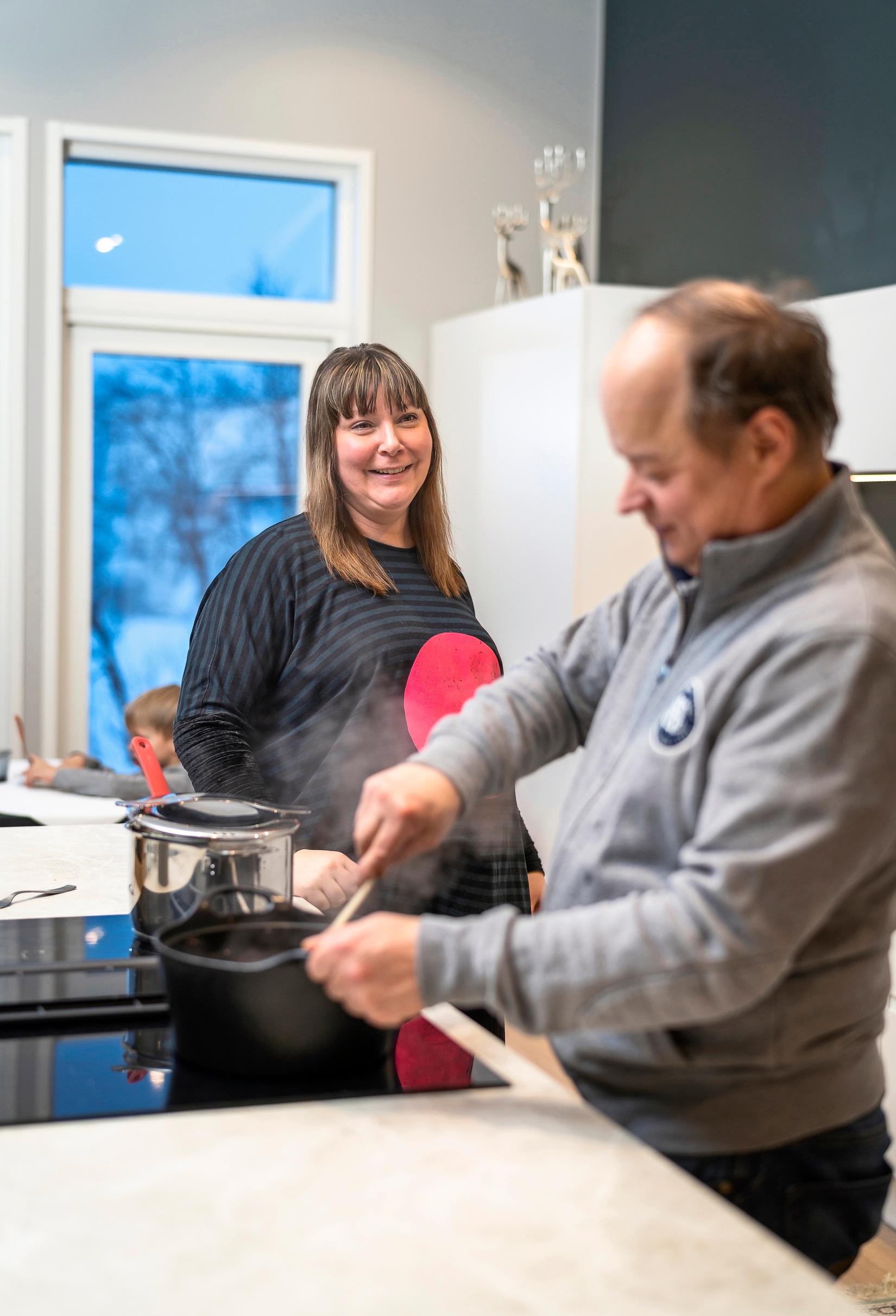

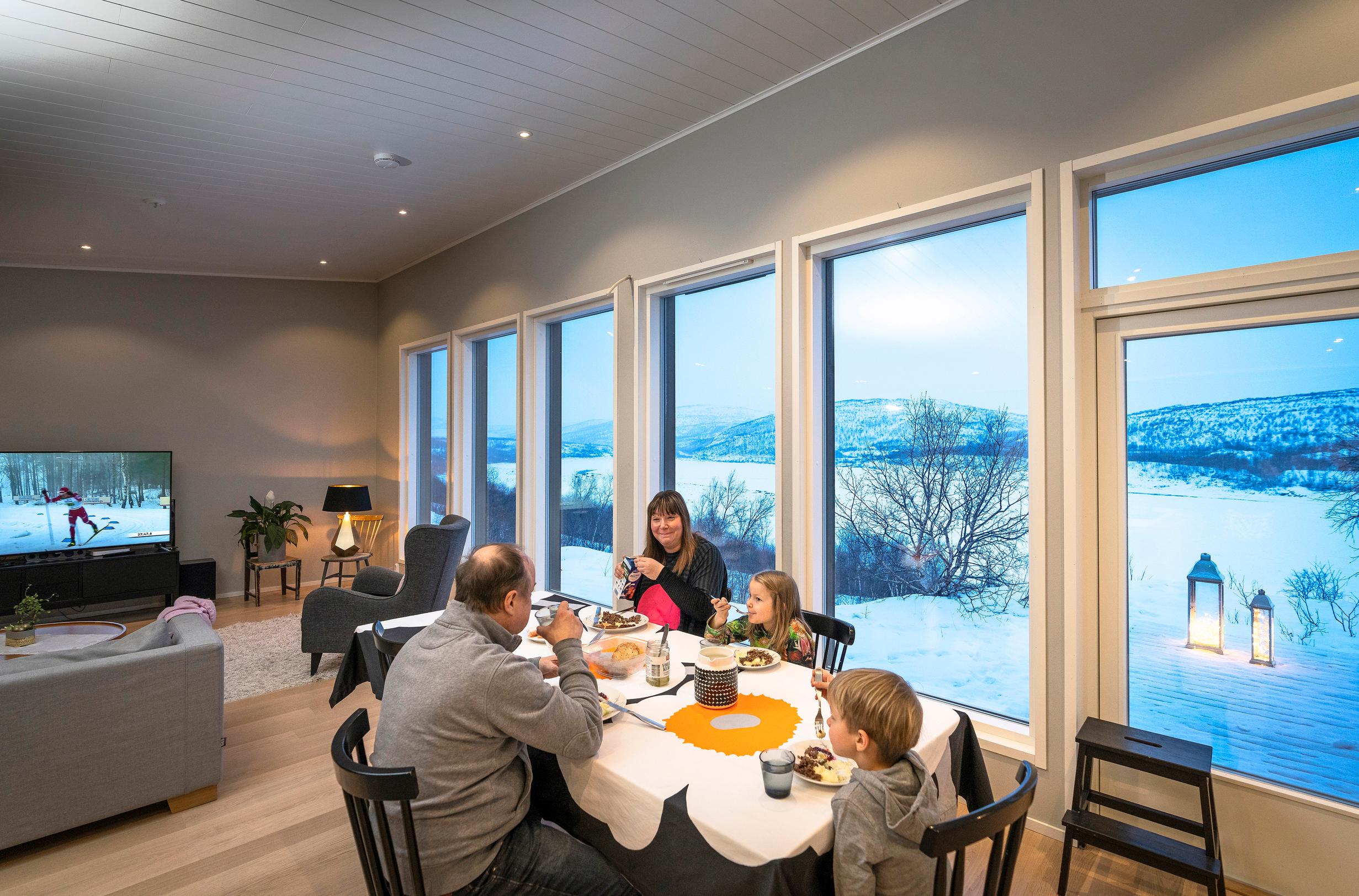
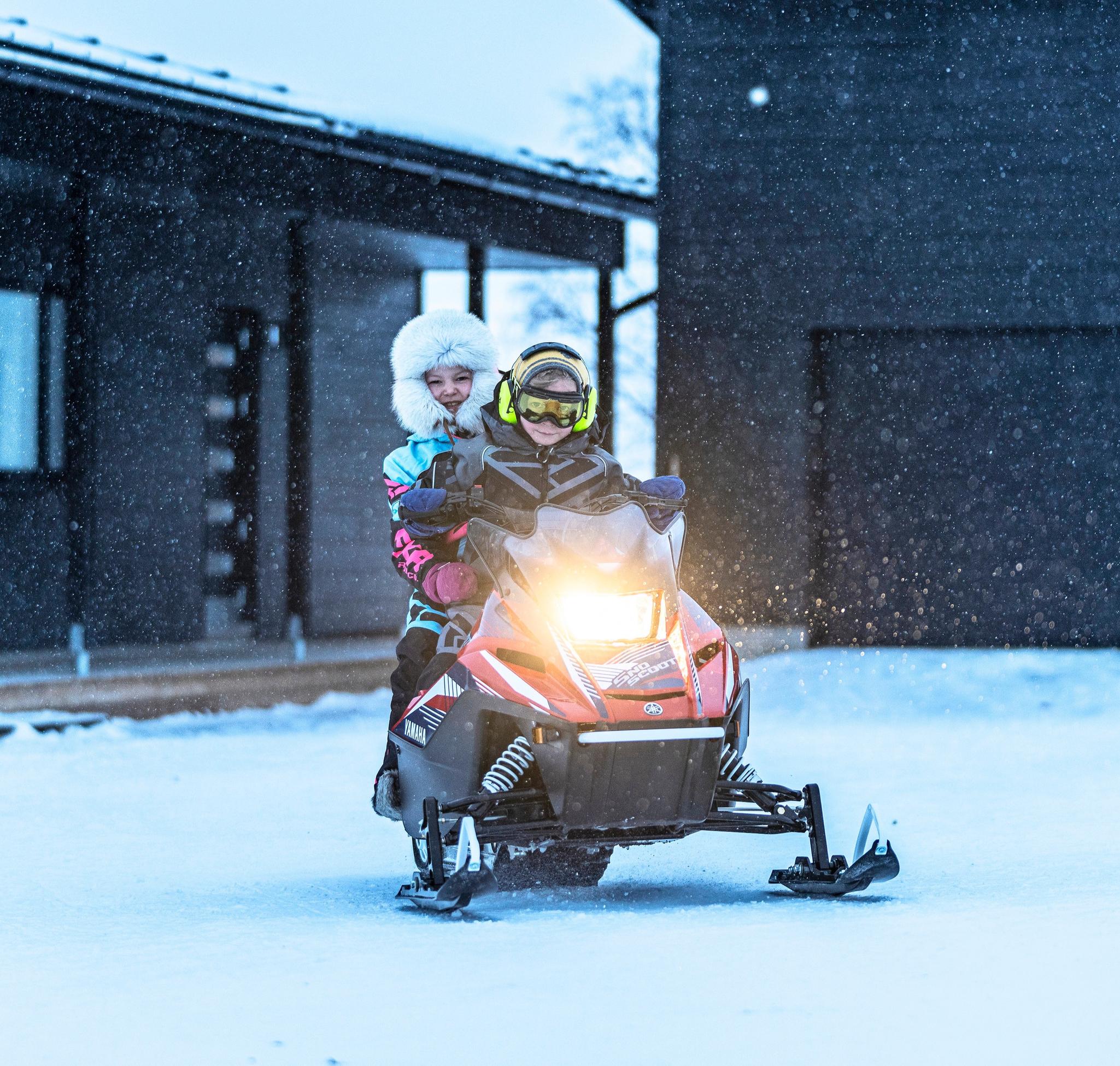
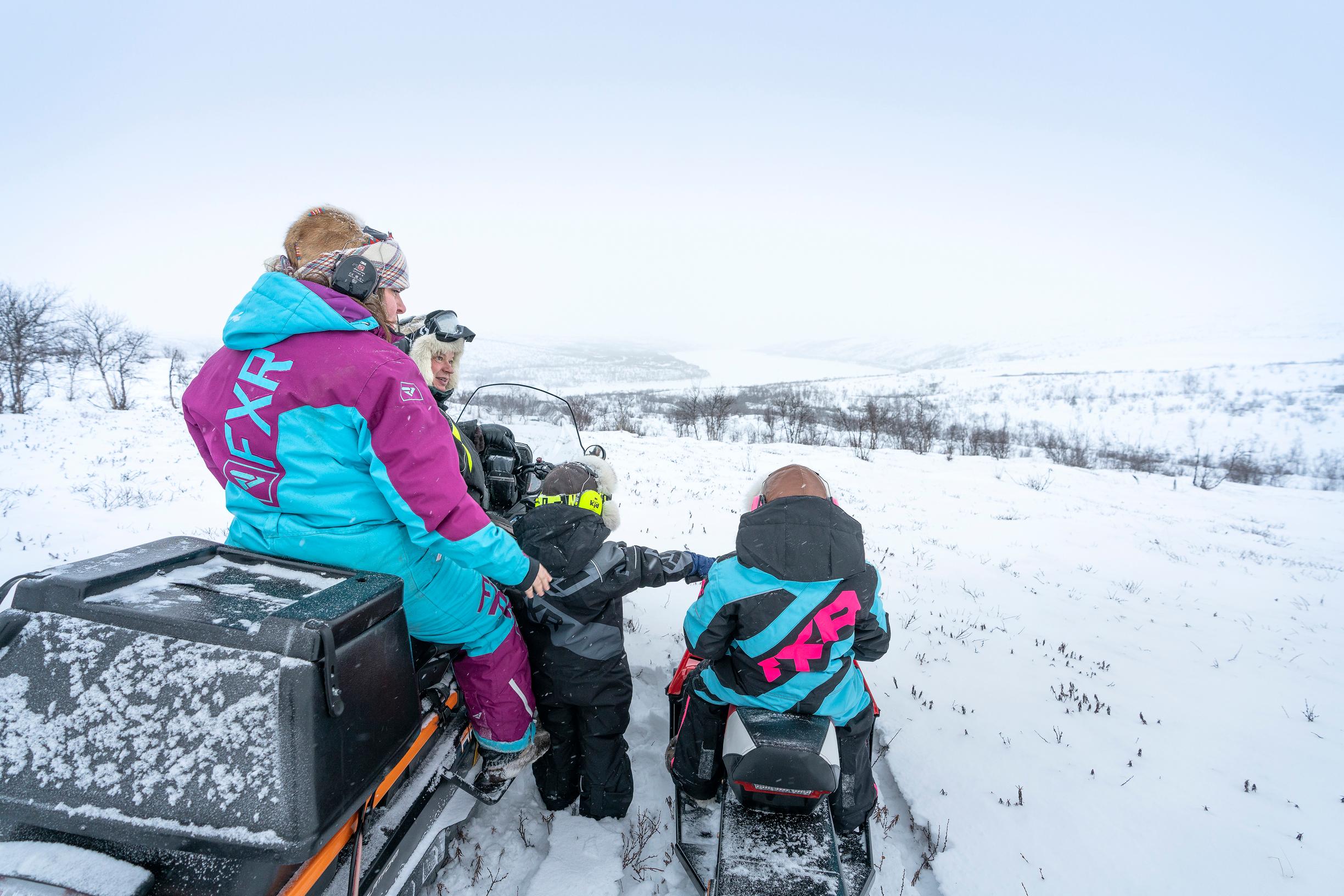
In the afternoon, Anna picks up the children from school and daycare. At home, the family cooks with reindeer or salmon they’ve produced themselves and then heads outside together. The kids practice driving their own snowmobile in the yard. The nearest friend lives half a mile away.
“It’s true that out here, in the middle of nature, it isn’t always easy to see friends. Parents have to be willing to drive and coordinate what the kids do,” Anna says.
“We still have strong ties to Utsjoki, where the kids used to be in daycare. Even yesterday we had lots of friends visit. You just have to make the effort.”
“The place is like a postcard of Sápmi’s nature. It’s incredible that there’s an almost untouched wilderness right next door.”
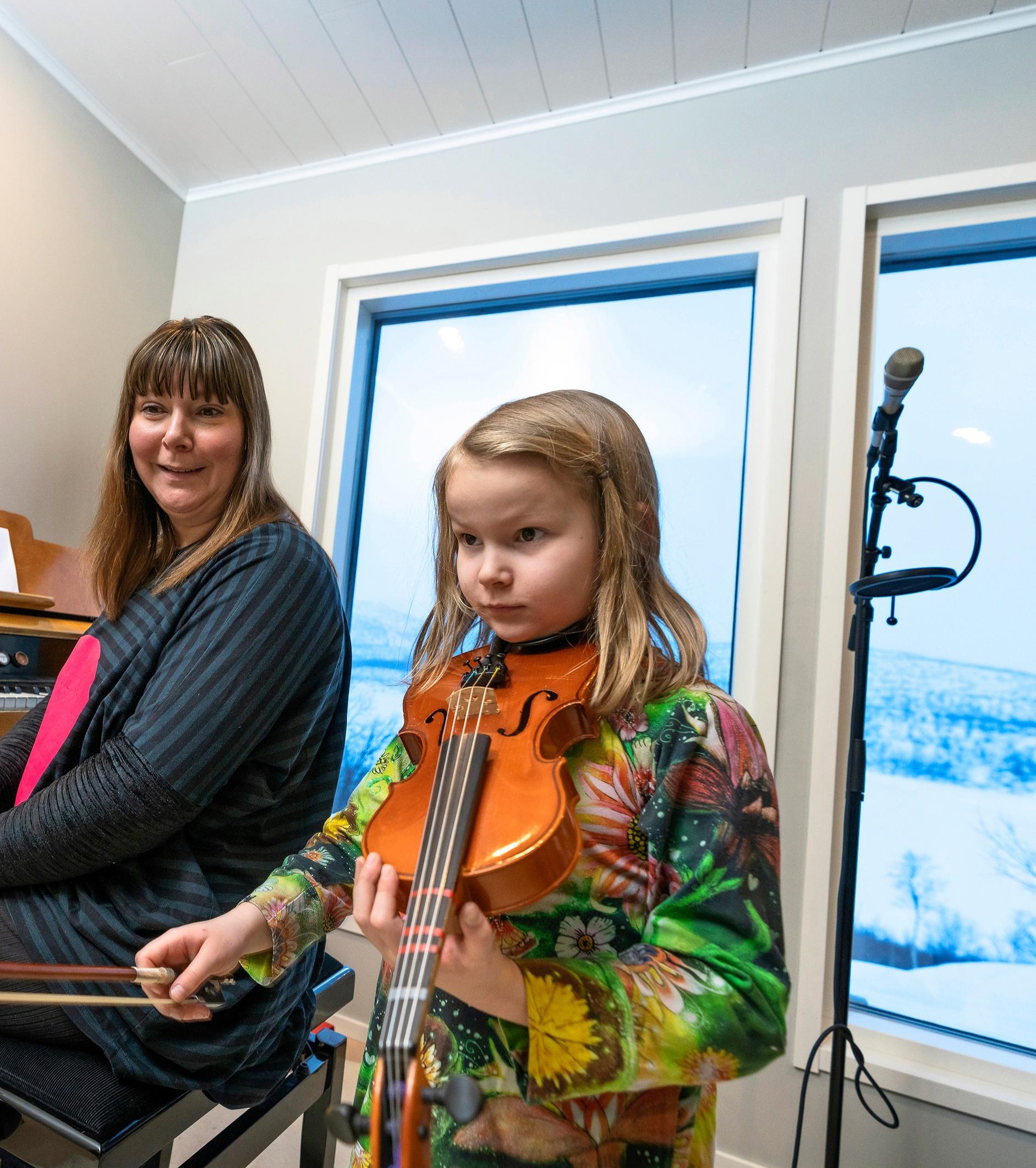
Living near the border was especially noticeable during the pandemic. The children’s clubs were able to continue despite it, but Anni-Siviä’s violin lessons wware on hold. Her music teacher is in Norway at the Tana culture school, and the border was only open for essential commuting. Border traffic affects the entire municipality.
“The biggest source of income for the municipality of Utsjoki is cross-border trade. When Norwegian customers can’t come here, our services start to decline as well. My husband’s reindeer-meat business also lost customers because people from the Norwegian side couldn’t come shopping,” Anna says.
“In the summer the mood was positive because there were so many domestic travelers here. At New Year, Norway tightened its border even further. It made me realize how dependent we are on it.”

There were also some upsides to the exceptional situation. When Anna wasn’t touring on weekends, she had more time for family. During the week, she started doctoral studies at the Sibelius Academy remotely. It felt like a fantastic opportunity, because under normal circumstances in-person studies would require a huge amount of travel.
“It was wonderful up here. During the week I taught remotely for the Sámi musihkkaakademiija, but every weekend we were up in the fells with the reindeer, all of us together. Why would I ever want to schedule anything for spring weekends again?” Anna says with a laugh.
In a reindeer-herding family, the season sets the rhythm of everyday life. When the year turns toward summer, the community’s daily life centers on salmon fishing. That’s also when travelers appear in the wilderness scenery.
As evening falls, Anna and Asko sit on the sofa to watch Taivaan tulia. It’s the couple’s time together.
“Sámi culture is very family-centered. We don’t think in terms of a couple over here and the kids over there—we’re together. I love sitting on the couch and knitting. Pure hygge!”