A house that sat empty for 35 years stopped Salla in her tracks: “I was only thinking about how to make it mine”
Salla and her family gave the abandoned farmhouse a second chance. At Christmas, aesthetics come first, just as they do on every other day of the year. “If you get your hands on a 175‑year‑old house, don’t ruin it” is Salla’s guiding principle.
It’s December in the late 1980s. The teenage Salla Kaunisto quickens her pace as she walks past the abandoned farmstead on the village’s main street. The big house’s dark windows seem to follow her. Salla’s imagination races. What secrets might the house be hiding?
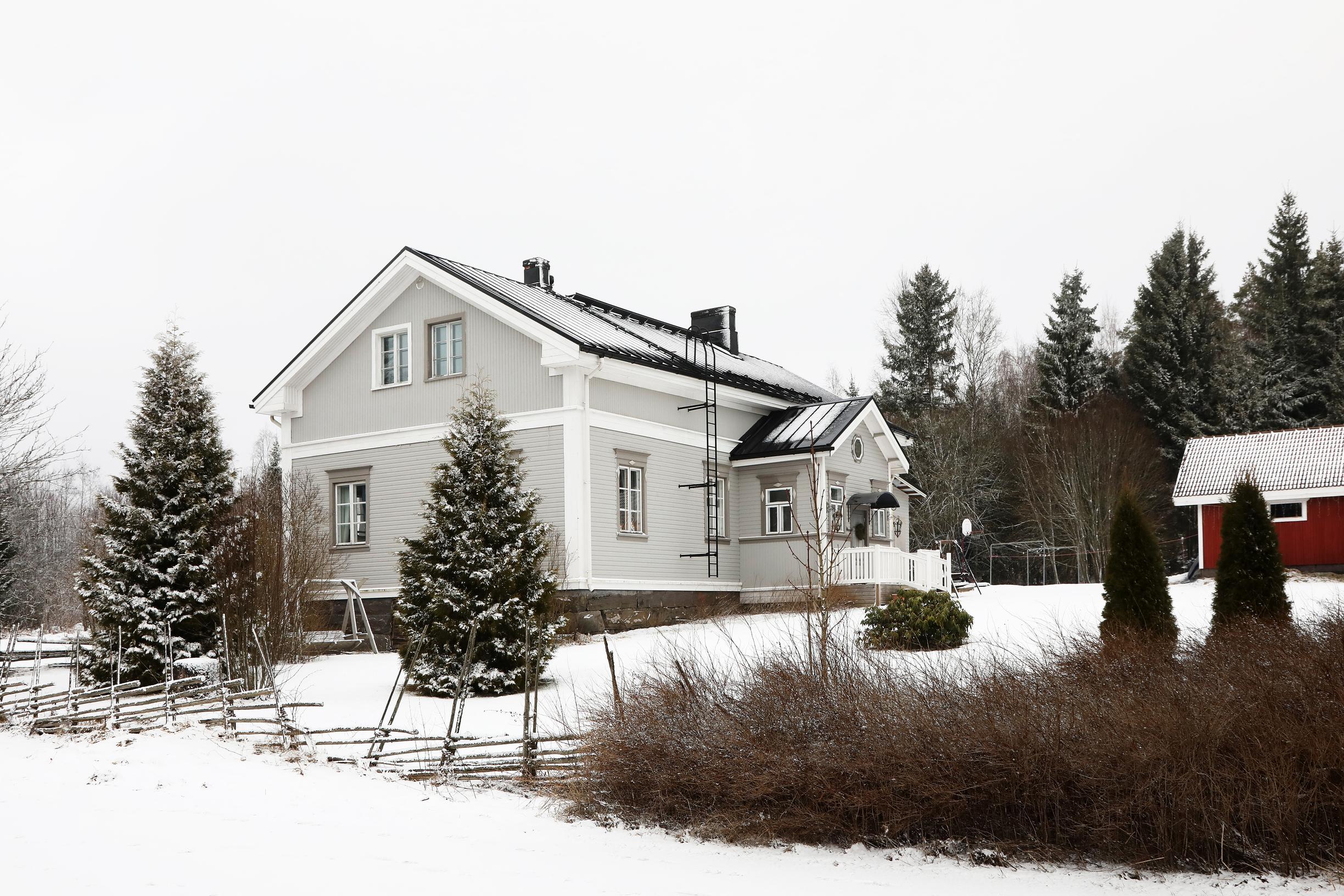
Home: The Yli‑Parma house in Kokemäki, built in 1850: 8 rooms + kitchen + entrance hall + WC + bathroom; 350 m² (3,770 square feet).
Living here: Salla Kaunisto with her family and the dogs Deyna and Elli, who moved to Finland from Greece.
Follow on social media: @old_house_design
Forty years later, the kitchen’s wood‑burning range spreads its cozy warmth, and the home is getting ready for Christmas. That teenage girl has grown into a woman who, together with her family, saved that very farmhouse from final ruin.

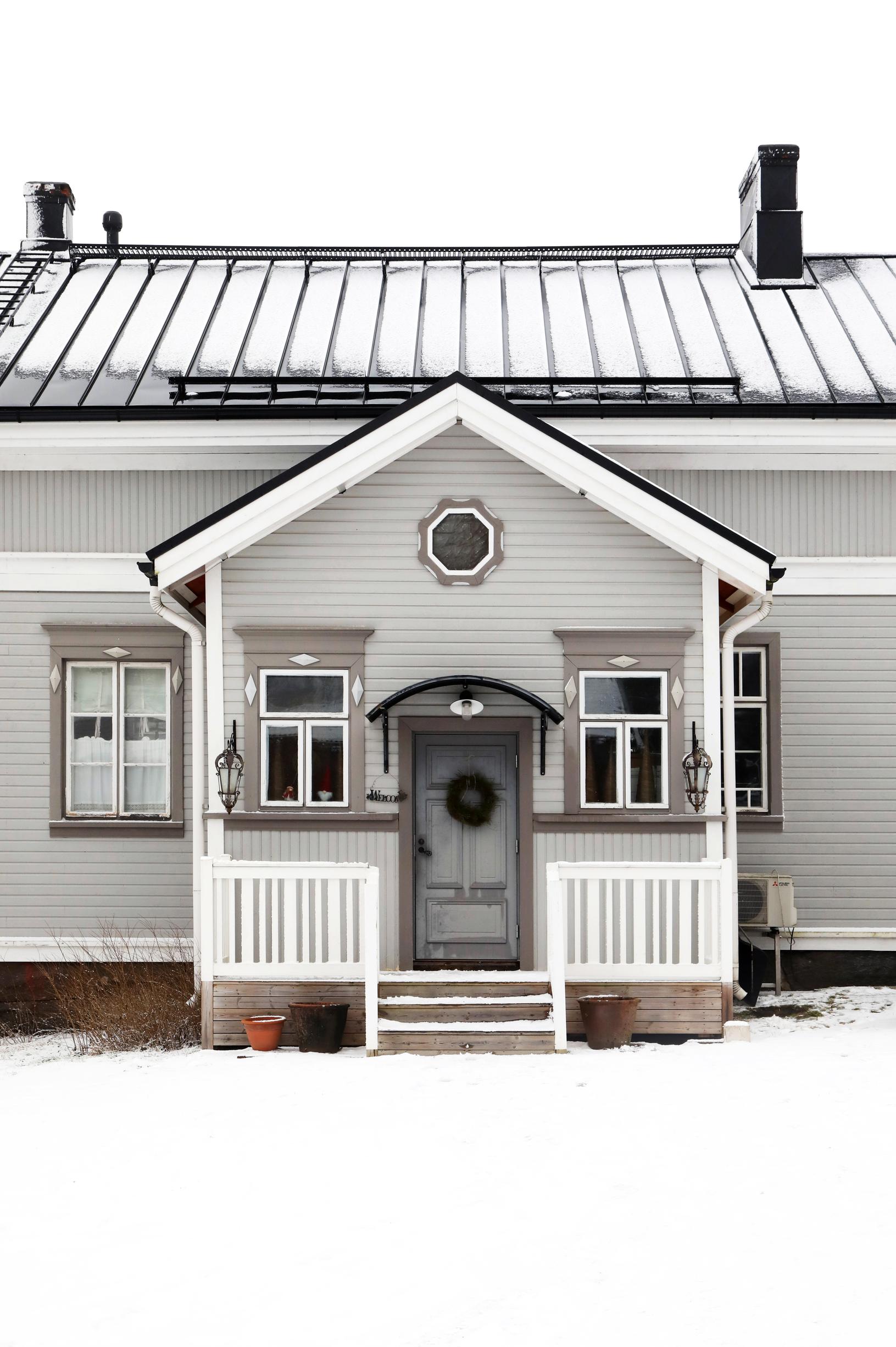

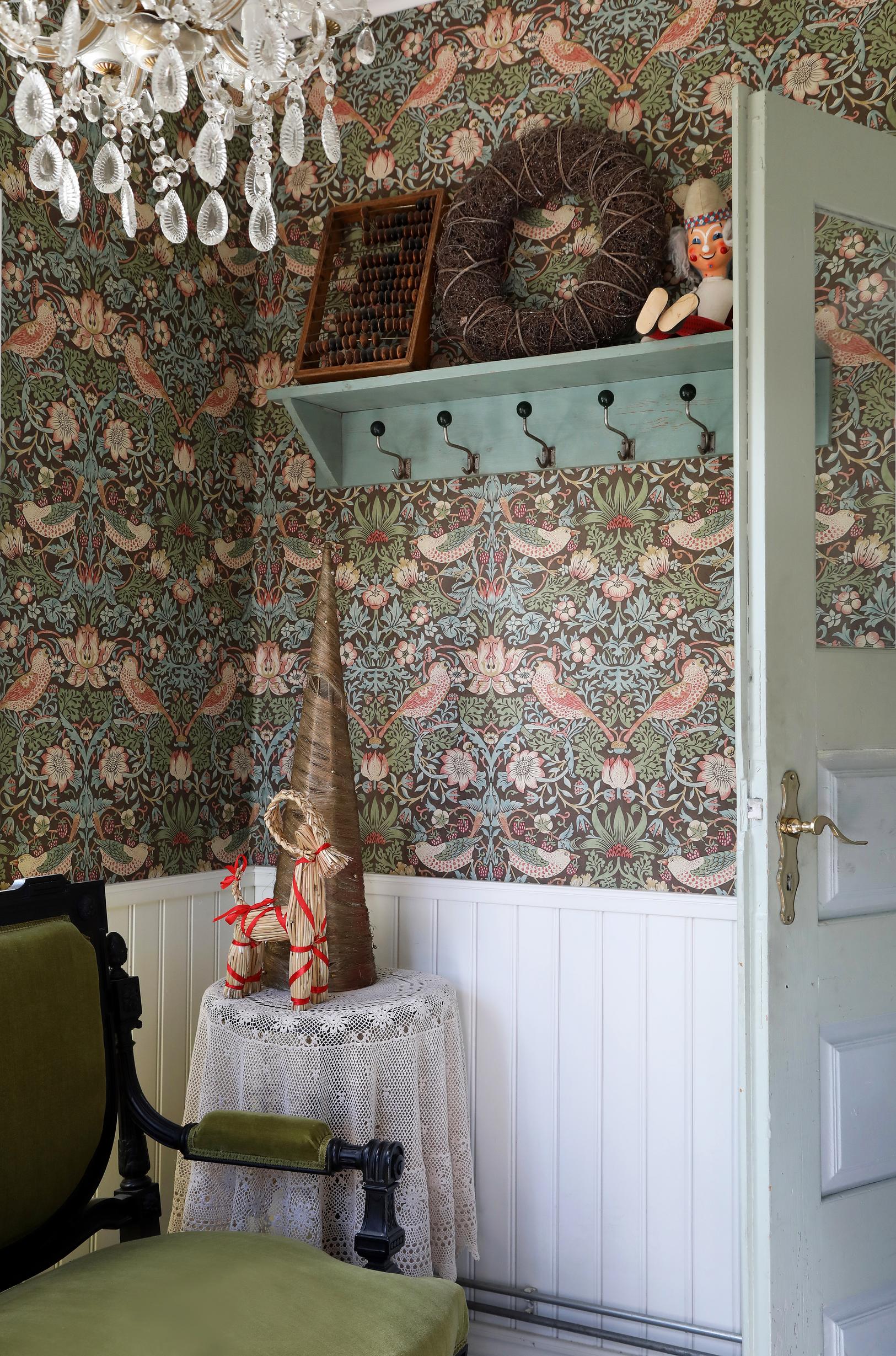

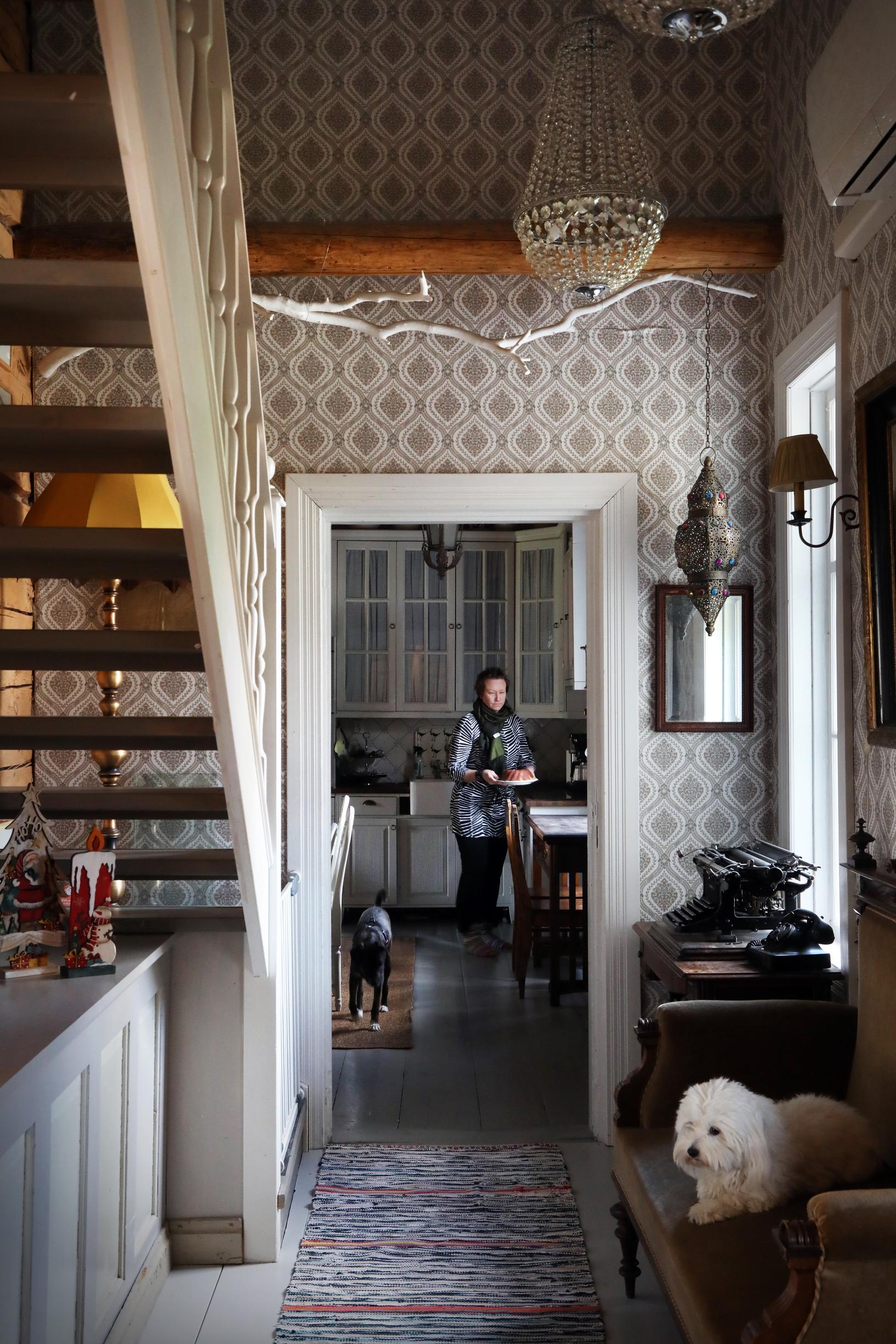

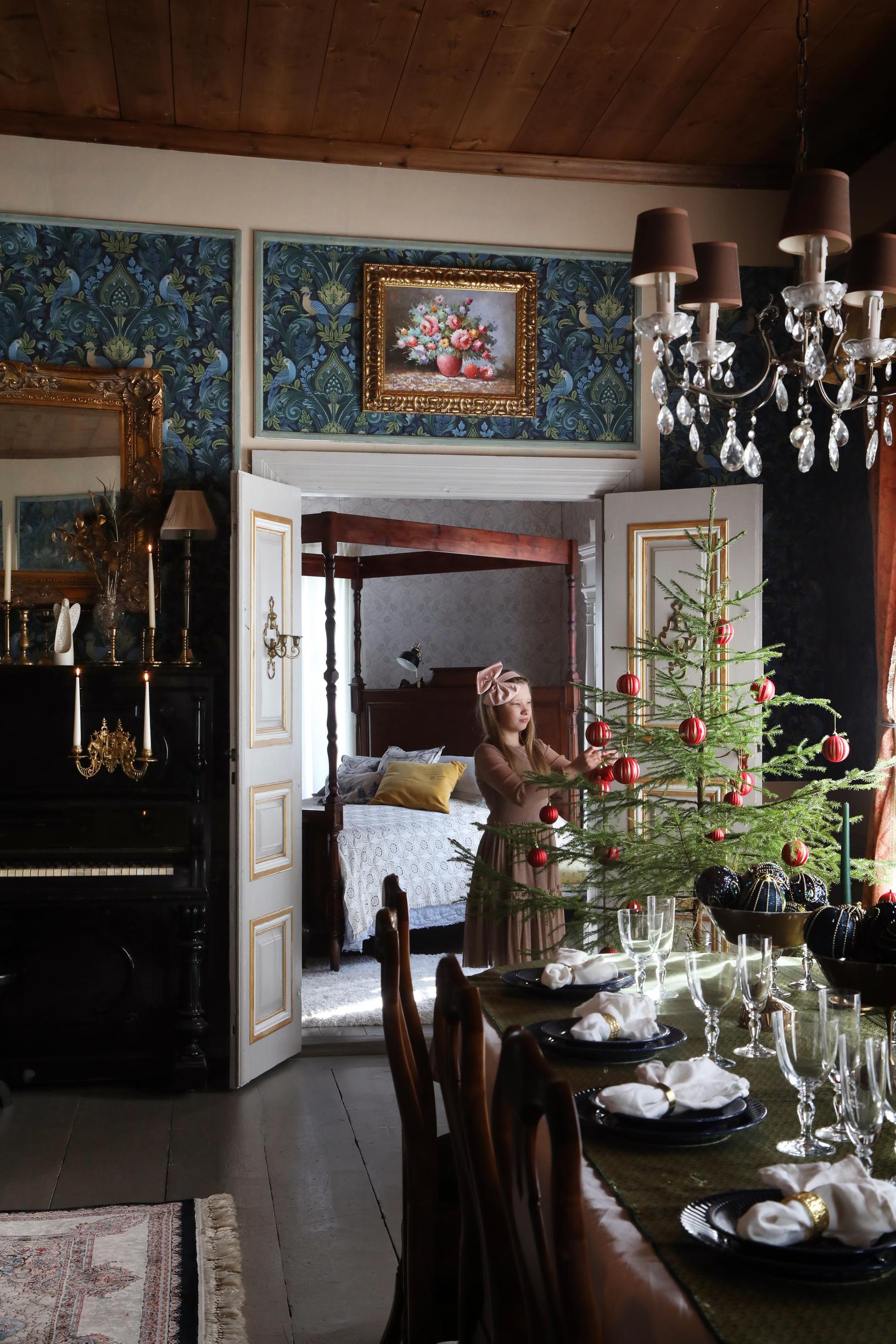
“Old houses and interior design have been my passion for as long as I can remember. Buying a house wasn’t on the agenda in 2003, but the urge to explore this one—a place I’d known for years—was strong. When my interior design studies covered building styles from different eras, I dared to approach the owner. He grabbed a massive iron key from a hook and set off to show me around,” Salla recalls.
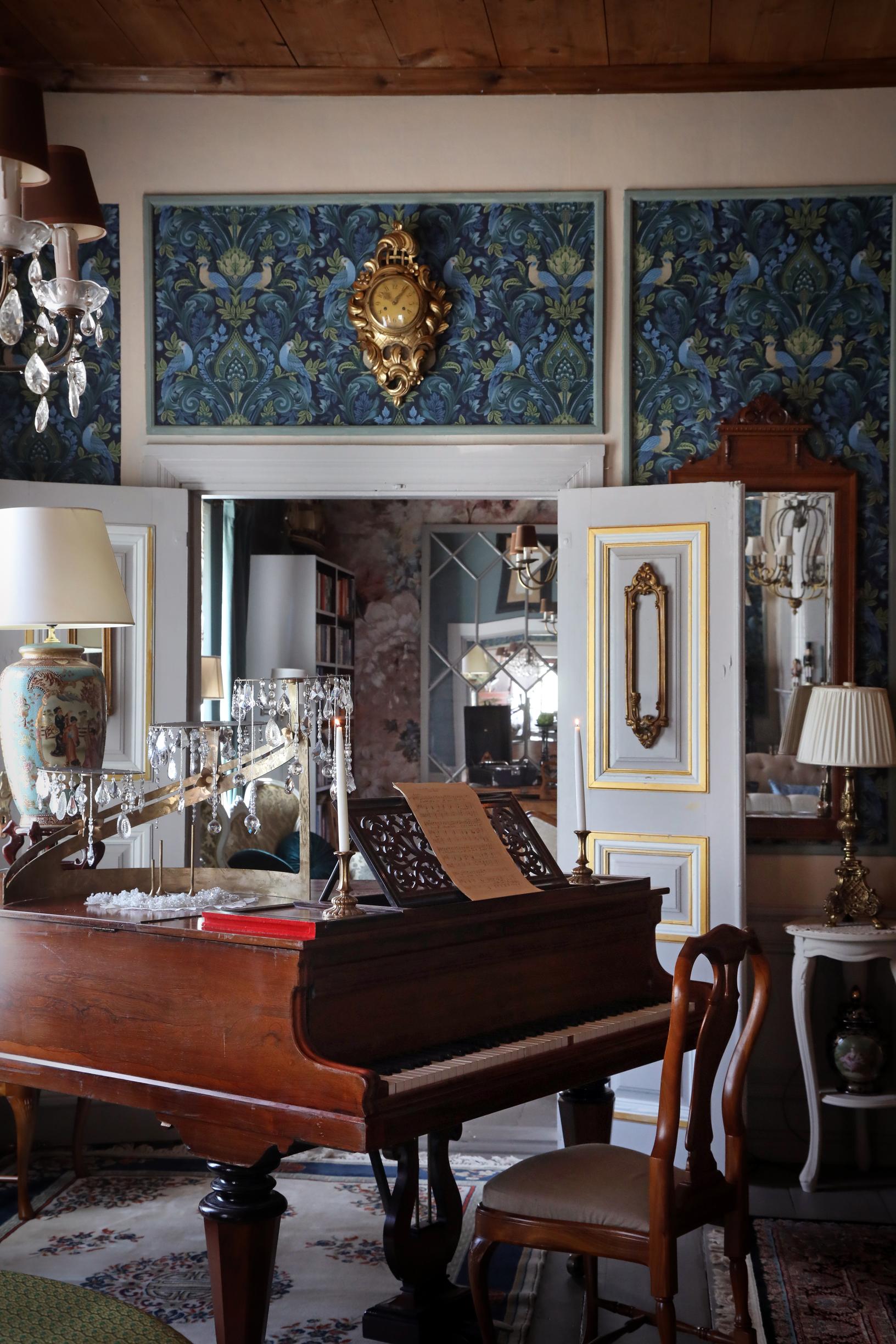
The big farmhouse had stood unoccupied for 35 years, so stepping inside was nerve‑racking. The excitement deflated a bit when the first thing Salla saw was a kitchen done up in ’60s style. But then the owner opened the salon’s double doors—and there was no going back.

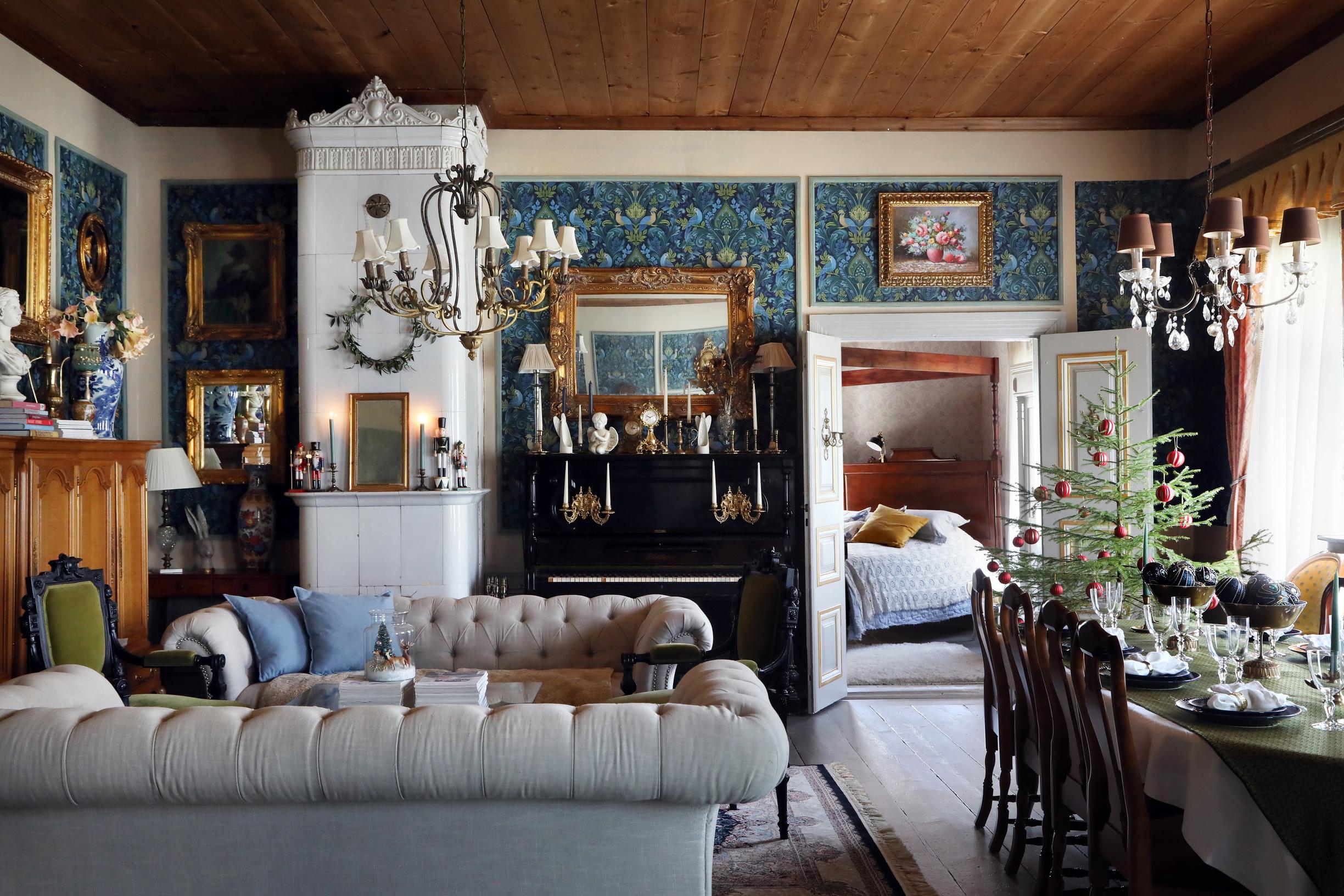

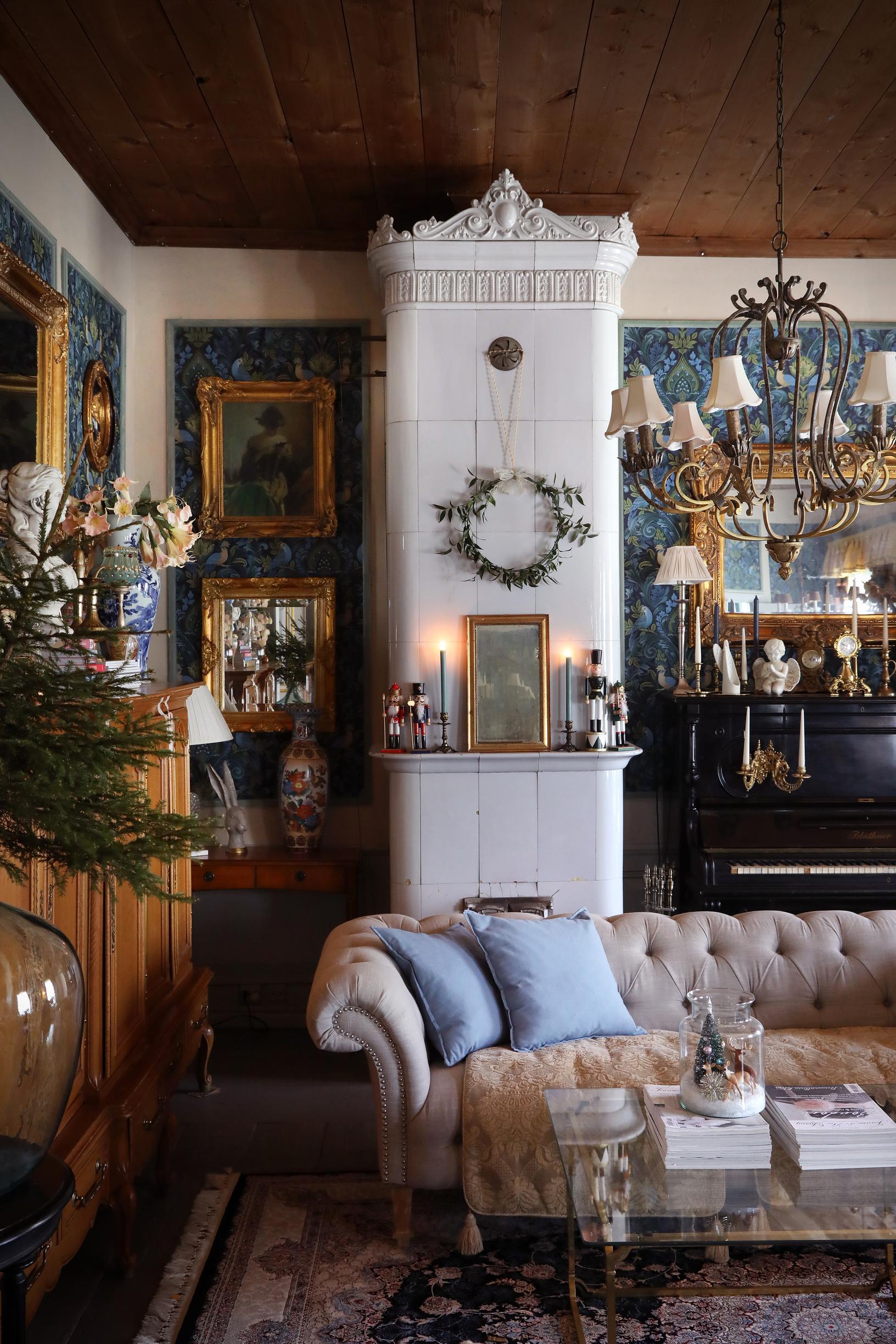
”“At that moment the salon was filled with old apothecary fittings in storage, but I just stood in the middle of the floor, marveling and breathing.””

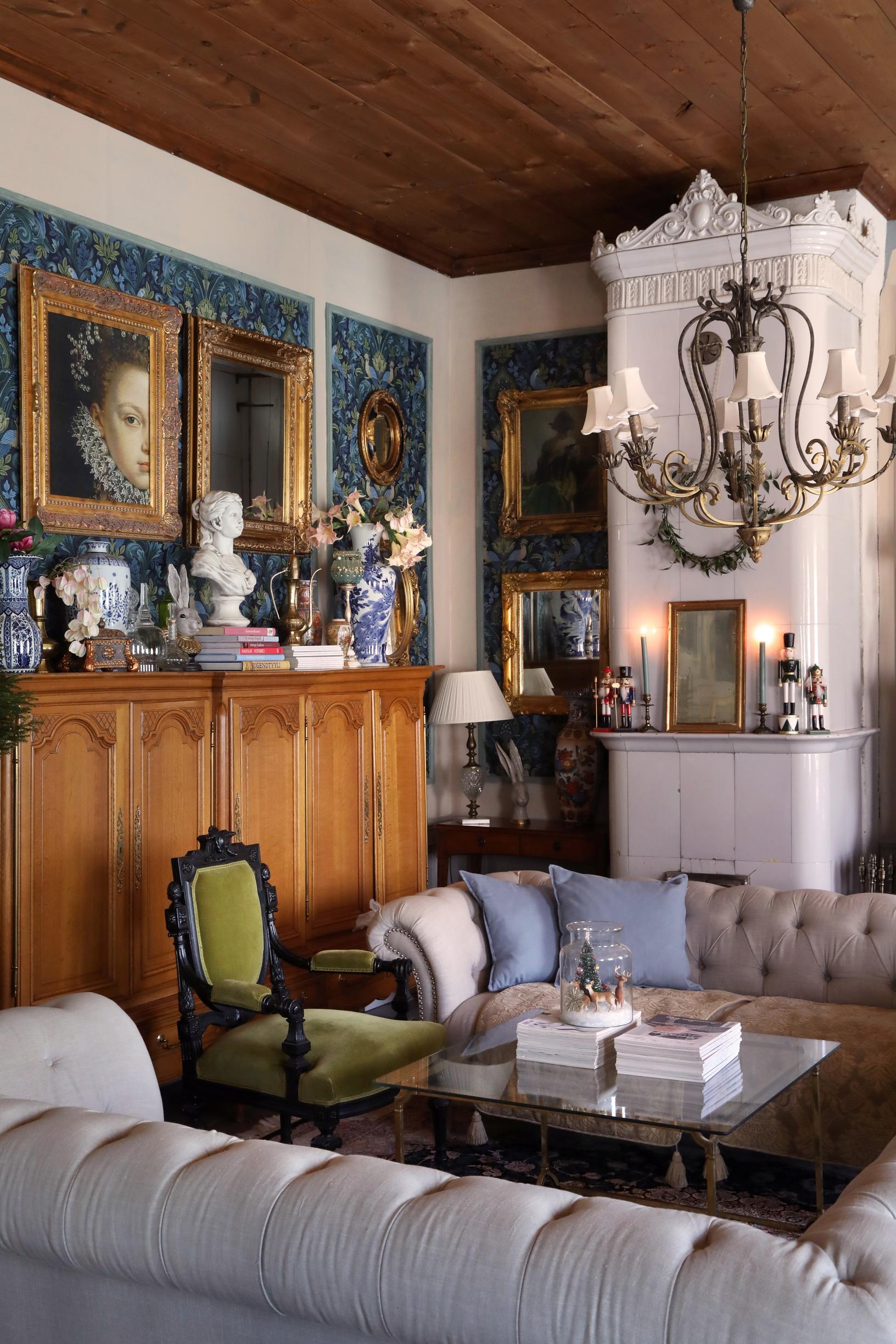


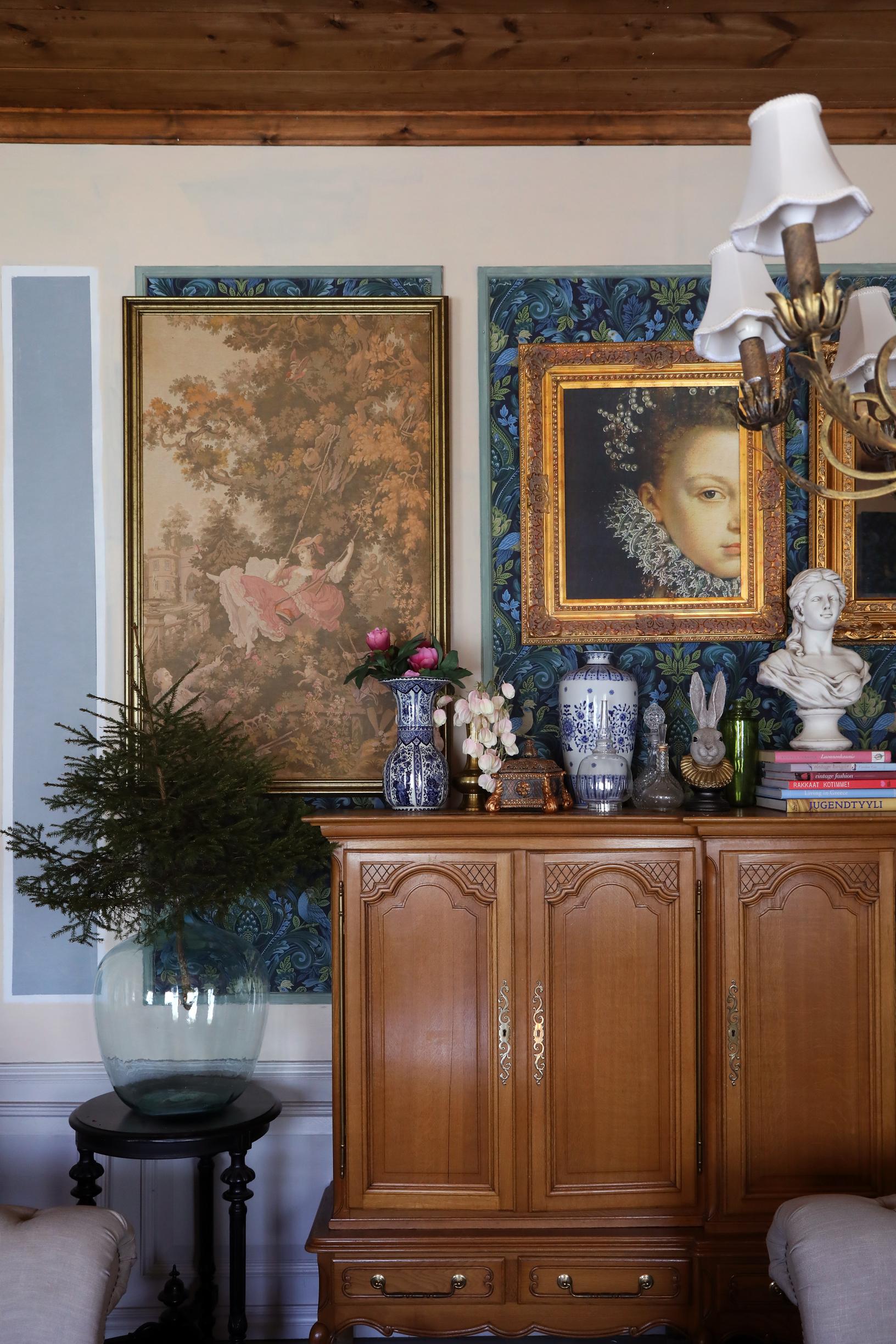
“The size and height of the salon completely swept me away. The owner told me more about the house afterward, but I didn’t hear a thing. I was only thinking about how to make it mine. I went back the same evening to make an offer,” Salla says.
”When the kids come home from school, they no longer bat an eye even if the house has changed its look.”
During the years‑long renovation the house has literally been gone through from floor to ceiling. During the salon’s floor remodel, attention was drawn to odd strike marks visible on the planks. According to a story Salla heard, they came from the spurs on the boots of soldiers who lodged in the house during the war years while they danced.

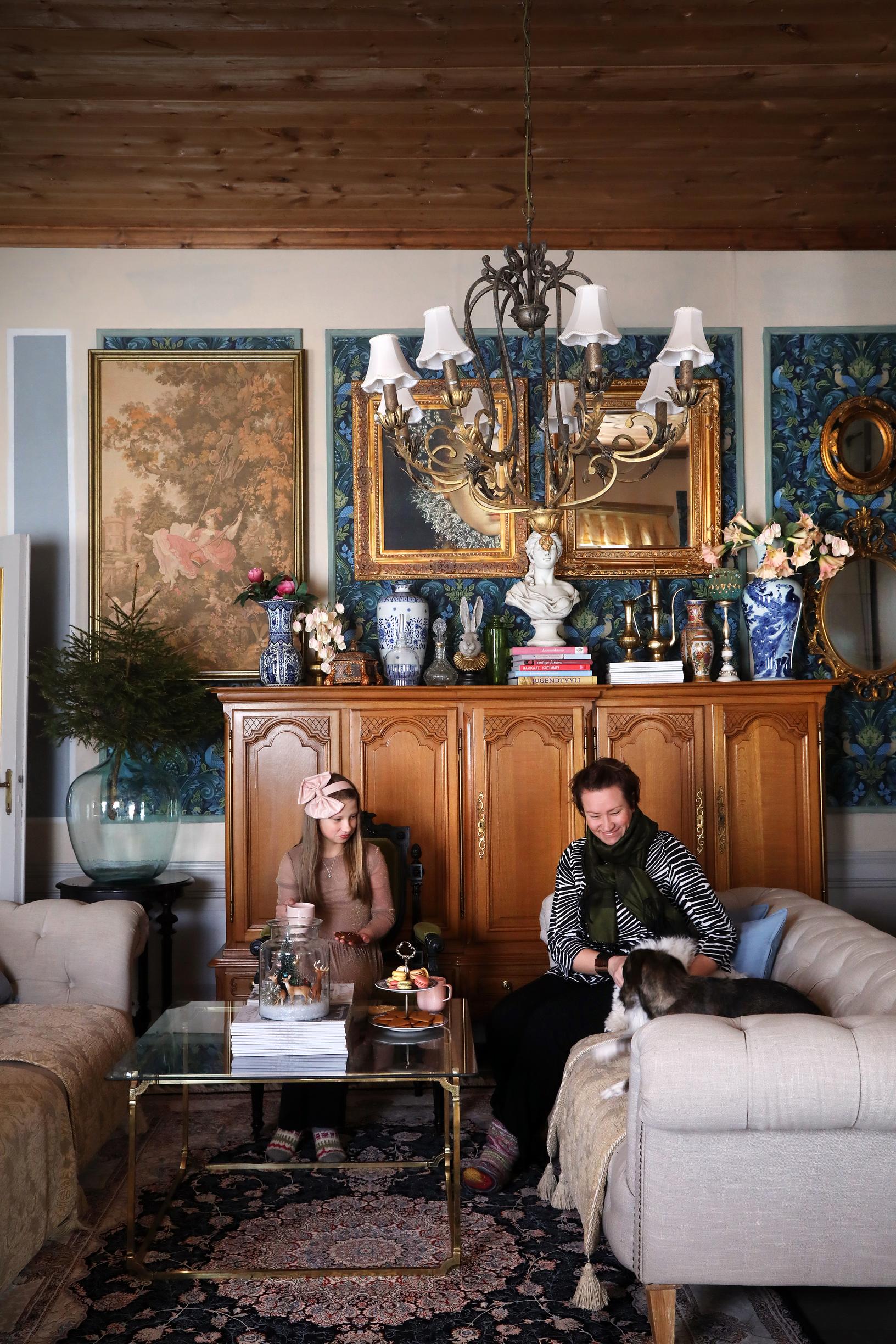

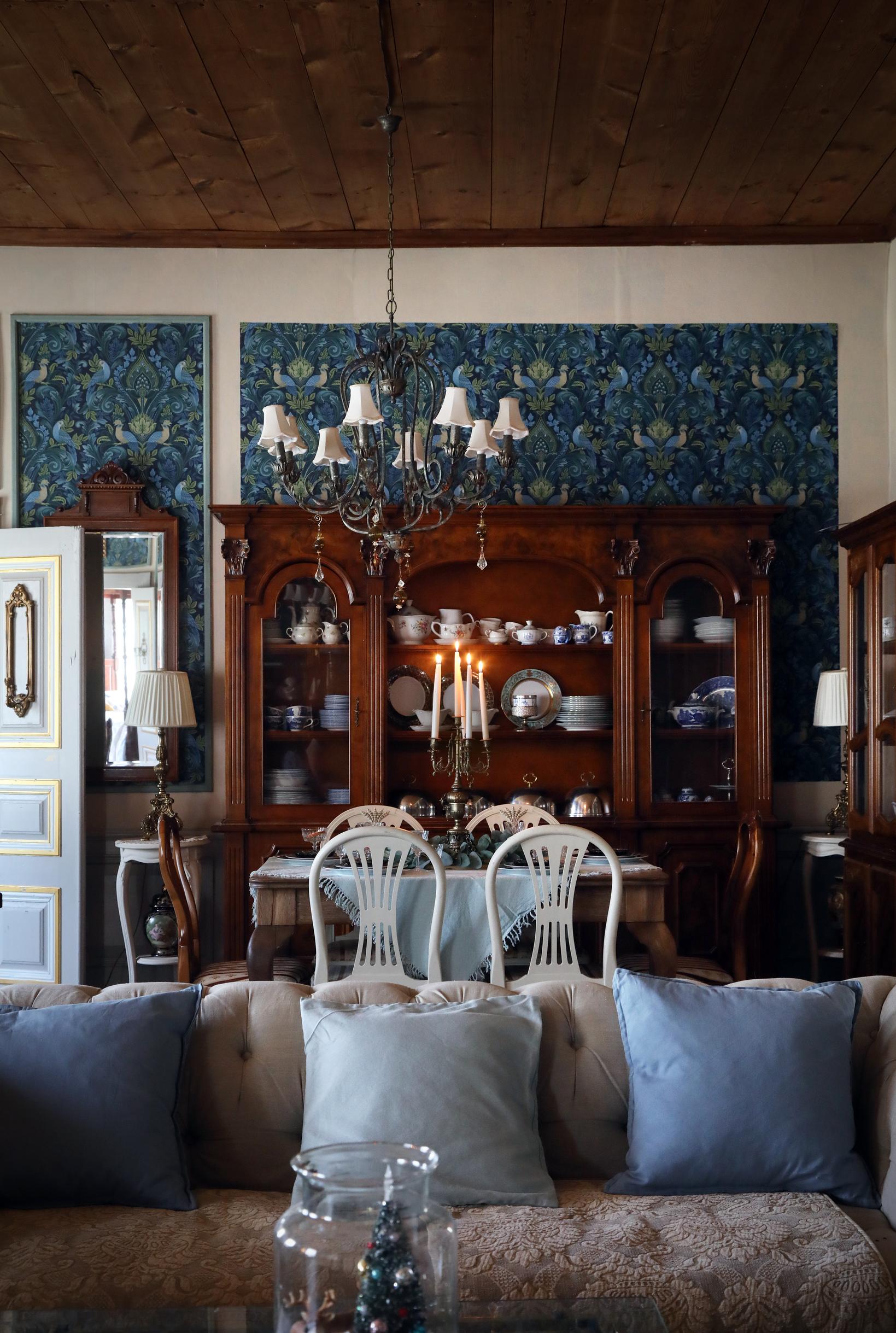



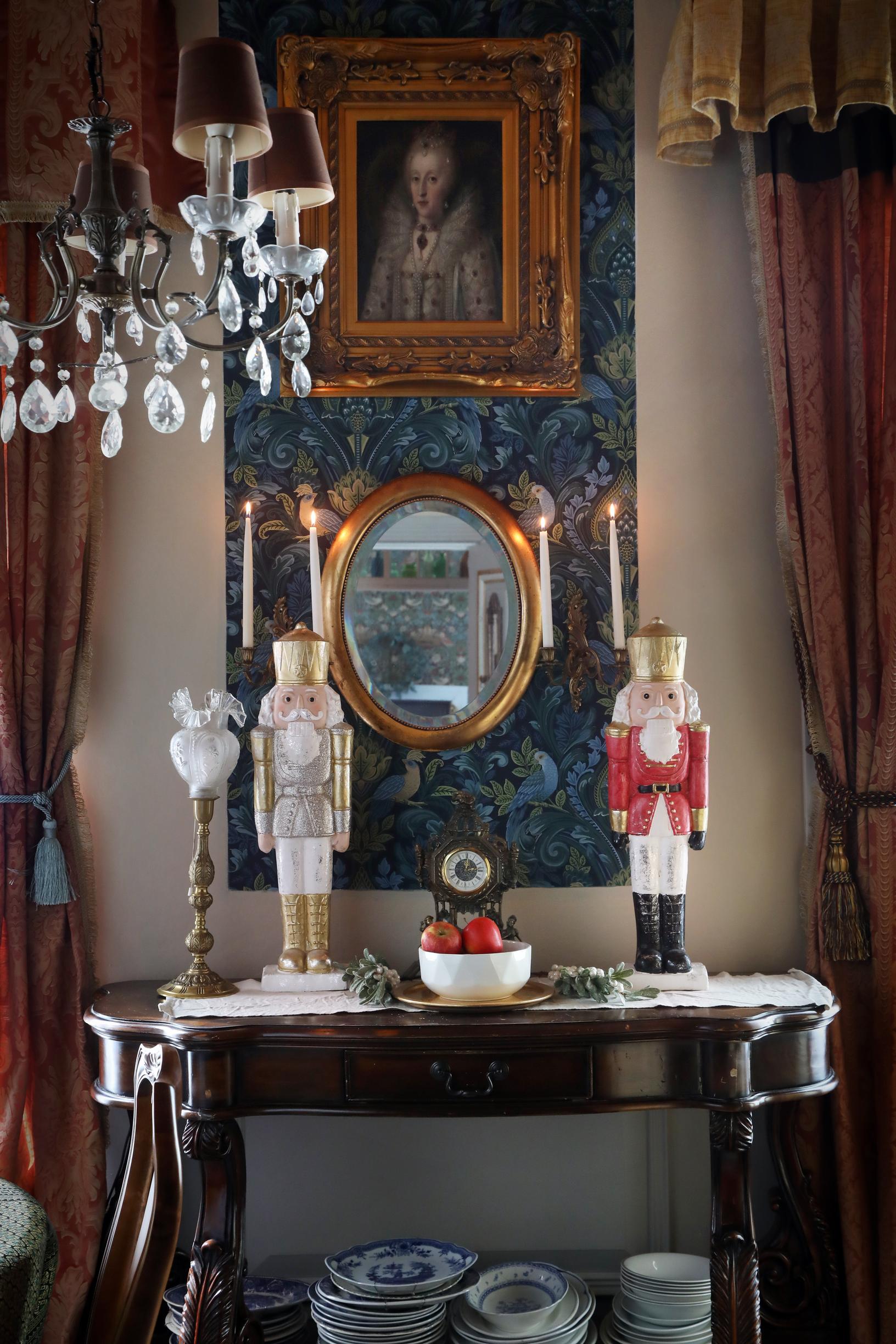
“One guiding principle is important to me: if you get your hands on a 175‑year‑old house, don’t ruin it. That’s why we’ve tried to choose only breathable materials here. The exposed log walls haven’t been painted either. That doesn’t mean the surfaces haven’t been renewed many times. I’m a restless decorator, always juggling a thousand things. Furniture is in constant motion at our place. When the kids come home from school, they no longer bat an eye even if the house has changed its look over the course of the day,” Salla says with a laugh.



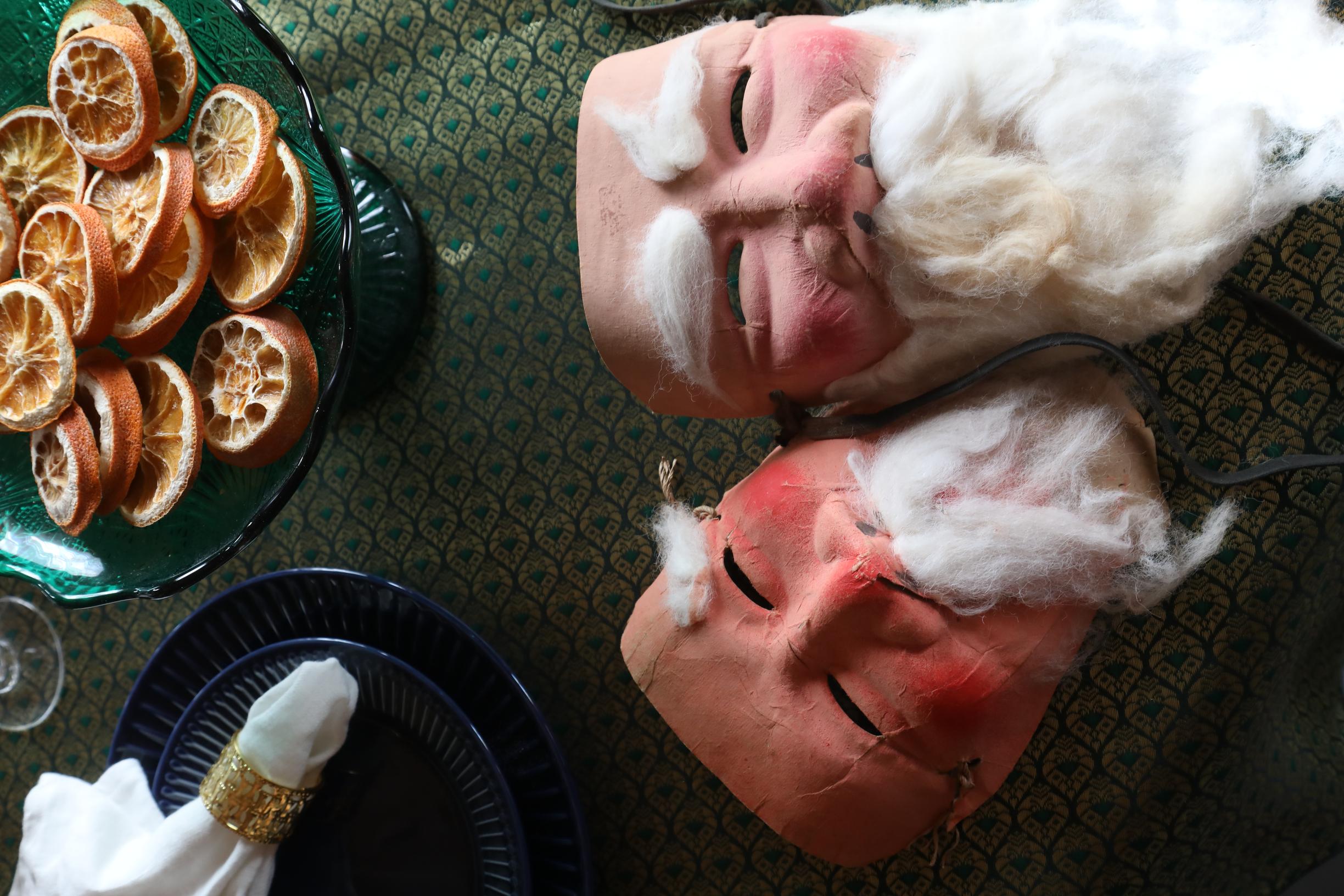

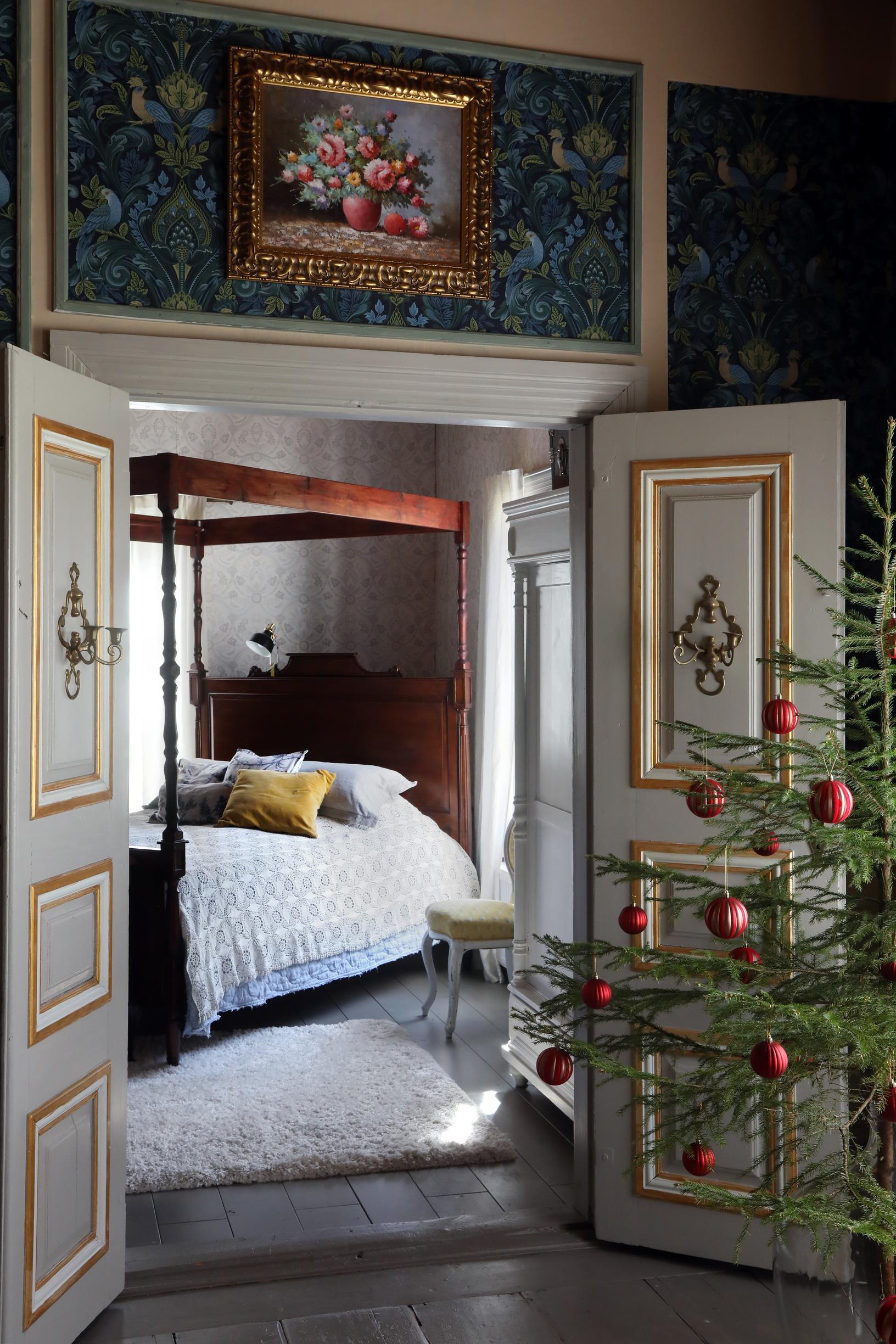
Salla has a knack for spotting beauty even in cast‑offs. She brings the same philosophy to Christmas.
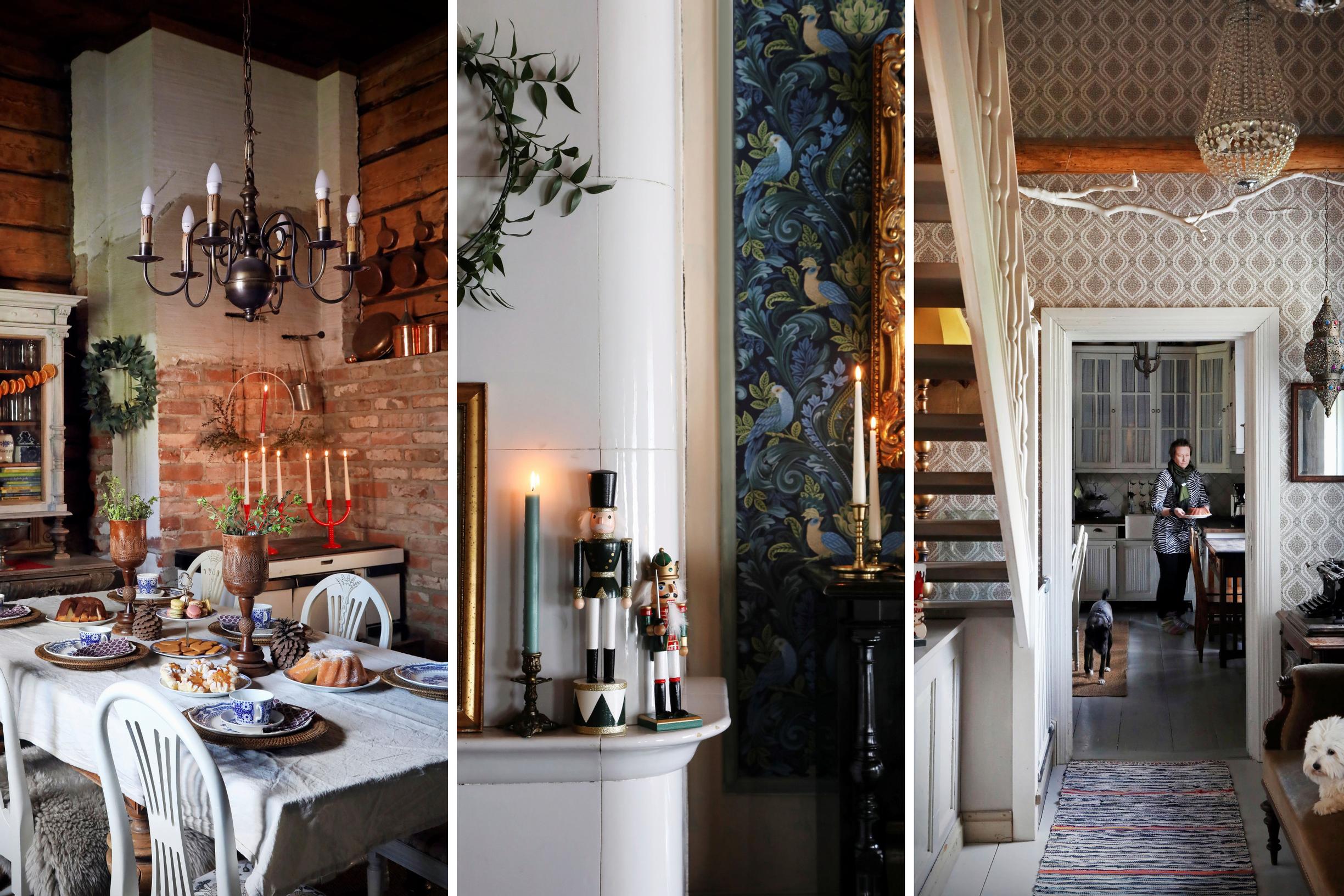
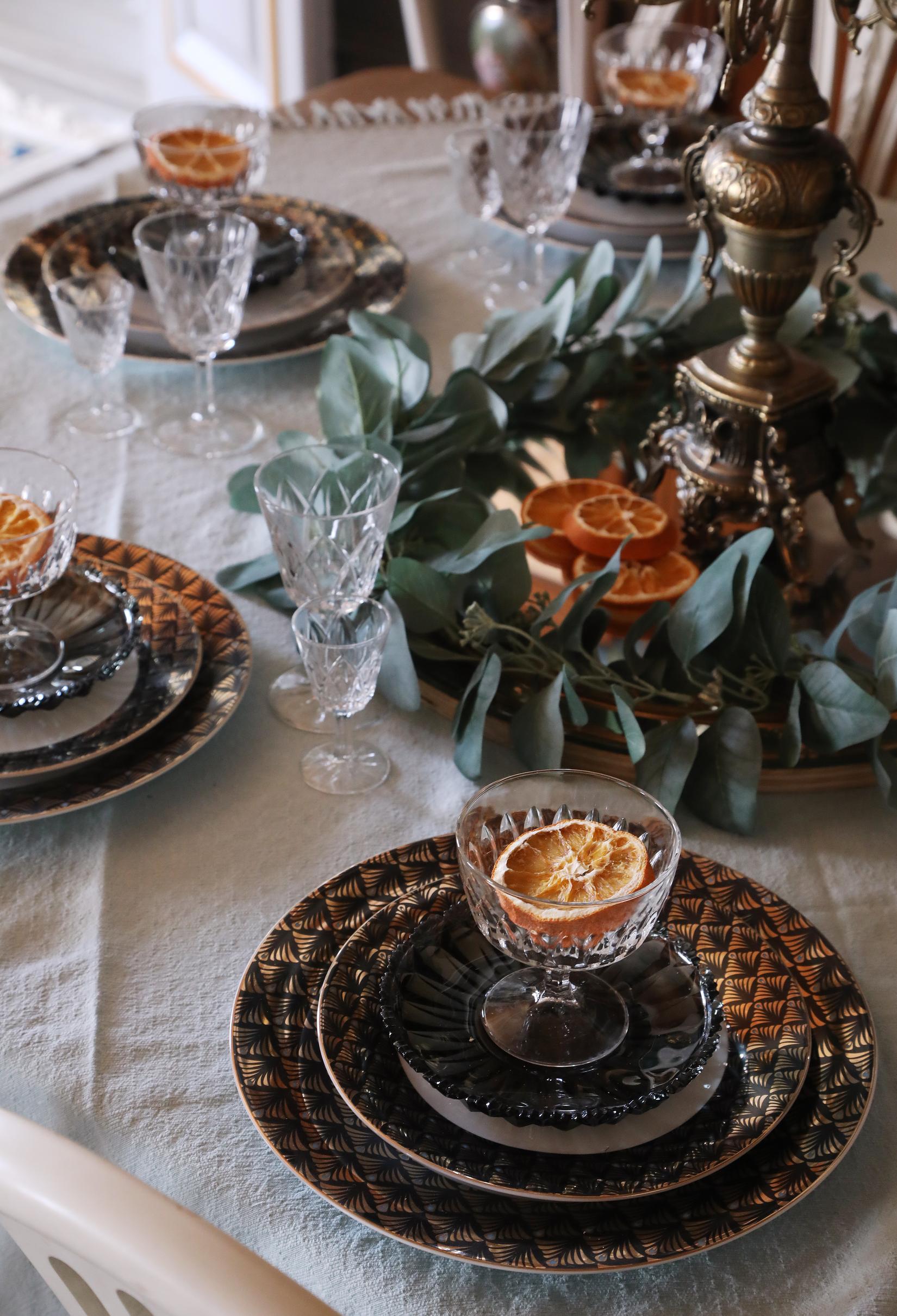
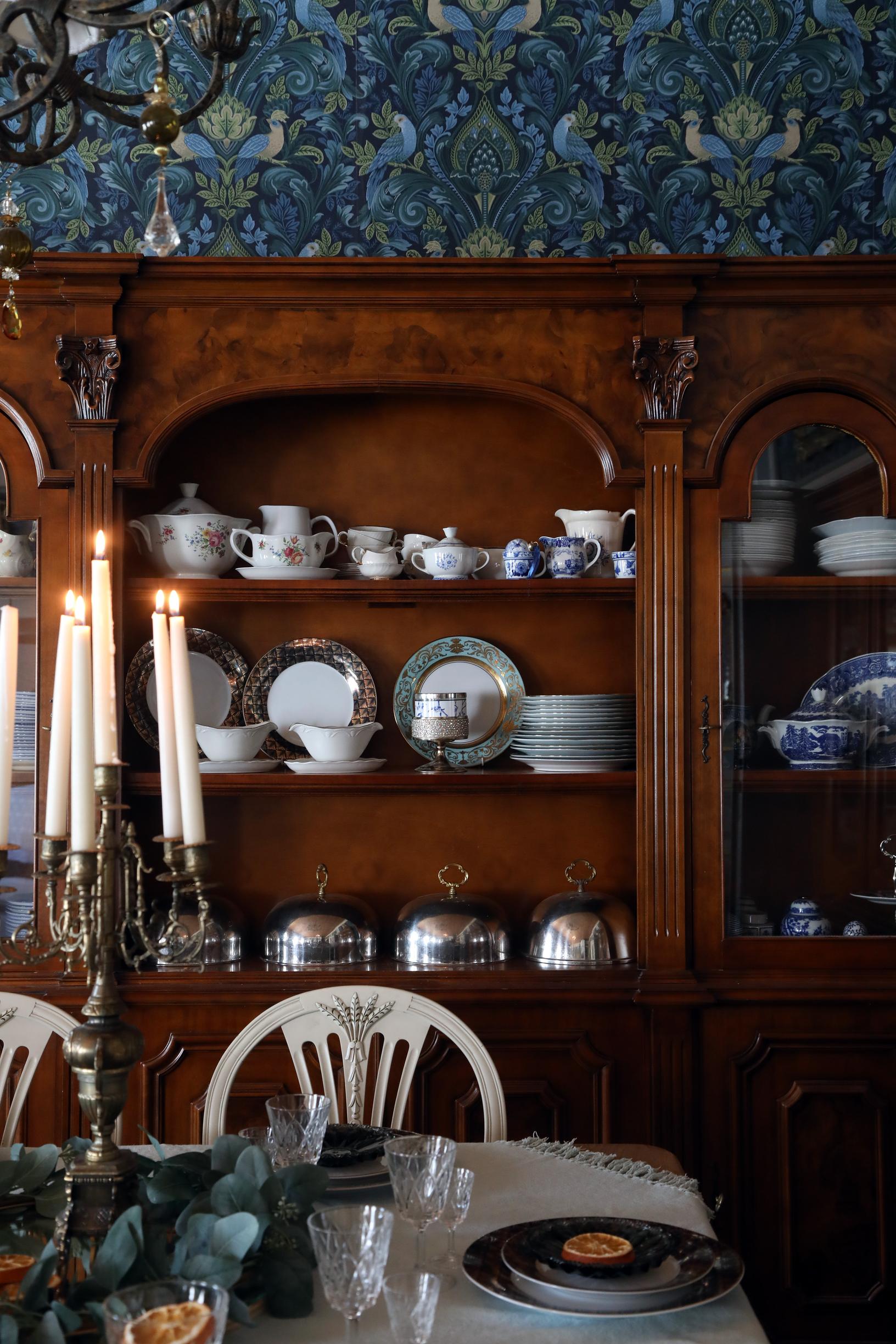
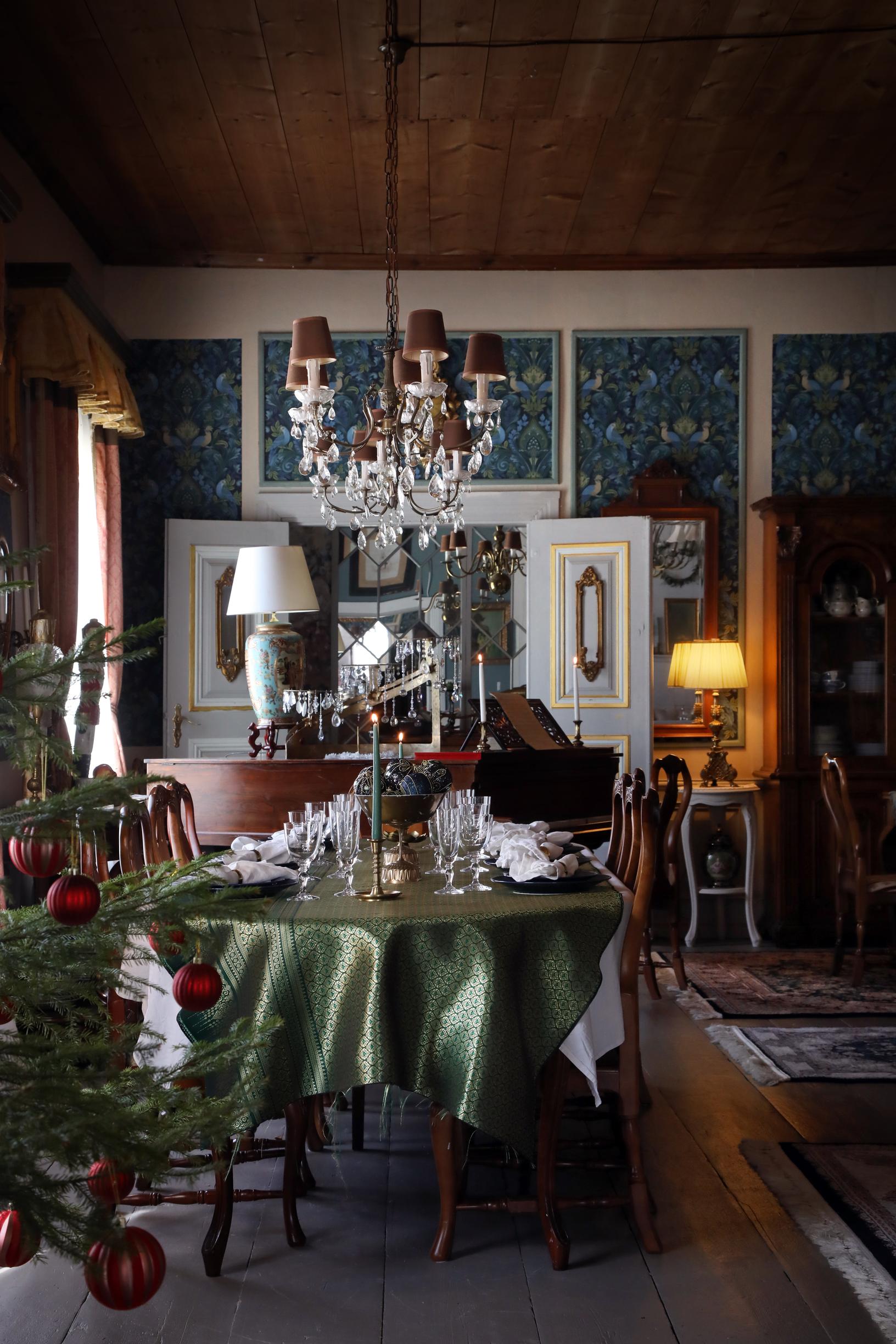
“Aesthetics come first here. On most Christmases there are around twenty of us at the table. That’s plenty to prepare, so we lighten the workload by buying some things—like traditional casseroles—ready‑made. I’d rather focus on presentation, pulling out vintage Arabia dishes, grand ham platters, and cloth napkins. A beautifully set meal tastes better to everyone,” Salla says.

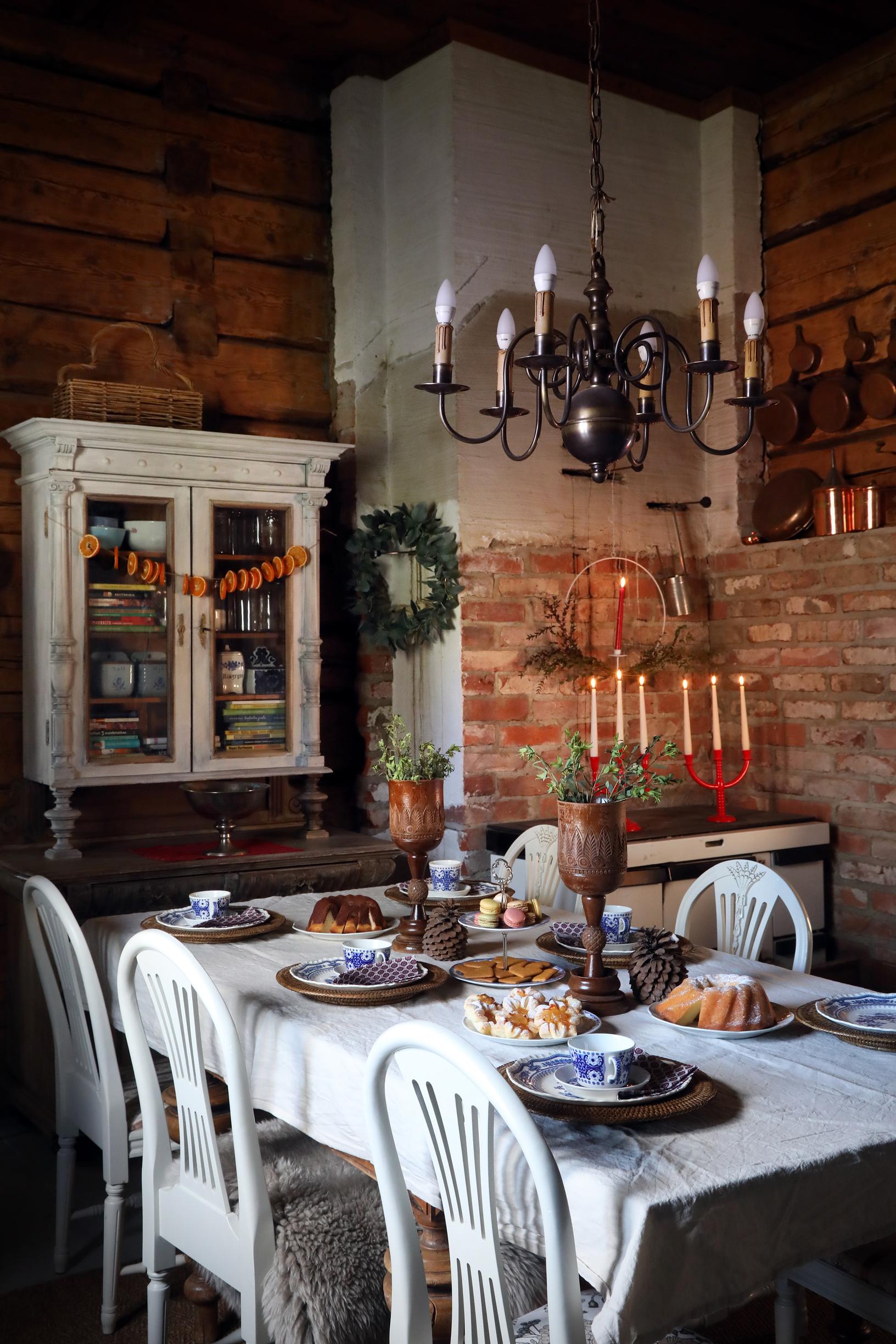

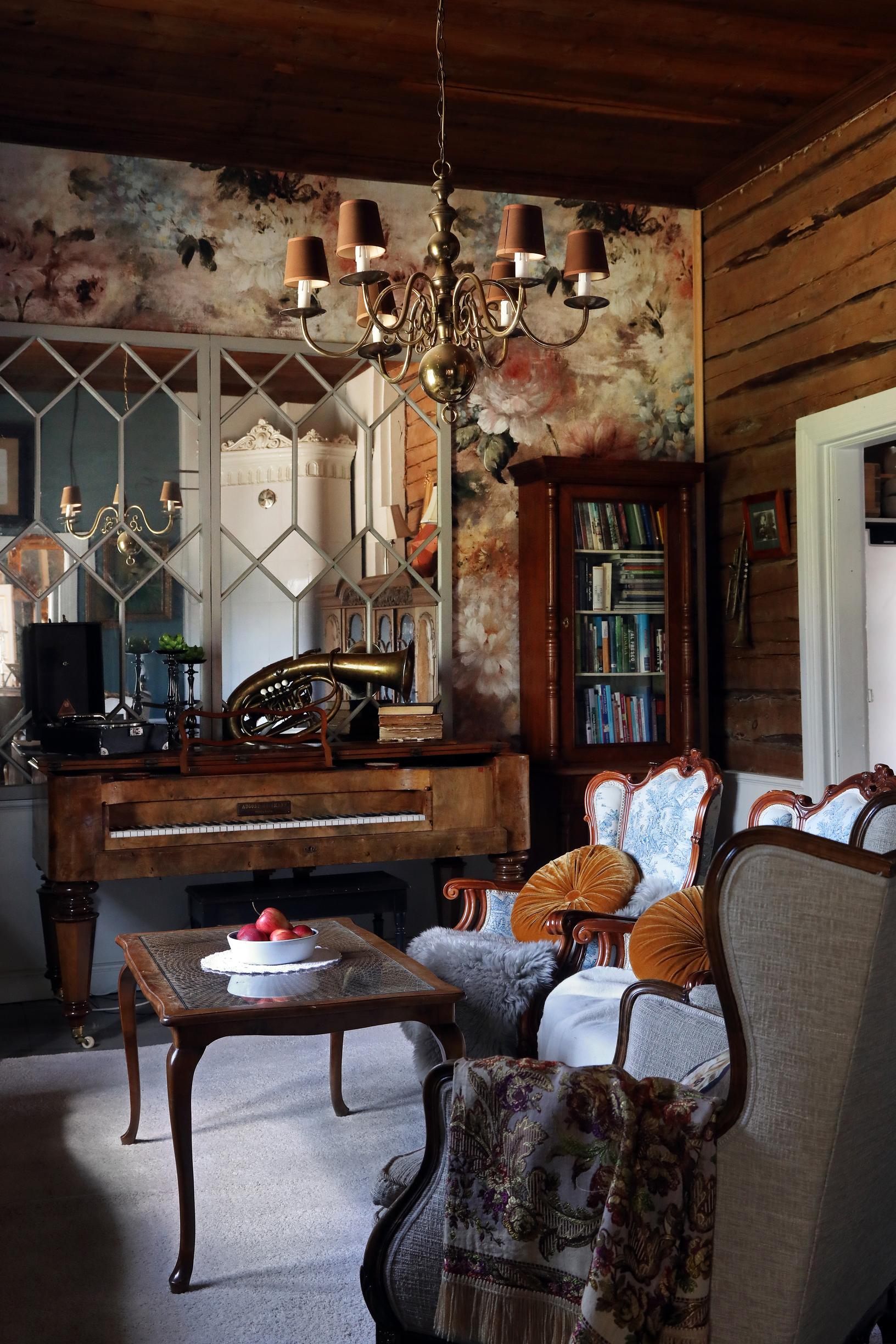

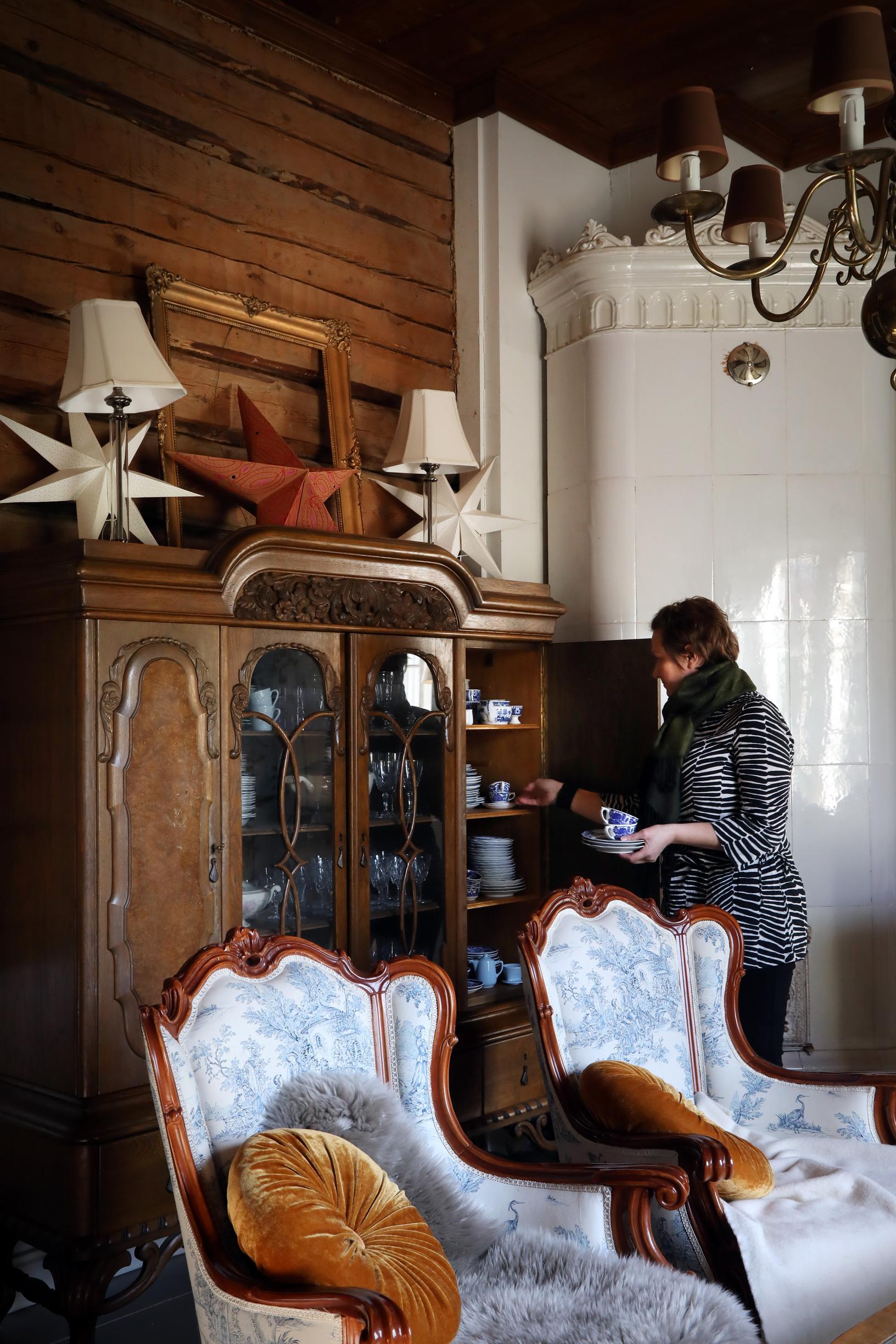

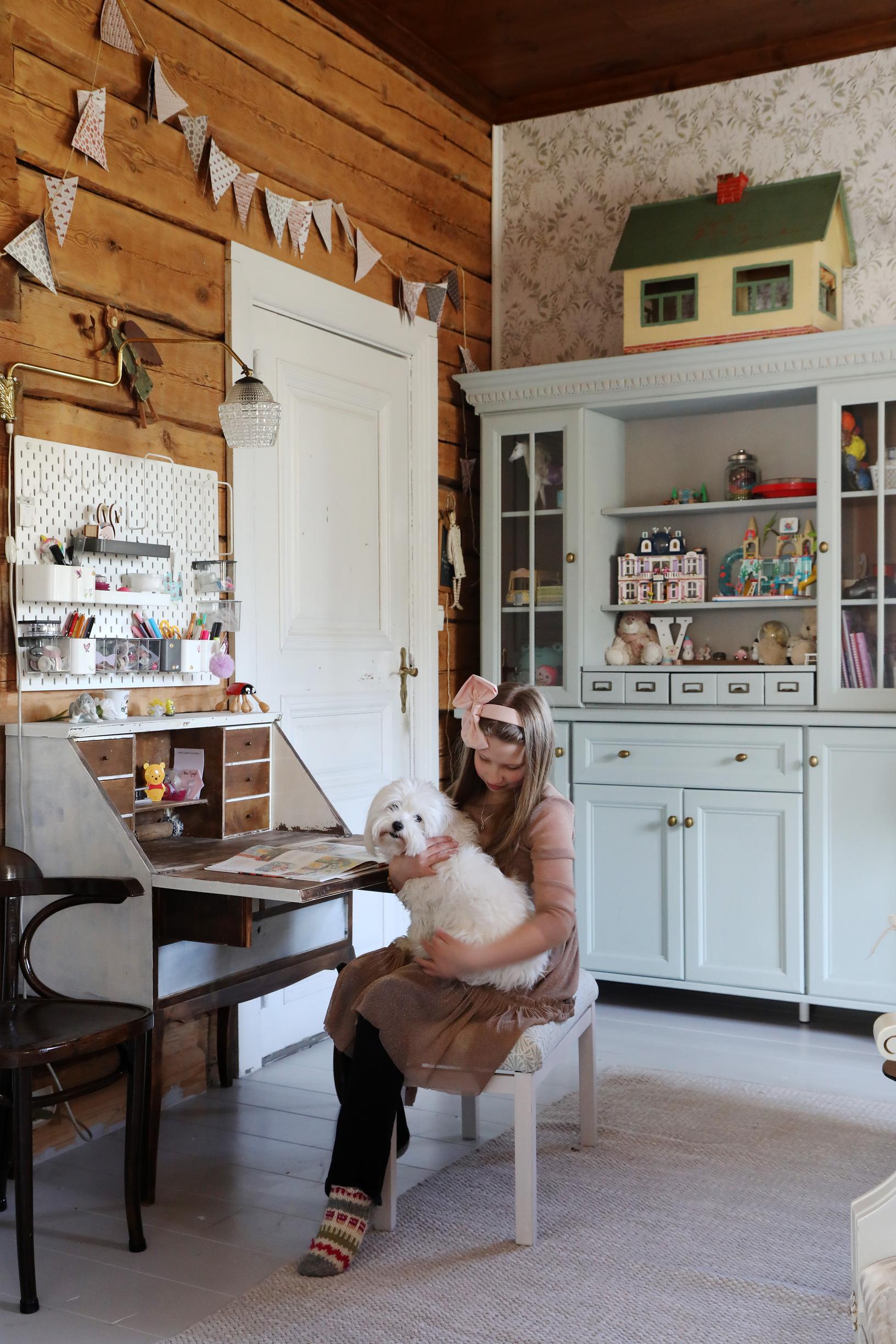
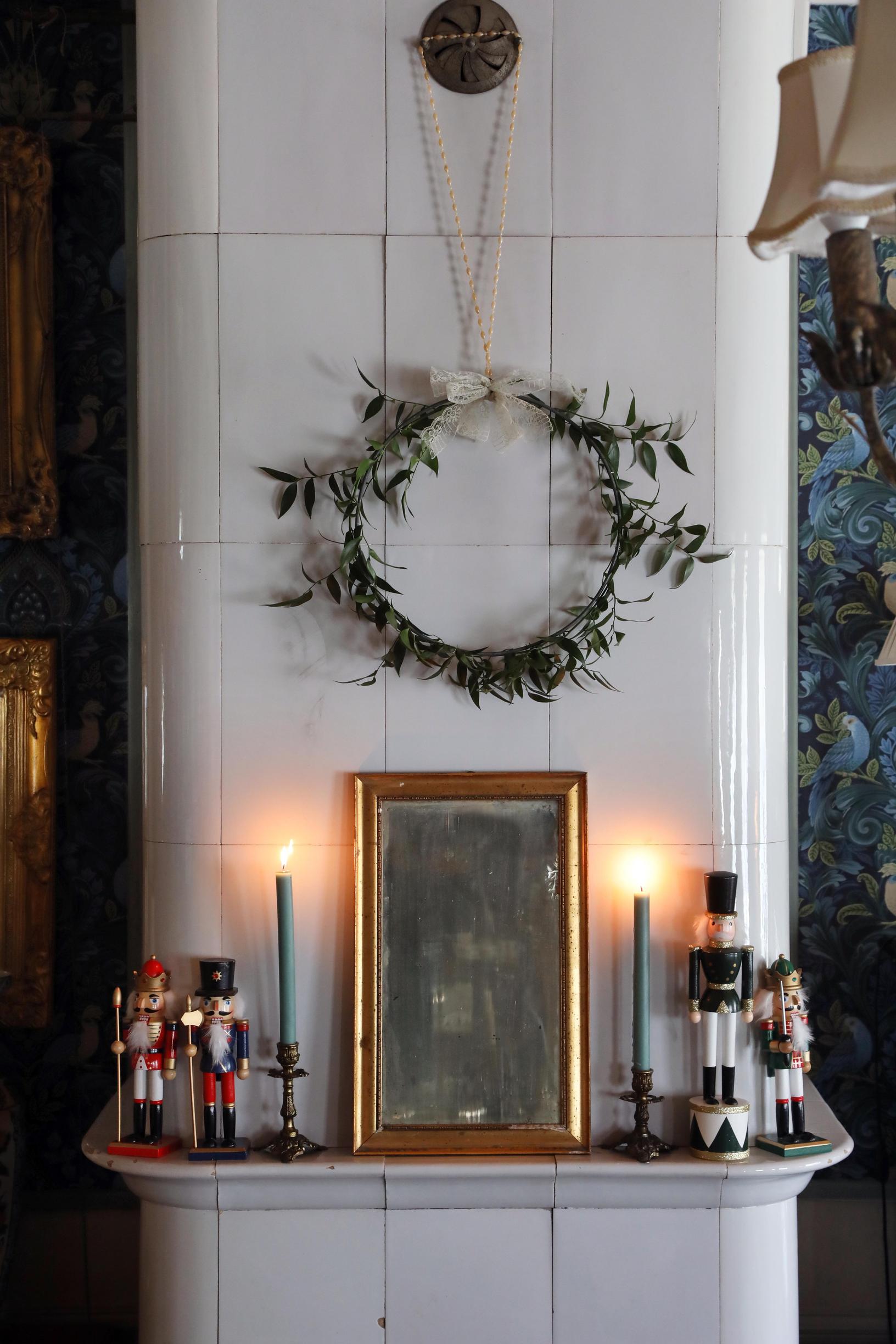
The farmhouse interior is rich and saturated with color. Salla says the style is a bit over the top, so there’s no need to go overboard at Christmas. Subtle white poinsettias, brass candelabras gathered over the years from flea markets, and handmade wreaths are her favorites.
Salla has strict criteria for decorating the Christmas tree. Ornaments aren’t tossed here and there; the decorations are placed in a balanced, harmonious way.
Christmas twilight settles over the yard. At the farmhouse, everyone soon gathers around the shared festive table. In the glow of the chandeliers, happy chatter and laughter fill the air. The big house is no longer empty.