

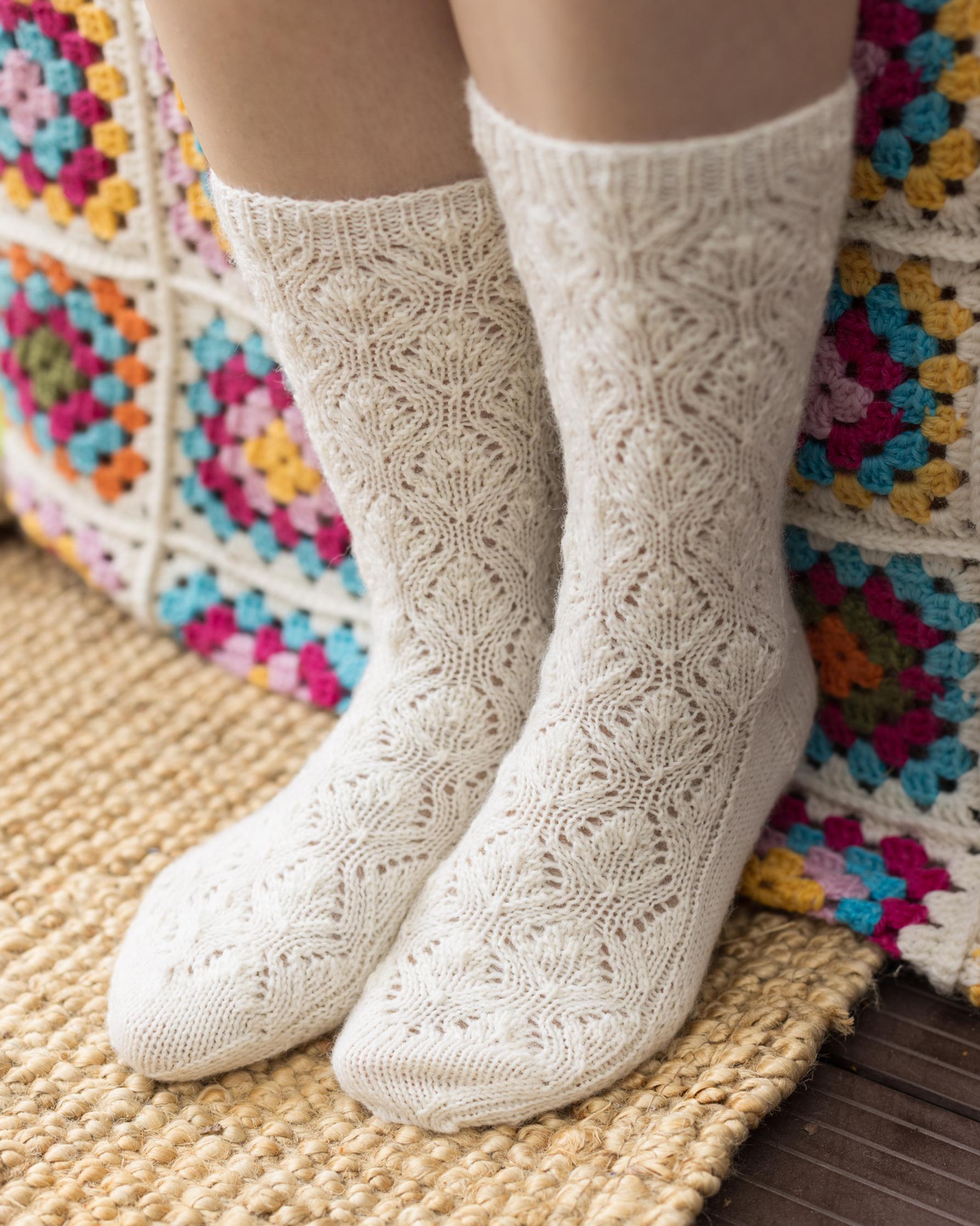
Have you tried blocking knitting projects yet? Reset your wool’s memory and get an even gauge
Wet blocking your knitting is an advanced finishing technique that makes your project look smooth, beautiful, and professionally done. The piece is soaked in water and left to dry in the desired shape. See how to block knitting projects at the end of this article!
When you’ve bound off your knitting, it’s not in its final form yet. The yarn has been on the skein, in your hands, and on your needles, leaving its mark on the wool fiber. It’s almost as if the fiber has a memory. It remembers its previous twists and tensions, but water and heat can reset that memory.
As the knitting dries in its new position, the fiber relaxes and reprograms itself to match that shape. It’s a bit like styling hair: damp hair can be curled, straightened, or arranged, and once it dries, it stays in that shape—at least until it’s wet again.
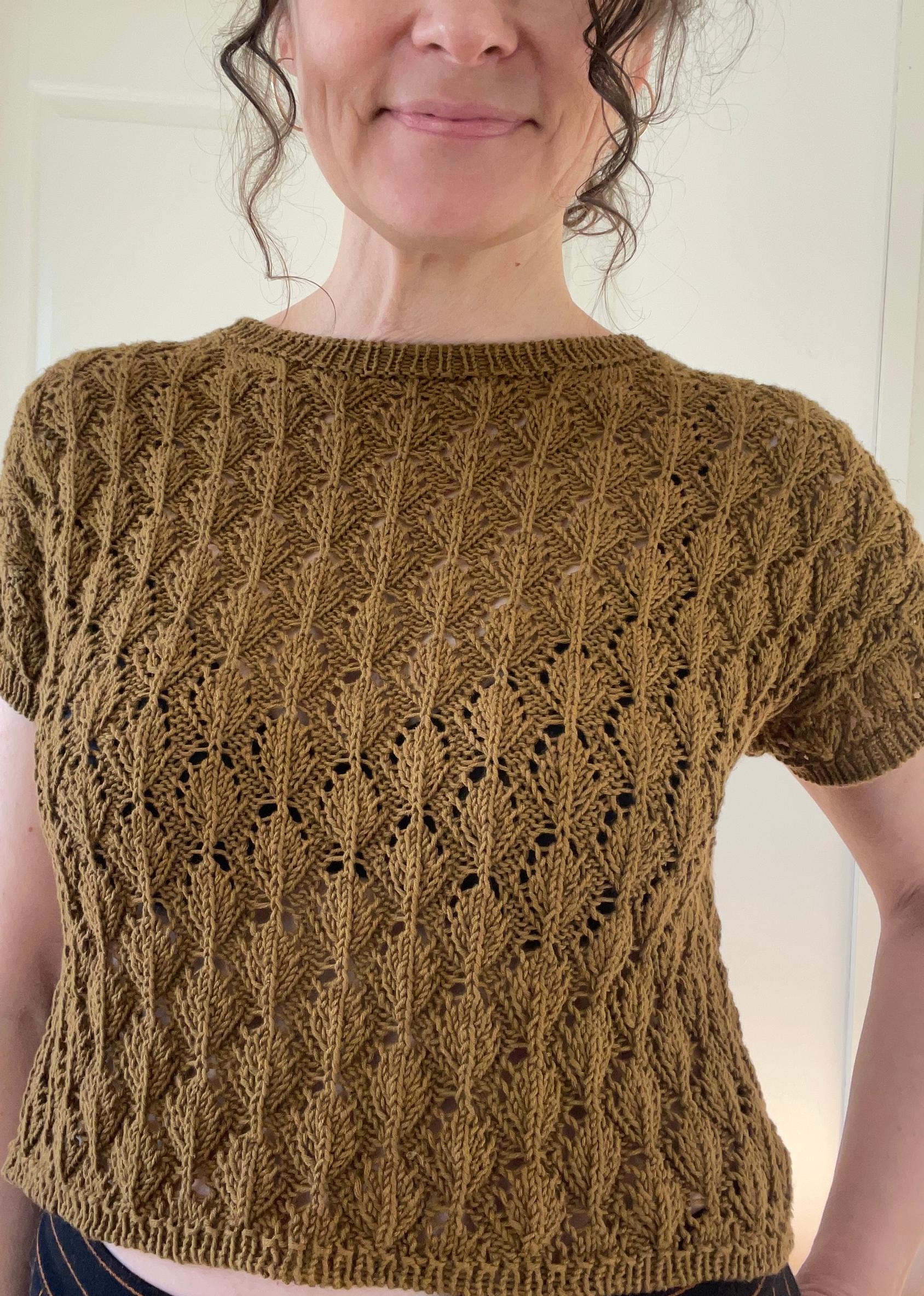
Blocking helps stitches settle neatly, opens up textured and lace patterns, and evens out proportions and edges. The fibers are reprogrammed so the knitting takes on its final shape. Some wools (like merino) may stretch slightly when soaked, so experienced knitters factor this in during finishing. All knitted projects benefit from blocking, although the effects are most noticeable in lace and textured patterns.
How blocking transforms your knitting
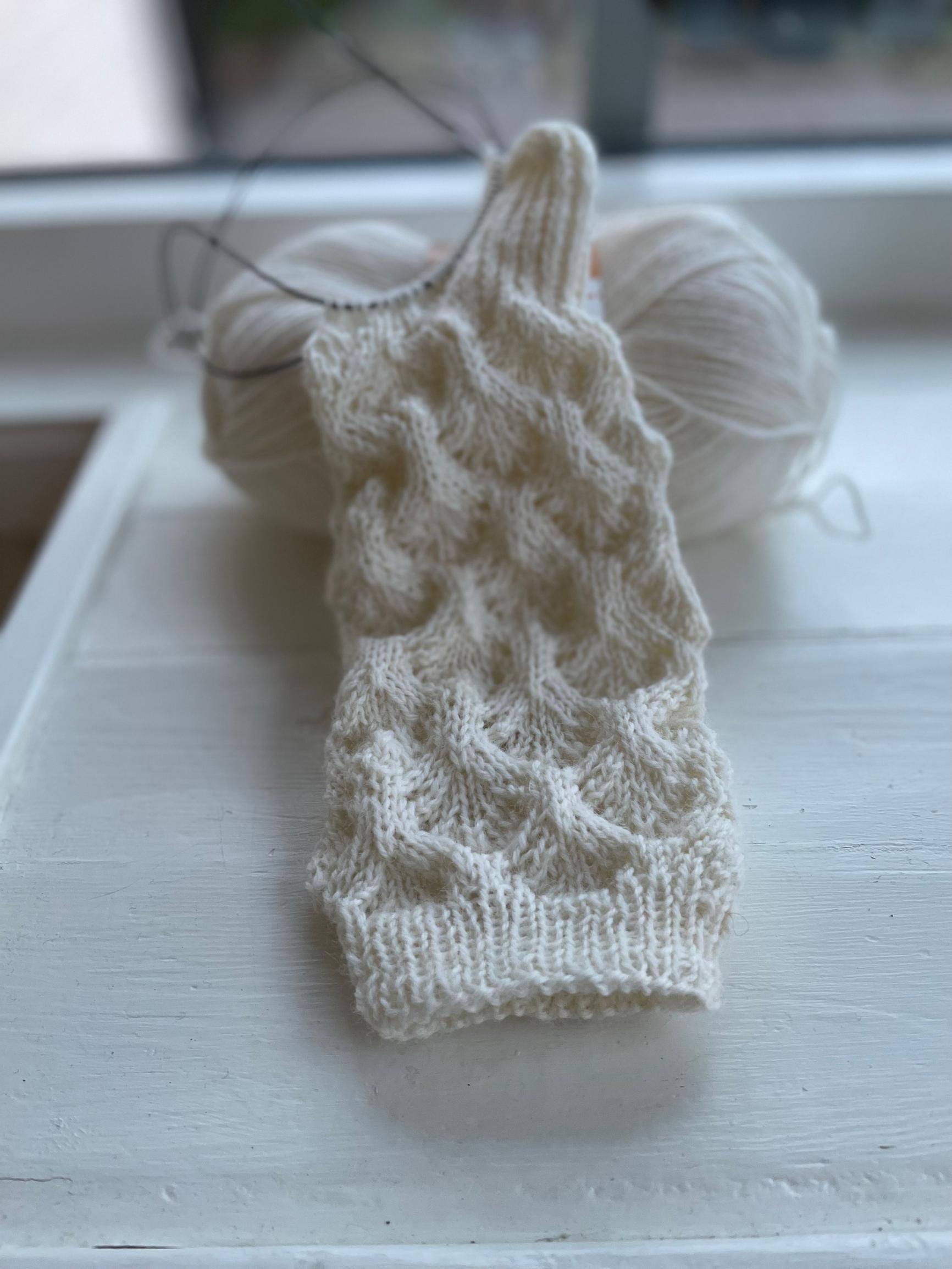
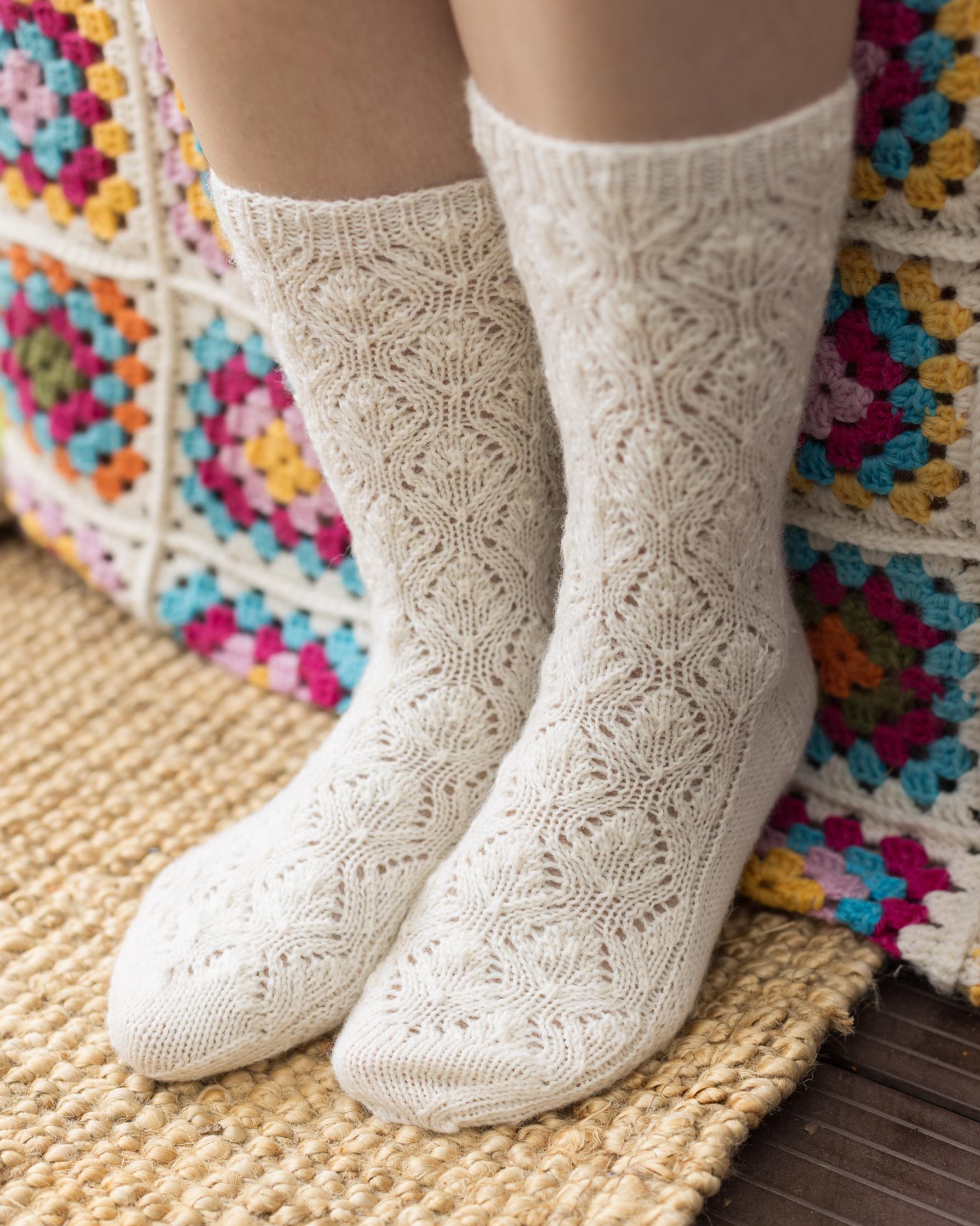
Unblocked and blocked lace sock


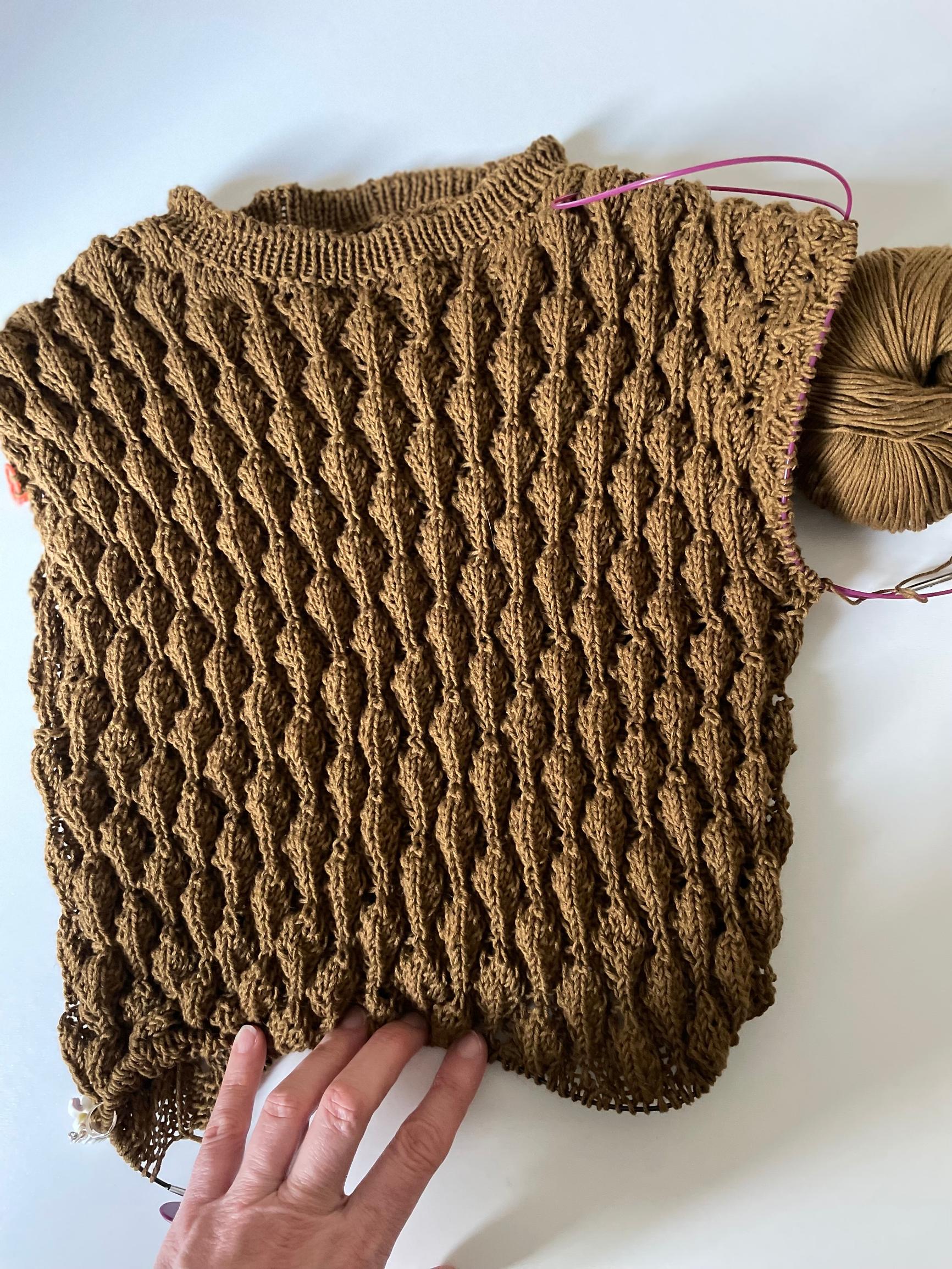
Unblocked and blocked lace sweater


Blocking knitting—supplies needed:
- A sink, bucket, or other container large enough to hold your knitting.
- Lukewarm water (about hand temperature, not too hot).
- A wool-friendly detergent (coarser wools can soften with wool wash).
- A towel.
- A blocking mat (or the top of a bed, a thick mattress, or a wool rug).
- Pins (T-pins or regular ones), blocking wires (if you’d like).
Blocking knitting—instructions:
- Soak the knitting. Fill the container with lukewarm water, add a drop of wool wash if you like, and gently submerge your knitting. Let it soak for 15–30 minutes so the fibers are fully saturated.
- Gently squeeze out the water. Lift your knitting out of the bath, supporting its shape. Press out excess water gently—don’t twist or wring. Wrap it in a towel and press out more moisture.
- Lay it out to dry. Place the knitting on your blocking surface. Arrange it according to your pattern’s measurements, measuring length and width as needed.
- Secure the shape. Use pins or blocking wires. For lace, gently pull the stitches to open the pattern. For stockinette, simply laying it flat is often enough.
- Allow it to dry thoroughly. This might take a day or two, depending on the thickness of the piece and the ambient humidity.
- Finish up. Once it’s completely dry, remove the pins and blocking wires. Now it’s ready to wear in its final form—smooth and beautifully opened.

