

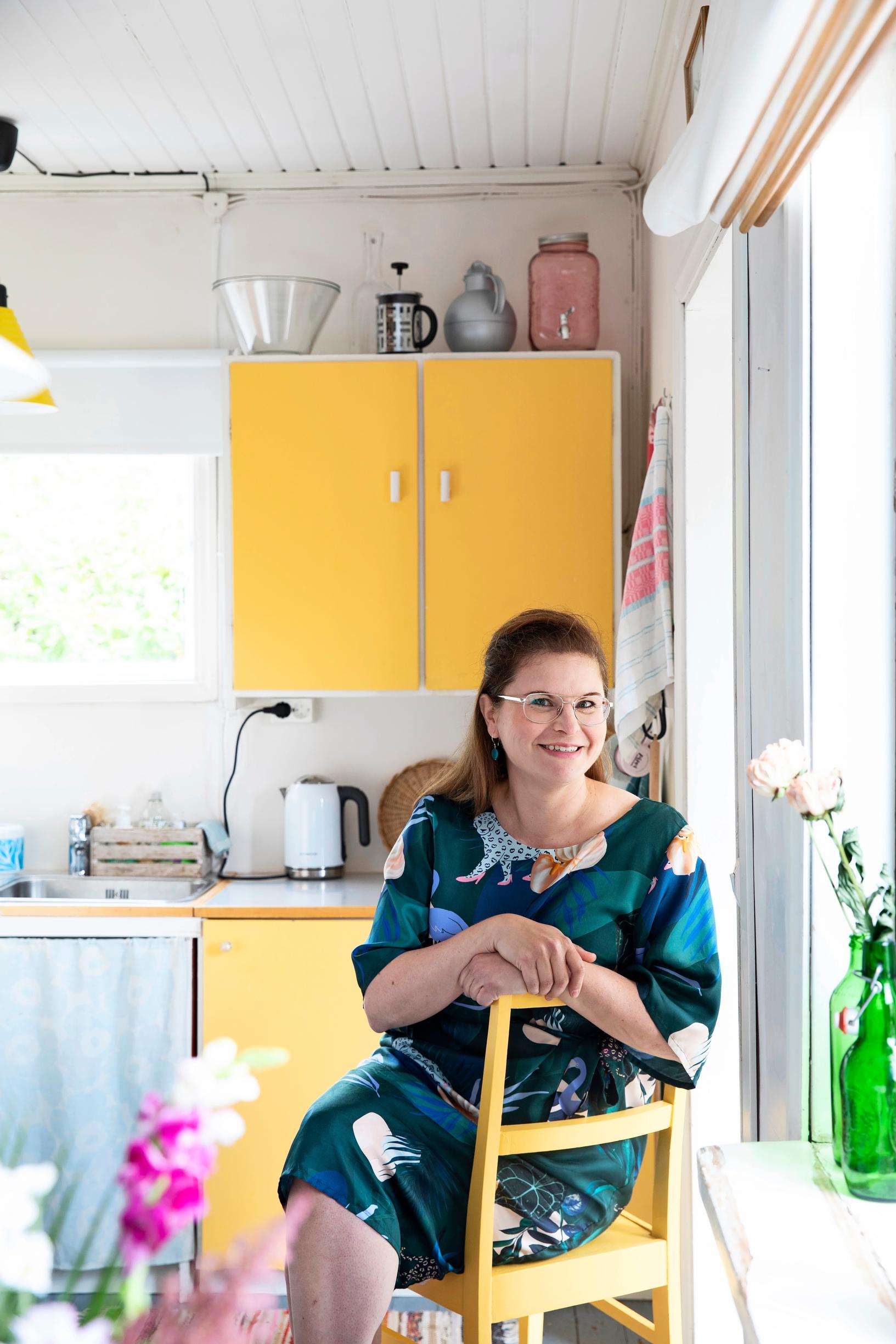
Is aesthetic organizing the new KonMari? “For many, a disorganized home is a painful problem,” says pro organizer Ilana Aalto
First people hoarded items, then they followed the KonMari method. Now they want to arrange things neatly and find freedom in minimalism, says professional organizer Ilana Aalto.
The first KonMari wave swept through Finnish homes seven years ago.
“Our history with material possessions is long, which explains why everyone got so carried away with it,” says professional organizer, non-fiction author, and Doctor of Philosophy Ilana Aalto.
In her view, the wartime era and years of scarcity shaped our way of thinking: goods were hard to come by. Anything could end up useful and was therefore kept.
In the 1960s, Finland turned into a consumer society where each purchase improved one’s quality of life. By the ’80s, we were already living in a world of abundance. By the turn of the millennium, the standard of living had risen significantly, and shops like IKEA and H&M offered cheap goods—even if you had to take out a quick loan, which was becoming more common. The standard of living had risen quickly, but the scarcity-era mentality still lingered in the back of people’s minds.
“There are many factors behind why we started accumulating so much stuff. I think this history explains why KonMari struck Finland like lightning and why we got so excited about organizing.”
The most intense wave of decluttering has perhaps leveled off, but interest in home organization remains strong. Where do Finns stand now in their relationship to stuff?
Organizing is now a skill
The professional organizing field began to take shape in Finland even before the KonMari boom. Aalto herself trained as a professional organizer in 2014.
Marie Kondo’s KonMari book made people realize that we no longer control our belongings; instead, they control us. Aalto calls it “stuff work”—the effort we put into figuring out where to store all the clutter.
“The fact that people started talking about organization introduced a new perspective: belongings can be managed, and decluttering is a process that can be done following KonMari or some other method,” she says.
Sure, the Martha Association has been providing guidance for decades on how to arrange bed linens in a closet. But we lacked instructions on how to manage a linen closet when it must fit your own sheets, your mother’s old sheets, your wedding gift sheets, and your grandmother’s heirloom sheets.
Now people really recognize that belongings can be organized more cleverly, that tidy cabinets serve everyday life, and that people can develop “stuff skills.”
“Once such an idea emerges, it influences how people see things throughout society. I believe this has significantly impacted our relationship with our belongings. Many have begun to wonder if life would be easier by reducing what they own.”
The freedom of minimalism appeals
Minimalism is now here—yes, only just now. Aalto says that although minimalism has been discussed before, it has only recently become a real trend within organizing and decluttering.
“Minimalism has a clear logic that resonates with many people: when you pare things down to a minimum, you can do enjoyable things in life without feeling weighed down by your belongings. There’s a lot of talk now about the happiness and joy that comes from minimalism.”
Aalto believes minimalism is a bit misunderstood. Many interpret it as an ascetic philosophy, a particular style of architecture and stark white, empty homes.
“Many people say they could never be minimalists because they love having plenty of belongings. But you can still be a minimalist even if you adore a rustic interior style.”
The idea of minimalism appeals to Aalto herself.
“But I’m not sure I could commit to it entirely. I have three children—it would take quite the effort to streamline all the unnecessary stuff. I’ve always been fine with a reasonably basic level of organization at home.”
It’s trendy now to organize things beautifully
Have you ever seen a fridge where juices and milk have been poured into simple glass bottles bought especially for them? Even the butter might be in a container from the same set.
One recent trend is organizing belongings neatly—really neatly. Aalto calls it aesthetic organizing.
“Everything ends up looking very pleasing to the eye. Often it’s practical, but not always.”
Aalto herself once tried keeping her sandwich fixings together in one box in the fridge. Everyday life proved the system too complicated, as her family wouldn’t bother putting the cheese and spreads back into the box.
“It defeats the purpose to put items in fancy containers if others don’t want to use them.”
Aalto has nothing against people aiming for aesthetics when organizing their homes.
“But it would be awful if a certain look became the standard for beauty, and people started thinking that the inside of their cabinets had to match it.”
Aalto says that in the United States, aesthetic organizing has been a trend for a long time. On Netflix, The Home Edit features professional organizers arranging books by color and transferring pantry items into uniform containers.
“Aesthetic organizing is a major phenomenon, and it’s closely tied to another trend: the commercialization of organizing.”

Using organization as a reason to shop
Shelf and storage systems for wardrobes and kitchen cabinets have been sold for quite a while, but now you can find all sorts of organizers in regular stores for your fridge: soda cans go here, carrots go there, and cold cuts in this little compartment. You can even pick up a box for your closet where each pair of pants can be folded into its own slot.
According to Aalto, we’re now seeing a whole new level of commercialization of organizing here in Finland, too. In her Facebook group Paikka kaikelle (A Place for Everything), people are increasingly asking where they can buy some clever gadget for organizing.
“Many people now begin organizing by buying things, even though the right approach would be to downsize first. I don’t condemn this—except in cases where people purchase plastic products they could easily manage without.”
Besides, if you declutter first, you’ll probably free up some boxes, so you won’t have to buy more.
The next trend: self-compassion?
Because of our history, we Finns have a tendency to think it’s wise to hoard things. Aalto says that alongside this, there’s another tendency.
“We have a long history of viewing cleanliness and order as positive and desirable. There’s a strong sense of admiration for neatness.”
There was a belief that a woman’s job was to raise new citizens, and a clean home was an important part of that. Even today, a home overflowing with stuff is often too quickly associated with poor life management or mental health problems.
“For many, a disorganized home is a painful problem. Some feel a sense of inferiority and shame about their home.”
“When you’re pressured on one side to hold onto things and on the other side by strict norms for cleanliness, it’s easy to feel guilty and frustrated.”
“Many people don’t realize we have this kind of history. They feel relieved to learn about these ingrained thought patterns, alongside the massive marketing machinery employing top psychologists to figure out how to make you buy more.”
If disorganization still causes guilt, Aalto encourages reflection. Does it really matter if your home isn’t in tip-top shape?
“My most important goal is making everyday life run smoothly. If your belongings don’t cause arguments with your partner or fall on your head when you open a cabinet, does the mess really matter? If it doesn’t bother you, it doesn’t matter.”

